Miami Beach’s ultra-luxury interiors are moving beyond quiet minimalism into a more expressive, wellness-led era. The defining look for 2026 is layered and personal, but still disciplined: edited color, tactile finishes, art-forward moments, and nature-connected planning that supports how owners actually live. With South Florida logging 361 home closings above $10 million in 2025 and cash representing 81% of those deals, the market’s most decisive buyers are also the most design-literate. What follows is a buyer-oriented view of the ten trends shaping trophy residences and branded living in Miami-beach today.
Miami Beach has always treated interiors as culture, not just decoration. In 2026, that instinct is sharpening into something more deliberate. South Florida recorded 361 home closings at $10 million and above in 2025, and 81% of those purchases were cash. In practical terms, this is a market where the most active buyers can move quickly, recognize craftsmanship, and insist on immediate livability.
At the same time, the aesthetic pendulum is shifting. The “quiet luxury” era of restrained minimalism is giving way to more expressive homes - but not chaotic ones. The emerging signature is intentional maximalism: layered color, texture, art, and statement pieces, tightly edited so the space still reads calm and architectural.
In Miami-beach, that evolution shows up in bolder material selections, more decisive palettes, and plans that prioritize wellbeing, privacy, and performance in a humid, high-sun climate. For buyers evaluating new construction and branded residences, the question is no longer whether a home is beautiful. It’s whether that beauty supports daily rhythm.
1. Intentional maximalism - layered, edited, never cluttered The new maximalism is about curation: a controlled mix of sculptural furnishings, textured textiles, and art-forward moments that feel collected over time. The differentiator is discipline. Every layer must earn its place, with negative space protected so the home still feels expansive.
In Miami Beach, this approach reads especially strong when paired with clean-lined architecture: a restrained envelope that can carry a more expressive interior narrative.
2. Mood-forward color - rich palettes replacing all-neutral rooms 2026 color direction is richer and more character-driven than the pale, near-monochrome schemes that dominated recent years. Think saturated tones used with intent, not wall-to-wall. A deep hue in a library alcove, a lacquered corridor, or a dining room that feels like an evening destination.
For buyers, the value is emotional: color can make a large residence feel composed and intimate, particularly in high-ceiling great rooms.
3. Biophilic planning - nature as a wellness strategy, not a theme Biophilic design in ultra-luxury Miami is moving beyond potted plants. It’s planning: how daylight moves through the home, how views are framed, and how materials and textures contribute to a sense of calm.
The strongest executions maintain a continuous relationship to the outdoors, especially in Miami-beach properties where water, sky, and palms become part of the interior’s visual field.
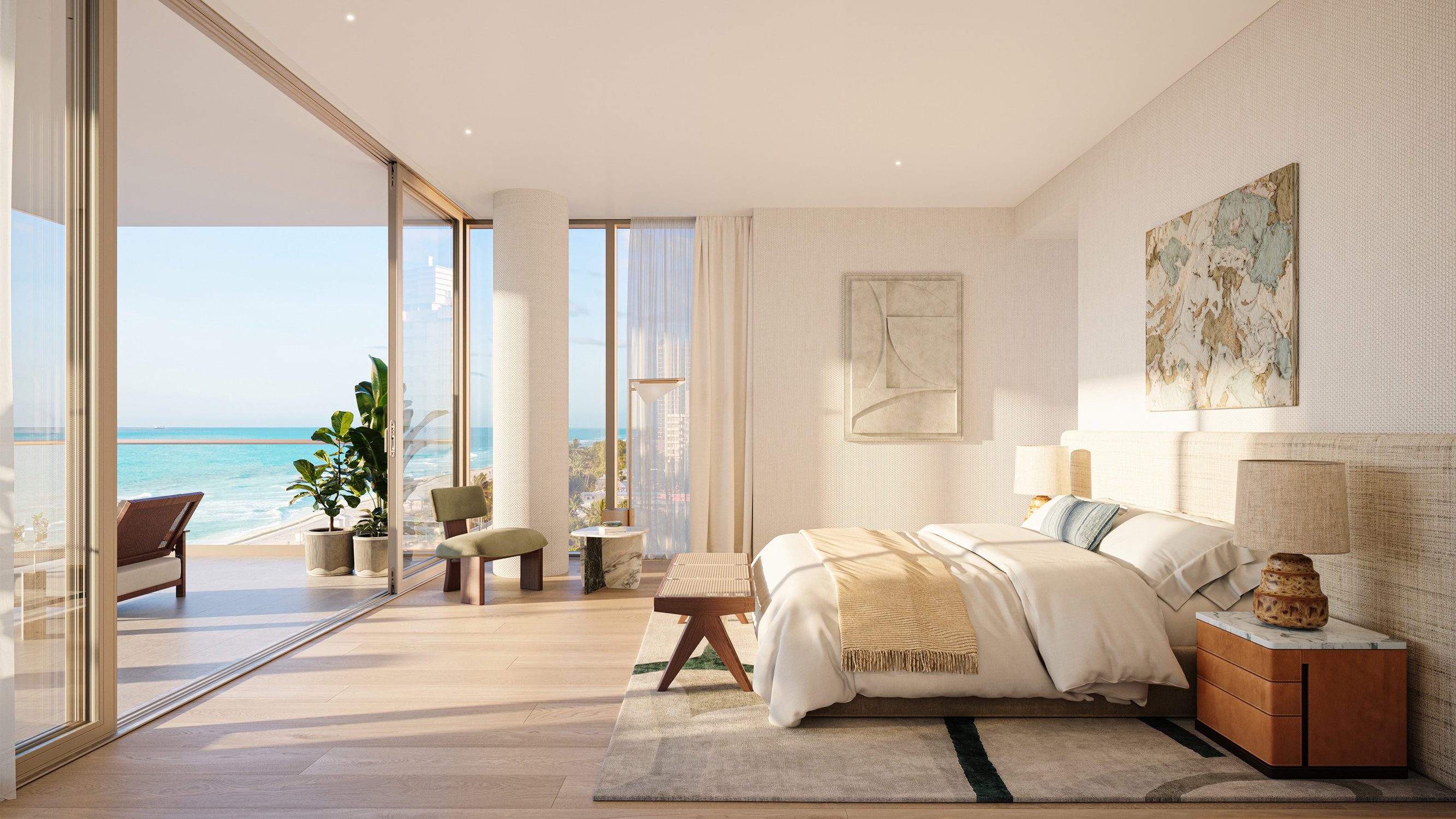
4. Big glazing plus smart shading - maximizing light without sacrificing comfort A hallmark of high-end Miami interiors is expansive glazing to capture views and daylight. In 2026, the conversation is more precise: large glass areas paired with shading strategies that keep spaces comfortable and genuinely usable throughout the day.
For buyers touring, pay attention to how the home handles late-afternoon glare and heat buildup. A beautiful living room that can’t be enjoyed after 3 p.m. isn’t luxury.
5. Greenwalls as focal architecture - living or faux, used with precision Greenwalls are being used as high-impact focal elements: an arrival moment in the foyer, a dramatic dining backdrop, or a wellness-room feature that reads like a private conservatory.
Whether living or faux, the luxury signal is integration. The wall should feel architectural, supported by deliberate lighting and surrounding finishes that elevate it beyond “decor.”
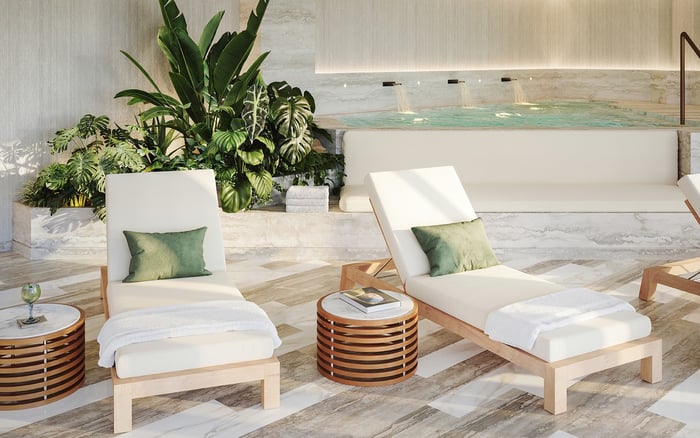
6. Dedicated wellness rooms - the spa becomes a programmed space “Wellness is the new luxury” has moved from slogan to floor plan. In 2026, buyers increasingly expect dedicated rooms for meditation, yoga, or spa-like routines, rather than a treadmill in a guest bedroom.
This trend pairs naturally with service-driven living. In branded residences such as Shore Club Private Collections Miami Beach and The Ritz-Carlton Residences® Miami Beach, the lifestyle expectation often includes hospitality-grade amenity thinking - and many owners echo that sensibility inside their private homes.
7. Sustainable materials with true luxury finish - responsible can still be rich Sustainability is being treated less as a separate “green” look and more as a baseline material standard - one that still has to deliver warmth and refinement. Premium wood flooring, for example, is increasingly positioned around responsible sourcing without compromising tone, grain, or finish quality.
Buyers should ask not only what the material is, but how it will age in Miami’s environment. Longevity is part of sustainability.
8. Venetian plaster and tactile wall finishes - depth replaces flat paint Venetian plaster is resurging as a signature finish for ultra-luxury interiors, adding depth, subtle movement, and a handcrafted quality that reads immediately on entry. It’s also a tool for “quiet drama”: walls that feel like sculpture without adding objects.
In a market trending toward intentional maximalism, plaster delivers richness while keeping surfaces clean.
9. Botanical and heritage prints - high-impact moments in smaller rooms Wallpaper is back, but with strategy. Botanical and heritage-inspired prints are often reserved for powder rooms, corridors, or dressing areas - spaces where a bold moment reads couture rather than overwhelming.
The strongest applications balance pattern with restraint: one decisive surface, paired with quieter stone, wood, or plaster.
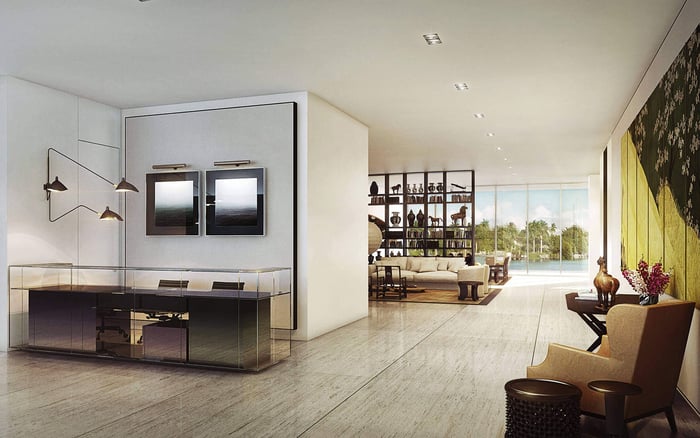
10. Art-forward interiors - cultural energy shaping residential taste Miami’s cultural calendar continues to influence how homes are styled, with interiors increasingly conceived as settings for art and collecting. That doesn’t mean turning the residence into a gallery. It means planning proper lighting, wall proportions, and circulation so art placement feels inevitable.
This is where intentional maximalism earns its name: personal, expressive, and curated - every object chosen as part of a coherent story.
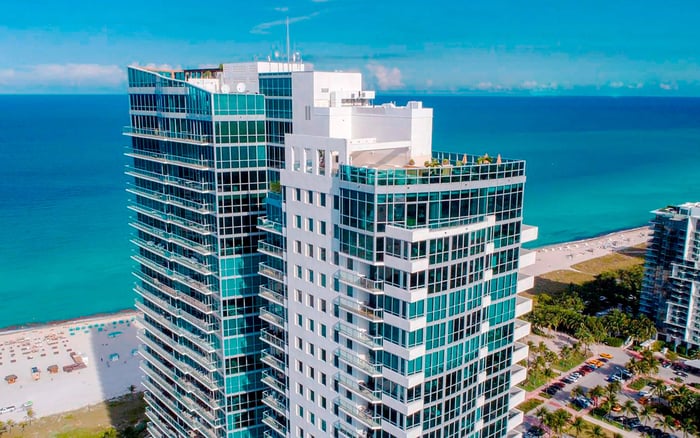
In Miami Beach, interiors are rarely one-note. Ocean-facing homes often lean into serenity and horizon lines, while South of Fifth is known for a more concentrated luxury feel with strong dining and walkability - context that naturally supports bolder design choices for entertaining.
For buyers considering an oceanfront new build, the design conversation often starts with glazing, shading, and wellness programming. In that context, 57 Ocean Miami Beach aligns with the broader shift toward nature-connected living and sanctuary-like planning, where light and calm are treated as amenities.
Branded residences remain a meaningful part of the Miami conversation. Many buyers are drawn to the service layer, but the most sophisticated purchases treat the interior as the true differentiator. A residence that can host a dinner, recover like a spa, and still feel quiet on a Monday morning is where 2026 design is headed.
For those who prefer a highly polished, globally legible aesthetic, Setai Residences Miami Beach fits naturally within the trend toward edited luxury: clean architecture that can carry richer color, art-forward styling, and tactile finishes without losing composure.
When you walk a Miami Beach residence, look past the staging and assess performance.
First, evaluate comfort architecture: daylight, glare control, and how rooms transition from bright day to evening mood. Second, look for intentionality in material selection. Richer color and pattern only read as luxurious when the underlying craftsmanship is exact.
Third, examine how the home supports wellness. A dedicated room is ideal, but so is acoustic privacy, places to decompress, and a primary suite that reads like a retreat rather than an oversized hotel room.
Finally, consider how a residence can evolve. Intentional maximalism is forgiving because it’s curated. A home designed around layers and texture can absorb new art and furnishings over time without needing a full reset.
What is “intentional maximalism” in Miami luxury interiors? It’s a layered look using color, texture, and statement pieces, edited so it feels curated rather than cluttered.
Are neutral interiors going out of style in 2026? Not entirely, but richer, mood-forward palettes are becoming more common as accent and feature moments.
What is biophilic design and why does it matter in Miami Beach? It prioritizes connection to nature through light, views, and materials, supporting wellbeing beyond aesthetics.
How do luxury homes maximize views without overheating? By pairing large expanses of glazing with shading strategies that manage glare and comfort throughout the day.
Do greenwalls need to be living to feel high-end? No. Living or faux can work, but the wall must be integrated architecturally with lighting and refined surrounds.
What defines a true home wellness room? A dedicated space designed for meditation, yoga, or spa routines, not a temporary corner in a multipurpose room.
Are sustainable materials compatible with ultra-luxury finishes? Yes. High-end options, including premium wood flooring, can emphasize responsible sourcing and lasting quality.
Why is Venetian plaster trending again? It adds depth and handcrafted character, delivering quiet drama without relying on excess decor.
Where should bold wallpaper be used in an ultra-luxury residence? Smaller spaces like powder rooms or corridors often suit high-impact botanical or heritage prints best.
How should buyers evaluate branded-residence interiors? Look beyond the service promise to layout, comfort, and finish depth, because interior performance drives daily value.
For a confidential assessment and a building-by-building shortlist, connect with MILLION Luxury.
If branded residences are on your mind — as a home or as an allocation — we would be glad to share what we are seeing, privately.
Begin a quiet conversation