Ultra-luxury housing has entered a new phase: homes are being bought not only for prestige and views, but for the ability to operate a full professional life from a private, beautifully designed base. From $100M-plus headline transactions to the quiet rise of “Zoom-ready” listing language, 2025 delivered a clear message for South Florida buyers and developers alike: the most valuable residences are the ones that make everyday life effortless.
Ultra-luxury has always been a study in scarcity: the right address, the quietest stretch of shoreline, the most protected view corridor. What is changing is not the appetite for beauty, but the expectation of performance. In 2025, trophy sales across the country drew attention for their scale, yet the more useful takeaway was how these homes are being evaluated. The most valuable residences are increasingly purchased as complete operating systems for modern life, equally capable of supporting a board call at 8 a.m., a family lunch at noon, and a discreet dinner at nine.
That shift is visible in the way buyers talk about “livability.” It no longer means casual comfort. It means a property that can carry a full schedule without friction: secure privacy, reliable service, and the infrastructure to work as well as retreat. A spectacular view still matters, but the question has sharpened. Can the home function as a headquarters when needed, and feel like a sanctuary the moment the laptop closes?
Redfin reported that all 10 of the most expensive U.S. home sales of 2025 closed for $100M-plus, and that Florida and California dominated those top transactions. The implication is not simply that wealth is back in motion. It is that the ultra-high-end buyer is increasingly willing to move decisively when a property delivers true autonomy: control, discretion, and the kind of behind-the-scenes capability that makes daily life easier.
In South Florida, this lands naturally. The region already offers what globally mobile buyers value: climate, international access, and hospitality-grade living. What has become more explicit is the operational brief. Buyers are not only shopping for prestige. They are buying a residence that performs, whether it is used year-round or as a second home that must still feel primary.
The clearest bellwether came from Florida itself. A Port Royal waterfront compound in Naples reportedly closed for $225M in April 2025, a state record widely covered as the second-highest U.S. home sale. Reporting described it as an assemblage of three adjacent properties totaling approximately 15 acres and about 812 feet of beach frontage, and it reportedly traded below an earlier ask of $295M.
For a South Florida reader, the lesson is not “Naples beat Miami.” The lesson is that the top of the market has become comfortable paying for land, frontage, and privacy at a scale that functions like an estate, even when the purchase is framed as a residence. When a home can operate as both retreat and headquarters, the upper bound on pricing rises because the buyer is not buying a house alone. They are buying the ability to live on their own terms.
The same theme echoed outside Florida. Local reporting described a $120M purchase in the Snowmass area: Palantir CEO Alex Karp bought the 3,700-acre St. Benedict’s Monastery property in December 2025, marketed as an exceptionally private legacy holding. On the celebrity side, national coverage reported that Eric Schmidt and Wendy Schmidt bought Los Angeles’ “Spelling Manor” for $110M. The Real Deal reported Australian billionaire James Packer paid $110M for “Le Belvedere” in Bel-Air.
These are different geographies, but they share a consistent buyer logic: make one decisive acquisition that can be reprogrammed for meetings, hosting, recovery, and deep privacy, while still supporting always-on connectivity. In other words, the market is rewarding properties that can absorb complexity. That is why South Florida’s most compelling homes are no longer marketed as beautiful spaces alone. They are positioned as lifestyle infrastructure.
Remote work is no longer a temporary accommodation. It is embedded in how high performers expect to live, even when they maintain formal offices elsewhere. The very top of the market now assumes that work can happen anywhere, which makes the residence itself part of the professional toolkit.
A 2025 summary from the Pennsylvania Association of Realtors captured how the market is describing this shift in plain language: listing mentions of CAT6 or hardwired Ethernet, soundproofing, and dedicated “Zoom room” or home office setups rose sharply year over year. The same report tied those remote-work features to higher-priced inventory.
Translation for luxury buyers: what used to be “nice to have” is now a pricing signal. It is not just that buyers want an office. They want a credible environment for concentration, confidentiality, and presentation.
Design and industry guidance has moved in the same direction. Coverage aimed at homeowners and builders increasingly treats the office as core program, emphasizing privacy, acoustics, lighting, and reliable connectivity. In ultra-luxury staging and positioning, the pendulum has swung away from palatial-but-impractical rooms toward residences that feel livable, functional, and believable for daily operations.
In South Florida, where many principals split time between cities, this expectation is amplified. If a residence is a second home, it still must work like a first. That means the basics cannot be improvisational. The office cannot be an afterthought. The network cannot be fragile. The acoustics cannot be overlooked. Buyers at this level have too little patience for friction, and too many options.
At the top of the market, the remote-work conversation quickly becomes a question of systems, not gadgets. Consider these as practical non-negotiables when evaluating an oceanfront condominium, a branded residence, or a single-family estate.
First, connectivity should be designed, not improvised. Hardwired Ethernet is increasingly referenced in listing language for a reason: it is stable, fast, and professional. In a high-rise, ask how the building and unit support robust internet options, and whether the residence can be cleanly outfitted for a secure network. The goal is not simply speed. The goal is reliability under pressure, with enough flexibility to support multiple users, devices, and work styles.
Second, acoustics are a form of privacy. Soundproofing is not only for media rooms. It matters for calls, confidentiality, and calm. A beautiful library that leaks hallway noise is not an office. In a South Florida condo, that might mean considering adjacency to elevators, corridors, or amenity floors. In a single-family estate, it can mean paying attention to how the home’s social areas and service circulation relate to the work zone.
Third, the office should have a “front door.” Today’s serious buyers want an office that can host, not just accommodate. Think: a dedicated room with proper lighting, a background that reads well on camera, and a layout that allows an assistant or spouse to move through the home without interrupting. The best offices also feel composed. They support focus during the day and transition smoothly into an evening environment without feeling like a corporate annex.
Fourth, smart-home infrastructure is now expected. The National Association of Realtors has highlighted that luxury buyers look for integrated control of lighting, climate, and security, positioning smart-home tech as a lifestyle differentiator, not a novelty. In practice, buyers are looking for systems that simplify routines and reduce mental load. Technology matters most when it fades into the background.
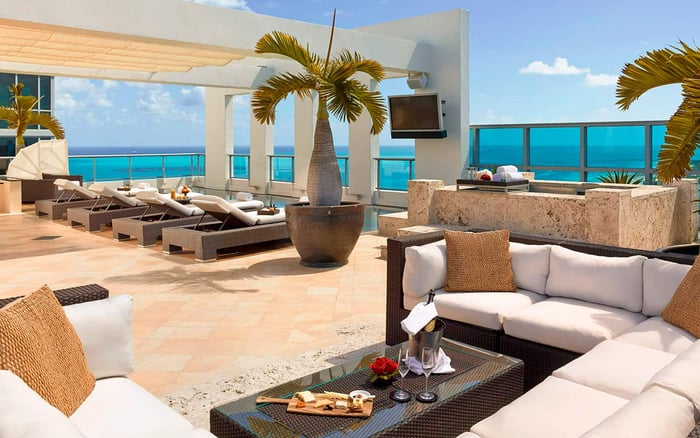
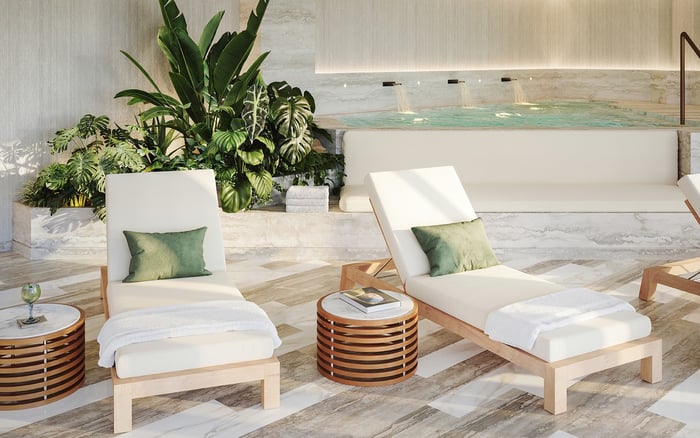
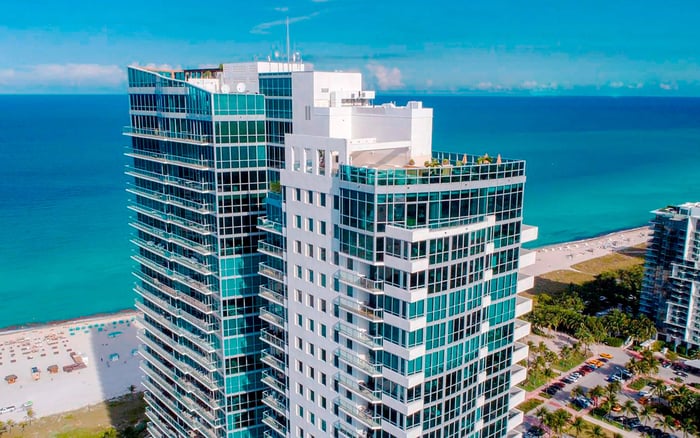
In Miami Beach, these expectations often intersect with the convenience of service and the ease of a managed building. For buyers considering a refined, hospitality-aligned approach to daily life, Setai Residences Miami Beach sits within a market segment where seamless living is part of the appeal, particularly for owners who want the residence to stay “ready” between visits.
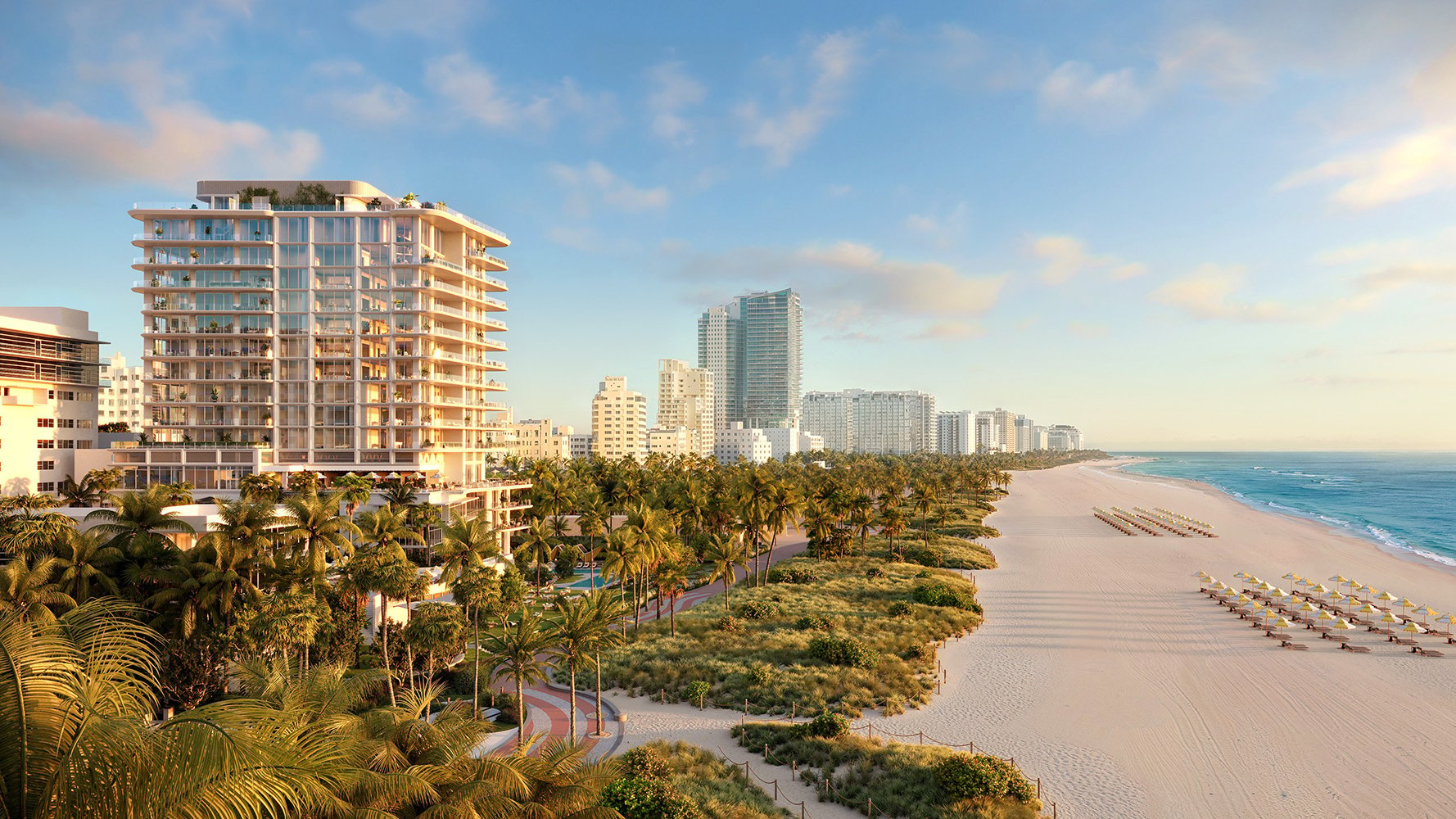
Miami Beach has long been a global shorthand for glamour. What is changing is how that glamour is used. The modern ultra-wealth buyer is frequently less focused on nightlife proximity and more focused on an environment that supports recovery, discretion, and impeccable routines. The lifestyle is still aspirational, but the priorities are quieter: privacy, consistency, and the freedom to move through the day without logistical drag.
That is why the resort-residence idea has matured. Branded residential projects can fit this moment because they may deliver a service layer that removes friction, quietly and consistently. That service layer becomes particularly valuable when the home doubles as a professional base, even intermittently. Arrive, log on, host, reset. Leave, and the residence remains maintained. The point is not spectacle. The point is continuity.
This dynamic helps explain the appeal in projects such as Shore Club Private Collections Miami Beach, which speaks to a buyer who wants a Miami Beach address that can function with resort-grade polish without becoming performative.
For those who want the same Miami Beach magnetism with a classic luxury cue, The Ritz-Carlton Residences® Miami Beach aligns with the broader market expectation that the residence should feel like a private home supported by an experienced hospitality operator.
The point is not that a brand guarantees perfection. The point is that buyers are increasingly pricing the value of reliability, including how smoothly the home supports everyday operations. In a market where schedules are demanding and privacy is priceless, reliability is not a soft benefit. It is a core value driver.
When a market shifts toward livable luxury, it does not become less exclusive. It becomes more discriminating.
Oceanfront inventory is finite, and within that finite set, the most prized homes share a trait that is often overlooked: quiet. Quiet not only in the literal sense of sound, but in the sense of mental bandwidth. A well-placed oceanfront residence can reduce decision fatigue by consolidating what used to be scattered: wellness, work, and leisure.
This is why the record-setting Naples deal resonates beyond the Gulf Coast. Approximately 812 feet of beach frontage is not just “more beach.” It is a buffer of tranquility, a margin of separation that helps the home operate like an institution. At the highest level, buyers value separation because separation protects time, attention, and privacy.
In Miami Beach, the oceanfront buyer often seeks a similar effect at a different scale: fewer interruptions, fewer compromises, and a residence that supports deep rest between obligations. 57 Ocean Miami Beach sits within that conversation for buyers who prioritize an ocean-near lifestyle where morning routines and evening decompression are framed by the shoreline.
In practical terms, “quiet” is also about planning. It is about a layout that allows work to happen without crossing paths with the social heart of the home. It is about entrances, corridors, and separation between guest flow and private space. It is about windows and terraces that give you a view without exposing you to constant noise. In South Florida, where outdoor living is central, the best homes deliver calm without sacrificing the energy of the coastline.
The practical takeaway for South Florida is that the next wave of value will be created as much by planning as by marble. Materials matter, but at the ultra-luxury level, execution and usability are what separate a “beautiful” home from a truly compelling one.
Sellers should evaluate whether their home reads as operationally complete. If a buyer walks through and cannot immediately identify a credible office and a credible secondary work zone, the property may feel behind, even at a spectacular price point. A single showpiece office is helpful, but buyers increasingly want optionality: a private office, a quieter call room, and a flexible meeting space that can shift from professional to personal without effort.
This is not about turning a residence into a workplace. It is about acknowledging that work happens in real life, and luxury is the ability to accommodate it gracefully. The most successful homes do not force tradeoffs. They preserve beauty while quietly supporting function.
For developers, this is a blueprint for differentiation. Floor plans that anticipate remote work, without sacrificing entertaining, should be treated as part of the core product. It is no accident that industry commentary on ultra-luxury staging emphasizes making large residences feel livable. The buyer is not paying for empty rooms. They are paying for frictionless life.
Smart-home infrastructure should be integrated early, not bolted on. Lighting scenes that support video calls, climate control that is granular room by room, and security that feels invisible are now baseline expectations in the segment the National Association of Realtors describes. Buyers are not impressed by complexity for its own sake. They are drawn to systems that are intuitive, stable, and professionally installed.
Finally, there is a psychological component. The ultra-high-end buyer is often purchasing relief: relief from time loss, from public exposure, from logistical complexity. Properties that deliver that relief, through land, frontage, service, and technology, command the strongest demand. In South Florida, where buyers often have multiple residences, the winning home is the one that makes arriving effortless and staying effortless.
The market’s most public moments in 2025 were record numbers, but the enduring story is less about price and more about intent.
High-net-worth buyers are building a life pattern that is geographically flexible but operationally strict. They want to be able to work intensely and recover deeply, often in the same day. They will pay for the residence that makes that possible, and they will pay even more when the home delivers that capability without calling attention to itself.
For South Florida, the opportunity is clear. The region is already a luxury destination. The next step is continuing to deliver homes that are not only beautiful, but engineered for modern living: resilient connectivity, serious privacy, thoughtful acoustics, and smart systems that recede into the background.
In Miami and Miami Beach, this will continue to influence how properties are designed, renovated, staged, and marketed. The most persuasive listings will not just describe finishes. They will communicate readiness. They will show a buyer how the home supports real life: a call that cannot be interrupted, a weekend that needs to be restorative, an arrival that should feel seamless.
When those elements are present, “work-from-paradise” stops being a marketing line and becomes an everyday reality.
Is remote-work design really affecting luxury pricing? Market-facing evidence suggests it is. Listing mentions of hardwired Ethernet, soundproofing, and dedicated office spaces increased in 2025, and those features were associated with higher-priced inventory.
What should I prioritize first: office space or smart-home systems? Start with a credible office and connectivity, then layer in integrated lighting, climate, and security. The most successful homes treat all three as one ecosystem.
Do branded residences matter for remote-work lifestyles? They can. Many buyers value the reliability and service layer that keeps a home ready, particularly when the residence is used intermittently.
How can I tell if a home office is “luxury-grade”? Look for privacy, acoustic control, flattering lighting, and an entrance that allows you to host without disrupting the rest of the home.
Explore South Florida residences built for modern living with MILLION Luxury.
If branded residences are on your mind — as a home or as an allocation — we would be glad to share what we are seeing, privately.
Begin a quiet conversation