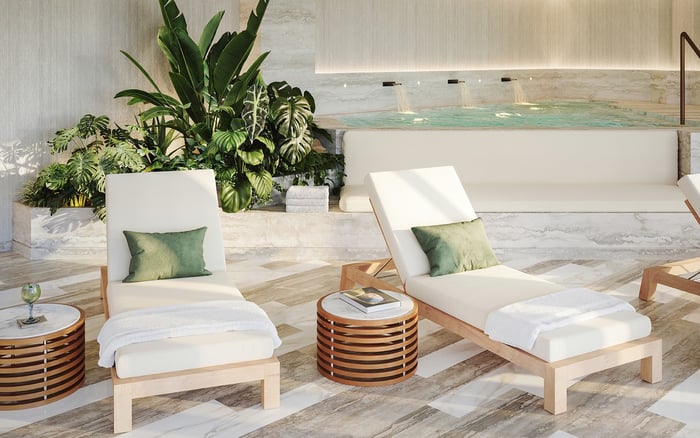
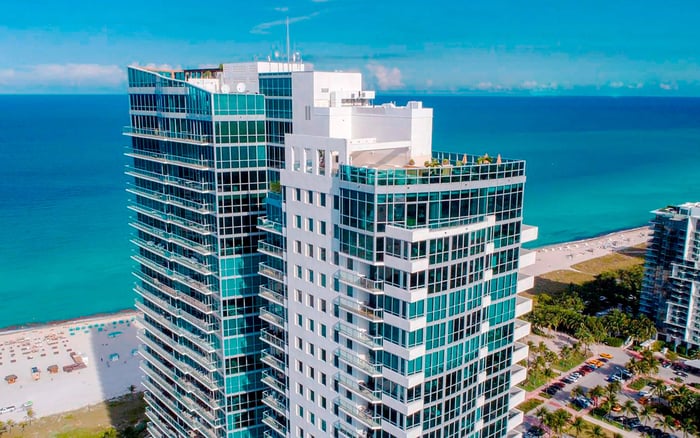
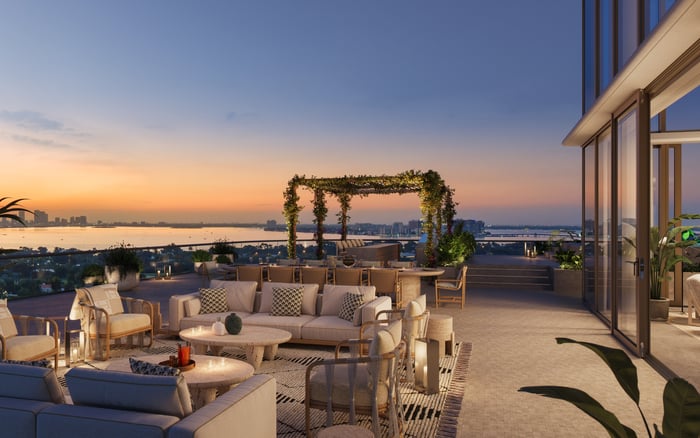
A discreet, buyer-oriented comparison of two rare Miami Beach oceanfront propositions: The Ritz-Carlton Residences® Miami Beach and The Perigon Miami Beach. With few public specifics required for an informed decision, this guide focuses on what typically matters most to ultra-premium buyers: the lifestyle model behind the brand, the character of privacy, the architecture and arrival experience, and the practical realities of owning on the Atlantic edge of Miami-beach.
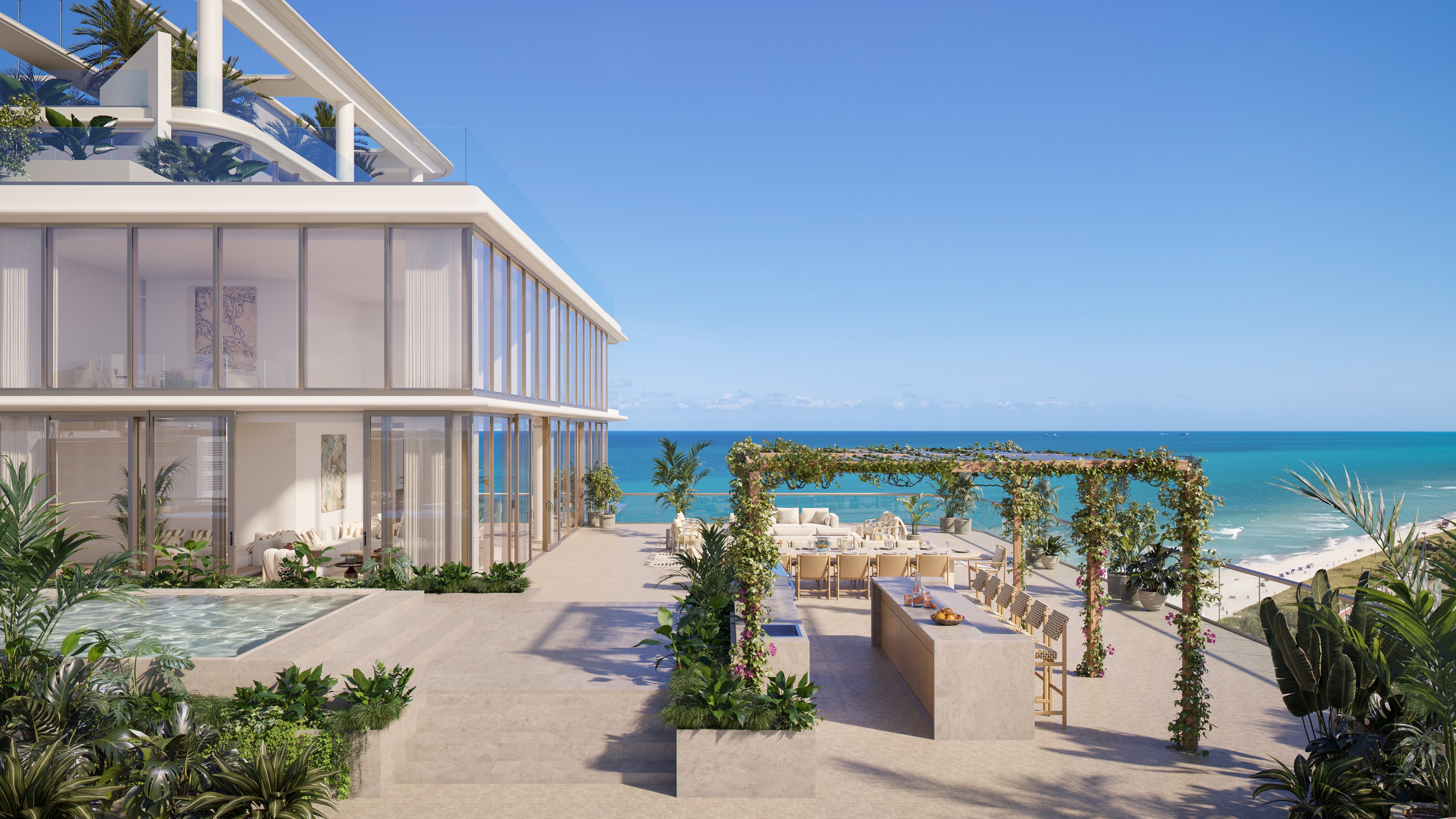
In Miami Beach’s top tier, the decision is rarely about a single feature. It’s about the operating model behind the address, the cadence of daily life, and how the building performs as an asset over decades. Oceanfront living adds another layer-wind load, salt exposure, coastal maintenance cycles, and the psychology of privacy when the beach is public but your home is not.
Against that backdrop, The Ritz-Carlton Residences® Miami Beach and The Perigon Miami Beach belong in the same rarefied conversation-yet they tend to attract different buyers. Both signal oceanfront stature and a Miami Beach lifestyle, but they often separate on emphasis: service culture versus design posture, heritage codes versus a more contemporary statement.
This MILLION Luxury editorial is intentionally buyer-oriented. Rather than leaning on marketing specifics that can shift, it focuses on the enduring questions that separate excellent from exceptional.
The central distinction is how lifestyle is actually delivered. With a Ritz-Carlton branded residential proposition, many buyers gravitate to the familiarity of hospitality-grade standards: staffing ethos, consistency of arrival, and the feeling that the day-to-day is quietly orchestrated. The value isn’t only what you see-it’s what you don’t have to manage.
Perigon, by contrast, tends to resonate with buyers who lead with design and architectural identity. The appeal is often a more intimate, curated oceanfront sanctuary where the building’s look, feel, and spatial decisions shape the daily experience. In ultra-premium inventory, design isn’t decoration; it’s governance. It dictates sightlines, noise behavior, corridor intimacy, elevator rhythm, and the emotional temperature of the home.
The practical takeaway: if you want your residence to read as an extension of a well-run resort mindset, the Ritz-Carlton narrative can align naturally. If you want your residence to present as a modern, design-led artifact on the Atlantic, Perigon may feel more intentional.
Oceanfront buildings on Miami Beach can be paradoxical: the most coveted views sit alongside the most public shoreline. The best-performing residences are the ones that resolve the human side of that tension.
When evaluating either building, treat privacy as a sequence-not a claim. Track how you enter from car to lobby, how you move from lobby to elevator, and how quickly you can shift from social to private. The ideal arrival feels protected without feeling theatrical.
For many ultra-high-net-worth households, privacy is also operational. How are deliveries handled? Where do service staff circulate? How is guest access managed on weekends when Miami Beach is at its liveliest? Even the most beautiful oceanfront terrace can lose value if internal circulation creates friction.
Buyers who keep a lower profile-or who hold multiple residences and want seamless in-and-out living-often prize a building’s ability to make routine feel invisible. That’s where a service-forward brand can excel. Buyers who entertain selectively and want the architecture itself to do the “editing” may prefer a quieter, more design-constrained environment.
In the current South Florida cycle, luxury finishes are widely available. What remains rare is composition: proportion, light behavior, ceiling geometry, and the way ocean and sky are framed from primary rooms.
As you compare The Ritz-Carlton Residences® Miami Beach against The Perigon Miami Beach, interrogate the fundamentals:
Does the living space feel like a gallery for the view, or simply a room with a view?
Are primary bedrooms positioned for true nighttime quiet?
How is glazing treated for heat gain, salt exposure, and long-term clarity?
Do terraces function as outdoor rooms, or read as appendages?
The best Miami Beach residences resolve these questions with restraint and precision. The right choice is the one whose spatial logic matches how you actually live: early mornings, late dinners, children in and out, or weeks of unbroken solitude.
Amenity lists are easy to inflate; lived experience is harder to counterfeit. Ultra-premium buyers should evaluate amenities the way they evaluate private clubs: by real usage patterns and by the quality of the default.
Ask which spaces you’ll use weekly, not annually. A well-considered fitness and wellness program, a serene pool environment with comfortable wind protection, and an owner-friendly beach setup often outperform novelty features.
If you’re comparing across Miami Beach, it can help to calibrate expectations by referencing other luxury standards in the neighborhood. For example, Setai Residences Miami Beach has long represented a benchmark for buyers who prioritize a hotel-adjacent lifestyle. For a different kind of Miami Beach proposition-one oriented toward newer neighborhood energy and park-adjacent living-Five Park Miami Beach can be a useful mental reference point for how modern amenities and programming are being positioned.
Amenities are also governance: rules, staffing, reservations, and the culture of shared space. Two buildings can offer “similar” amenities and still feel entirely different in how those spaces are managed, protected, and experienced.
Oceanfront ownership is a privilege, and it comes with a maintenance cadence that inland buyers sometimes underestimate. On the Atlantic edge, salt air, wind-driven moisture, and intense sun exposure heighten the importance of building-envelope decisions and ongoing capital planning.
Diligence here is less about perfect certainty and more about risk containment:
Building reserves and capital planning: how proactively the building anticipates lifecycle replacement.
Insurance posture: how the association budgets for a changing coastal insurance environment.
Mechanical systems and corrosion strategy: how the building protects critical infrastructure.
Window and balcony maintenance cycles: predictable costs over time.
In a market like Miami Beach, these variables can be as consequential as view orientation. Oceanfront buyers who treat the condo as a “care asset” tend to sleep better than those who focus only on the launch narrative.
Miami Beach isn’t a monolith. Even within Miami Beach, daily life changes meaningfully by micro-location: morning traffic patterns, the feel of the beach in front of you, your natural dinner radius, and how quickly you can get off the island when you need to.
Ask yourself what you want Miami Beach to be for you:
A primary residence where convenience and routine matter.
A second home where the residence must feel instantly restorative.
A part-time base where lock-and-leave ease is paramount.
If your broader lifestyle also includes other South Florida hubs, keep a comparative map in mind. Some buyers pair an oceanfront Miami Beach condo with a Brickell pied-à-terre such as 2200 Brickell for city access, while others prefer a North-of-Miami Beach alternative for a different texture of waterfront living.
Rather than forcing a single “winner,” the more precise approach is identifying which address aligns with your operating style.
Choose a Ritz-Carlton branded residential lifestyle when:
You value consistency, service culture, and an experience that feels managed.
You want an arrival and day-to-day that read effortless.
You prefer a luxury proposition that can feel familiar across global travel.
Choose a design-forward oceanfront proposition like Perigon when:
You prize architectural identity and a quieter sense of distinction.
You want your residence to feel curated, not generalized.
You are buying for aesthetic permanence and modern restraint.
In both cases, the best outcome comes from matching your personality to the building’s culture. The right home is the one that removes friction from your life.
In ultra-premium Miami Beach, timing and terms can matter as much as headline pricing. The goal isn’t simply “a deal,” but a clean alignment between your intended hold period and the building’s long-term character.
Consider:
Your sensitivity to construction timeline and delivery risk.
Your appetite for customization and interior involvement.
Your preference for immediate use versus patient, strategic entry.
The most sophisticated buyers approach oceanfront acquisitions like a portfolio decision with lifestyle upside. They buy what they intend to keep.
Is The Ritz-Carlton Residences® Miami Beach more lifestyle-driven than The Perigon Miami Beach? Often, yes. Many buyers associate Ritz-Carlton with a service-forward residential model.
Is The Perigon Miami Beach positioned as more design-led? It is commonly perceived that way. Many buyers are drawn to a more contemporary, curated identity.
What should I prioritize first: view, layout, or building operations? Start with layout and operations, then refine by view. A perfect view can’t fix daily friction.
Are oceanfront condos harder to maintain than bayfront condos? Typically, yes. Salt exposure and wind-driven moisture increase envelope and maintenance demands.
Does “Oceanfront” always mean better resale? Not automatically. Long-term desirability also depends on privacy, operations, and building culture.
How important is the arrival sequence in Miami Beach luxury buildings? Very. Privacy is experienced through the path from car to residence, not through marketing language.
Should I expect higher insurance and reserve considerations on the ocean? It is prudent to plan for that. Coastal conditions can increase the importance of capital planning.
Is a branded residence always a better choice for a second-home buyer? Not always. Branded service can be ideal for lock-and-leave, but some buyers prefer quieter design.
Can I compare these homes to other Miami Beach benchmarks quickly? Yes. Reviewing established luxury standards like Setai and newer offerings helps calibrate fit.
What is the simplest way to decide between these two projects? Choose the building whose culture matches your life: managed ease versus design-driven quiet.
If you'd like a private walkthrough and a curated shortlist, connect with MILLION Luxury.
If branded residences are on your mind — as a home or as an allocation — we would be glad to share what we are seeing, privately.
Begin a quiet conversation