A buyer-focused analysis of Faena Residences Miami Downtown Miami, examining resale positioning through brand equity, Downtown Miami maturity, and the depth of global and domestic luxury demand.

Faena Residences Miami Downtown Miami should be read less as a conventional condominium launch than as a test of how brand, lifestyle, and urban location can compound over time. The project sits in Downtown Miami, a district whose luxury identity is still maturing, but whose long-term appeal is being reshaped by residential, cultural, dining, and waterfront demand drivers.
That distinction matters for resale. A building can sell well at launch because of scarcity, marketing, or market momentum. Long-term resale strength is different. It requires buyer recognition after the first cycle, confidence in operations, durable building identity, and a buyer pool broad enough to support liquidity when owners eventually decide to exit.
For Faena Residences Miami Downtown Miami, the clearest thesis is brand-led. If the tower delivers the lifestyle, design identity, service standards, and social signaling associated with the Faena name, it may be positioned to command a premium over non-branded Downtown condominium peers. That premium is not automatic. It must be earned through execution and protected through governance.
The long-term resale case is best viewed through three lenses: Faena brand equity, Downtown Miami’s luxury-market maturity, and the performance of Branded Residences across South Florida.
Brand equity is the first filter because ultra-luxury buyers are not simply purchasing square footage. They are purchasing certainty, image, hospitality language, and a curated way of living. Faena’s differentiation depends on whether the name remains meaningful inside the building after the initial sales campaign has passed.
The second lens is Downtown Miami itself. The district has been moving from a primarily commercial core toward a more complete mixed-use environment. For a resale buyer, that evolution matters. A home in the urban core becomes easier to underwrite when the surrounding neighborhood supports daily life, entertainment, dining, waterfront access, and cultural energy.
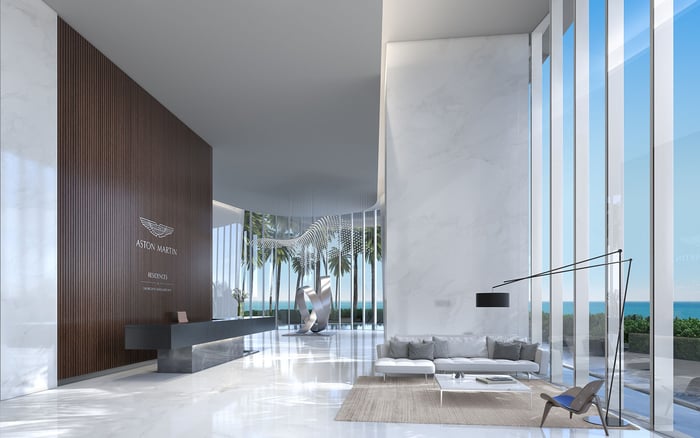
The third lens is the broader branded-residence landscape. Downtown buyers will inevitably compare Faena with other recognizable luxury propositions, including Aston Martin Residences Downtown Miami and Waldorf Astoria Residences Downtown Miami. The question is not only which tower is most visible at launch. It is which one maintains the clearest identity across multiple market cycles.
The most disciplined way to view Pricing & Trends for Faena is to separate potential from proof. The project may have the ingredients for premium resale positioning, but long-term market performance will depend on how buyers perceive the building once it is lived in, maintained, and compared with the next wave of luxury supply.
The core resale thesis is straightforward: a well-executed Faena-branded tower can justify a premium over non-branded Downtown Miami condominium peers. Branded residences compete on more than location and floor plan. They also compete on service culture, design language, atmosphere, and social relevance.
Still, premium pricing requires discipline. Buyers paying a brand premium will expect the building to feel distinct, not generic. They will look for consistency in operations, a high standard of maintenance, and a sense that the brand remains present in the everyday ownership experience. If those qualities weaken, resale pricing can become more dependent on conventional metrics such as views, interior condition, carrying costs, and available competing inventory.
Buyer depth is likely to be one of Faena’s most important long-term advantages, provided the building resonates with more than one audience. The relevant pool is expected to include Latin American capital, Northeastern U.S. wealth, European buyers, and domestic finance and technology executives seeking Miami exposure.
That mix matters because liquidity in the luxury market improves when demand does not depend on a single geography or buyer type. A project with only local appeal can perform well in a tight market, but may face thinner demand during slower cycles. A branded Miami address with international recognition has a broader base from which to draw attention, especially if buyers view it as part of a lifestyle ecosystem rather than a typical luxury condominium.
This is where Downtown Miami’s position becomes nuanced. Brickell has long attracted a finance-oriented luxury buyer, with projects such as Baccarat Residences Brickell reinforcing the branded-residence conversation just south of the urban core. Faena’s opportunity is to give Downtown a distinct, culturally charged luxury identity that does not simply mimic Brickell or Miami Beach.
Resale durability is often discussed in terms of views, finishes, and floor height. Those will matter, especially for scarce high-floor, view-oriented, larger-format, or otherwise differentiated residences that remain difficult to replicate in future supply cycles. For Faena, however, the deeper question is operational consistency.
The strongest resale advantage would come from pairing recognizable Faena design and programming with service standards that remain consistent over multiple ownership periods. Governance also matters. A building’s association, maintenance discipline, reserve planning, and ability to protect brand integrity can become as important as its original design narrative.
This is particularly true in a market with growing branded supply. Buyers will compare Faena not only with Downtown towers, but also with lifestyle-led projects in adjacent luxury corridors. A buyer considering urban Miami may also study Brickell hospitality names such as Cipriani Residences Brickell or design-forward Downtown peers such as Casa Bella by B&B Italia Downtown Miami. Faena’s resale edge will depend on whether its identity feels more singular, more complete, and more emotionally resonant.
From an Investment perspective, Faena should be framed as a brand-led Downtown Miami hold rather than a short-term resale play. The buyer most aligned with the thesis is likely someone who values long-term positioning, lifestyle utility, and the possibility of premium liquidity if the building becomes one of Downtown’s reference addresses.
The better resale outcomes are likely to cluster around residences that are naturally scarce. High-floor homes, view-oriented layouts, larger-format residences, and differentiated floor plans tend to carry clearer resale narratives because they are harder for later projects to replicate. In a more competitive future market, that scarcity can become a powerful signal.
The principal risks are equally important. Competing branded-residence supply could dilute buyer attention. Rising ownership costs may affect carrying-cost sensitivity. Insurance pressure, climate exposure, and shifts in international capital flows can all influence buyer depth. None of these risks eliminates the Faena thesis, but each argues for selectivity, patience, and a clear understanding of total ownership economics.
The most important question is whether Faena maintains a clear identity inside Downtown Miami’s growing luxury pipeline. In a crowded market, the buildings that hold value best are often those buyers can describe instantly. They are not merely expensive. They are legible.
For Faena, that legibility should come from the relationship between brand, place, and daily experience. If owners and future buyers perceive the project as a complete lifestyle environment, with service, design, and programming reinforcing one another, the resale case becomes more durable. If it is perceived as just another luxury tower with a famous name, the premium may be more vulnerable.
The long-term buyer should therefore evaluate not only the residence, but the building culture. How will the brand be expressed after move-in? How will service standards be protected? How will governance preserve the experience? In the ultra-premium market, these are not soft questions. They are value questions.
Is Faena Residences Miami Downtown Miami a resale-driven purchase? It is better viewed as a long-term brand-led hold. The resale thesis depends on execution, buyer perception, and Downtown Miami’s continued luxury maturation.
What is the main resale advantage? The principal advantage is the Faena name, if paired with strong design identity, service culture, programming, and consistent operations.
Can Faena command a premium over non-branded Downtown condos? It may, but only if the building delivers a clearly differentiated ownership experience that buyers continue to value over time.
Who is the likely buyer pool? Likely buyers include Latin American capital, Northeastern U.S. wealth, European buyers, and domestic finance and technology executives seeking Miami exposure.
Why does Downtown Miami matter to resale? Downtown Miami’s shift toward a mixed-use residential, cultural, dining, and waterfront district supports a deeper long-term buyer base.
Which residences may have the strongest resale positioning? Scarce high-floor, view-oriented, larger-format, or otherwise differentiated homes should have the clearest long-term resale narrative.
What are the biggest resale risks? Key risks include competing branded supply, rising ownership costs, insurance pressure, climate exposure, and shifting international capital flows.
Is branded-residence demand guaranteed? No. Branded Residences perform best when the brand is actively supported by service, identity, maintenance, and governance.
How should buyers compare Faena with other towers? Buyers should compare brand clarity, operational standards, location trajectory, carrying costs, and how difficult the chosen residence would be to replicate.
Is this more lifestyle purchase or financial purchase? It is both, but the strongest case is lifestyle-led ownership with potential long-term resale strength if execution remains disciplined.
When you're ready to tour or underwrite the options, connect with MILLION.
If branded residences are on your mind — as a home or as an allocation — we would be glad to share what we are seeing, privately.
Begin a quiet conversation