A buyer-focused guide to the property-tax reassessment questions that matter before purchasing at Villa Miami, from just value and homestead timing to millage, special assessments, proration, and appeal windows.
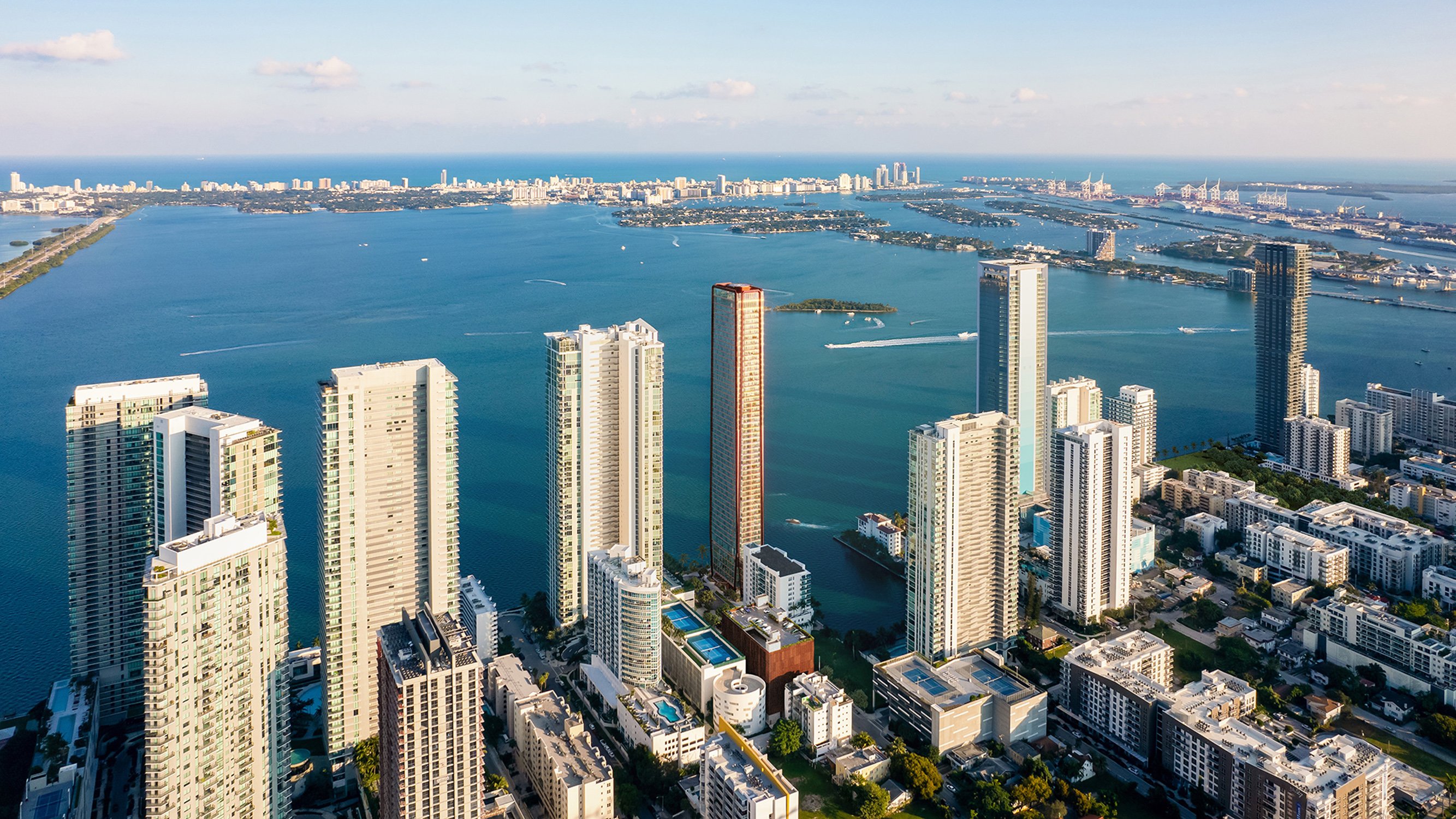
For many luxury buyers, property tax enters the conversation too late, after finishes, view lines, amenity access, and closing mechanics have already taken priority. At Villa Miami, that order deserves to be reversed. The better question is not simply what the taxes are today. It is what they may become after the residence is separately assessed, ownership changes, exemptions are applied or denied, millage is set, and any non-ad valorem charges appear on the bill.
Villa Miami is listed as an Edgewater, Miami condominium project. That makes the exact taxing location, folio creation, and parcel history especially important once individual condominium parcels exist. Until then, estimates may rest on assumptions rather than the actual assessed profile of a completed residence. A polished tax projection can be useful, but it should never be treated as a guarantee.
For Buyer's Guides readers comparing new-construction residences along the bay, this is one of the quieter carrying-cost questions that can materially change ownership planning. It matters for primary residents, second-home buyers, foreign purchasers, and investment owners alike.
Florida real property is generally assessed at just value. In practice, a buyer should not assume the developer's land basis, a prior parcel assessment, or a seller's protected taxable value will carry over after purchase. A change in ownership can reset the assessment framework, and the property appraiser has a broader valuation mandate than simply copying the contract price.
Before signing, ask directly: is the tax estimate based on the contract purchase price, a projected just value, or an older assessment of the development site? Each answer creates a different risk profile. A contract-price model may be conservative in one scenario and incomplete in another. A site-assessment model may understate the future tax burden once the building is completed and individual residences are recognized.
This is not unique to Villa Miami. Buyers studying nearby Edgewater inventory such as Aria Reserve Miami or EDITION Edgewater should make the same distinction: current parcel history is not the same as the assessed value of a completed, separately owned condominium residence.
Florida real property is assessed as of January 1 each year. That date can make closing timing more important than buyers expect. A residence that closes after a key assessment date may not produce a fully informative post-closing tax bill until a later cycle. Conversely, a completion or ownership change near the start of the year can bring reassessment planning to the front of the cash-flow schedule.
Ask your closing team to explain which tax year is being prorated, what assumptions are being used for escrow, and when the first meaningful bill reflecting your ownership may arrive. Florida property taxes are generally due beginning November 1 and become delinquent April 1. That timing affects liquidity, especially for buyers who prefer to manage carrying costs outside a lender escrow structure.
A careful buyer should also ask how the closing statement handles prorations if the prior bill relates to an undeveloped or differently assessed parcel. The number on the settlement statement may be accurate for proration purposes yet still offer little guidance on future carrying cost.
Florida's homestead exemption can reduce taxable value for qualifying permanent residences, but eligibility depends on the legal use of the property as a permanent residence. A buyer who intends to live at Villa Miami full time should ask early whether the facts support a lawful homestead claim and whether the filing timeline can be met.
Homestead applications are generally due by March 1. Missing that window can affect the first year in which benefits are available. Once a homestead exemption is in place, the Save Our Homes cap generally limits annual assessed-value increases to the lesser of 3 percent or the CPI. That cap can become highly valuable over time, but it is not automatic before qualification.
Relocating Florida homeowners should also ask whether any Save Our Homes benefit can be ported to a new homestead. Portability is technical, and the amount that can transfer depends on the owner's circumstances. It belongs in the same conversation as residency, estate planning, financing, and the intended use of the residence.
Not every Villa Miami purchaser will be a permanent Florida resident. For second-home owners, investors, and foreign buyers, non-homestead treatment may be the more relevant scenario. Non-homestead residential property in Florida is generally subject to a 10 percent annual assessment-increase cap, but that cap does not apply to school district taxes. In addition, a non-homestead residence is generally reassessed at just value after a change of ownership or control.
That means the long-term ownership model should include more than one version of the tax bill. Ask for a homestead scenario, a non-homestead scenario, and a higher-assessment sensitivity case. If the residence is part of a broader investment strategy, this modeling should sit beside association dues, insurance, reserves, financing costs, and expected holding period.
Buyers comparing urban luxury product across Miami, including The Residences at 1428 Brickell, should be careful not to compare projected taxes without checking whether the assumptions are identical. Different municipalities, millage rates, exemptions, and special assessments can make two similarly priced residences carry differently.
Once value is estimated, the next question is millage. Ask which taxing authorities will apply to the Villa Miami residence. County, municipal, school, and special-district levies can all affect the final amount. A buyer who focuses only on assessed value may miss the other half of the equation.
Then ask whether any non-ad valorem assessments or special assessments may appear on the tax bill. These charges are not ordinary value-based property taxes, but they can still affect the total amount due. They may relate to services, districts, or other local obligations. The right question is simple: what charges could appear on the bill in addition to ad valorem property tax?
For buyers who prefer precision, request a side-by-side estimate showing assessed value, taxable value, exemptions, applicable millage, school taxes, and non-ad valorem items as separate lines. The exercise often reveals where the uncertainty actually sits.
Before contract, review the current property record for the development parcel and comparable nearby condominium properties. Look at assessed values, taxable values, exemptions, and tax history. Comparable properties will not create a guarantee, but they can help frame the discussion.
Before closing, ask for an updated tax estimate, a written explanation of assumptions, and a calendar of key dates. Include the January 1 assessment date, the March 1 homestead filing deadline if relevant, the expected tax-bill cycle, and the appeal window after the notice of proposed taxes. If the assessed value later appears wrong, taxpayers generally have a limited period to petition the Value Adjustment Board.
A luxury purchase deserves this discipline. At the top of the market, a tax variance is not merely an accounting footnote. It is part of the property's annual ownership architecture.
Will Villa Miami taxes be based on the developer's current parcel bill? Not necessarily. Once individual condominium parcels are created and ownership changes, the relevant assessed value may differ materially from the prior parcel history.
What is the most important property-tax question to ask before buying? Ask what assessed-value assumption is being used. The estimate should clarify whether it relies on contract price, projected just value, or an older site assessment.
Why does January 1 matter? Florida property is assessed as of January 1 each year. Closing and completion timing can affect when the first meaningful post-closing tax bill appears.
Can homestead exemption reduce my Villa Miami taxes? It may reduce taxable value if the residence qualifies as your permanent home. Eligibility and filing timing should be reviewed before closing.
When is the homestead application generally due? The general deadline is March 1. Buyers planning Florida residency should calendar it early and confirm what documentation is required.
What is the Save Our Homes cap? After homestead is in place, annual assessed-value increases are generally capped at the lesser of 3 percent or CPI. A purchase can still trigger reassessment to just value.
Do non-homestead owners receive a cap? Non-homestead residential property generally has a 10 percent annual assessment cap. That cap does not apply to school district taxes and may reset after ownership change.
Should second-home buyers model taxes differently? Yes. A second-home buyer should model non-homestead treatment, reassessment after purchase, millage, and school taxes separately from any homestead scenario.
Can special assessments appear on the tax bill? Yes. Non-ad valorem or special assessments may appear in addition to ordinary value-based property taxes, so buyers should ask about them specifically.
What if the assessed value seems too high? There is generally a limited window after the proposed tax notice to file a petition. Calendar the deadline and consult a qualified tax professional promptly.
For a tailored shortlist and next-step guidance, connect with MILLION.
If branded residences are on your mind — as a home or as an allocation — we would be glad to share what we are seeing, privately.
Begin a quiet conversation