A discreet buyer’s guide to reading service staffing ratios in branded residences, with emphasis on staffing quality, amenity complexity, shift coverage, and owner lifestyle fit.

In South Florida’s branded residence market, architecture and amenities often create the first impression. Service determines whether the building continues to feel composed after move-in. For buyers comparing Brickell towers, oceanfront addresses, private island enclaves, and resort-style coastal residences, staffing ratios offer one of the clearest ways to understand day-to-day livability.
A staffing ratio is not simply a headcount divided by the number of homes. It is a portrait of how a building intends to operate. A residence with a modest amenity program may feel exceptionally polished with a lean, well-trained team. A larger property with multiple pools, wellness areas, food and beverage venues, valet, beach service, marina touchpoints, and private event spaces may require a deeper operational bench to deliver the same sense of ease.
The mistake is treating the ratio as a standalone bragging point. The more refined question is: who is on property, when are they present, what are they trained to do, and how does that staffing model support privacy, response time, security, and the standards promised by the brand?
When reviewing staffing, ask for the full-time equivalent, often discussed as FTE, rather than a loose headcount. A property may reference a large team, but the actual service experience depends on how many people are scheduled across days, evenings, weekends, holidays, and peak occupancy periods.
Full-time equivalent staffing helps normalize comparisons. A building with numerous part-time positions may appear heavily staffed on paper, while another with fewer but more consistently scheduled personnel may provide stronger continuity. In luxury residential service, continuity matters because familiarity is part of the product. Owners value being recognized, remembered, and served without repeatedly explaining preferences.
For a buyer comparing branded residences such as St. Regis® Residences Brickell or Baccarat Residences Brickell, the staffing conversation should extend beyond the front desk. Ask how the team is allocated across concierge, valet, security, housekeeping of common areas, engineering, management, lifestyle programming, and amenity operations. A glamorous lobby experience is only one layer of the service ecosystem.
The most visible staff are usually concierge, valet, doormen, lobby hosts, and attendants. They shape arrival, recognition, and first impressions. Yet the quality of a branded residence often depends just as much on less visible roles: engineers who keep systems quiet and reliable, housekeeping teams that maintain spa-level common spaces, managers who coordinate vendors, and security personnel who preserve discretion.
A building can feel well staffed at the entrance and still be stretched behind the scenes. Conversely, a residence with excellent engineering and management may function beautifully even when the public-facing team is understated. The balance matters. Ultra-luxury buyers should ask whether staffing has been designed as hospitality theater or as a complete residential operating platform.
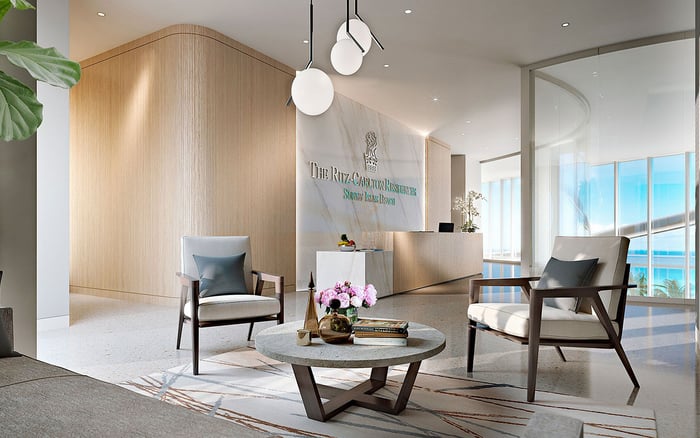
For coastal residences, the distinction becomes even more important. Properties such as The Ritz-Carlton Residences® Sunny Isles may be evaluated not only by lobby service, but also by how the staffing structure supports amenity upkeep, arrival flow, privacy, and the demands of a high-expectation beachfront lifestyle.
A staffing ratio that looks generous in one building may be inadequate in another. The difference is often amenity complexity. A residence with a simple pool, fitness room, and attended lobby carries a different operational burden than a property with wellness suites, food and beverage programming, private dining, beach or marina access, children’s areas, pet services, guest suites, and event spaces.
Buyers should ask how each amenity is staffed. Is the spa merely an amenity room, or does it require trained attendants? Is the pool self-service, or supported by towel, seating, and food coordination? Is valet limited to arrivals and departures, or does it also manage package flow, guest movement, and private transport coordination? Are lifestyle events handled by an in-house team or by outside vendors?
The more complex the amenity menu, the more important it becomes to understand staffing by function. A single blended ratio can obscure pressure points. A building may have a strong concierge team but limited wellness staffing. Another may excel in security and engineering while relying more lightly on lifestyle programming. Neither approach is inherently better, but the fit should match how the owner expects to live.
South Florida ownership patterns are varied. Some residences serve as primary homes, others as seasonal retreats, and others as part of a broader global portfolio. Staffing must be evaluated against actual use. A building that feels serene in the off-season can feel strained when many owners arrive simultaneously for holidays, cultural events, school breaks, or peak winter weeks.
Ask how staffing adapts during high-demand periods. Does the building add coverage when occupancy rises? Are valet and concierge teams reinforced when arrivals cluster? Are amenity spaces monitored more closely as guest volume increases? A luxury service model should not depend on ideal conditions. It should remain graceful when the building is active.
This is especially relevant in resort-oriented settings such as Fort Lauderdale, Boca Raton, and waterfront Miami neighborhoods. At Four Seasons Hotel & Private Residences Fort Lauderdale, buyers naturally consider the relationship between branded hospitality expectations and residential calm. The staffing question is how that expectation translates into everyday ownership, not merely how it appears in presentation materials.
A staffing ratio is a structural measure. Response time is the lived experience. Buyers should ask how requests are received, prioritized, tracked, and completed. A well-run residence will have clear channels for service requests, transparent responsibility between departments, and management oversight that prevents small issues from becoming recurring frustrations.
Consider the difference between availability and effectiveness. A concierge desk may be staffed around the clock, yet the real test is whether the team can coordinate a vendor, arrange a last-minute arrival, manage a delivery, or address a residence issue without confusion. Similarly, valet staffing is not only about how many attendants are present. It is about choreography during peak arrival windows.
The most sophisticated branded residences make service feel unforced. Owners should not feel the machinery. They should experience a building that anticipates likely needs, resolves ordinary issues quietly, and escalates unusual requests with judgment.
Staffing is one of the defining components of the ownership experience, and it is also a meaningful component of ongoing building operations. A higher staffing level may support richer service, but buyers should understand how that service is reflected in maintenance, association budgets, and long-term financial planning.
The right question is not whether staffing is expensive. In the ultra-premium category, service is part of the value proposition. The better question is whether the staffing plan is coherent, sustainable, and aligned with the building’s brand promise. A residence that underfunds service may disappoint owners. A residence that overbuilds service without clear purpose may create inefficiency.
Buyers considering projects such as The Residences at Mandarin Oriental Boca Raton should evaluate staffing as part of the complete ownership equation: brand standards, amenity programming, privacy, operating culture, and the level of personal recognition expected by residents.
A polished sales presentation should lead to a practical conversation. Ask for the projected staffing structure by department. Ask which roles are on-site, which are shared, and which are provided through outside vendors. Ask about overnight coverage, holiday staffing, emergency protocols, and the role of the property manager. Ask how the brand trains or oversees the residential team after opening.
Also ask how service standards are maintained as the building matures. New residences often open with intense attention. The true measure is whether service remains consistent after the first year, after the initial sellout energy fades, and as the owner community develops its own rhythm.
The best answer is rarely the largest number. It is a staffing model that matches the building’s scale, amenities, owner profile, and location. In South Florida, where buyers may compare urban Brickell, oceanfront Sunny Isles, Fort Lauderdale resort living, and Boca Raton refinement, that alignment separates a pleasant building from a true residential hospitality experience.
What is a staffing ratio in a branded residence? It is a way to compare the size of the service team with the number of residences, but it should be read alongside scheduling, departments, and amenity demands.
Is a higher staffing ratio always better? Not always. A thoughtful, well-trained team can outperform a larger team when roles, coverage, and management are stronger.
What does FTE mean in this context? FTE means full-time equivalent, a more useful measure than a simple headcount because it reflects actual staffing capacity.
Which departments should buyers review? Review concierge, valet, security, housekeeping, engineering, management, lifestyle programming, and amenity operations.
Why does amenity complexity affect staffing? More complex amenities require more coordination, upkeep, training, and supervision to feel seamless.
Should seasonal occupancy affect staffing? Yes. A luxury building should have a plan for periods when more owners and guests are in residence.
How does staffing affect privacy? Proper staffing can reduce friction, manage guest movement, and protect discretion without making service feel intrusive.
Are branded residences staffed like hotels? Some borrow from hospitality, but the best residential models adapt service to long-term ownership and privacy.
How should staffing be compared between neighborhoods? Compare the staffing model to the lifestyle of the location, whether urban, beachfront, marina-oriented, or resort-driven.
What is the most important question to ask? Ask whether the staffing plan is sustainable, well managed, and aligned with the service promise being sold.
To compare the best-fit options with clarity, connect with MILLION.
If branded residences are on your mind — as a home or as an allocation — we would be glad to share what we are seeing, privately.
Begin a quiet conversation