A buyer-focused framework for evaluating arrival privacy in South Florida luxury residences, from curb approach and valet choreography to lobby sight lines and elevator discretion.
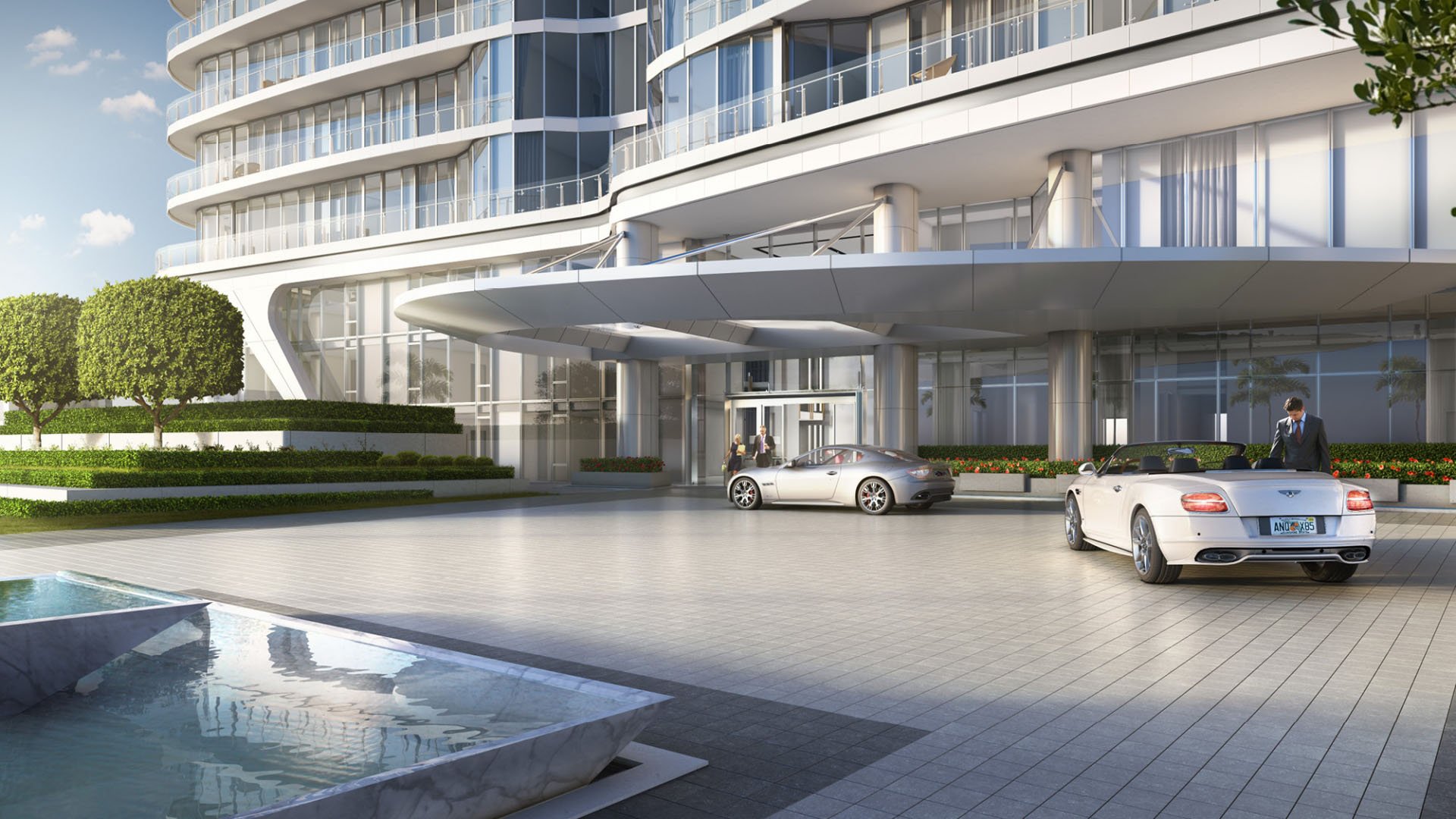
In Palm Beach, Brickell, and Miami Beach, privacy is no longer judged only by what happens behind the residence door. It begins when a resident turns off the street, enters a drive, steps from a car, and crosses the threshold into the building. For ultra-premium buyers, that first sequence can reveal more about a property than any brochure.
The arrival privacy test is a practical lens, not a slogan. It asks whether a building allows residents to arrive without feeling observed, delayed, announced, or processed. A grand lobby may photograph beautifully, but a truly private arrival is measured by controlled sight lines, calm staff choreography, protected vehicle movement, and the absence of social friction. The best buildings make the transition from public city to private residence feel seamless.
This is especially relevant in South Florida, where the climate encourages open-air thresholds, valet-forward living, waterfront access, and hospitality-style amenity programming. A property may be architecturally impressive and still feel exposed if the curb, lobby, garage, elevator bank, and service paths are not thoughtfully composed.
A discreet arrival begins with the approach. Buyers should notice whether the building gives cars enough room to slow, pause, and unload without turning the moment into a public performance. A compressed driveway, a highly visible valet queue, or a tight curbside handoff can make even a prestigious address feel less private than expected.
The second element is sight-line control. From the moment the door opens, who can see the resident? Street pedestrians, restaurant guests, other residents, delivery staff, lobby visitors, and beach traffic all matter. Privacy is not simply about access control. It is also about how visibility is edited.
The third element is staff choreography. In the best buildings, doormen, valet attendants, concierge teams, and security personnel appear attentive without creating ceremony. For many buyers, discretion means being recognized without being announced.
The fourth element is vertical movement. The route from arrival to elevator should feel direct, calm, and protected. Shared elevator lobbies can be elegant, but buyers should consider whether residents, guests, service personnel, and amenity users converge too visibly.
The fifth element is repeatability. A building may feel private at 11 a.m. on a weekday and entirely different during dinner service, a holiday weekend, school pickup hours, or a stormy afternoon. The real test is whether the arrival holds its composure when the building is active.
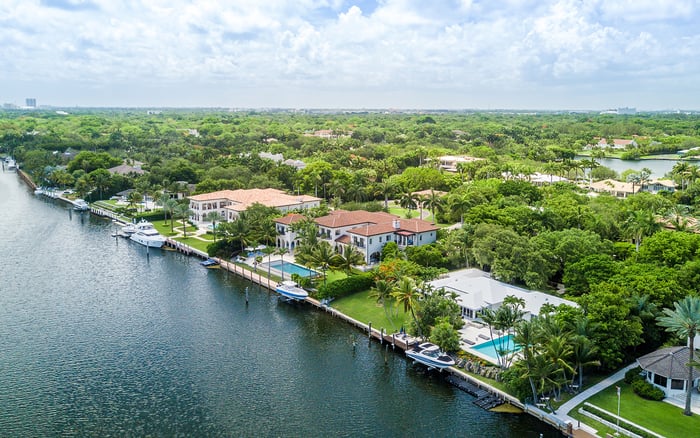
Palm Beach privacy is often about understatement. The ideal arrival does not need to impress from the street. It needs to reduce exposure, shorten transitions, and keep daily life away from public view. For buyers considering Palm Beach Residences, the important question is not only how the entrance looks, but how naturally it separates residents from casual observation.
In this market, the privacy premium is closely tied to pace. A strong Palm Beach arrival should feel unhurried without feeling slow. There should be room for luggage, guests, pets, and staff interaction without making the resident feel as if they are occupying a stage. The most refined buildings create a sequence that feels residential first and ceremonial second.
Buyers should also consider how service circulation is handled. Deliveries, maintenance, moving activity, and staff movement should not compete with the resident arrival path. When those flows overlap, privacy becomes dependent on timing. When they are separated, privacy becomes part of the architecture.
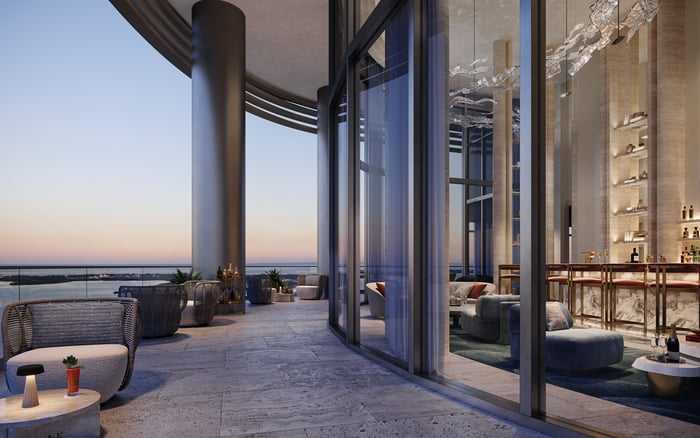
Brickell presents a different challenge. The neighborhood’s energy is part of its appeal, but that intensity places pressure on arrival design. A resident may move from traffic, valet activity, ride-share movement, restaurant activity, and tower lobbies into a private home within minutes. The test is whether the building can absorb that urban energy without transferring it into the residential experience.
At The Residences at 1428 Brickell, a buyer’s arrival review should focus on how the public-to-private transition is composed. Does the entry feel protected from the street? Are guest and resident paths intuitively distinguished? Is the elevator journey calm, or does it feel like an extension of the district’s pace?
Similarly, a tour of St. Regis® Residences Brickell should include more than residence views and amenity finishes. The buyer should observe the handoff between car, staff, lobby, and elevator. In a hospitality-influenced market, service quality matters, but privacy depends on whether that service is precise rather than performative.
Brickell buyers should visit more than once if possible. Morning departures, evening returns, and weekend guest activity can each reveal different pressure points. The strongest buildings preserve a sense of private rhythm even when the surrounding district is fully awake.
Miami Beach has its own arrival paradox. The best addresses often sit near the very qualities that make privacy more difficult: beach access, resort activity, dining, nightlife, pedestrian movement, and visiting guests. For this reason, arrival privacy in Miami Beach is not about isolation alone. It is about controlled permeability.
At The Perigon Miami Beach, buyers should ask how the building balances residential calm with the sensory character of the beach. A beautiful oceanfront setting can still require careful control of guest flow, service routes, and amenity movement.
The same lens applies at The Ritz-Carlton Residences® Miami Beach, where the arrival experience should be considered as part of the broader residential promise. The key issue is not whether the building feels luxurious, but whether it lets owners come and go without unnecessary exposure.
Miami Beach buyers should pay close attention to secondary entries, parking access, and how beach-bound movement is managed. A private residence can feel less private if residents must consistently cross the paths of visitors, vendors, or amenity guests. The most successful buildings let the beach feel immediate without making the owner feel visible.
The best arrival evaluation happens slowly. Pause before entering. Watch where cars stop, where staff stand, where guests wait, and where sight lines open. Notice whether the entrance frames residents or protects them. Ask yourself whether you would feel comfortable arriving after a long flight, after a formal dinner, with family, or with no interest in conversation.
Inside, observe the lobby’s social temperature. Some buyers want a club-like atmosphere. Others want the lobby to function as a quiet passage. Neither preference is wrong, but the building should align with the owner’s lifestyle. Privacy is personal, and a mismatch becomes more noticeable over time.
Finally, follow the route to the elevator with attention to interruptions. Doors, turns, reception points, seating areas, and corridor widths all influence the degree of exposure. A short path is not always the most private path. The better path is the one that feels intentional.
Arrival privacy is ultimately about control. The resident controls when to be social, when to be unseen, when to host, and when to retreat. In Palm Beach, that control may feel like quiet sequencing. In Brickell, it may feel like insulation from urban momentum. In Miami Beach, it may feel like graceful separation between residential life and resort energy.
For buyers at the highest end of the market, finishes can be upgraded, furniture can be replaced, and views can be styled around. Arrival privacy is more permanent. It is embedded in the site plan, the circulation, the staffing model, and the building culture. That is why the first five minutes of a tour may be among the most revealing.
What is the arrival privacy test? It is a buyer’s way to evaluate how discreetly a building handles the route from street or garage to residence.
Why does arrival privacy matter in luxury real estate? It affects daily comfort, personal security, social exposure, and the overall feeling of control at home.
Is a private elevator enough? Not always. The approach, lobby, staff flow, and garage experience can matter just as much.
What should Palm Beach buyers prioritize? Look for quiet sequencing, protected transitions, and limited overlap between resident and service movement.
What should Brickell buyers watch most closely? Study how the building manages valet activity, lobby visibility, and vertical movement during busy hours.
What makes Miami Beach different? Beach access, hospitality energy, and guest flow can make arrival planning especially important.
Should buyers tour at different times of day? Yes. A building’s privacy can feel different during peak arrivals, weekends, and quieter weekday periods.
Does a dramatic lobby reduce privacy? Not necessarily. It depends on whether the lobby is designed for observation or for discreet passage.
Can staff improve arrival privacy? Yes. Well-trained staff can create recognition, access control, and calm without making residents feel displayed.
What is the simplest sign of a strong private arrival? The resident moves from car to home with little friction, few interruptions, and no feeling of being watched.
To compare the best-fit options with clarity, connect with MILLION.
If branded residences are on your mind — as a home or as an allocation — we would be glad to share what we are seeing, privately.
Begin a quiet conversation