A discreet look at why some ultra-prime South Florida buyers choose quieter buildings, private arrivals, and restrained prestige over maximum visibility.
In South Florida luxury real estate, visibility has long carried its own currency. A skyline silhouette, a famous address, a branded porte cochere, a lobby with the atmosphere of a members club: these cues can validate a purchase before anyone steps inside the residence. Yet for a certain tier of buyer, the most valuable amenity is not the one that announces itself. It is the one that prevents the owner from being announced.
That is the discretion premium. It is not anti-luxury, nor is it modesty in the conventional sense. It is a more calibrated expression of power, one that prizes privacy, sequence, security, and social control. For some buyers, the loudest trophy building is ideal. For others, that same visibility becomes friction. The arrival is too exposed, the lobby too social, the brand too legible, the building too frequently discussed. At the top of the market, the question is no longer only, “What will this address say about me?” It is also, “Who will know I am here?”
A trophy building can deliver prestige, architecture, service, and instant recognizability. Those qualities are real, and many buyers seek them. But recognizability has a dual nature. The more a building becomes shorthand for status, the more it can attract attention from guests, vendors, neighbors, curious observers, and social circles that treat the address itself as information.
The most discreet buyers often separate prestige from exposure. They may still want design pedigree, water views, private outdoor space, and refined service, but they want those elements without the daily performance of being seen. In practical terms, they study the choreography of a building: how one arrives, who can observe the arrival, how elevators are managed, whether common areas feel calm, and whether the resident experience is intimate or theatrical.
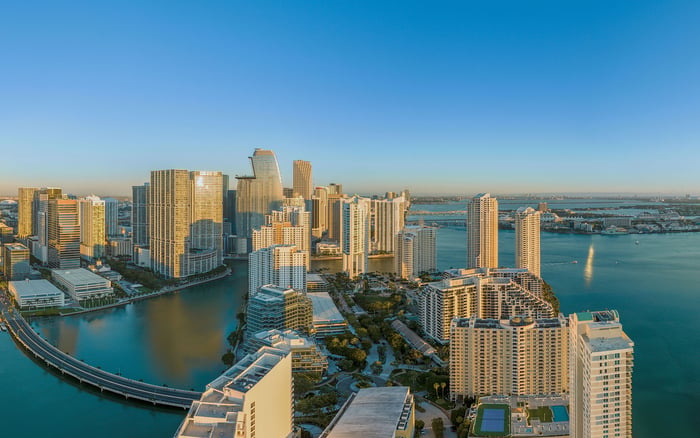
This is why the same buyer may admire the architectural confidence of The Residences at 1428 Brickell while also weighing whether Brickell’s energy aligns with the rhythm of private life. The issue is not whether a market is prestigious. It is whether the building’s daily tempo matches the owner’s need for control.
For ultra-prime buyers, control is a form of luxury. Control over access. Control over social overlap. Control over the path from car to residence. Control over whether a home feels like a stage or a sanctuary.
That preference often favors smaller resident populations, fewer shared touchpoints, and settings where the architecture does not need to shout. Boutique is not automatically better, but it can be more compatible with a life involving family offices, prominent guests, security teams, confidential meetings, and a desire to keep domestic life separate from public identity. Boutique residences can also reduce the psychological weight of constant encounter, which matters more than many floor plans admit.
In Surfside, for example, a buyer considering The Delmore Surfside may be responding not only to place, but to the idea that coastal luxury can feel composed rather than performative. Nearby conversations around The Perigon Miami Beach show the same distinction: buyers are not simply choosing oceanfront presence, they are choosing how that presence is experienced.
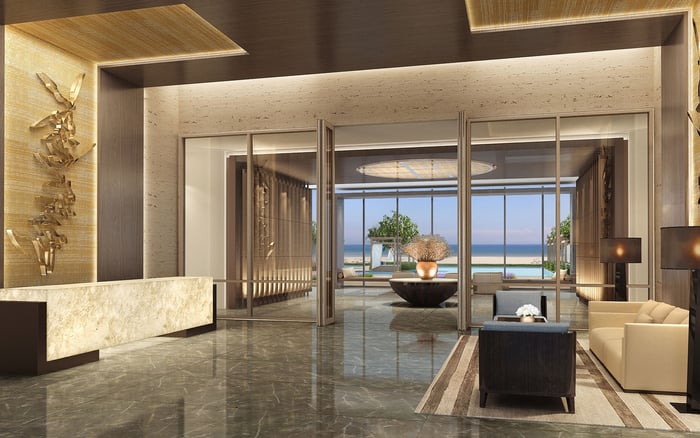
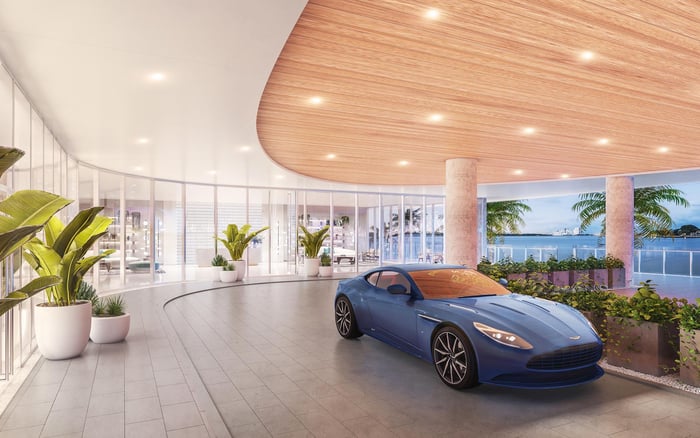
Discretion is often decided before the elevator opens. A buyer who values privacy will study the street approach, valet flow, guest handling, service access, lobby scale, and the visibility of resident movement. A dramatic lobby may photograph beautifully, but if it turns every arrival into a social event, it can become a liability for the wrong owner.
This is especially true for penthouse buyers and others whose homes may invite attention by default. The residence itself can be extraordinary, but the path to it should feel protected. The best luxury experience is sometimes the one that removes small anxieties: no unnecessary exposure, no crowded waiting, no sense that the building is a backdrop for someone else’s content.
The quiet buyer is also alert to building culture. Some addresses are inherently social, with a strong scene built around amenities and visibility. Others feel more residential, where service is present but not theatrical. Neither model is universally superior. The discretion premium appears when a buyer pays more, waits longer, or accepts a less obvious address because the building culture better protects their peace.
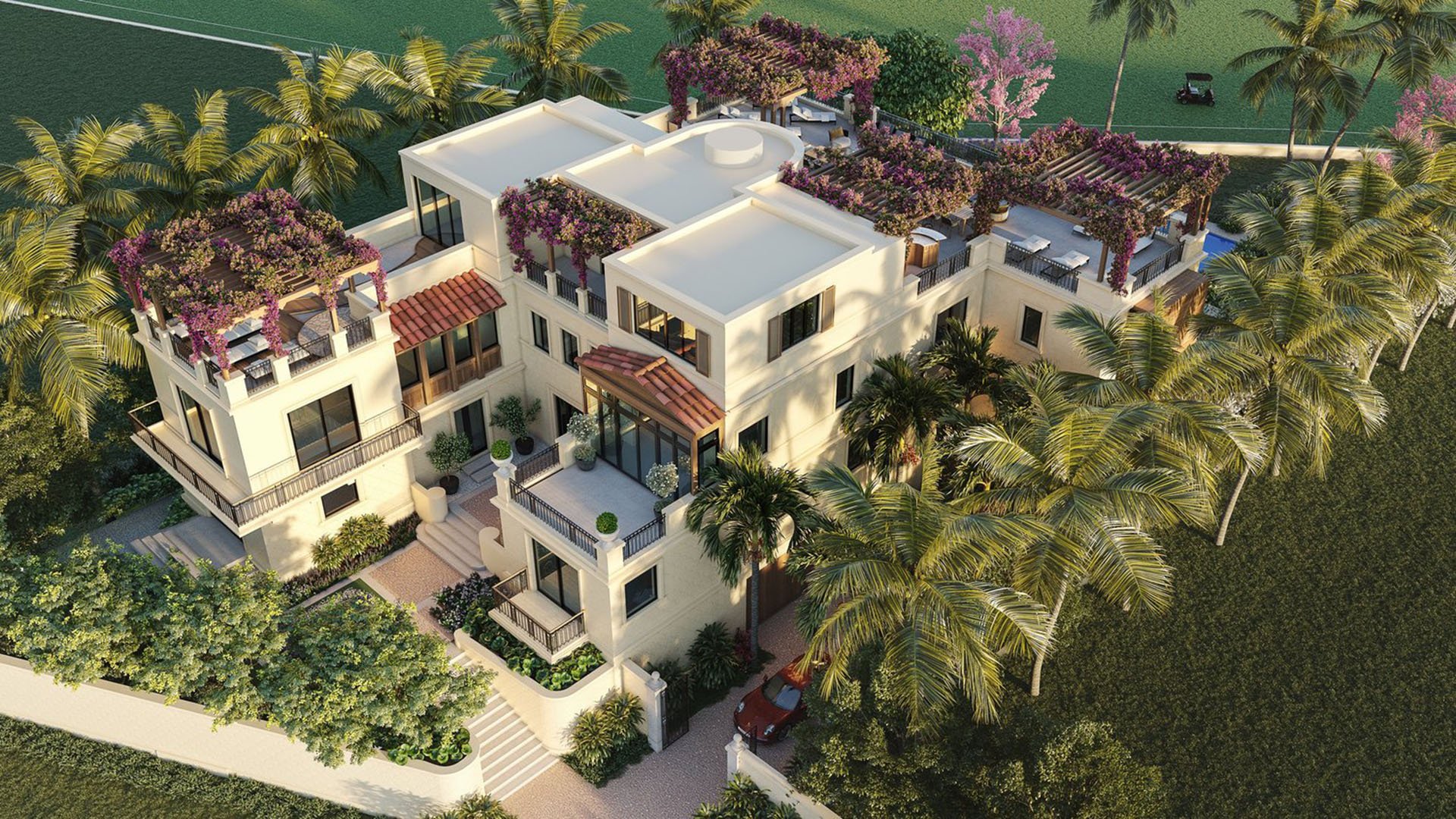
South Florida has always rewarded the fantasy of separation: bay, ocean, island, garden, gate, marina, canopy. For some buyers, the ideal condominium behaves less like a tower and more like a vertical private compound. The appeal is not isolation for its own sake. It is the ability to participate in Miami, Palm Beach, Fort Lauderdale, or Boca Raton on selective terms.
That helps explain why a project such as The Residences at Six Fisher Island belongs in the discretion conversation. The name itself evokes a different buyer psychology: less interested in being close to everything at all times, and more interested in deciding when and how the outside world enters.
Coconut Grove can speak to a similar instinct in a different language. A buyer looking at Arbor Coconut Grove may be seeking greenery, neighborhood texture, and a softer residential cadence rather than maximum skyline assertion. In both cases, discretion is not the absence of luxury. It is luxury edited.
The quietest buyers tend to ask sharper questions. How many people must a resident pass between the curb and the front door? Does the building encourage lingering in public areas? Are amenity spaces sized for calm use or social display? Can guests be received without broadcasting the owner’s presence? Does the residence have enough private outdoor space to reduce dependence on shared areas?
They also think about resale differently. A highly visible trophy address may have a large recognition pool, but a more discreet property can attract a narrower buyer with stronger conviction. That buyer may care less about public validation and more about fit, privacy, and the emotional ease of living there. In the ultra-prime segment, that can be powerful.
The best purchase is rarely the loudest by default. It is the one whose architecture, operations, location, and culture support the life the owner actually lives. Sometimes that life wants a landmark. Sometimes it wants a whisper.
What is the discretion premium? It is the added value some buyers place on privacy, controlled access, and a quieter residential profile rather than maximum public visibility.
Does choosing discretion mean avoiding branded buildings? Not necessarily. A branded building can still feel discreet if its operations, scale, and arrival experience protect resident privacy.
Why might a buyer avoid a famous trophy address? A highly recognizable address can create social exposure, more attention, and a daily sense of being on display.
Is boutique living always more private? Boutique scale can help, but privacy depends on design, access, staffing, resident culture, and how shared spaces are managed.
Do discreet buyers still want views and amenities? Yes. They often want exceptional views and amenities, but prefer them delivered with restraint and minimal social friction.
Is Brickell too public for discreet buyers? Not automatically. Brickell can work when the building experience offers separation, calm movement, and a strong sense of private arrival.
Why is Surfside appealing to privacy-focused buyers? Surfside can offer a more composed coastal rhythm while still keeping buyers close to Miami Beach and Bal Harbour.
Do penthouse residences require extra privacy planning? Yes. Their visibility and value make arrival, elevator access, guest flow, and service protocols especially important.
Can oceanfront living still feel discreet? Yes. Oceanfront privacy depends on building spacing, approach, amenity culture, and the separation between public and resident areas.
What is the best way to shortlist comparable options for touring? Start with location fit, delivery status, and daily lifestyle priorities, then compare stacks and elevations to validate views and privacy.
To compare the best-fit options with clarity, connect with MILLION.
If branded residences are on your mind — as a home or as an allocation — we would be glad to share what we are seeing, privately.
Begin a quiet conversation