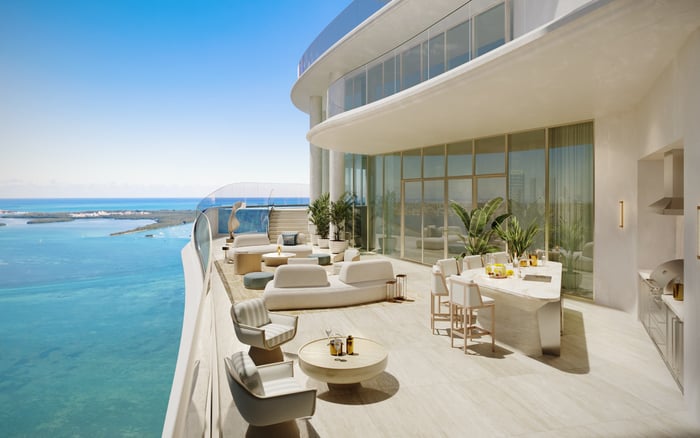
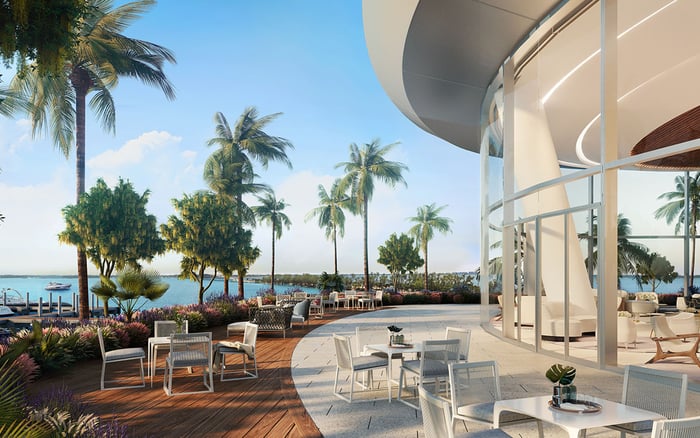
A buyer-focused guide to evaluating security, arrival choreography, valet operations, and elevator privacy in Brickell luxury towers without mistaking visible service for true discretion.
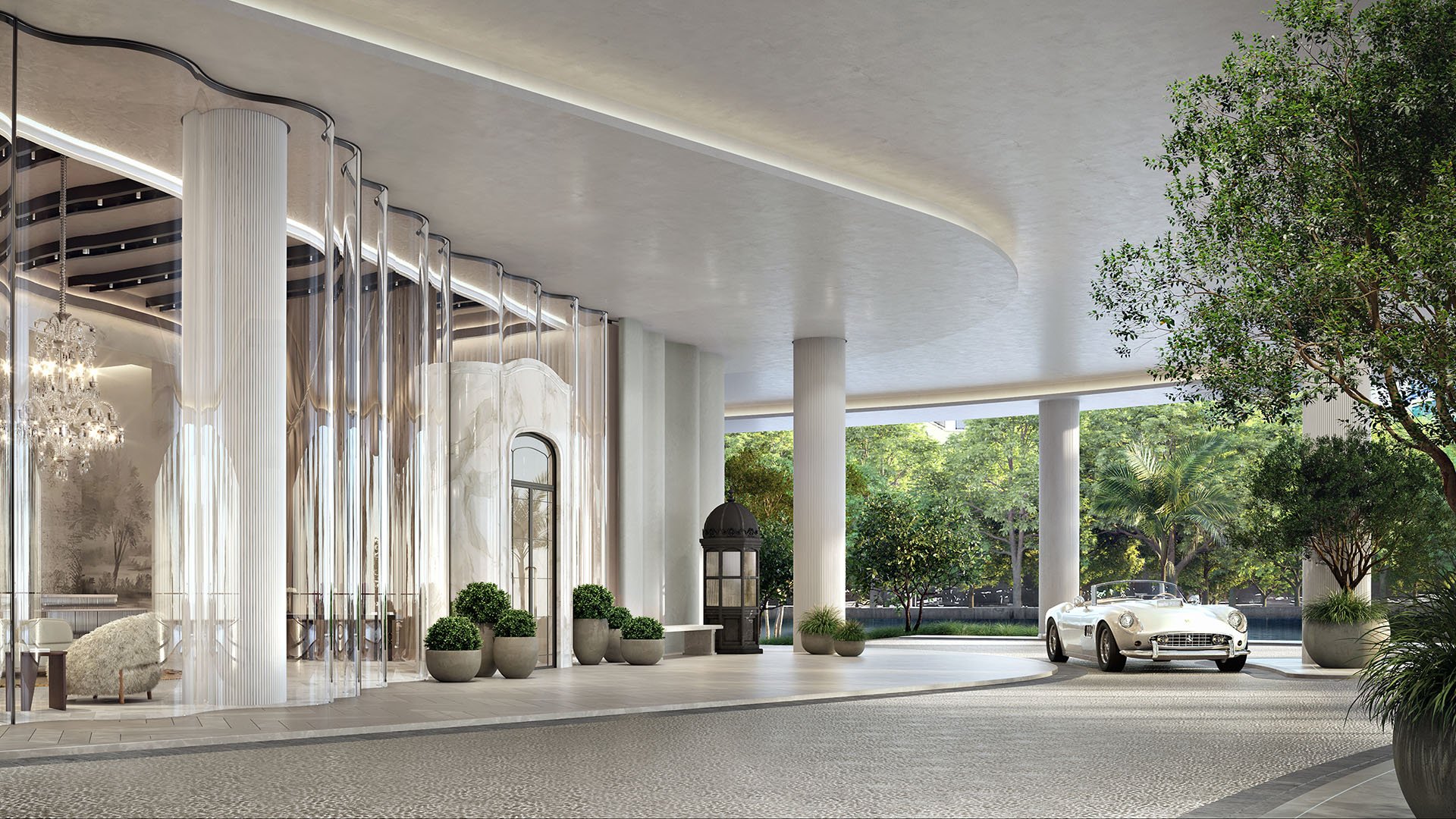
In Brickell, security is no longer a guard desk and a camera grid. For high-net-worth buyers, it is a complete sequence: how a resident arrives, how a guest is received, how service providers are routed, how packages are handled, and how privately one moves from street to residence. The most compelling buildings do not make security feel heavy. They make it feel calm.
That distinction matters. A luxury tower can read as polished at the lobby level while still creating friction at the curb, confusion at valet, or unwanted exposure in the elevator bank. Buyers comparing Brickell residences should look beyond finishes and ask how the building manages identity, movement, and separation at every threshold.
This is especially relevant for buyers considering branded and design-forward addresses. A tour of Baccarat Residences Brickell, Cipriani Residences Brickell, or any other trophy-caliber tower should include not only views and floor plans, but the choreography of arrival.
The first security layer is psychological as much as physical. A well-run building establishes who belongs before anyone reaches the lobby. That can include controlled vehicle entry, clear resident and guest protocols, staffed arrival points, and reception teams trained to identify irregular patterns without creating a public scene.
For buyers, the key question is not whether a building has access control. Most luxury towers do. The more important question is how access control is staged. Is there a meaningful distinction between residents, invited guests, vendors, delivery personnel, and ride-share traffic? Are visitors verified before they enter residential areas? Are service routes separated from resident routes where possible?
The most elegant systems are layered. They avoid a single point of failure by combining staffing, technology, policy, and physical design. When those elements work together, residents experience ease while unauthorized access becomes difficult, inconvenient, and visible to building personnel.
Valet is often treated as hospitality, but in Brickell it is also a security instrument. A congested porte cochere can expose residents to unnecessary observation, create confusion for staff, and blur the line between private and public space. A controlled arrival court creates order.
Buyers should watch valet operations at different times of day. Morning departures, evening returns, dinner-hour guest arrivals, and weekend traffic can reveal more than a scheduled tour. The test is whether the system keeps its composure when demand rises. Does staff recognize residents without broadcasting names? Are keys handled discreetly? Are waiting vehicles organized so residents are not forced to linger in open view?
Valet flow also shapes guest management. A refined building should make invited guests feel expected, not improvised. For residents who entertain frequently, host family, or maintain a visible professional profile, that difference can be material. Privacy is not only about keeping people out. It is about allowing the right people in with quiet precision.
In a high-rise neighborhood, the elevator is the private corridor. It is where a resident leaves the shared environment and enters a more controlled realm. Elevator privacy therefore becomes central to the luxury experience.
Buyers should ask how elevator access is managed between the lobby, amenity levels, parking, service areas, and residential floors. Some buildings use key, fob, credential, or destination-based systems to limit floor access. Others rely more heavily on staffed control and traditional elevator banks. The value is not in the label of the technology, but in how well the system protects the resident’s daily movement.
For buyers considering St. Regis® Residences Brickell or The Residences at 1428 Brickell, elevator privacy should sit beside ceiling heights, terraces, and views in the evaluation. A magnificent residence loses some of its composure if the trip home feels exposed or inefficient.
Technology can support security, but culture delivers it. The best buildings train staff to be observant without being intrusive, warm without being casual, and responsive without improvising outside protocol. That balance is difficult, and it is one reason service quality becomes a defining difference among luxury towers.
During a showing, buyers can observe the small things. Does staff maintain eye contact with arrivals? Are contractors directed with confidence? Is the reception area orderly? Are conversations handled quietly? Is there a visible chain of command when something unexpected occurs?
A sophisticated buyer should also ask about written procedures. How are guests pre-cleared? What happens when a resident forgets a credential? How are after-hours deliveries handled? How does the building coordinate move-ins, private events, or large service appointments? Clear answers suggest operational maturity. Vague answers suggest that the building may rely too heavily on personality rather than system.
Every security decision involves a trade-off. Highly restrictive protocols can feel inconvenient if poorly designed. Overly relaxed protocols can feel pleasant until a resident realizes too many people can move through the property without meaningful oversight.
The ideal Brickell tower does not force residents to choose between grace and control. It creates convenience for verified users and friction for everyone else. That distinction should guide buyer evaluation. A resident should be able to arrive smoothly, invite guests easily, receive services efficiently, and still feel that the building understands boundaries.
This is where pre-construction and new-development buyers need particular discipline. Renderings can communicate atmosphere, but operations are lived in real time. When evaluating a future residence such as Una Residences Brickell, buyers should ask how the developer, management team, and association framework intend to translate design intent into daily control.
Security due diligence should happen before contract negotiations are complete. It should not become an afterthought once the floor plan, view line, and parking assignment have been discussed. For many luxury buyers, privacy is part of the asset.
Ask how access is controlled at the garage, lobby, amenity levels, elevators, package rooms, and service entries. Ask whether residents can pre-authorize guests digitally or through staff. Ask how vendors are logged, escorted, or restricted. Ask whether elevator access is limited by floor or zone. Ask how valet handles peak periods, special events, and overflow.
Also ask about governance. Policies can evolve after turnover, association changes, or management transitions. A building with a clear operating philosophy is more likely to preserve its security culture over time. In Brickell, where density, hospitality, finance, and nightlife overlap, that continuity can be as valuable as a premium exposure.
The most secure luxury buildings rarely feel theatrical. They do not announce their systems. They create a sequence of subtle confirmations, quiet separations, and controlled transitions. Residents feel known, guests feel guided, and outsiders encounter boundaries that are polite but firm.
For Brickell buyers, the question is not which building has the most visible security apparatus. The question is which building protects daily life with the least friction. Access control, valet flow, and elevator privacy are not minor operational details. They shape how a residence feels from the moment a car enters the drive until the front door closes behind you.
Why is security especially important in Brickell luxury towers? Brickell combines density, hospitality, business traffic, and high-rise living, so privacy depends on disciplined control of movement through the building.
What is the first access-control question a buyer should ask? Ask how the building separates residents, guests, vendors, deliveries, and service personnel before they reach residential areas.
Does valet affect residential privacy? Yes. Valet is often the first point where resident identity, vehicle handling, guest arrivals, and street exposure intersect.
What makes an elevator system feel private? Privacy improves when floor access is controlled, residential elevators are logically separated, and residents are not forced into unnecessary shared circulation.
Should buyers ask about security technology by brand? The better question is how the system works in daily life, including credentials, guest approval, vendor handling, and staff response.
Can strong security still feel welcoming? Yes. The best luxury buildings combine firm protocols with hospitality, allowing verified residents and guests to move smoothly.
What should buyers observe during a showing? Watch how staff greet arrivals, manage contractors, handle vehicles, and maintain discretion in public-facing areas.
Are package rooms part of the security conversation? Yes. Package and delivery handling can create access vulnerabilities if it is not clearly separated and monitored.
How should pre-construction buyers evaluate security? Ask how access, valet, elevators, service routes, and management protocols are intended to function once the building is occupied.
Is more visible security always better? Not necessarily. In luxury residential settings, the strongest systems often feel understated, consistent, and quietly enforced.
If you'd like a private walkthrough and a curated shortlist, connect with MILLION.
If branded residences are on your mind — as a home or as an allocation — we would be glad to share what we are seeing, privately.
Begin a quiet conversation