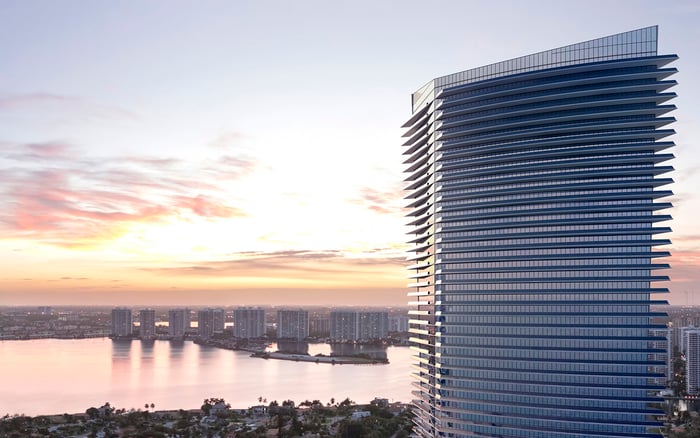
A refined guide to reviewing a luxury condo budget before emotion takes over the showing, with emphasis on reserves, insurance, maintenance, collections, amenities, and long-term ownership signals.

The most seductive moment in a South Florida condo tour is rarely financial. It is the first step into a high-floor great room, the sweep of water beyond the glass, the quiet arrival by private elevator, or the way evening light turns the terrace into a second living room. In luxury real estate, beauty is part of the asset. But it is not the entire asset.
A condominium budget is the building’s private operating portrait. It shows how the association expects to care for the property, staff it, insure it, repair it, and prepare for the next capital cycle. For a buyer comparing a boutique Surfside address with a glass tower in Brickell, the view may explain the emotional premium. The budget explains the ownership experience.
This is especially relevant in South Florida, where waterfront living, sophisticated amenities, and high service standards can carry complex operating obligations. Buyers considering branded or design-forward residences such as St. Regis® Residences Brickell should admire the architecture, but also ask how the monthly structure supports the level of service being promised.
A luxury condo budget should be read in layers. The first layer is the reserve contribution. Reserves are not glamorous, but they are one of the clearest signs of discipline. They indicate whether the building is setting money aside for future repairs and replacements rather than relying too heavily on sudden owner contributions.
The second layer is insurance. In coastal markets, insurance is often one of the most meaningful operating lines. A buyer does not need to become an insurance analyst, but should understand whether premiums are a stable component of the budget or a source of pressure. Ask what the association covers, what remains the unit owner’s responsibility, and whether the building has recently adjusted its expectations.
The third layer is maintenance. This includes the visible and invisible costs of keeping a luxury property functioning at its intended level. Elevators, mechanical systems, pools, landscaping, security, cleaning, valet operations, water features, fitness spaces, spas, and common-area finishes all create ongoing obligations. The best buildings do not merely look immaculate on tour day. They budget to stay immaculate.
Amenities are often marketed as lifestyle, but in the budget they behave like operating assets. A pool deck requires staffing, cleaning, equipment, repairs, furniture replacement, and periodic refinishing. A spa or fitness center may need specialized maintenance. Private dining rooms, club lounges, screening rooms, and children’s areas all age, even when lightly used.
This is not an argument against amenities. Quite the opposite. Well-run amenities can strengthen daily life and long-term desirability. The key is alignment. If a building promises resort-level living, its budget should reflect the cost of that promise in a coherent way. If the monthly dues appear unusually restrained relative to the amenity package, the buyer should ask what has been deferred, subsidized, or excluded.
At beachfront properties such as The Perigon Miami Beach, the relationship between lifestyle and maintenance deserves particular attention. Salt air, wind exposure, glass, terraces, and exterior finishes all make the care plan more important, not less.
A luxury association is only as strong as its cash flow. The budget may show what the building plans to spend, but the collection history helps reveal whether owners are reliably funding that plan. Delinquencies are not always dramatic, yet they matter. A pattern of unpaid assessments can pressure reserves, delay projects, or shift burdens onto owners who do pay on time.
Ask for the most current financials, not just the adopted budget. Review whether actual expenses are tracking close to projections. Look for recurring deficits, repeated transfers from reserves to operations, or unusually low line items that seem inconsistent with the property’s scale. One year of variance may be explainable. A pattern deserves a more careful conversation.
For investment-minded buyers, this is central. A beautiful residence can still disappoint if operating surprises compress yield, weaken resale confidence, or create friction during a future sale. In the high-end market, sophisticated buyers often discount uncertainty faster than they discount price.
Special assessments can make buyers nervous, but they are not automatically a sign of mismanagement. Sometimes they indicate that a building is addressing a legitimate capital need directly. The better question is why the assessment was necessary, how it was calculated, whether the work is complete, and whether similar needs remain.
A completed assessment for meaningful improvements may be less concerning than a building with no assessment history, low reserves, and visible aging. The goal is not to find a property that never spends money. The goal is to find a property that spends transparently, plans intelligently, and communicates clearly.
In new-construction settings, buyers should also ask how the first operating budget was built and how expenses may normalize after initial occupancy. A pristine sales gallery and a first-year budget can tell different stories. The durable question is whether the building can maintain its proposed standard once the property is fully alive.
South Florida’s most coveted views are often tied to the most demanding maintenance environments. Oceanfront, bayfront, and Intracoastal properties can offer extraordinary daily beauty, but they also require disciplined care of exterior systems, waterproofing, balconies, glazing, landscaping, drainage, and mechanical infrastructure.
A tour of Bentley Residences Sunny Isles or another highly amenitized coastal tower should inspire questions beyond square footage and finishes. How are exterior maintenance cycles planned? How are common elements monitored? What portion of dues supports long-term preservation rather than short-term presentation?
Sunny Isles buyers, Surfside buyers, and Brickell buyers may each be dealing with different micro-market priorities, but the principle is the same: the more complex the property, the more carefully the budget should be read.
Monthly dues are frequently misunderstood because buyers compare them too quickly. A lower number is not automatically better, and a higher number is not automatically excessive. The right comparison considers service level, building age, unit size, staffing model, amenity depth, insurance profile, reserve contribution, and whether utilities or other services are included.
A boutique building with fewer owners may feel private, but it can also mean fewer households sharing fixed costs. A large tower may spread expenses widely, yet it may carry larger amenity and staffing obligations. A branded residence may command a premium service culture, but that culture must be budgeted.
When comparing a project such as The Delmore Surfside with a more urban, vertical address, the question is not which dues are cheaper. The question is which budget best matches the property’s ambition and your expectations as an owner.
Before a second showing, ask for the current budget, recent financial statements, reserve information, meeting minutes, insurance summary, pending litigation disclosure if applicable, and any known assessment discussions. A qualified advisor can help interpret these materials, but the buyer should still know what matters.
Look for clarity. Are reserves treated as a recurring obligation? Are large maintenance items anticipated? Are amenities properly funded? Are staffing costs consistent with the service promise? Are insurance costs clearly visible? Does the association seem reactive or prepared?
The best luxury purchase is not emotionless. It is emotionally compelling and financially legible. When both are present, the view feels even better, because the ownership foundation beneath it is sound.
Why should I read a condo budget before touring twice? The budget can reveal ownership costs and future obligations before emotion anchors your decision.
Are high monthly dues always a negative? Not necessarily. Higher dues may reflect strong staffing, reserves, amenities, insurance, or included services.
What is the most important line item in a luxury condo budget? Reserves, insurance, and maintenance deserve the closest review because they shape long-term stability.
Should I avoid buildings with special assessments? No. Understand why the assessment exists, whether the work is complete, and whether more costs may follow.
Why do waterfront buildings require closer budget review? Coastal exposure can make exterior maintenance, insurance, and capital planning especially important.
How should I compare dues between two buildings? Compare service level, amenities, staffing, reserves, insurance, building scale, and what the dues include.
Do amenities increase financial risk? Amenities are not a risk by themselves, but they must be properly funded and maintained over time.
What does owner delinquency tell a buyer? It can indicate pressure on cash flow and may affect how smoothly the association funds operations.
Can a beautiful building still have a weak budget? Yes. Presentation and financial discipline are related, but they are not the same thing.
When should I involve an advisor? Before contract deadlines, especially if reserves, insurance, assessments, or financial statements are unclear.
For a discreet conversation and a curated building-by-building shortlist, connect with MILLION.
If branded residences are on your mind — as a home or as an allocation — we would be glad to share what we are seeing, privately.
Begin a quiet conversation