A practical luxury buyer's guide to balancing walkable Downtown Miami living with discretion, privacy, arrival control, views, sound, and daily routines before purchasing.

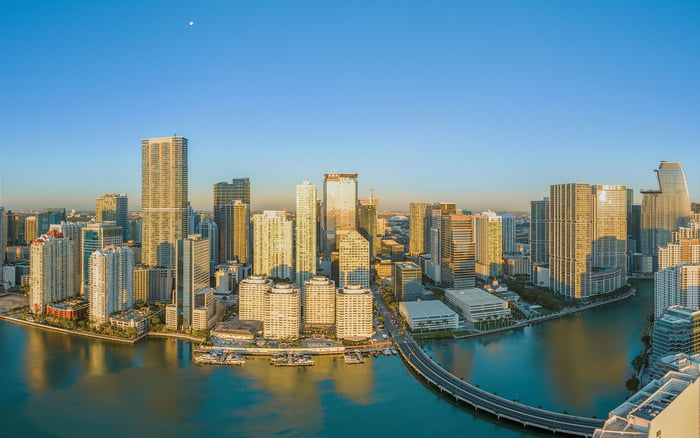
The best Downtown Miami purchase is rarely defined by a map alone. A building can appear perfectly positioned, yet feel entirely different at 7:30 in the morning, after dinner, during a weekend event, or when guests arrive as deliveries are being handled. For luxury buyers, walkability should be assessed as a lived rhythm, not a marketing adjective.
Begin by walking the immediate blocks you expect to use most: coffee, dining, fitness, office, parking access, waterfront paths, cultural plans, and rideshare pickup. Then repeat the same loop at different times. Notice where the sidewalk narrows, where lighting feels more public than private, where vehicle movement interrupts the pedestrian experience, and where the building approach begins to feel residential again.
This is the first principle of privacy in a walkable district: convenience should not follow you into the residence. The public realm may be energetic, but the arrival sequence, lobby threshold, elevator experience, and home itself should restore quiet. A buyer comparing Aston Martin Residences Downtown Miami, Waldorf Astoria Residences Downtown Miami, or Casa Bella by B&B Italia Downtown Miami should evaluate the building visit as carefully as the neighborhood walk.
Privacy begins before the front door. Ask where residents arrive by car, where guests wait, how service access is organized, and whether the path from curb to elevator feels exposed or controlled. A grand lobby can be beautiful, but discretion depends on circulation. If every visitor, resident, delivery, and valet interaction converges in one visible place, the building may feel less private than its finishes imply.
The strongest walkable residences create a measured transition from street to sanctuary. Look for a sense of progression: exterior approach, sheltered entry, controlled reception, calm elevator area, and a residential corridor that does not feel over-trafficked. The question is not whether the building feels impressive on a tour. The question is whether it will feel composed on an ordinary Tuesday when you are returning home with guests, luggage, children, or a driver waiting outside.
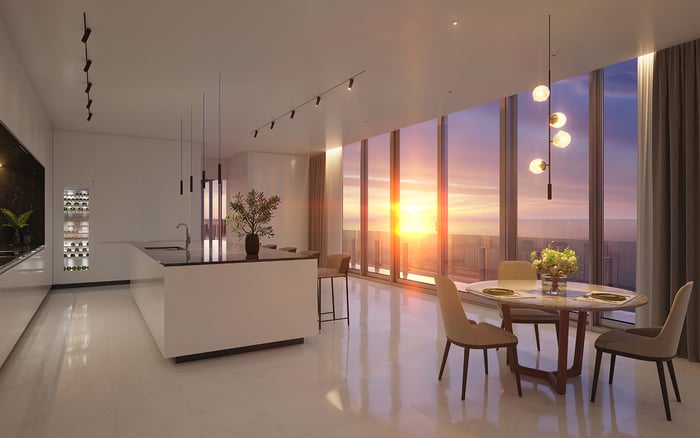
High-floors often appeal to buyers seeking separation from street activity, yet elevation alone does not guarantee privacy. Sightlines matter. Study what the residence faces, how neighboring towers align, and whether primary rooms feel visually exposed from adjacent buildings. Daytime privacy and nighttime privacy can differ, especially when interiors are illuminated.
Balcony use deserves the same scrutiny. A Balcony may be generous, but if it faces a highly visible corridor of other residences, it may function more as a view platform than a private outdoor room. Stand in the main living area, primary suite, kitchen, and terrace, then ask where your eye naturally lands and who may be looking back.
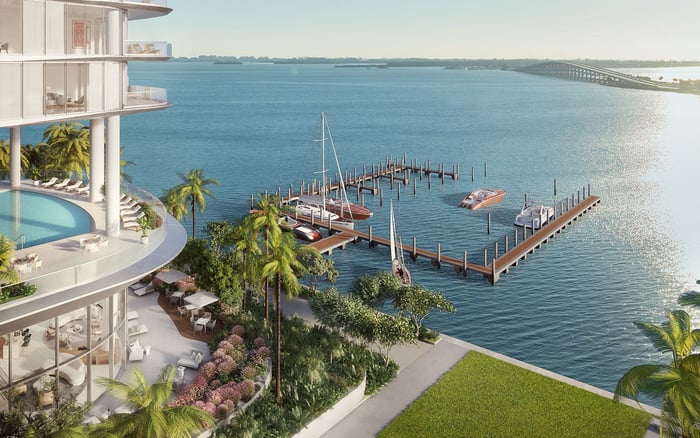
Waterfront orientation can add a sense of openness, but it should still be tested for wind, noise, sun, and public visibility. A residence that feels cinematic for ten minutes should also feel comfortable for daily living. Privacy is not the absence of neighbors. It is the feeling that the home has been positioned, planned, and detailed so the owner can live without performing.
Downtown Miami buyers often compare the district with Brickell because both can support an urban, low-car lifestyle. The distinction is not simply geographic. It is personal. Some buyers want proximity to dining and business routines. Others prioritize a quieter arrival, a more residential edge, or a particular view corridor.
When reviewing Brickell alternatives such as Baccarat Residences Brickell, The Residences at 1428 Brickell, or Cipriani Residences Brickell, apply the same walkability test. Do not ask only what is nearby. Ask how you move through the area, how quickly you can retreat, and whether the building shields private life from the public tempo outside.
For Buyer's Guides in dense urban markets, the most refined advice is often the simplest: never buy only the neighborhood, and never buy only the residence. Buy the relationship between the two.
Sound is one of the most underestimated privacy issues. During a tour, pause without conversation. Listen near windows, in the primary bedroom, on the terrace, in corridors, and beside elevator banks. Mechanical sound, street sound, service movement, and neighboring activity all affect how private a home feels.
Service design also matters. Walkability can increase the frequency of deliveries, guests, drivers, and spontaneous plans. A building should absorb that activity gracefully. Ask how packages are handled, how food delivery is received, where cars queue, and whether staff protocols feel polished without becoming intrusive. Luxury privacy is not isolation. It is orchestration.
Finally, test friction. If a building is wonderfully located but every arrival feels congested, or if a residence is serene but daily errands require constant driving, the balance may be wrong. The ideal purchase gives you options: to walk, to be driven, to host, to withdraw, and to live visibly in the city without surrendering private composure.
Before committing, create a personal privacy scorecard. Rate approach, lobby discretion, elevator flow, corridor quiet, view exposure, terrace comfort, acoustic performance, service handling, guest arrival, and the quality of the surrounding walk. Weight each category according to your life rather than a generic checklist.
A pied-a-terre owner may value lock-and-leave simplicity. A full-time resident may care more about morning routines, staff consistency, and acoustic calm. A collector may prioritize secure, elegant arrivals. A family may focus on how comfortably everyone can move from building to neighborhood and back again.
The right Downtown Miami residence should make the city feel available, not invasive. Walkability is a privilege when it is paired with design intelligence, operational discipline, and a home that remains unmistakably yours.
How should I test walkability before buying in Downtown Miami? Walk the same daily routes at morning, evening, and weekend times. Pay attention to comfort, lighting, crossings, sound, and how the building approach feels on return.
Does a higher floor always provide better privacy? Not always. High-floors may reduce street exposure, but neighboring tower sightlines, window placement, and nighttime visibility still matter.
What is the most important privacy feature in a walkable building? The arrival sequence is critical. A controlled path from curb to elevator can preserve discretion even in an active urban setting.
Should I prioritize views or privacy? The best choice balances both. A spectacular view loses appeal if the main rooms feel visually exposed from nearby residences.
How do I evaluate a Balcony for privacy? Stand outside during the tour and study sightlines from surrounding buildings. Also consider noise, sun exposure, and whether you would use it often.
Is Brickell a useful comparison for Downtown Miami buyers? Yes. Brickell can help buyers clarify whether they prefer a business-oriented urban rhythm, a different residential feel, or another arrival experience.
What questions should I ask about service areas? Ask how deliveries, guests, valet, rideshare, and maintenance access are managed. Smooth service flow often protects resident privacy.
Can a very walkable address still feel calm? Yes, if the building creates a strong threshold between the street and the residence. Lobby design, staffing, elevators, and acoustics all contribute.
How many times should I visit before making an offer? More than once is prudent. Visit at different times so the residence is judged by daily conditions rather than a single curated showing.
What should luxury buyers avoid overlooking? Avoid focusing only on finishes. Privacy is shaped by circulation, sound, sightlines, service protocol, and the real experience of coming home.
For a discreet conversation and a curated building-by-building shortlist, connect with MILLION.
If branded residences are on your mind — as a home or as an allocation — we would be glad to share what we are seeing, privately.
Begin a quiet conversation