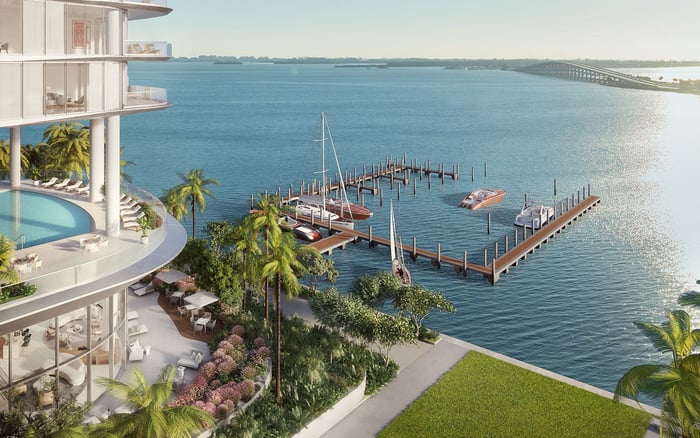
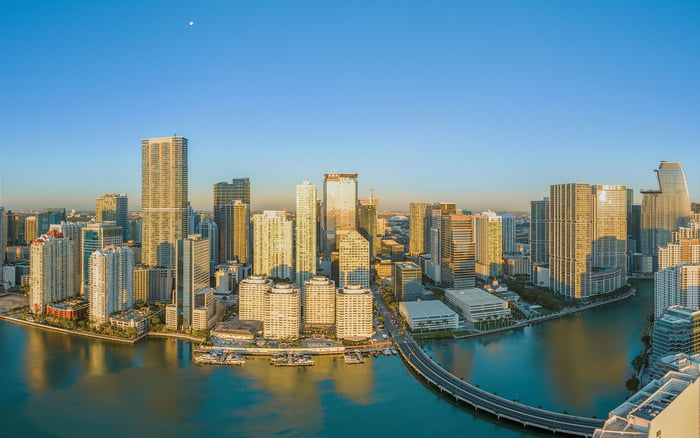
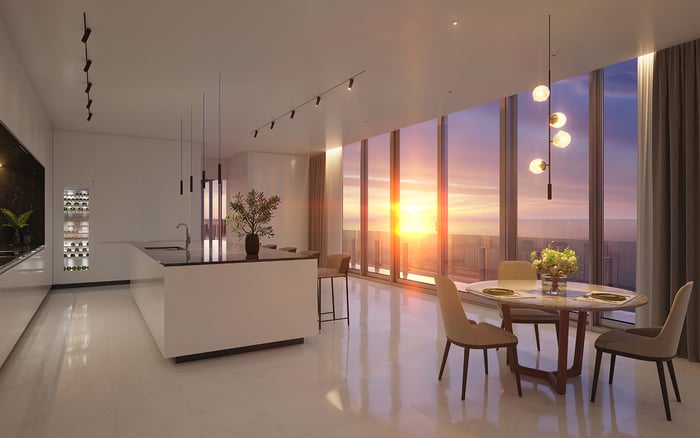
A buyer-focused look at why Faena Residences Miami deserves attention from Downtown Miami purchasers who want terraces that function as true outdoor rooms in heat, humidity, sun, storms, and wind.
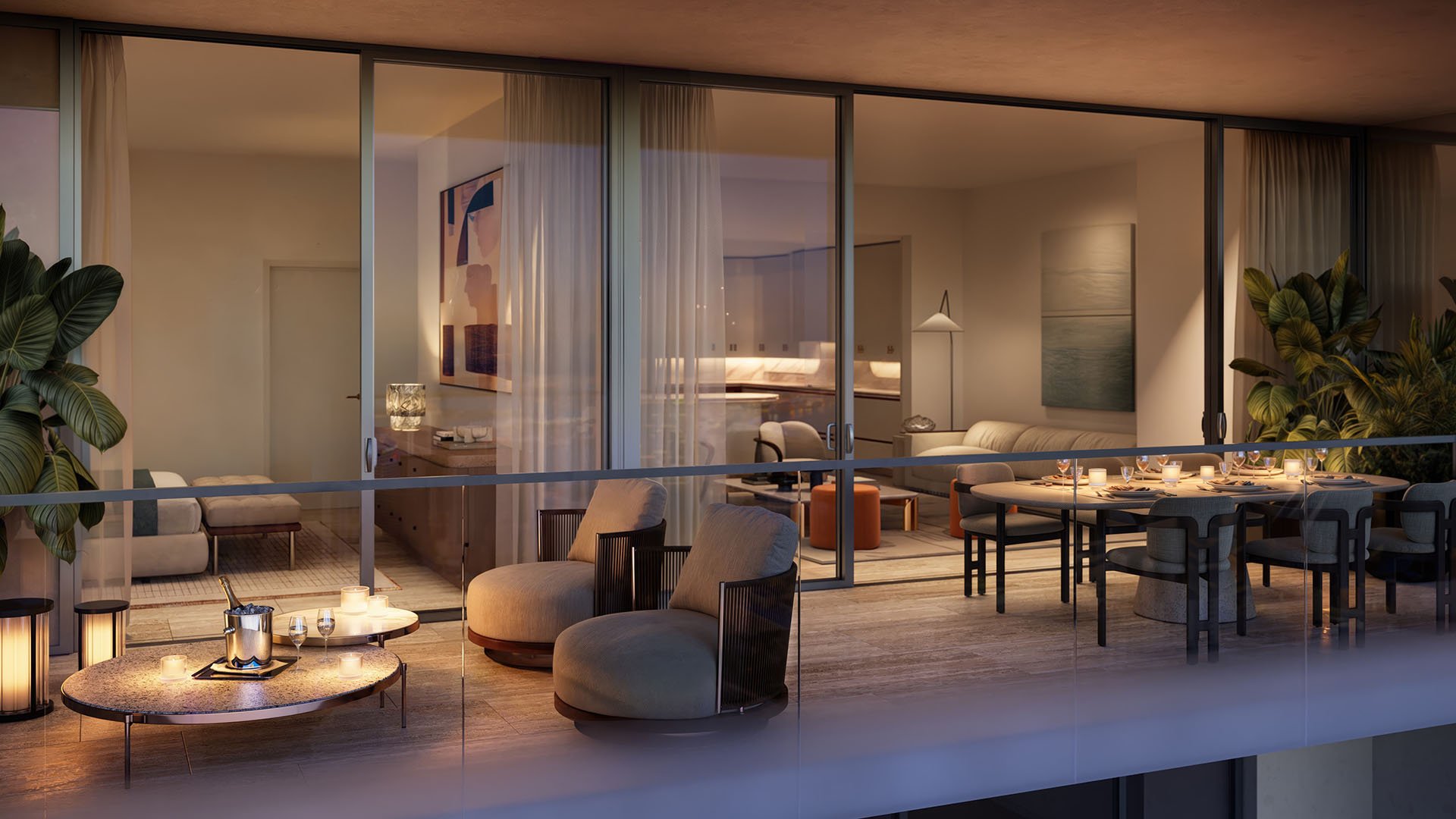
For South Florida buyers, a terrace is no longer a decorative line item. It is a room that happens to be outdoors, and in Miami that room has to perform under pressure. Heat, humidity, direct sun, thunderstorms, and tower-level wind all determine whether a balcony becomes part of daily life or remains an occasional photograph.
That is why Faena Residences Miami Downtown Miami belongs on the shortlist for buyers who prioritize usable terraces. The case is not that every terrace in the building should be treated as equal. It is that the project’s broader positioning around experiential living and indoor-outdoor integration makes it especially relevant for buyers who consider outdoor space central to the residence.
The right question is not, “Does the unit have a terrace?” It is, “Can this terrace support reading, dining, working, and entertaining when Miami is hot, bright, humid, breezy, or changing quickly?” That is the more disciplined question, and it is the one serious buyers should bring to Downtown Miami.
Terrace square footage can be misleading when the space is shallow, overly exposed, or difficult to furnish. A narrow balcony may look generous on a marketing plan but fail the practical test once chairs, a table, circulation space, planters, and glare are considered. Buyers should compare usable terrace area, not simply the outdoor number attached to a floor plan.
Depth is the first filter. A terrace needs enough dimension for someone to sit without blocking the door, dine without feeling wedged against a railing, and move around furniture without turning every evening outside into a logistics exercise. Orientation is the second filter, because morning and afternoon sun behave very differently in Miami.
Overhead cover, side shielding, material selection, and mechanical or ventilation support also matter. These elements can determine whether a terrace feels like an extension of the living room or a surface that becomes too hot, too windy, or too exposed for regular use.
This is why Faena Residences Miami Downtown Miami should be evaluated as part of a true buyer’s guide conversation rather than a generic amenities conversation. The purchase decision should focus on livability under demanding conditions, not only on view, height, or total stated outdoor area.
Miami heat is not only about air temperature. Direct sun can make outdoor surfaces, furniture, railings, and flooring feel significantly hotter than the ambient reading. A terrace that works at 9 a.m. may feel very different at 4 p.m., especially if it faces west and receives the harshest afternoon exposure.
East-facing terraces generally require morning-sun management. For many buyers, that can still support breakfast, work calls, or early-day reading, provided there is enough shade strategy and airflow. West-facing terraces deserve closer scrutiny because afternoon sun can intensify radiant heat and glare precisely when many owners want to use the space after work.
This is where architecture matters. Overhead slab projection, recessed terrace design, and façade articulation can help reduce glare and radiant heat on outdoor surfaces. The point is not shade for shade’s sake. The ideal Miami terrace allows daylight and view while preventing the space from becoming a heat trap.
Buyers comparing Downtown Miami options such as Aston Martin Residences Downtown Miami or Waldorf Astoria Residences Downtown Miami should apply the same standard: which terrace remains comfortable long enough to be used as an outdoor room, not merely admired from inside?
In high-rise Miami living, wind can be a gift or a problem. Coastal breezes can create natural cooling, especially when humidity is high. But wind can also become uncomfortable when tower geometry amplifies it around corners, higher elevations, and exposed edges.
This is especially important for high floors, where buyers often expect more dramatic views and stronger breezes. A top-tier terrace should balance shade and air movement rather than maximize exposure alone. A completely exposed terrace can feel exhilarating on one evening and unusable on another.
Side shielding and partial enclosure can help reduce wind discomfort, but those features need to be understood carefully. Too little shielding can leave the terrace gusty. Too much enclosure can trap heat or block useful airflow. The best answer is usually balance: enough protection to support dining and conversation, enough openness to keep air moving.
Floor height, corner condition, surrounding buildings, and exposure can all change the terrace experience. That makes unit selection critical. Two residences in the same building may deliver different levels of comfort depending on orientation, plan shape, and relationship to neighboring towers.
Faena’s relevance comes from how the project is framed: experiential living, indoor-outdoor continuity, and the idea that a residence should support more than formal interior rooms. For terrace-focused buyers, that positioning matters because it places outdoor life closer to the center of the value proposition.
Still, the strongest case is practical, not theatrical. Faena belongs on the shortlist because it invites the correct evaluation: will the terrace function during hot afternoons, humid mornings, breezy evenings, and post-storm conditions? If the answer is yes on a specific floor plan, the outdoor space becomes a meaningful part of daily life.
This is also why comparisons should be made carefully across Downtown Miami, Brickell, and nearby waterfront or skyline markets. A buyer looking at Casa Bella by B&B Italia Downtown Miami or The Residences at 1428 Brickell should not rely only on renderings or stated exterior dimensions. The question should be performance: shade, breeze, depth, privacy, and usable furniture zones.
Downtown Miami buyers often want the energy of the city without surrendering the ritual of being outside. A terrace that supports a quiet breakfast, a late call, a dinner for four, or an hour with a book is not a bonus. It is a lifestyle asset.
Start with depth. Can the terrace hold real furniture without blocking circulation? Then study orientation. East, west, north, and south exposures each create different relationships with sun, glare, and comfort.
Next, look for overhead cover and recessed conditions. A projecting slab or façade articulation can moderate heat and improve the sense of enclosure. Then evaluate side shielding. Does it reduce wind without sealing off airflow? Does it provide privacy without making the space feel boxed in?
Materials matter as well. Outdoor flooring and furniture surfaces can absorb heat, reflect glare, or remain more comfortable under foot and hand. Buyers should also ask how doors open, where mechanical elements are located, and whether ventilation patterns help or hinder terrace use.
Finally, test the plan as if living there. Where would the dining table go? Where would a reading chair sit? Could a laptop be used without glare? Would guests be able to converse on a breezy evening? These questions reveal whether the terrace is functional or symbolic.
Faena Residences Miami deserves a shortlist position for buyers who prioritize usable terraces in heat and wind. Its relevance is strongest for purchasers who view outdoor space as a core part of the residence rather than a secondary amenity.
The disciplined buyer takeaway is simple: do not assume terrace performance from the building name alone. Verify terrace dimensions, exposure, overhead cover, side shielding, and wind behavior on the specific floor plan under consideration. In Miami, the most valuable outdoor space is not necessarily the largest. It is the space that can actually be used.
Why does Faena Residences Miami belong on a terrace-focused shortlist? It belongs because the project is positioned around experiential living and indoor-outdoor integration, which aligns with buyers who want outdoor space to function daily.
Is terrace size alone enough to judge comfort? No. Usable area matters more than advertised outdoor square footage, especially when heat, wind, furniture, and circulation are considered.
What should buyers examine first on a terrace floor plan? Start with depth, orientation, overhead cover, side shielding, materials, and whether airflow supports comfort rather than creates gusts.
Are west-facing terraces a concern in Miami? They require careful review because afternoon exposure can be the harshest for heat and glare, especially during the hours many owners want to be outside.
Are east-facing terraces automatically better? Not automatically. They may be more compatible with morning use, but they still need sun management, privacy, and enough depth to function well.
Why does wind matter so much in high-rise terraces? Wind can cool a terrace, but it can also become uncomfortable when amplified by tower geometry, corner conditions, or elevation.
Can side shielding solve wind issues? It can help, but buyers should confirm it does not trap heat or block the useful airflow that makes a terrace comfortable in humidity.
Should buyers compare Faena with other Downtown Miami projects? Yes. The same terrace-performance lens should be applied across Downtown Miami and nearby markets before choosing a residence.
Can two units in the same building have different terrace comfort? Yes. Floor height, exposure, corner position, and surrounding buildings can all change sun, shade, airflow, and privacy.
What is the safest purchase takeaway? Faena deserves a place on the shortlist, but buyers should verify the specific terrace dimensions, exposure, and wind behavior before committing.
If you'd like a private walkthrough and a curated shortlist, connect with MILLION.
If branded residences are on your mind — as a home or as an allocation — we would be glad to share what we are seeing, privately.
Begin a quiet conversation