A discreet buyer’s guide to evaluating sightlines, neighboring towers, balcony exposure, floor height, and future privacy risk before purchasing in Downtown Miami.
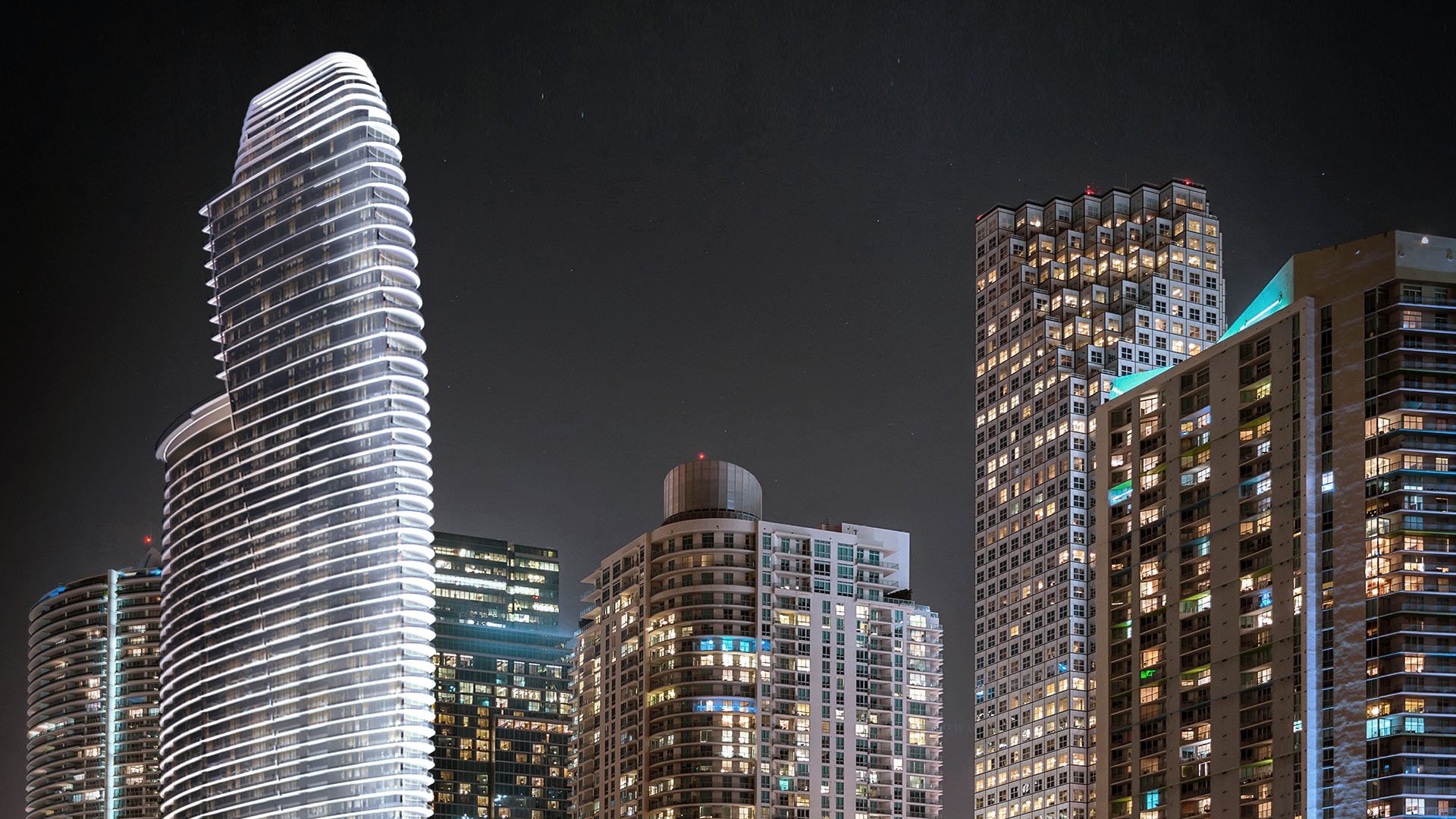
In Downtown Miami, privacy is not a single question of whether another tower is nearby. It is a layered evaluation of orientation, height, glass exposure, balcony depth, building geometry, amenity placement, and what may happen on surrounding parcels over time. For a luxury buyer, the goal is not to avoid the city’s vertical energy. It is to understand exactly where the residence feels open, where it feels observed, and where that balance could change.
The most refined purchases begin with a room-by-room privacy audit. A residence can feel wonderfully secluded from the primary suite yet exposed from the kitchen. A corner living room can hold a dramatic water view while a secondary bedroom faces directly toward another façade. A terrace may feel private while seated but exposed while standing near the rail. These distinctions matter because privacy is lived in moments, not in marketing language.
This is especially important when comparing Downtown Miami residences such as Aston Martin Residences Downtown Miami, Waldorf Astoria Residences Downtown Miami, and Casa Bella by B&B Italia Downtown Miami. Each buyer should evaluate the actual line, floor range, and outlook under consideration, rather than assuming that a prestigious address automatically resolves privacy.
A view corridor is the broad direction of exposure. A sightline is more intimate: the specific angle from your sofa, bathtub, bed, desk, or balcony toward another residence, office, hotel room, amenity deck, or future development site. Buyers often overemphasize the postcard view and underweight the everyday sightline.
During a showing, stand where life actually happens. Sit on the sofa, not just by the window. Stand at the kitchen island. Walk into the primary bath at night if possible, or at least ask how the glass reads after dark. Step onto the terrace and look left, right, below, and above. Privacy is frequently affected by diagonal views, not only by the tower directly in front of you.
A practical buyer’s test is simple: identify every window and terrace edge from which another person could comfortably see into the residence. Then ask whether that exposure affects a transient zone, such as a hallway, or a high-value private zone, such as the primary suite. The answer should shape the premium you are willing to pay.
High floors often improve openness, but they do not automatically solve privacy. A higher residence may clear one neighboring podium yet align directly with another tower’s residential stack. A lower floor may be more shielded by setbacks, landscaping, or podium massing, while a mid-level home may be most exposed because it sits across from active amenity spaces.
The disciplined approach is to compare privacy by elevation band. Ask what the residence sees at the podium level, at the amenity level, at neighboring residential levels, and above the surrounding rooflines. If the building is still under construction, review the floor plan, stacking diagram, and surrounding context with a specialist who understands how a line may feel once glass, lighting, and adjacent occupancy are in place.
In nearby Brickell, the same thinking applies to residences such as Baccarat Residences Brickell and The Residences at 1428 Brickell. The best choice is rarely just the highest available floor. It is the floor and line where outlook, light, and discretion meet your daily habits.
A balcony can be a private outdoor salon or a visible stage. The difference depends on depth, side walls, neighboring angles, railing design, and whether the terrace sits across from other balconies. Buyers should assess the terrace from multiple positions: seated near the interior, standing at the rail, and positioned at each corner.
Also consider how you intend to use the outdoor space. Morning coffee requires a different threshold of privacy than evening entertaining. A terrace used occasionally for skyline views may tolerate more exposure than one intended as an extension of the primary suite. If you entertain often, pay special attention to whether guests would face neighboring windows when seated.
Sound matters as well. Visual privacy and acoustic privacy do not always move together. A residence may feel visually screened yet still carry sound from neighboring amenity decks or nearby outdoor spaces. Luxury privacy should be evaluated with the doors closed and open, during quiet hours and active hours when possible.
The greatest privacy mistake is evaluating only what exists today. Downtown Miami buyers should treat surrounding parcels as part of the residence’s long-term context. Empty lots, low-rise structures, parking areas, or underused sites may not remain that way. Even when no specific future building is known to a buyer, the possibility of change should be part of the negotiation and purchase decision.
This does not mean avoiding every residence with development potential nearby. It means separating protected value from conditional value. A view over water, a broad corridor between established towers, or an outlook unlikely to be duplicated may deserve a different price premium than a view over a parcel that could change the experience later.
Before waiving major contingencies, buyers should request a careful review of surrounding conditions, likely exposure points, and practical risk. The question is not merely, “Will something be built?” The more useful question is, “If something changes, which rooms, views, and outdoor spaces are most vulnerable?”
For sophisticated buyers, privacy can be scored across five categories: primary suite exposure, living area exposure, terrace exposure, amenity-to-residence exposure, and future-context sensitivity. Each category can be rated low, moderate, or high risk. This makes emotional impressions easier to compare across buildings.
A residence with a spectacular view but high primary-suite exposure may be less desirable than a slightly less dramatic home with better day-to-day discretion. Conversely, a unit with some visible urban adjacency may still be excellent if the exposed areas are secondary and the main living spaces feel protected.
This is where a buyer’s-guide mindset is useful. Do not rely solely on renderings, sales-gallery perspectives, or the first impression from the elevator entry. Ask for the line, the stack, the floor, the neighboring orientation, and the way the residence lives after sunset. Privacy is not anti-urban. It is the quiet architecture of comfort within the city.
What is the first privacy question a Downtown Miami buyer should ask? Ask which rooms face neighboring towers and whether those sightlines affect daily living, sleeping, bathing, or entertaining.
Should I buy only on high floors for privacy? Not automatically. High floors may improve openness, but the correct line and angle can matter as much as elevation.
How should I judge balcony privacy? Test the balcony while seated, standing at the rail, and looking diagonally toward nearby façades or amenity areas.
Can a great water view still have privacy concerns? Yes. A residence can have a strong water view in one direction and an exposed sightline from another room or terrace edge.
Is Brickell privacy evaluated differently from Downtown Miami privacy? The principles are similar. In both Brickell and Downtown Miami, line, height, angle, and neighboring tower context matter.
Are corner residences always more private? Not always. Corners can deliver expansive views, but they may also create more diagonal exposure from multiple directions.
What should I review before signing a contract? Review the residence line, floor level, surrounding parcels, terrace orientation, and likely exposure from nearby buildings.
Do window treatments solve privacy issues? They help, but they also change light, view quality, and the feeling of openness. They should not replace proper due diligence.
How important is nighttime privacy? Very important. Interior lighting can make a residence more visible after dark, especially through large glass walls.
Can privacy affect resale value? Yes. Buyers often place a premium on residences that feel open, calm, and discreet in the main living areas.
For a confidential assessment and a building-by-building shortlist, connect with MILLION.
If branded residences are on your mind — as a home or as an allocation — we would be glad to share what we are seeing, privately.
Begin a quiet conversation