A discreet buyer’s guide to weighing terrace life against climate-controlled interiors in Sunny Isles Beach, where ocean exposure, privacy, design priorities, and daily rhythm shape the right residence.
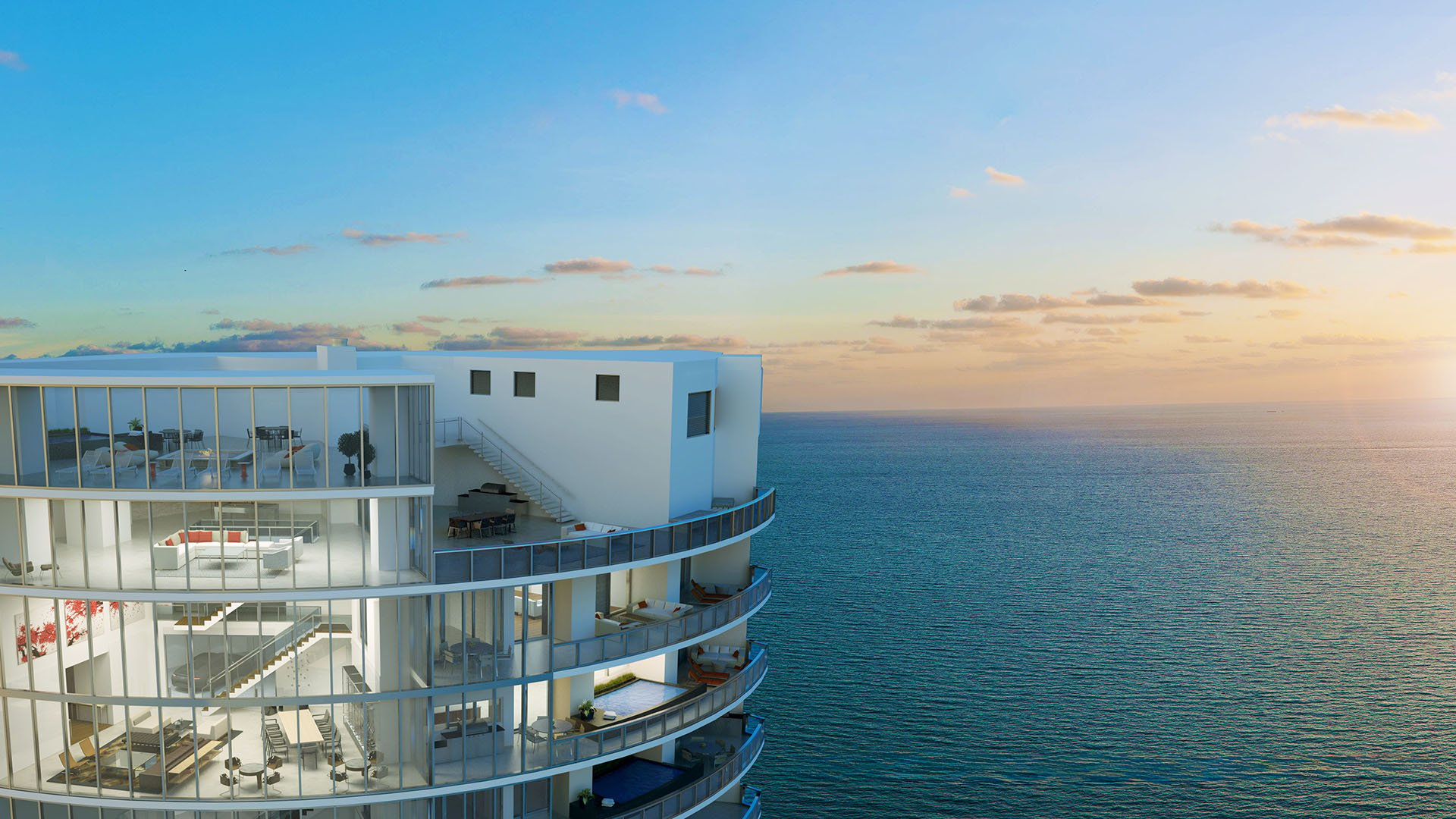
In Sunny Isles Beach, the choice between deep terraces and climate-controlled interiors is rarely a matter of square footage alone. It is a question of how a residence performs throughout the day, how it receives light, how it manages exposure, and how much of private life should unfold against the Atlantic horizon.
For some buyers, the terrace is the soul of the home: the setting for sunrise coffee, late dinners, family conversation, and the quiet luxury of feeling outdoors without leaving the residence. For others, the more persuasive luxury is a serene interior envelope: cool air, controlled acoustics, protected art walls, filtered light, and a living room that remains composed in every season.
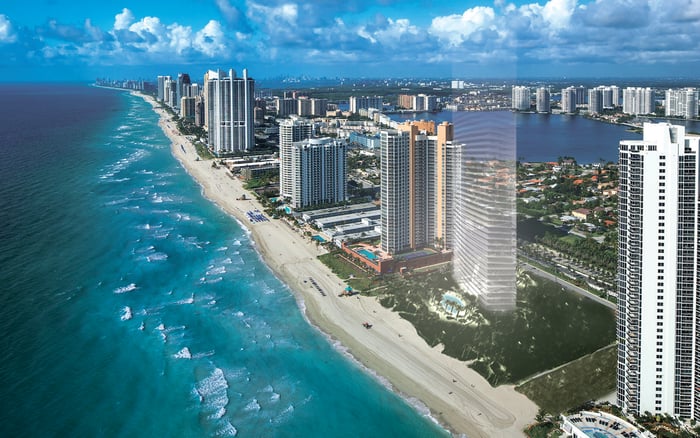
Sunny Isles Beach sharpens this decision because the setting is so vertical, coastal, and view-driven. Oceanfront living rewards openness, but it also demands discernment. A beautiful balcony is not automatically a livable outdoor room. A dramatic glass wall is not automatically comfortable at every hour. The most successful purchase understands the difference.
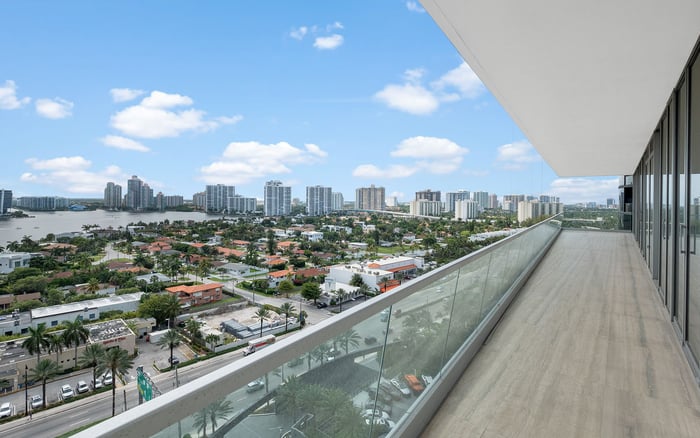
A deep terrace changes the emotional register of a residence. It extends the living room outward and allows the ocean to become part of daily ritual rather than a distant visual asset. The more generous the outdoor area feels, the more naturally it can support proper furniture groupings, shaded lounging, private dining, and a sense of separation from the building edge.
This is especially important for buyers who entertain quietly rather than theatrically. A terrace that can hold a dining table, lounge seating, and circulation space gives the home a resort-like cadence without requiring a trip to the pool deck. In a market where many residences offer views, the quality of the outdoor room can become a meaningful differentiator.
Projects such as Bentley Residences Sunny Isles speak to this buyer psychology, where the residence is imagined as a private world with a strong indoor-outdoor relationship. In this context, the terrace is not surplus space. It is part of the architectural promise.
Yet depth alone is not enough. Buyers should consider how the terrace connects to the kitchen, principal bedroom, and main living area. If access is awkward, the outdoor space becomes decorative. If the threshold is graceful, the terrace becomes a second salon.
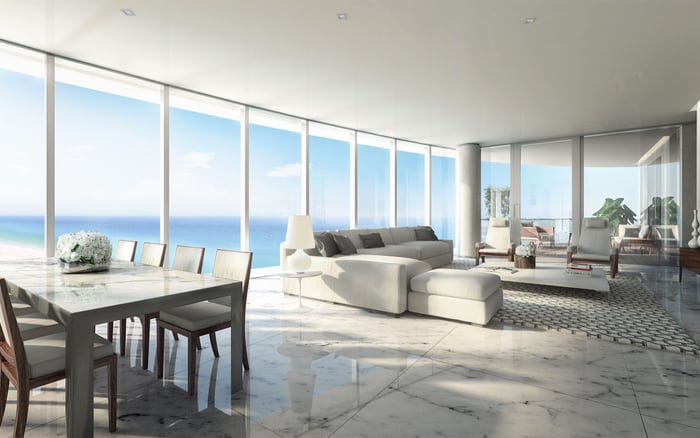
Climate-controlled interiors appeal to a different but equally sophisticated instinct: continuity. The home remains quiet, cool, and controlled. Finishes are protected. Upholstery, lighting, millwork, and collected objects can be composed with fewer compromises. The residence behaves like a private gallery, lounge, and retreat rather than an exposed pavilion.
This matters for buyers who divide time among multiple homes, travel frequently, or prefer a lock-and-leave rhythm. An interior-led residence can feel more predictable, particularly when the owner values privacy, acoustic calm, and carefully controlled light. In Sunny Isles Beach, where views are abundant, the best interiors frame the water without requiring the household to live outdoors to enjoy it.
At St. Regis® Residences Sunny Isles, the appeal for many buyers is not only the presence of exterior space, but the promise of a refined interior life supported by a highly serviced residential environment. The question becomes: should the terrace dominate the plan, or should it serve a more measured role alongside expansive, polished rooms?
For art owners, collectors, and buyers who value formal entertaining, climate control often carries more weight than raw outdoor area. The right interior can create a sense of permanence that a terrace, however beautiful, cannot always replicate.
The same floor plan can live differently depending on orientation and height. Morning light, afternoon intensity, wind, reflected glare, and privacy from neighboring towers all influence whether a terrace feels seductive or underused. Higher floors may provide cinematic views, but outdoor space can feel different from lower, more sheltered levels.
This is why the decision should be made in person whenever possible. Stand where the dining table would go. Open the doors. Notice whether conversation feels natural. Then step back inside and ask whether the interior still feels generous when the terrace is not in use.
Sunny Isles Beach rewards this kind of close reading. At The Ritz-Carlton Residences® Sunny Isles, a buyer may be drawn to the oceanfront setting, but the more precise evaluation is how the residence balances view, privacy, and comfort. Waterfront living is not one sensation. It is a sequence of sensations across morning, midday, evening, and stormy weather.
The best residences do not force a choice between exposure and shelter. They create a hierarchy: public rooms that open to the view, private rooms that recover calm, and terraces that feel intentional rather than appended.
A family that hosts long weekend lunches will value outdoor dining differently from a couple who prefers evening cocktails indoors. A seasonal owner may prioritize easy maintenance. A full-time resident may want both a shaded terrace and a substantial living room. Lifestyle is not a soft factor. It is the operating system of the purchase.
The word lifestyle appears often in luxury real estate, but in Sunny Isles Beach it should be interpreted literally. How many months will you occupy the residence? Do you cook often? Do you entertain with staff support? Do you want children or grandchildren to use the terrace freely? Will pets require outdoor access? Do you prefer a quiet bedroom suite removed from the social areas?
At Jade Signature Sunny Isles Beach, buyers often think in terms of architectural flow and the relationship between interior design and the ocean. At Turnberry Ocean Club Sunny Isles, the conversation may lean toward private-club ease and amenity-supported living. In both cases, the terrace question is really a question of how the residence will be inhabited.
For resale, the strongest outdoor spaces are those that feel usable immediately. Buyers respond to terraces that are deep enough to furnish, private enough to enjoy, and connected enough to the main rooms to feel effortless. A narrow exterior strip may photograph well, but it rarely carries the same emotional value during a showing.
Interior quality has equal power. A beautifully scaled living room, a calm primary suite, and a plan that keeps service, storage, and entertaining areas in balance can outperform a larger but less coherent layout. Climate-controlled interiors also tend to appeal to buyers who prioritize design, quiet, and convenience.
The most resilient choice is not necessarily the largest terrace or the most enclosed interior. It is the residence where the trade-off feels resolved. In Sunny Isles Beach, the ideal home gives the buyer both a memorable relationship to the water and a private interior that remains elegant when the terrace doors are closed.
Is a deep terrace always better in Sunny Isles Beach? Not always. A deep terrace is valuable when it is private, comfortably furnished, and well connected to the main living areas.
Who should prioritize climate-controlled interiors? Buyers with art, formal furniture, frequent travel schedules, or a preference for quiet consistency may place greater value on interior control.
Does a balcony add the same value as a true terrace? A balcony can be desirable, but a true terrace usually offers more flexibility for dining, lounging, and outdoor living.
Is oceanfront exposure the main factor? Oceanfront positioning is important, but orientation, privacy, wind, light, and floor plan quality can be just as influential.
Should full-time residents think differently from seasonal buyers? Yes. Full-time residents often need more day-to-day functionality, while seasonal buyers may prioritize ease, views, and lock-and-leave simplicity.
Are higher floors always preferable? Higher floors can offer dramatic views, but buyers should still evaluate comfort, outdoor usability, and the feeling of exposure.
What makes a terrace feel truly usable? Depth, shade, privacy, furniture placement, and direct access from social rooms all determine whether the terrace becomes part of daily life.
Can an interior-focused residence still feel connected to the water? Yes. Strong glass lines, thoughtful room orientation, and balanced proportions can make the ocean feel present without relying on outdoor use.
How should buyers compare two similar residences? Walk through the day as you would live it, from breakfast to evening entertaining, and see which plan supports that rhythm more naturally.
What is the safest long-term choice? The safest choice is a residence with both emotional view appeal and practical livability, rather than one feature that overwhelms the rest of the plan.
When you're ready to tour or underwrite the options, connect with MILLION.
If branded residences are on your mind — as a home or as an allocation — we would be glad to share what we are seeing, privately.
Begin a quiet conversation