For ultra-luxury buyers, staff parking is not a small operational detail. It can shape daily privacy, service flow, guest reception, and the real choice between Hallandale Beach and Sunny Isles Beach.
In South Florida’s ultra-luxury market, parking is rarely just parking. For owners who rely on drivers, house managers, nannies, chefs, personal security, health aides, trainers, stylists, or visiting household staff, the protocol behind staff arrivals can quietly define how a residence lives day to day. It shapes privacy at the porte cochère, the rhythm of morning departures, the discretion of service entries, and the confidence that the building’s hospitality culture understands a staffed household.
That is why the comparison between Hallandale Beach and Sunny Isles Beach should not begin with a broad assumption about either city. It should begin with a more precise question: where will the people who support the home actually go when they arrive?
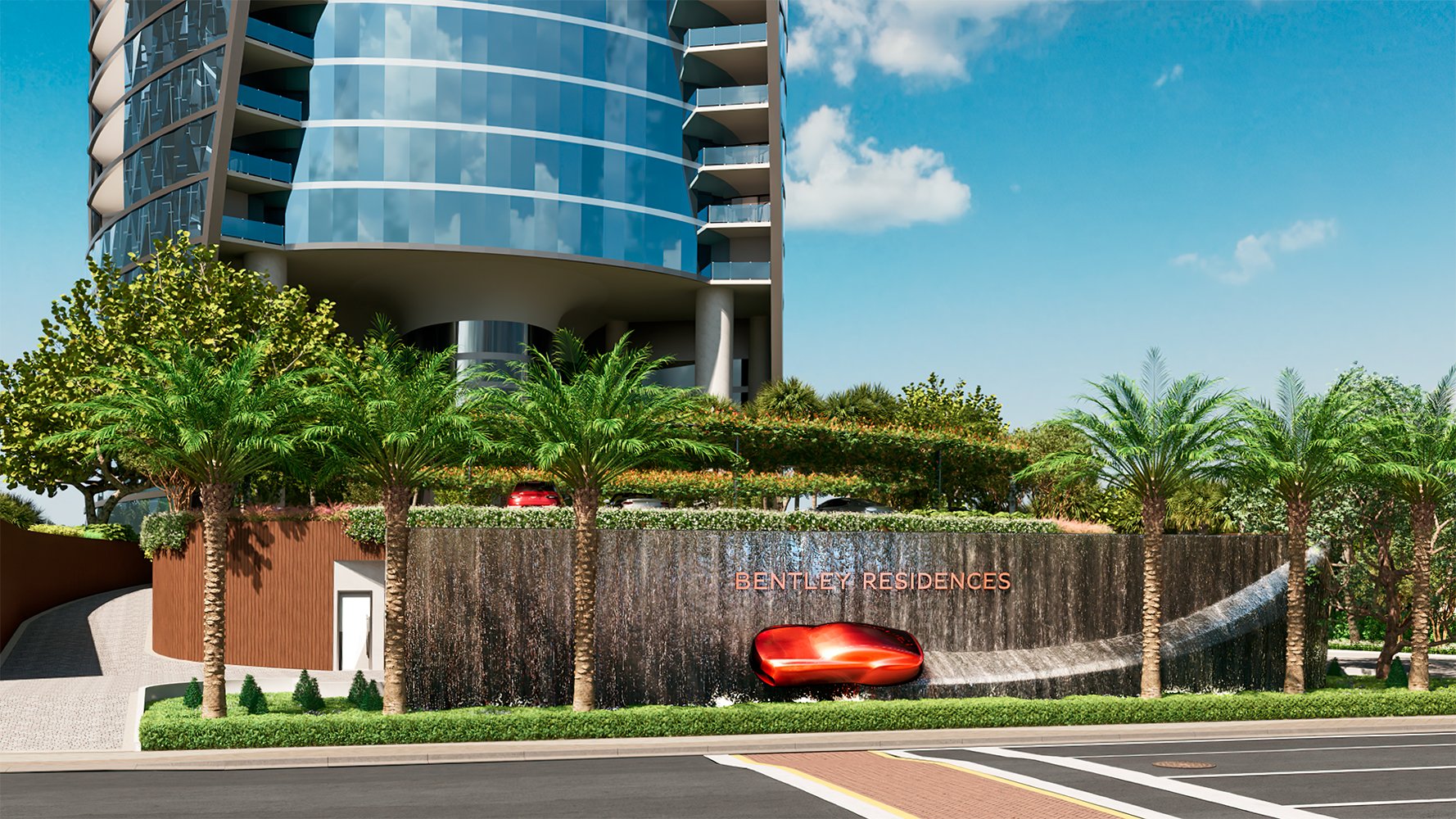
For a buyer considering Hallandale Beach, the conversation may naturally include residences such as 2000 Ocean Hallandale Beach, where the inquiry should focus on how the building handles daily staff presence, recurring vendors, guest vehicles, and service circulation. For a buyer considering Sunny Isles Beach, the same operational lens applies to a branded or oceanfront setting, including Bentley Residences Sunny Isles. Location matters, but the operating manual matters just as much.
Many buyers begin with the familiar lifestyle contrast: Hallandale Beach can feel connected to Broward’s northern coastal rhythm, while Sunny Isles Beach is often evaluated within the broader Miami-Dade luxury corridor. But a staffed household does not live by map lines alone. It lives by access, timing, security, and repetition.
A vague answer about staff parking should slow the purchase conversation. A polished answer should advance it. The best buildings can explain where staff vehicles are directed, when valet is appropriate, whether recurring staff can be pre-authorized, how long a vehicle may remain, and how service providers move from arrival to residence without unnecessary exposure. Buyers do not need friction at the lobby when a chef arrives for dinner preparation or a driver waits between appointments. They need predictability.
In Hallandale Beach, a buyer comparing Shell Bay by Auberge Hallandale with other coastal options should ask whether the building culture is prepared for frequent, named staff as part of the household ecosystem. In Sunny Isles Beach, the same question should be asked at a residence such as St. Regis® Residences Sunny Isles, where the promise of elevated service should be tested against the ordinary mechanics of arrival and parking.
The most useful staff parking questions are specific, calm, and practical. Can household staff be registered in advance? Are there different procedures for daily staff and occasional vendors? Is there a separate valet instruction for service personnel? Where does a driver wait during an extended appointment? How are overnight staff vehicles handled, if permitted? What happens during holiday periods, construction activity, or high-occupancy weekends?
A buyer should also ask who controls the protocol. Sometimes the answer sits with the condominium association. Sometimes it is shaped by management, valet, security, or house rules. In the most refined buildings, these layers feel seamless to the resident. In less disciplined settings, they can become a daily negotiation.
This is especially important for owners who split time between residences. A second-home owner may not be present when staff, vendors, or family guests arrive. If the protocol is informal, every arrival depends on whoever is working that shift. If the protocol is institutionalized, the residence functions with continuity even when the owner is away.
At the top end of the market, privacy is not only about elevator access or residence size. It is about reducing unnecessary visibility. If staff must circle the property, negotiate with valet, or wait in conspicuous areas, the household’s routine becomes more public than it needs to be.
Sunny Isles Beach buyers often focus on tower presence, ocean views, and resort-style amenities. Those attributes matter, but a property such as The Ritz-Carlton Residences® Sunny Isles should still be evaluated through the choreography of arrivals. The question is not simply whether the building feels glamorous. It is whether the service sequence remains graceful when repeated every day.
Hallandale Beach buyers should apply the same standard. A building can be architecturally compelling and still require clarification on how household staff interact with parking, valet, loading areas, service elevators, and resident communication. The more complex the household, the more valuable written clarity becomes.
A buyer may prefer Sunny Isles Beach on lifestyle grounds, then discover that a particular Hallandale Beach residence offers a more comfortable operating environment for staff. Another buyer may begin with Hallandale Beach for convenience, then find that a Sunny Isles Beach building has a more developed hospitality structure for household support. The answer is rarely universal.
This is where the search becomes more sophisticated. The best choice is the address where the owner’s private life can proceed without friction. For some households, that means easy daily access for a nanny and housekeeper. For others, it means a driver who can wait without disrupting guest valet. For another, it means managing rotating security, wellness providers, or extended family staff with discretion.
Parking protocols also influence the perceived value of service amenities. A beautiful lobby cannot compensate for confusion at arrival. A strong valet team cannot resolve unclear rules. A celebrated address may still be the wrong fit if the resident’s actual household pattern conflicts with the building’s procedures.
Before a contract becomes emotional, the buyer should request the relevant house rules and ask direct questions in writing. The goal is not to create tension with the building. It is to understand whether the building can support the way the owner lives.
Key points include recurring staff registration, staff vehicle access, valet expectations, loading and unloading procedures, guest versus vendor classification, overnight allowances, waiting areas, insurance requirements for vendors, and communication protocols for household managers. If the household includes security staff or medically necessary support, the conversation should be even more precise.
The most elegant solution is often not the most permissive one. It is the clearest one. A building with firm, consistent rules may serve an ultra-private owner better than a building that improvises generously but inconsistently. In luxury real estate, discretion depends on predictability.
Questions about staff parking protocols can materially change the choice between Hallandale Beach and Sunny Isles Beach because they move the search from lifestyle imagery to lived performance. The stronger comparison is not which shoreline sounds more prestigious. It is which residence allows a complex household to function quietly, securely, and without repeated explanation.
Hallandale Beach and Sunny Isles Beach each deserve careful, building-specific review. For the right buyer, the winning address will be the one where staff arrivals feel anticipated rather than accommodated, where service movement is composed rather than improvised, and where privacy is protected not only by design, but by daily operation.
Why does staff parking matter in a luxury condo search? It affects privacy, timing, service quality, and the ease with which a staffed household functions each day.
Should buyers compare Hallandale Beach and Sunny Isles Beach by city rules alone? No. The more useful comparison is building by building, because operating procedures can vary materially.
What staff roles should be considered when asking parking questions? Consider drivers, nannies, housekeepers, chefs, security, trainers, health aides, stylists, and recurring vendors.
Is valet service enough to solve staff parking concerns? Not always. Buyers should understand whether valet procedures distinguish residents, guests, staff, and vendors.
What is the most important document to review? House rules and association procedures are essential because they show how daily access is formally handled.
Can staff be pre-authorized in many luxury buildings? Buyers should ask directly, since pre-authorization procedures depend on the individual building and management.
Why does a driver’s waiting location matter? It can affect discretion, traffic flow, guest experience, and the owner’s confidence during appointments.
Should second-home buyers care more about written protocols? Yes. Written clarity helps staff and managers operate smoothly when the owner is not present.
Can staff parking influence resale appeal? For buyers with staffed households, clear operations can make a residence feel more practical and desirable.
What is the best way to evaluate two finalist buildings? Ask the same operational questions of each building, then compare clarity, consistency, and discretion.
For a tailored shortlist and next-step guidance, connect with MILLION.
If branded residences are on your mind — as a home or as an allocation — we would be glad to share what we are seeing, privately.
Begin a quiet conversation