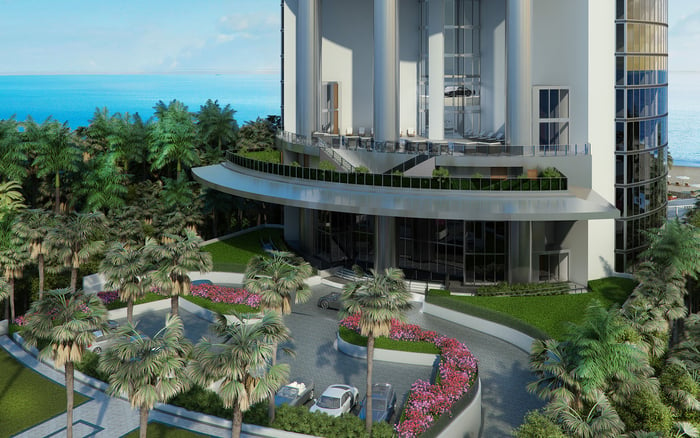
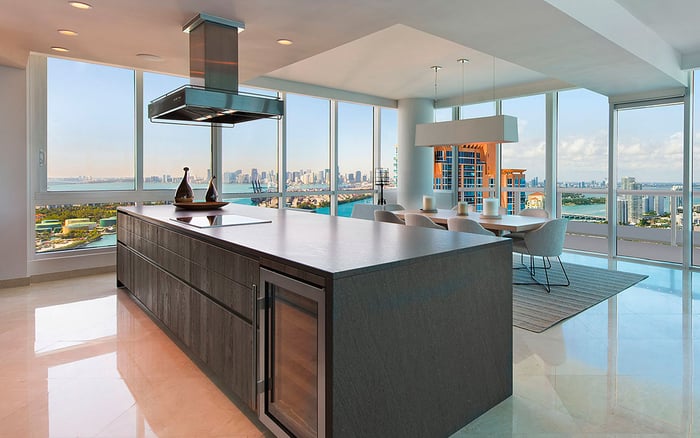
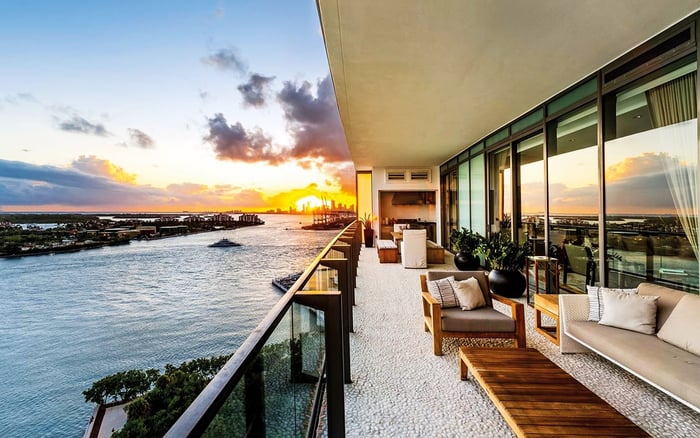
Miami and Miami Beach luxury condominiums deliver resort-level services, but the HOA fee behind that lifestyle is now one of the highest recurring costs of ownership. For high-rise buildings in Miami Dade, average monthly assessments have climbed to levels that can rival a mortgage payment, and fees in ultra-boutique or hotel-branded towers can be substantially higher. This MILLION Luxury editorial explains what HOA fees actually fund, why they have risen so sharply, how to compare buildings on a cost-per-square-foot basis, and how to translate those numbers into an accurate view of long-term carrying cost.
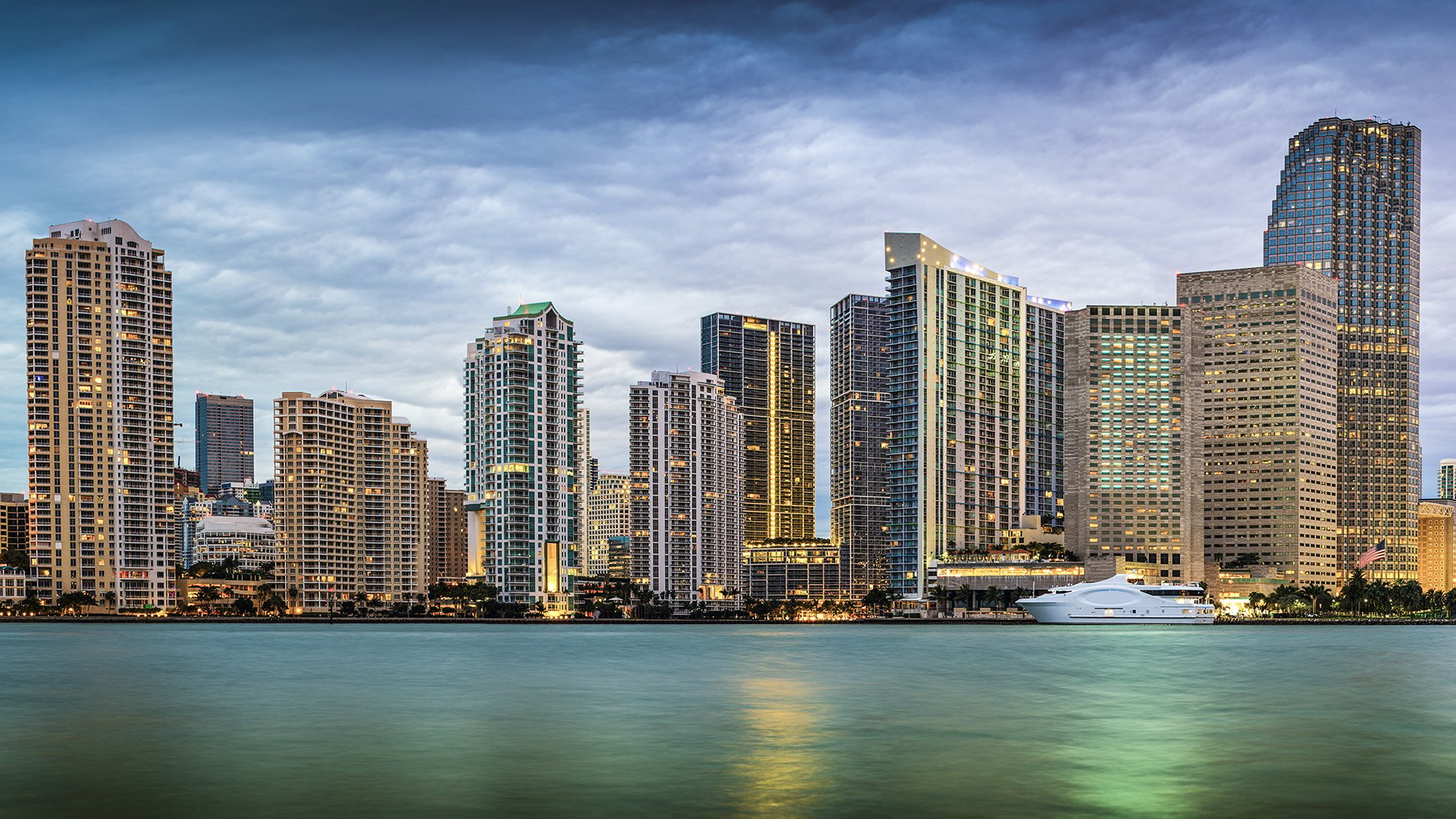
Owning a residence in a Miami or Miami Beach luxury tower is as close as most people will ever come to five star resort living at home. Valet takes the car, the concierge secures the dinner reservation, and the pool team sets up your lounger on the oceanfront deck. Behind that seamless lifestyle, however, is a very real operating budget that shows up each month as the homeowners association fee. In Miami Dade high rise buildings, average condo assessments now exceed roughly one thousand nine hundred dollars per month, second only to New York City, and many buyers are surprised when they add those figures to their carrying cost.
For the ultra premium buyer, the question is rarely whether the service level is worth it in principle. The real question is how to compare one building to another, and how today's fee translates into a long term obligation when insurance, taxes, and club dues are layered in. This MILLION Luxury editorial offers a framework for understanding what HOA fees in Miami's luxury condominiums actually fund, why they have risen so sharply in recent years, and how to evaluate them alongside the other factors that determine the true cost of owning in South Florida.
An HOA fee is simply your share of the association's annual budget. Every owner contributes based on the proportion established in the condo documents, usually tied to unit square footage. In a luxury tower that budget funds a round the clock operating platform that looks much more like a hotel than a conventional apartment building. Payroll, security, engineering, insurance, utilities, reserves, and amenities are all bundled into a single line item on your monthly statement.
Staffing and security are typically the largest line. A true full service building may carry twenty four hour front desk teams, dedicated concierges, valets, doormen, porters, building engineers, housekeepers for common areas, pool and beach attendants, and sometimes even a private dining or club staff. Miami buyers expect privacy and service at the level of a top hotel, and that demands a high staff to residence ratio. In financial statements you will usually see this category labelled management and personnel, often accounting for the biggest share of the budget.
The second major component is building operations. This includes electricity and chilled water for common areas, water and sewer for pools and shared facilities, elevator maintenance contracts, mechanical systems, landscaping, pest control, cleaning, waste removal, and routine repairs. Luxury specific features such as private elevators, high speed destination elevators, elaborate lighting installations, on site generators, and sophisticated building management systems also slot into this bucket. On the coast the mix can include frequent facade washing and corrosion control as salt air takes its toll on exteriors and balcony hardware.
Master insurance has become one of the fastest growing elements inside Miami's HOA fees. The association's policy covers the structure and common elements against perils including windstorm, named hurricanes, flood where applicable, liability, and directors and officers coverage for the board. In recent years, premium jumps have been dramatic after a series of active storm seasons and more stringent underwriting following the Surfside tragedy. Industry data now suggests that in Miami Dade high rise buildings, the insurance component alone often adds three hundred fifty to four hundred dollars per unit per month, and that figure can be higher in direct oceanfront towers with extensive amenities.
Amenities and bulk services are where the luxury lifestyle shows up most obviously in the HOA. Multiple heated pools, resort style decks, private spa and wellness suites, wine rooms, golf simulators, children's play spaces, pet spas, on site restaurants, and private marinas all require staffing, supplies, maintenance, and insurance. Many associations also contract for bulk cable and internet, sometimes bundled at a premium level, or include valet parking, beach club access, package rooms, and other conveniences as part of the monthly dues. When a building appears to have unusually high fees, it is often because so many of the luxuries you would otherwise pay for a la carte are being quietly absorbed by the association.
Finally, reserves fund tomorrow's work before it is urgent. Florida's post Surfside legislation now requires associations to maintain and fund reserves for critical structural components such as roofs, waterproofing, electrical systems, and structural slabs. Buyers will often see line items such as structural reserve, elevator reserve, and building repainting reserve. Well run Miami associations may be directing ten to fifteen percent or more of every budget dollar into these accounts. That does make today's fees feel higher, but it dramatically reduces the odds of a surprise six figure special assessment to pay for a recertification project or facade restoration years down the line.
When you write one monthly check for your HOA fee you are effectively pre paying for security, staffing, building operations, hurricane insurance, amenities, and long term capital repairs. The number can be substantial, but it also buys a level of convenience and risk management that would be nearly impossible to replicate in a single family home.
Not all luxury condos in Miami carry the same HOA burden, and the differences are rarely arbitrary. Location is a pivotal factor. Direct oceanfront towers in Miami Beach, Sunny Isles Beach, and Surfside face constant exposure to salt air and humidity, increasing the frequency of painting, waterproofing, garage and balcony repairs, and mechanical replacement. Inland or bayfront buildings in Brickell, Edgewater, or the Design District may enjoy somewhat lower insurance and maintenance loads, even if they share a similar level of interior finish.
Scale is another. Boutique properties with enormous amenity programs and only a handful of residences inevitably have higher per unit costs because the same pool deck, spa, security team, and engineering staff are being supported by fewer owners. Large scale complexes can spread many of those fixed costs across hundreds of residences. A sixty seven residence oceanfront building with a single tower will almost always post a higher cost per square foot than a one hundred story landmark that combines hotel and residential uses, even if both offer a similar lifestyle.
Age and regulatory milestones also play a role. Newly delivered towers, especially those completed after 2020, benefit from current building codes, efficient mechanical systems, and a long runway before major replacements are due. In the first few years, their projected HOA fees may look surprisingly modest compared with older peers. By contrast, buildings approaching key recertification dates often need to set aside significant sums for concrete restoration, garage work, facade upgrades, and life safety systems, which can show up as rising monthly dues and temporary assessments. Florida's updated condo reform laws have made it much harder for associations to defer these expenses.
The final differentiator is service philosophy. A pure residential tower with a strong but discreet amenity package may operate with a leaner staffing model than a hotel branded property where residents enjoy white glove concierge, room service style dining, housekeeping on demand, and formalized butler style services. Those perks are often bundled into branded residences, but they do not come cheaply. When you see materially higher HOA fees in a Miami building, it is worth asking whether that premium reflects genuine additional value in lifestyle, or simply inefficiency in the way the property is run.
The cleanest way to compare HOA fees across Miami luxury condos is to normalize them to a cost per square foot per month. Take the monthly maintenance listed for a residence and divide it by the unit's interior square footage. A unit with a monthly fee of one thousand five hundred dollars and two thousand square feet is paying roughly seventy five cents per square foot per month. Another unit with a three thousand two hundred dollar fee on three thousand square feet is paying just over one dollar per square foot. That per foot metric allows you to line up buildings of very different sizes and price points on the same scale.
Numbers, however, only tell part of the story. A tower charging ninety cents per square foot with a single lap pool, a modest fitness room, and no staff beyond security may feel far more expensive in lifestyle terms than a property at one dollar twenty cents per square foot that includes a full spa, serious gym, residents lounge, children's areas, and staffed pool and beach service. When you evaluate a building, review the amenity stack and list of inclusions line by line. Does the fee cover premium internet, resort style pool service, valet, or membership in a private club, or are those additional out of pocket costs you will incur outside the HOA.
The association's financial health is just as important as the headline number. A surprisingly low fee can be a warning sign that the board has chosen to keep dues artificially suppressed by underfunding reserves or deferring maintenance. Ask to see the most recent budget, year end financial statements, reserve schedules, and any engineering reports tied to recertification. Buildings that highlight strong reserves and a history of avoiding special assessments are often safer choices, even if the monthly fee is somewhat higher. Conversely, towers with a long list of pending projects, past due assessments, or prolonged disputes over repairs can expose owners to sudden, large cash calls.
To understand true carrying cost, add the HOA to every other recurring expense tied to ownership. A simple framework is: monthly HOA fee, plus monthly share of property taxes, plus condo insurance on the interior and contents, plus any club, marina, parking, or golf dues that are not included in the HOA, plus your mortgage payment if you are financing. That total is the monthly number to evaluate against your lifestyle and investment goals. For a five million dollar residence, even small differences in HOA and tax assumptions can swing the annual carrying cost by tens of thousands of dollars.
End users often rightly place lifestyle first, especially when Miami will be a primary home. Investors and pied a terre buyers, however, should pay close attention to the way HOA fees eat into yield, particularly in buildings with strict rental policies or very high insurance allocations. A deliberate, side by side comparison of total monthly cost for each residence on your shortlist will make it clear which options align with your expectations for both enjoyment and long term financial comfort.
In the ultra boutique category, Apogee South Beach in the South of Fifth enclave is frequently cited as an example of a building where exclusivity commands a premium. With only sixty seven residences sharing a prime Miami Beach bayfront site, a resort pool deck, spa, and vigilant security, its HOA fees can approach or exceed five dollars per square foot per month for larger residences. Owners are effectively maintaining a private club environment with a small group of neighbors, and the monthly assessments reflect that reality.
Farther north in Sunny Isles Beach, The Estates at Acqualina illustrates how scale can temper costs even in an amenity rich environment. Between two towers, the community offers an extraordinary collection of features, from an ice skating rink and bowling alley to a Formula One simulator and Rolls Royce house car service, all set on a long stretch of beachfront. Published HOA figures for the property have generally clustered in the mid one dollar per square foot range, high by broader market standards but arguably efficient given the sheer volume of five star programming available to residents.
In the urban core, Waldorf Astoria Residences Miami has promoted projected maintenance below one dollar per square foot per month, an unusually low figure for a one hundred story icon that will share services with a hotel component. The key is scale and mixed use. With hundreds of residences and hotel guests participating in aspects of the overall operation, certain costs can be spread widely. If future actuals land near these early projections, it would demonstrate that a flagship address can still deliver a competitive HOA for its segment, underscoring the importance of analyzing cost per foot within the context of brand, height, and density.
Surf Club Four Seasons Residences in Surfside represents the other end of the branded spectrum. Here, residents enjoy direct access to Four Seasons level dining, spa, beach, and concierge offerings woven into a historically significant eight acre oceanfront site. HOA fees at Surf Club Four Seasons Residences are typically quoted well above three dollars per square foot per month, reflecting both the caliber of the brand and the extensive hotel quality program it supports. Nearby Fendi Chateau Residences, a more purely residential but still intensely serviced boutique building, usually prices its monthly dues in the high two dollar per square foot zone. Both demonstrate how hotel grade lifestyle predictably commands a premium.
Boutique projects such as Colette Residences provide a useful counterpoint. Designed for buyers who value intimacy and curated design as much as over the top amenities, Colette Residences is positioned to offer a full service yet finely edited lifestyle with a resident base that can still spread fixed costs efficiently. Prospective owners can review preliminary budgets, reserve schedules, and inclusions through resources such as Colette Residences to gauge whether projected HOA levels align with their expectations for services, privacy, and long term maintenance.
These examples are illustrative rather than exhaustive, and precise fees change over time as boards respond to insurance markets, staffing costs, and evolving building needs. What matters is the discipline of comparing cost per square foot, inclusions, reserves, and total monthly carrying cost across each candidate property. Working with an advisor who lives in this data daily can help you interpret budgets, reserve studies, and local regulations with nuance. For a confidential, building by building analysis of Miami and Miami Beach luxury condos tailored to your lifestyle, connect with MILLION Luxury.
What is a reasonable HOA fee for a Miami luxury condo?
For newer full service luxury buildings in Miami and Miami Beach, many buyers now see monthly HOA fees in the range of seventy five cents to one dollar fifty per square foot as typical, with truly boutique or hotel branded properties running materially higher. The right number for you depends less on the average and more on how that fee aligns with the services, reserves, and total carrying cost of a specific building.
How can I tell if a building's HOA fee is too low?
Ask for the association's budget, reserves, and engineering reports. Very low fees in an older building may indicate that the board is deferring maintenance or underfunding reserves, which can lead to large special assessments later. Strong cash reserves, transparent planning for recertification work, and a modest but steady history of fee increases are healthier signs than rock bottom dues.
What extra monthly costs should I add on top of the HOA?
Add your monthly share of property tax, interior condo insurance, any flood coverage not included in the master policy, utilities that are not bundled in the HOA, club, marina, or golf dues, and your mortgage payment if you are financing. Together these items, plus the HOA, form the true monthly cost of ownership.
Is it better to choose a boutique building or a large tower for lower fees?
Neither option is automatically cheaper. Boutique buildings like Apogee South Beach often have higher per foot fees because there are fewer owners sharing fixed costs. Very large towers such as Waldorf Astoria Residences Miami may spread expenses across many units, lowering the per foot number, but still carry a significant absolute monthly cost. The best choice depends on whether you prioritize privacy, brand, or efficiency.
How often can HOA fees increase in Miami condominiums?
Associations typically set budgets annually, and boards can adjust fees each year if operating or insurance costs change. In the current environment, mid single digit percentage increases are common, with larger jumps possible after insurance repricing or major capital projects. Reviewing several years of past budgets will show you whether a building's history of increases feels measured and predictable.
If branded residences are on your mind — as a home or as an allocation — we would be glad to share what we are seeing, privately.
Begin a quiet conversation