In South Florida luxury real estate, “pet-friendly” is rarely a simple yes or no. Building rules can hinge on weight limits, pet counts, fees, elevator protocols, and whether you are an owner or a tenant. For buyers and renters who travel with a dog, or simply want a building that treats pets as part of the lifestyle, the best options combine clear policies with amenities that make day-to-day living effortless. This MILLION Luxury editorial highlights ten South Florida condo buildings with publicly disclosed, pet-forward rules or amenities, then translates the fine print into practical guidance for evaluating your next address.
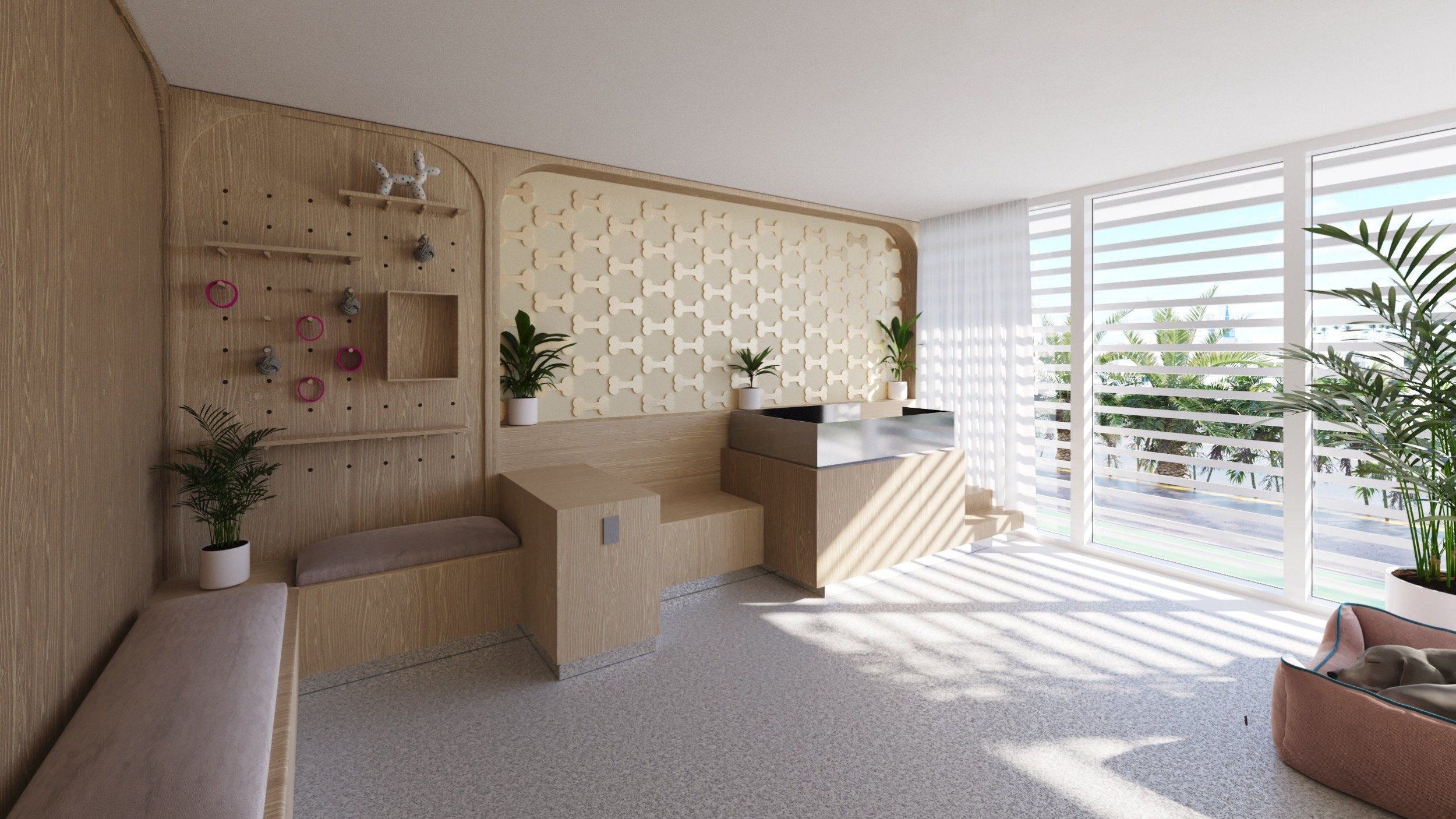
In a coastal market defined by concierge service and resort-caliber amenities, pet policies can feel unexpectedly restrictive. Many South Florida condo buildings impose meaningful limits, leaving truly pet-forward towers in shorter supply than many buyers anticipate. The result is a quiet form of scarcity: buildings that pair high design with rules that actually work for day-to-day life with a dog.
For households relocating from single-family homes, the adjustment is rarely about a lack of willingness to comply. It is about predictability. A simple “pets permitted” line item can conceal real friction: a 25-pound threshold that excludes most breeds, fees that operate as a deterrent, or elevator protocols that complicate everyday routines.
In rental scenarios, the gap can be even more pronounced. Across Miami-Dade, only about half of active rental listings allow pets, and multifamily rentals tend to be less accommodating than single-family rentals. If you are a renter with a large dog and a preference for a high-rise lifestyle, you are often choosing from the narrowest slice of the market.
Luxury buyers naturally focus on view corridors, ceiling heights, and service standards. Pet-forward living adds a second, equally important layer of due diligence. The best outcomes come from treating pet policy as a material building feature, not a footnote.
Key items to clarify early:
A subtle market signal is space: pet-friendly multifamily rentals have shown a larger median living area than units that do not allow pets. In practice, that extra square footage is not just comfort. It is circulation space for crates, feeding stations, and the calm that comes from a layout that does not force every walk through a tight corridor.
1. Panorama Tower, Brickell - “Dogtown” amenity Panorama Tower stands out for explicitly positioning “Dogtown” within its amenity package, signaling a pet-spa or daycare-style convenience on site. For residents with long workdays in Brickell, an in-building pet service can carry the same day-to-day value as a gym or business center.
2. Paramount Miami Worldcenter, Downtown - dedicated dog park Paramount Miami Worldcenter highlights a dedicated dog park-a straightforward feature that reshapes daily rhythm. A true on-site dog run reduces reliance on street-level loops and turns the “quick outing” into a controlled, private amenity.
3. Nine at Mary Brickell Village, Brickell - no pet weight restrictions (marketed) Nine at Mary Brickell Village is marketed as having no pet weight restrictions, an uncommon position for a major South Florida condo setting. A disclosed tenant pet fee to the association has been noted in building details, which matters for renters budgeting beyond base rent.
4. MarinaBlue, Miami - two pets, 45-pound maximum each MarinaBlue allows up to two pets per residence, with a 45-pound maximum per pet. For many buyers, that threshold is the line between “workable” and “impractical,” particularly for households with active, medium-to-large breeds.
5. Ten Museum Park, Downtown Miami - two pets, combined 100-pound cap Ten Museum Park permits up to two pets per unit with a combined 100-pound weight cap, plus a disclosed non-refundable pet fee per pet. The combined-limit structure can be ideal for two smaller dogs, or one larger dog with a smaller companion.
6. The Floridian, South Beach - two pets, no restrictions (listed) The Floridian is listed as allowing two pets per apartment with “no restrictions.” For a South Beach lifestyle, the value is straightforward: fewer constraints typically mean fewer day-to-day negotiations, especially for residents who host visitors or keep an active outdoor routine.
7. Apogee South Beach, South of Fifth - elevator protocol for pets over 25 pounds Apogee South Beach has been described as having no pet fees, paired with a rule requiring pets over 25 pounds to use the service elevator. In a true full-service environment, a service-elevator protocol can be a fair trade for clarity-provided access and staffing are seamless.
8. Paraiso Bayviews, Edgewater - pet-friendly positioning with resort amenities Paraiso Bayviews is marketed as pet-friendly, pairing that stance with extensive shared amenities and access to the Paraiso Beach Club. For buyers who want a resort lifestyle without treating pet ownership as an exception, that combination is meaningful.
9. Icon Brickell, Brickell - two pets, 100-pound total weight limit (policy summary) Icon Brickell’s pet rules have been summarized as allowing up to two pets with a 100-pound total weight limit. For many Brickell buyers, the appeal is balancing a social, high-energy location with a policy framework that can still accommodate real pets-not only toy breeds.
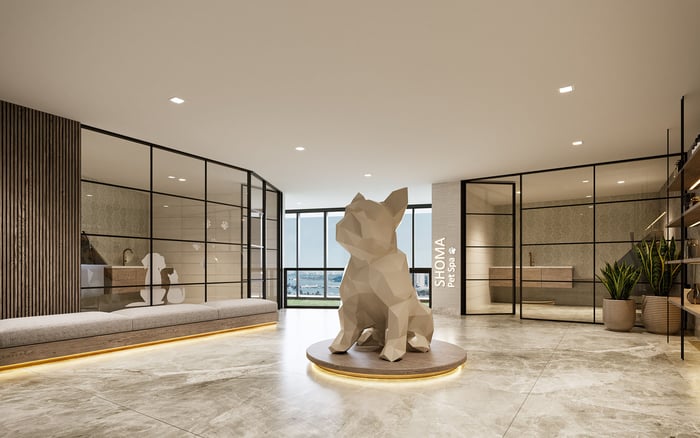
10. The Ritz-Carlton Residences, Pompano Beach - dedicated Pet Spa The Ritz-Carlton Residences, Pompano Beach lists a dedicated Pet Spa as part of its amenities. In the ultra-premium segment, the most persuasive pet features are the ones that remove friction-grooming, cleanup, and care handled with the same discretion as valet.
Brickell and Downtown living is built around efficiency: coffee within minutes, discreet dinners, and commutes measured in blocks. With pets, convenience is defined less by the neighborhood and more by building circulation and amenity planning.
Map your day as it truly operates. If your dog needs midday attention, an in-building offering like Panorama Tower’s “Dogtown” can function as a lifestyle anchor. If you prioritize a predictable outdoor routine without street-level intensity, a dedicated dog park like the one marketed at Paramount Miami Worldcenter can be a practical differentiator.
For buyers drawn to new, design-forward inventory in Brickell, the neighborhood’s evolving residential landscape extends well beyond any single tower. Addresses such as 2200 Brickell, ORA by Casa Tua Brickell, and The Residences at 1428 Brickell sit within a district where service culture is high. The real question is whether pet policy is managed with the same level of intention.
Miami Beach is not one market. It is a set of micro-lifestyles, from South of Fifth privacy to broader South Beach energy. For pet owners, the most valuable attribute is often not an extra amenity-it is the absence of burdensome constraints.
Buildings like The Floridian being listed with “no restrictions” for two pets, and Apogee South Beach being described as having no pet fees with a service-elevator protocol for larger pets, reflect two distinct models of pet-forward luxury. One prioritizes minimal limitation; the other prioritizes structured discretion.
For those exploring new-build and boutique inventory, 57 Ocean Miami Beach and Apogee South Beach reflect the range of Miami Beach living-where pets may be seamlessly integrated or quietly managed through building operations.
North of Miami, the luxury condo conversation increasingly overlaps with hospitality. That shift matters for pet owners because hotels have long treated pet policy as part of the guest experience, not an afterthought.
At Four Seasons Hotel and Residences Fort Lauderdale, accommodations permit up to two pets per room, each up to 25 pounds, framing pet acceptance within a defined, service-oriented standard. In Pompano Beach, a dedicated Pet Spa at The Ritz-Carlton Residences signals a similar philosophy for full-time residences: pets are not merely allowed-they are planned for.
For buyers who want Fort Lauderdale prestige with a modern residential lens, Four Seasons Hotel & Private Residences Fort Lauderdale is part of a broader ecosystem where lifestyle programming is expected, and pet accommodations increasingly follow.
A showing can reveal as much as a rule sheet-if you know where to focus.
Finally, be precise about your own household. A two-pet maximum is workable for many, but weight structures vary: two dogs at 45 pounds each is a fundamentally different reality than a combined 100-pound cap-especially if you anticipate adding a second pet later.
What does “pet-friendly” typically mean in South Florida luxury condos? It usually means pets are permitted with conditions, often tied to weight limits, fees, and pet counts.
Are truly pet-forward buildings common on the coast? No. Many coastal condo buildings impose restrictions, so the most accommodating towers are relatively scarce.
Do pet rules differ for owners versus renters? They can. Some buildings apply different rules or fees depending on whether you rent or own.
How many pets do luxury condo buildings usually allow? Two pets per residence is a common limit in publicly disclosed policies.
Are weight limits still a major issue in high-rises? Yes. Weight thresholds and combined caps can determine whether a building works for your household.
Do any buildings offer true pet amenities, not just permission? Yes. Some towers market features like a dedicated dog park, pet spa, or in-building pet service.
Can pet fees materially change monthly costs? They can, especially when buildings charge both upfront fees and monthly pet rent.
Is an on-site dog run actually useful in dense neighborhoods? Yes. It can simplify daily routines by reducing reliance on sidewalks and street crossings.
Should buyers assume pet policies stay the same over time? No. Association rules can change, so it is wise to confirm current policy during due diligence.
What is the most important question to ask during a tour? Ask for the current written pet policy and how it is enforced day to day, including elevator use.
To compare the best-fit options with clarity, connect with MILLION Luxury.
If branded residences are on your mind — as a home or as an allocation — we would be glad to share what we are seeing, privately.
Begin a quiet conversation