A discreet buyer’s guide for Greenwich residents comparing boutique residences across Miami’s waterfront, urban, and village-style luxury markets.
For a Greenwich buyer, the move into a Miami boutique residence is rarely about downsizing in the conventional sense. It is about translating an established standard of privacy, finish, service, and ease into a different climate and cadence. The strongest purchase is not simply the most dramatic view or the newest lobby. It is the residence that feels composed from garage arrival to terrace, from morning coffee to late-night returns, from family visits to quiet weeks in season.
Miami rewards precision. A buyer accustomed to acreage, gated entries, staff routines, and deep neighborhood nuance should approach the market with the same exacting lens. Boutique does not mean modest in ambition. It means more intentional: fewer moving parts, a clearer identity, and a lifestyle that can feel both serviced and private when chosen well.
This guide is designed for the buyer who knows quality but wants a sharper framework for choosing among Brickell, Miami Beach, Coconut Grove, and quieter waterfront pockets.
Boutique is an overused word, but for a high-net-worth buyer it should have practical meaning. It can suggest a more intimate residential experience, a stronger relationship between architecture and site, and amenities that feel curated rather than crowded. The essential question is not whether a building is marketed as boutique. The question is whether daily life there is genuinely more personal.
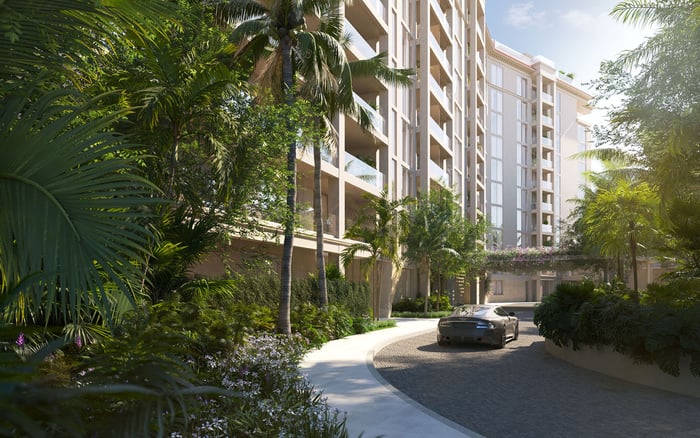
Start with arrival. In Greenwich, privacy is often expressed through setbacks, landscape, and controlled access. In Miami, the same principle may appear through a discreet porte cochere, separate residential circulation, attentive valet protocol, and elevator access that limits unnecessary exposure. A grand lobby can be beautiful, but the better test is whether it supports calm movement.
Then consider how the residence lives. Deep terraces, well-zoned entertaining areas, proper kitchen function, storage, staff access, and separation between primary suites and guest rooms matter as much as branded finishes. A boutique residence should not feel like a hotel room enlarged into an apartment. It should feel like a true home, with the convenience of service and the dignity of private domestic space.
Greenwich buyers often begin with a simple request: waterfront, privacy, and proximity. Miami quickly complicates that request in productive ways. The city is not one market, but a series of lifestyle microclimates.
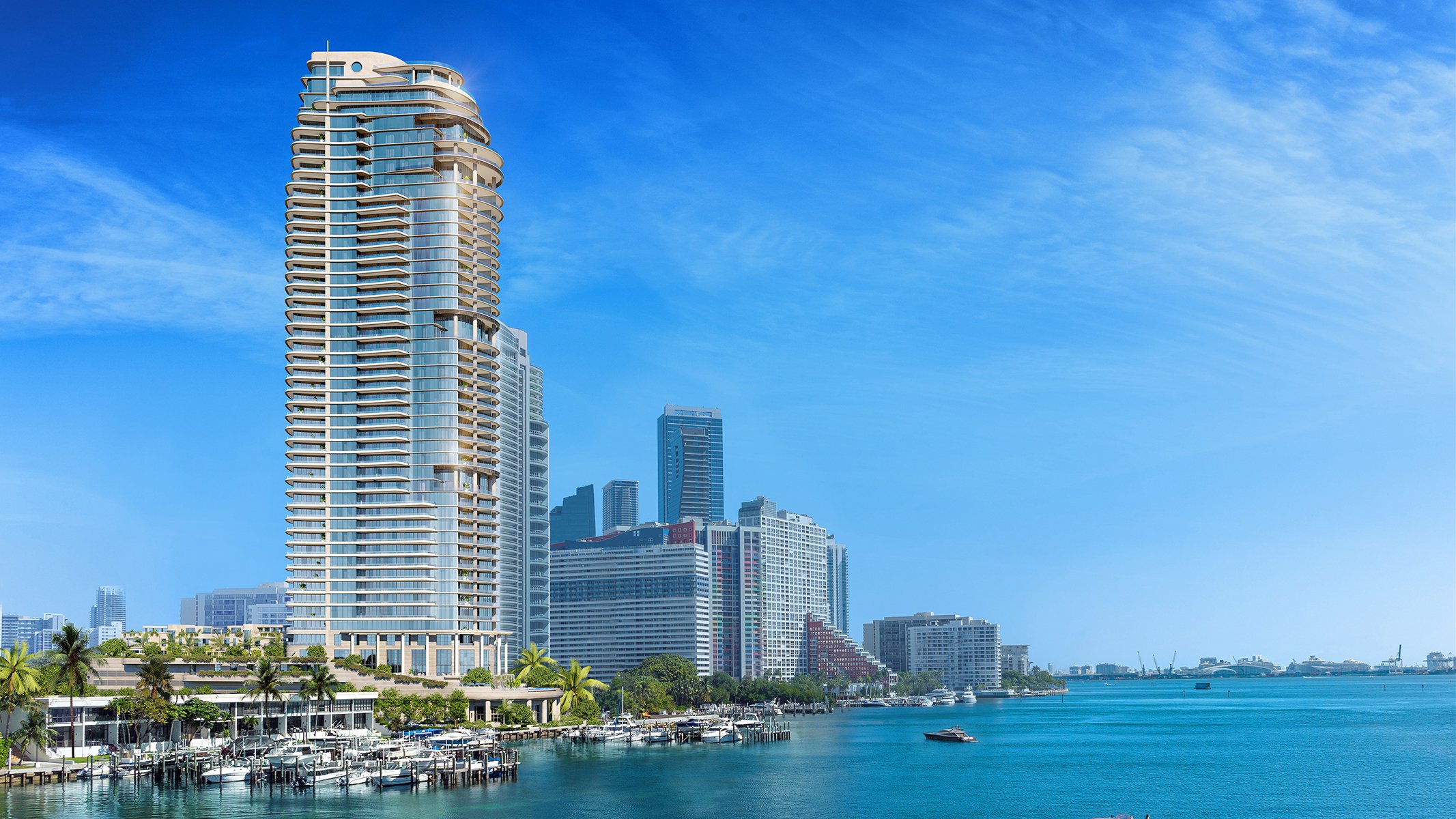
Brickell suits buyers who want energy, dining, finance, and an urban, marina-adjacent rhythm. It is vertical, polished, and efficient. A residence such as 2200 Brickell may appeal to buyers who want the convenience of a central address while still considering scale, service, and lock-and-leave ease.
Miami Beach offers a different promise: ocean air, resort language, artful architecture, and a more ceremonial sense of arrival. Buyers who want sand, wellness, dining, and a recognizable coastal identity may gravitate here. In that context, The Perigon Miami Beach belongs in the conversation for those studying how design, beachfront living, and privacy can intersect.
Coconut Grove is less about display and more about atmosphere. Its appeal is shaded, residential, and village-like, with a softer rhythm than the central urban core. For a buyer leaving a leafy enclave, Four Seasons Residences Coconut Grove can illustrate why the Grove is often considered by those who want service and refinement without surrendering neighborhood texture.
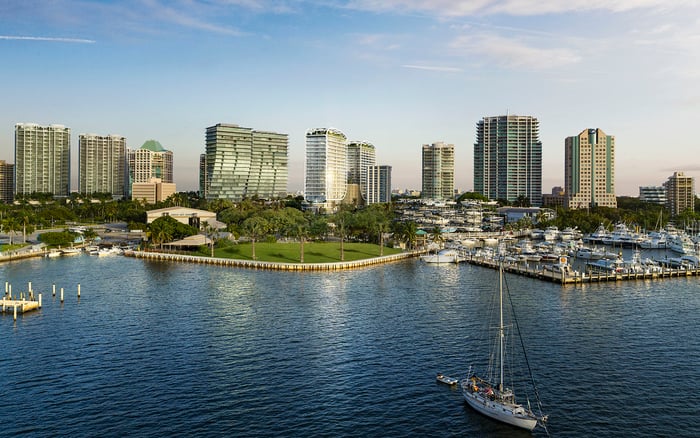
Waterfront is not one condition. Bayfront, oceanfront, canal-adjacent, marina-oriented, and island settings each behave differently in daily life. A Greenwich buyer should define what water means before touring. Is it a contemplative view from the primary suite? Direct beach access? A boating lifestyle? A terrace that functions as an outdoor living room? Or simply the emotional quiet of blue space?
In Miami, the strongest waterfront purchase is not always the one with the loudest panorama. Orientation, terrace depth, wind exposure, privacy from neighboring buildings, and the quality of the approach all matter. A spectacular view can lose appeal if the floor plan forces every room into a single gesture. Conversely, a calmer water view can feel more livable if the residence has proportion, shade, and multiple ways to inhabit the outdoors.
Buyers considering quieter bay settings may find Bay Harbor Islands compelling because it can offer a more residential scale while remaining connected to the broader Miami Beach and Bal Harbour orbit. A project such as Onda Bay Harbor is worth studying in that context, particularly for buyers weighing a gentler waterfront lifestyle against the visibility of larger destinations.
The hidden value in a boutique residence often lies in governance. Before falling in love with a view, study the rules that will shape ownership. Pet policies, leasing restrictions, guest procedures, renovation protocols, staffing levels, reserve philosophy, and amenity access are not secondary details. They determine whether a building feels effortless or frustrating.
Service deserves equal scrutiny. A highly serviced property can be appealing, but only if the service culture matches the buyer’s expectations. Some owners want hotel-style attentiveness. Others want quiet competence, minimal interaction, and impeccable response when needed. A Greenwich buyer accustomed to household systems should ask how packages, vendors, housekeeping, car handling, guests, and maintenance requests are actually managed.
Security is also more nuanced than a guarded desk. It includes elevator control, garage circulation, building access, staff training, and the discretion of the overall community. The most desirable boutique buildings often feel calm because protocols are clear and residents share similar expectations.
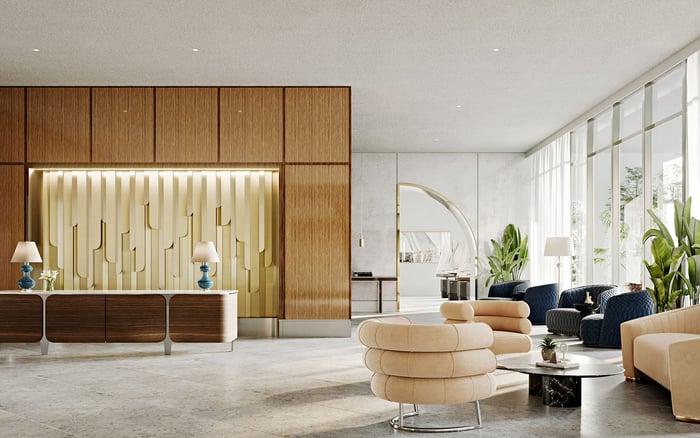
Luxury interiors can blur together on a tour. Stone, millwork, lighting, appliances, and hardware matter, but they are not the whole story. A serious buyer should study ceiling heights, sightlines, wall space for art, kitchen work zones, acoustic separation, and the ability to host without making the entire home feel public.
For buyers moving from a large Greenwich residence, storage is often underestimated. Seasonal wardrobes, entertaining pieces, sports equipment, wine, luggage, and family overflow all require planning. The most elegant Miami residence is the one that absorbs life gracefully.
Architecture should also be judged from the outside in. Does the building have a clear identity? Does it relate to its site? Does the amenity program serve real habits rather than brochure photography? A boutique residence should make daily life feel more considered, not more theatrical.
A second-home purchase can be emotional, but liquidity still matters. The most resilient choices tend to have a legible reason to exist: a strong location, limited comparable supply, enduring architecture, appealing views, practical layouts, and governance that protects the owner experience. Avoid buying only the novelty of a launch moment.
For buyers who prefer quieter glamour, Surfside may also merit attention. It offers a refined coastal identity distinct from the louder parts of the beach. The Delmore Surfside can be considered by those evaluating how exclusivity, architecture, and a low-key seaside setting align with long-term ownership goals.
The right boutique residence should feel desirable now and understandable later. Future buyers should be able to grasp, almost immediately, why the property matters.
Tour fewer properties, but tour them better. Visit at different times of day. Sit on the terrace long enough to understand sound, sun, and privacy. Walk the arrival sequence from car to residence. Ask how guests enter, where staff park, how deliveries are handled, and what happens during peak season.
Bring the same discipline you would bring to a Greenwich estate inspection. Review building documents with qualified advisors. Understand insurance, maintenance, reserves, and any restrictions that affect use. If the residence is pre-construction, focus on floor plan integrity, developer track record, contract structure, and the specificity of promised finishes and services.
Most importantly, match the building to the life you actually intend to live. Miami offers many versions of luxury. The best one is not the most visible. It is the one that makes ownership feel natural.
What should a Greenwich buyer prioritize first in Miami? Start with lifestyle fit: urban energy, beach living, village atmosphere, or quieter waterfront privacy. The right neighborhood narrows the search more effectively than finishes alone.
Is a boutique residence always better than a larger tower? Not always. Boutique living can offer intimacy and discretion, while larger buildings may provide broader amenities and deeper staffing.
Which areas should a first-time Miami buyer compare? Brickell, Miami Beach, Coconut Grove, Surfside, and Bay Harbor Islands are useful starting points because each offers a distinct rhythm.
How important is terrace design? Very important. In South Florida, the terrace often functions as a primary living space, not an occasional balcony.
Should buyers focus on branded residences? Branding can signal service and design intent, but the floor plan, governance, location, and owner experience still deserve independent scrutiny.
What documents should be reviewed before purchase? Buyers should have qualified advisors review association documents, budgets, rules, reserves, contracts, and any use restrictions.
Is pre-construction appropriate for a Greenwich buyer? It can be, if the buyer is comfortable with timing, contract terms, finish specifications, and the developer’s execution history.
How should privacy be evaluated during tours? Study arrival, elevator access, sightlines from neighboring buildings, terrace exposure, guest procedures, and staff protocols.
Does waterfront automatically mean better resale potential? Waterfront can be powerful, but orientation, layout, scarcity, building quality, and neighborhood demand all influence long-term appeal.
What is the best way to begin a search? Define how you plan to live in Miami, then compare only the buildings that support that daily routine with clarity and discretion.
To compare the best-fit options with clarity, connect with MILLION.
If branded residences are on your mind — as a home or as an allocation — we would be glad to share what we are seeing, privately.
Begin a quiet conversation