A practical MILLION guide for Toronto collectors relocating to Brickell or South Florida, with a focus on climate control, flood risk, hurricane resilience, light exposure, insurance readiness and the residential features that protect serious art collections.
For a Toronto collector moving to Brickell, the first mistake is treating art storage as secondary to skyline, terrace and brand. South Florida changes the conservation equation. Instead of managing a northern cycle of seasonal heating and cooling, the residence must perform through year-round heat, humidity, hurricane exposure, flood risk and intense sun.
That does not mean a collector must avoid glass, height or the water. It means the home should be assessed as conservation infrastructure. Stable temperature, stable relative humidity, low light exposure and pollutant control are not museum abstractions; they are purchase criteria. For a mixed collection, the goal is not one perfect setting for every work. The goal is to avoid damaging swings, especially for paper, canvas, wood, photographs and objects with sensitive finishes.
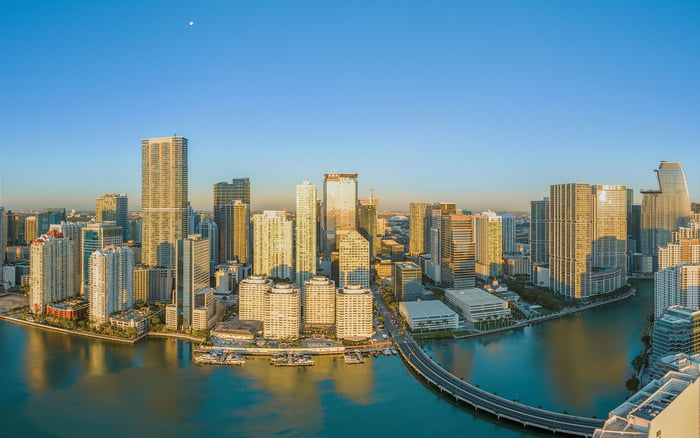
Brickell is attractive for a Toronto buyer because it offers urban energy, proximity to offices, dining, private clubs and the cultural gravity of Miami. For a collector, however, a high-rise home brings dependencies that a detached house may not: shared mechanical systems, elevator rules, loading-dock schedules, building-wide generator coverage, façade performance and post-storm recovery protocols.
A search that includes Baccarat Residences Brickell, Una Residences Brickell or The Residences at 1428 Brickell should therefore include a conservation walkthrough, not only a design tour. Ask where art would actually live during a storm, where crates would stage, which elevators can accommodate professional handlers, and whether the building can maintain humidity control if power is interrupted.
Flood-zone status should be verified before contract deadlines, particularly for Brickell and waterfront candidates. Storm-surge planning zones matter as well. A beautiful storage room is not appropriate if water intrusion, surge exposure or extended outage risk could compromise the collection.
The best art room in South Florida is often not the most glamorous room. It is interior, protected, secure, away from direct sunlight, away from damp exterior walls, and served by independent or tightly controlled HVAC and dehumidification. It should support gradual environmental stability rather than dramatic corrections after an outage or an open terrace door.
For paintings, wall selection matters. Avoid direct sun, fireplaces, air vents and locations where exterior moisture might affect the back of the work. For works on paper, large expanses of glass require a disciplined light strategy: UV mitigation, shades, low-intensity lighting and careful rotation. For photographs, a dedicated storage zone may be more appropriate than casual display throughout a sunlit apartment, because temperature, humidity, light and pollutants require closer control.
This is where design and architecture become operational. The right floor plan creates display walls that do not fight the climate. The wrong one turns every prized surface into a conservation compromise.
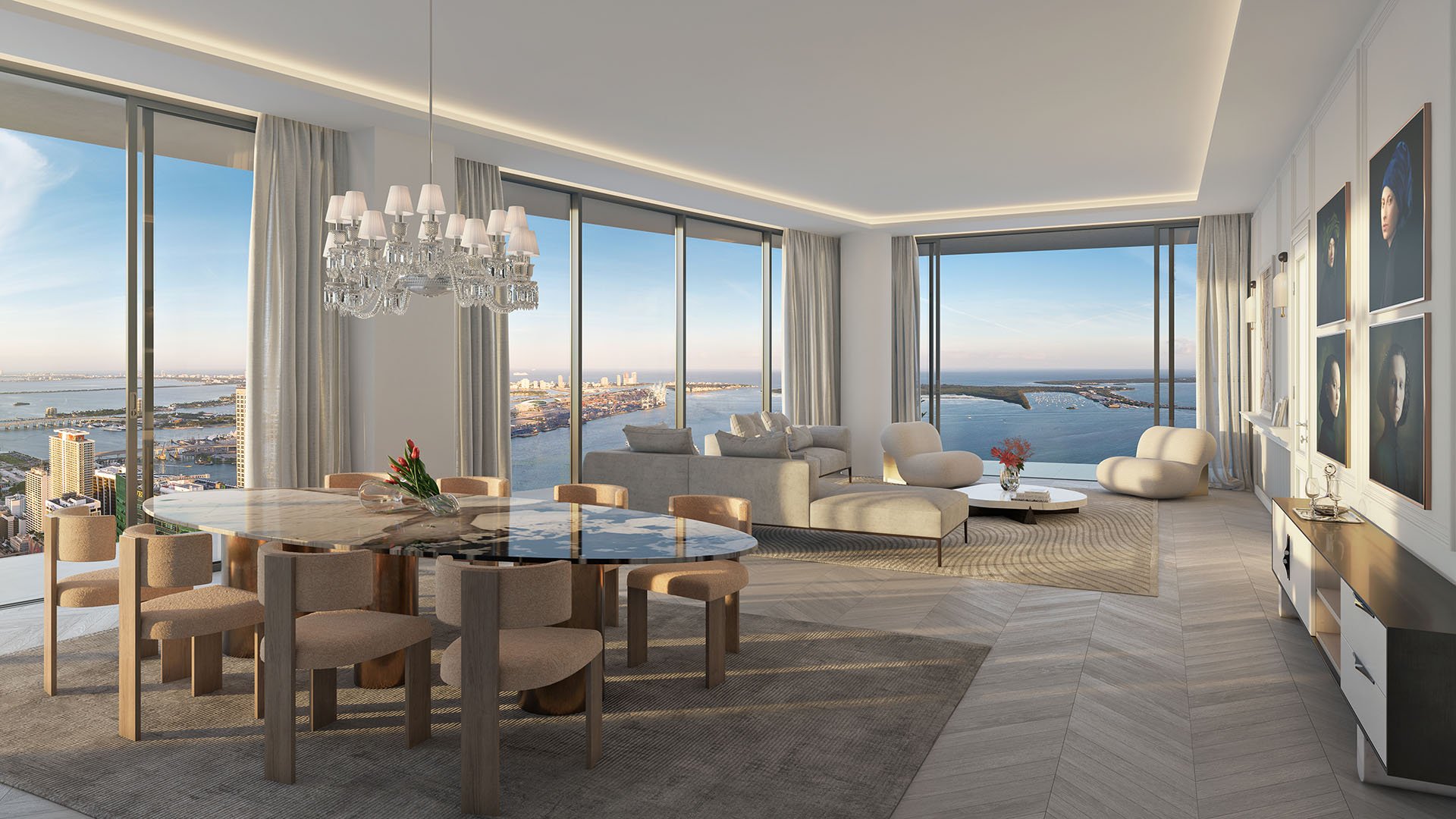
The South Florida luxury buyer is often seduced by panoramic glass. Collectors should admire it, then interrogate it. Light damage is cumulative and irreversible for many materials, making exposure management more important than ordinary staging suggests. A west-facing wall may be spectacular at sunset and unsuitable for works on paper. A double-height living room may be dramatic, yet difficult to stabilize if the collection requires quiet environmental control.
In Miami Beach, the same discipline applies to oceanfront and bayfront living. A buyer considering The Perigon Miami Beach should think beyond the romance of the water and ask how shades, films, lighting scenes, storage locations and hurricane procedures support the collection. The view can be part of the life. It should not become the collection’s primary risk factor.
Hurricane planning is not only about personal safety and property protection. It is a collection-management issue. Impact protection, storm-rated exterior components, backup power, emergency response planning and post-storm humidity control should all be reviewed before closing. In Miami-Dade, exterior windows, doors, shutters and related envelope components should be evaluated through the local Notice of Acceptance framework when applicable.
Generator coverage deserves special attention. Some buildings support life-safety systems and limited common-area functions, but not necessarily full in-unit climate stability. For a high-value collection, that distinction can be decisive. Ask what remains powered, for how long, and whether independent dehumidification in a storage room can continue after a prolonged interruption.
Brickell is not the only answer for a Toronto collector. Coconut Grove may appeal to buyers who want a quieter residential setting with a different relationship to greenery, privacy and access. A search that includes Four Seasons Residences Coconut Grove can still be evaluated through the same collector lens: elevation, storage-room placement, art-handler access, HVAC control, backup systems and light exposure.
Downtown Miami, Miami Beach, Surfside, Bal Harbour, Fisher Island and select inland neighborhoods can each make sense, depending on the collection and lifestyle. High floors may reduce certain water concerns but increase reliance on elevators, building staff and vertical logistics. Low floors may simplify movement but demand sharper flood and surge analysis. There is no universal best address. There is only the address that best protects the art while supporting the life around it.
Before deadlines expire, the buyer’s team should examine flood elevation, storm-surge planning zone, storm glazing, generator scope, HVAC redundancy, elevator reliability, loading-dock policies, storage-room security and professional art-handler access. The insurance conversation should happen in parallel. High-value fine-art coverage may require current appraisals, inventories, climate controls, security measures and disaster planning.
The advisory circle should include a conservator, art logistics specialist, insurance adviser and building engineer. The broker can coordinate access, but these specialists must test the home against the collection. For serious collectors, the most expensive question is not whether the residence is beautiful. It is whether the residence can remain stable when South Florida is at its least forgiving.
The practical answer is simple: choose the home around the art before asking the art to adapt to the home.
Should a Toronto collector prioritize Brickell or a single-family home? Brickell can work if the building supports climate control, access, backup power and storm planning. A single-family home may offer more control, but it still requires flood, humidity and hurricane due diligence.
Is a glass-walled condo unsafe for art? Not automatically. It needs UV mitigation, shade control, thoughtful wall selection, display rotation and storage areas away from intense light.
What is the most important room for a collector? The dedicated storage room is often more important than the living room. It should be secure, interior, climate-stable and protected from water and sunlight.
Should photographs be displayed throughout the residence? Photographs are especially sensitive to temperature, humidity, light and pollutants. Many collections benefit from dedicated storage and limited display rotation.
How should buyers evaluate hurricane readiness? Review impact protection, building-envelope approvals, generator coverage, emergency procedures and post-storm humidity control. These are art-protection issues, not only building issues.
Why does flood-zone status matter for art storage? Flood exposure affects where storage can safely be placed, how insurance is structured and how evacuation or recovery plans are designed.
Are high floors better for collectors? High floors may help with some water concerns, but they increase reliance on elevators, staff protocols and building power. The trade-off must be tested carefully.
When should an insurance adviser be involved? Before closing. Fine-art insurance may require appraisals, inventories, security measures, climate controls and disaster planning.
Can one climate setting protect every type of art? Mixed collections usually need stability more than a universal set point. Avoiding rapid fluctuations is central to reducing damage.
Who should inspect a residence for a major collection? A conservator, art logistics specialist, insurance adviser and building engineer should review the property before contingency deadlines.
To compare the best-fit options with clarity, connect with MILLION.
If branded residences are on your mind — as a home or as an allocation — we would be glad to share what we are seeing, privately.
Begin a quiet conversation