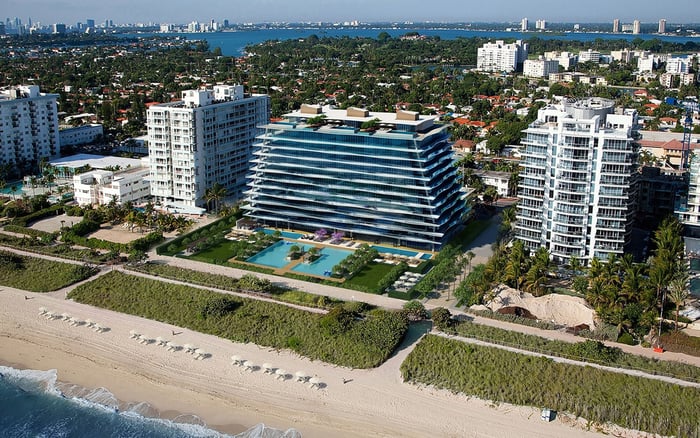
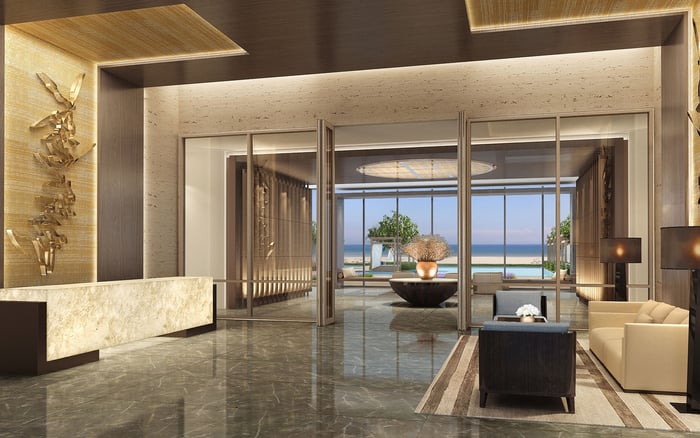
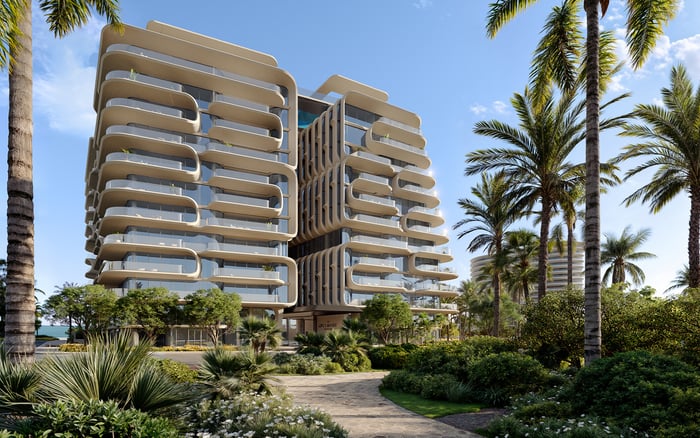
A discreet buyer-focused comparison of Fendi Château Residences Surfside and The Delmore Surfside, framed around branded residence heritage, standalone project identity, and the diligence luxury buyers should apply before choosing between Surfside alternatives.
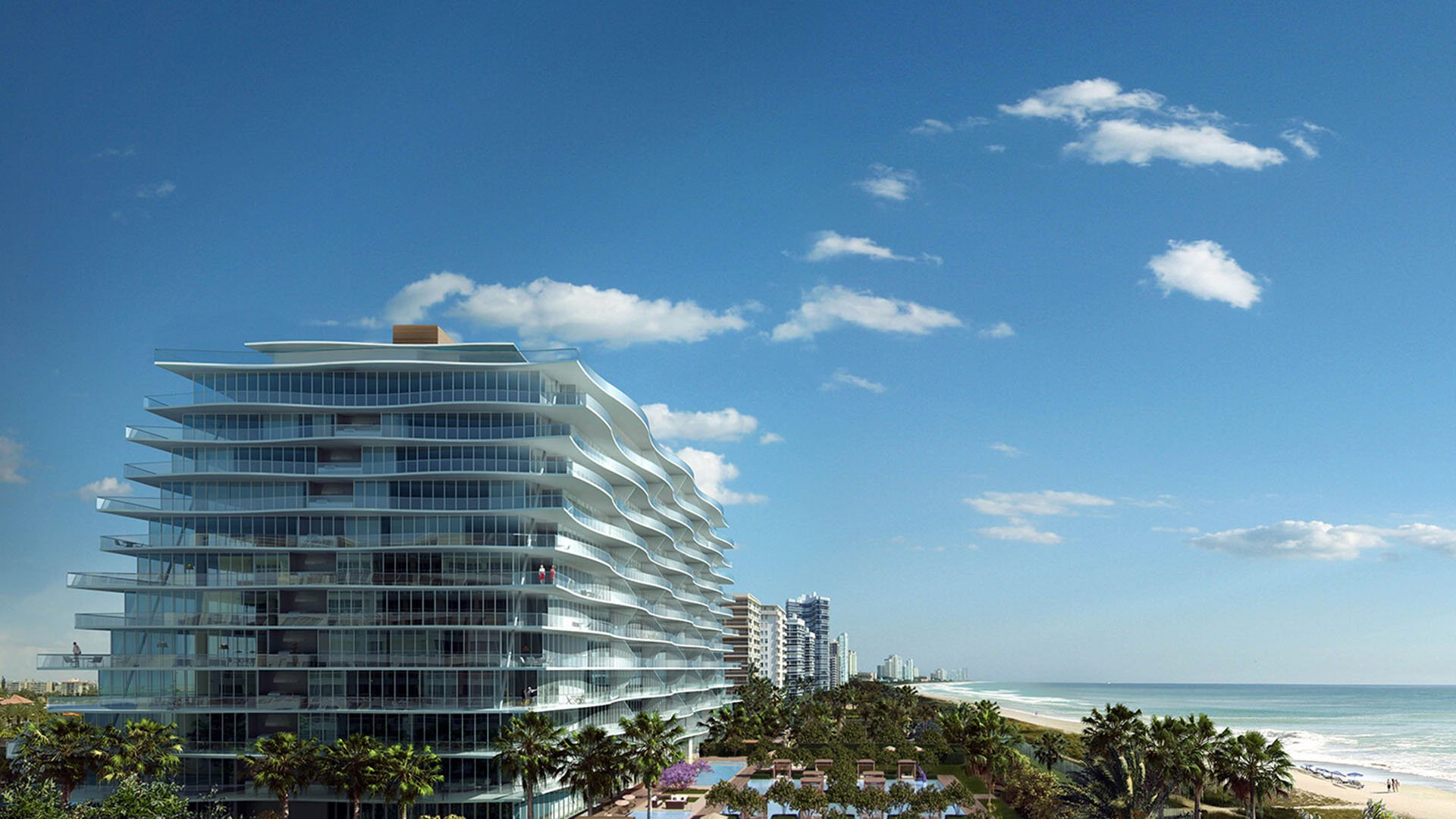
In Surfside, the most discerning residential decisions rarely begin with square footage alone. They begin with identity. Fendi Château Residences Surfside and The Delmore Surfside represent two different readings of the same coastal market: one through a fashion house embedded directly into the name, the other through a standalone Surfside identity that asks to be judged on its own residential proposition.
That distinction matters because branded residences and non-fashion-house alternatives speak to different forms of confidence. Fendi Château Residences Surfside carries the Fendi name in the residential identity itself, making fashion-house heritage central to the first impression. “Château” adds a European-estate cue to the branding, suggesting a cultivated tone without requiring unsupported claims about architecture, interiors or service programming.
The Delmore Surfside, by contrast, does not rely on a fashion-house name in its public project identity. For some buyers, that is not a disadvantage. It is the appeal. The Delmore Surfside becomes a cleaner question: what does the project offer on its own merits, and how do its current floor plans, pricing, residence mix, amenities and timeline compare after fresh verification?
The Fendi proposition begins with immediate recognition. In a market crowded with luxury vocabulary, a fashion-house name can help a residence communicate taste before a buyer studies the private details. The Fendi Château Miami naming convention also places the project within the broader Miami luxury conversation, even when the comparison is focused specifically on Surfside.
For buyers who collect design, fashion, art and property with equal seriousness, this kind of branding can be powerful. It gives the home a narrative that is legible to guests, future buyers and family offices alike. Yet the most sophisticated buyers separate narrative from underwriting. The brand can open the door, but it should not replace a careful review of current availability, residence layouts, pricing, completion status and the specific residential experience being offered.
That is the useful discipline with Fendi Château Residences Surfside: appreciate the fashion-house signal, then verify the residence itself. Does the layout suit full-time living or seasonal use? Does the ownership structure match the buyer’s plans? Are current opportunities aligned with the desired exposure, privacy and finish expectations? The name matters, but the private fit matters more.
The Delmore Surfside enters the conversation differently. Its identity is not fashion-led, allowing the project to be evaluated as a Surfside residence first. That can be attractive to buyers who prefer a quieter form of luxury, where the building’s name is not the primary statement.
The title of this comparison raises “New Oceanfront Scale,” and that phrase should be treated as a buyer-diligence theme, not a substitute for confirmed specifics. If a buyer’s thesis is tied to oceanfront positioning, larger-format living, a particular residence count or a specific delivery schedule, those items should be verified against the project’s current materials before a decision is made. The same applies to floor plans, amenities, design credits and pricing.
For buyers comparing boutique restraint with perceived scale, The Delmore Surfside may function as the more neutral canvas. It asks whether the purchaser wants the confidence of a globally recognizable fashion identity, or the discretion of a project that does not make brand heritage the headline.
Surfside has a particular buyer psychology. It is close to the energy of Miami Beach and Bal Harbour, yet it is often chosen for a more residential rhythm. Privacy, controlled density, beach proximity and architectural discretion tend to carry unusual weight. That is why a comparison between Fendi Château Residences Surfside and The Delmore Surfside should not be reduced to brand versus non-brand. It is really a question of how each project supports the owner’s life.
A buyer considering Surfside will naturally look at the broader neighborhood set. Arte Surfside helps frame the area’s appetite for distinctive residential identity, while The Surf Club Four Seasons Surfside underscores how powerful a named residential environment can become when the market understands its positioning. These references do not decide the Fendi versus Delmore question, but they remind buyers that Surfside rewards clarity.
That clarity should extend to lifestyle. Is the residence meant to be a primary coastal home, a second-home base or a long-term family holding? Does the buyer value social recognition, or a more private ownership profile? Is the desired feeling formal and collected, or modern and low-profile? In Surfside, the right answer is usually less about maximum spectacle and more about exact alignment.
Branded residences can create emotional and market advantages, but they also require discipline. The Fendi name gives Fendi Château Residences Surfside an immediate point of difference. It can signal design sensibility, global familiarity and a curated residential concept. For buyers who want their home to carry a recognizable luxury vocabulary, that can be decisive.
Still, no buyer should assume that brand alone determines long-term value. Resale performance, premium resilience and buyer depth depend on far more than the name on the building. They require confirmed information about the residence, the building, the competitive set and the market at the time of purchase or sale.
The more prudent view is to treat the Fendi affiliation as one important layer. It may elevate the first impression. It may sharpen the project’s identity. It may also attract a specific buyer pool. But the final decision should still be made residence by residence, with close attention to exposure, plan efficiency, privacy, monthly obligations, rules and future liquidity.
The Delmore Surfside’s advantage may be its relative neutrality. Without a fashion-house name leading the identity, the project can appeal to buyers who want the residence, not the label, to carry the decision. This is especially relevant for owners who value understatement, or who already have enough brand expression elsewhere in their lives.
That does not make The Delmore automatically more discreet, more spacious or more valuable. Those conclusions require verified project-level details. But it does mean the buyer can focus the analysis on the fundamentals: plan, privacy, views, amenities, operating costs, contract terms and timing.
In the same Surfside context, Ocean House Surfside offers another reminder that the neighborhood’s residential language can vary widely without leaving the same coastal micro-market. For new-construction-minded buyers, that variation is an advantage. It allows a more nuanced search rather than a single-brand reflex.
The Fendi buyer is likely drawn to a residence with a built-in point of view. This buyer may value the connection between fashion, interiors, entertaining and international recognition. They may also want a home that communicates a certain aesthetic before any explanation is required.
The Delmore buyer may be more focused on the project’s final, verified residential details. This buyer may be less interested in fashion-house heritage and more interested in the specifics of scale, layout, privacy and long-term usability. For them, the absence of a fashion name can feel more flexible.
Both approaches can be valid. The right choice depends on the buyer’s hierarchy. If identity, collectability and brand resonance sit at the top, Fendi Château Residences Surfside deserves close attention. If the priority is a fresh Surfside alternative evaluated on confirmed project fundamentals, The Delmore Surfside becomes the sharper due-diligence conversation.
Is Fendi Château Residences Surfside a branded residence? Yes. The Fendi name is embedded directly in the project identity, supporting its fashion-house residence positioning.
Does The Delmore Surfside use a fashion-house brand? Its public project identity does not include a fashion-house name, making it a standalone Surfside counterpoint in this comparison.
Should buyers compare the two only by branding? No. Branding is important, but buyers should also verify floor plans, pricing, amenities, availability, rules and timing.
What does “Château” add to the Fendi identity? It gives the project a European-estate naming cue, strengthening the heritage-oriented character of the brand presentation.
Is The Delmore Surfside automatically more discreet? Not automatically. Its non-fashion-house identity may feel quieter, but privacy and discretion depend on confirmed building details.
Can current prices be assumed from the project names? No. Current pricing should always be verified directly before comparing value between the two projects.
Is Surfside a good fit for second-home buyers? Surfside often appeals to buyers seeking a quieter coastal setting, but the right fit depends on lifestyle, building rules and timing.
What should a buyer verify first? Start with availability, residence mix, layouts, exposure, amenities, delivery expectations and total ownership costs.
Does oceanfront positioning change the analysis? Yes, but only when the exact positioning, views and residence details are confirmed for the specific opportunity being considered.
Which project is better for long-term value? That cannot be answered by identity alone. Long-term value depends on purchase basis, residence quality, market conditions and future buyer demand.
To compare the best-fit options with clarity, connect with MILLION.
If branded residences are on your mind — as a home or as an allocation — we would be glad to share what we are seeing, privately.
Begin a quiet conversation