A buyer-focused look at how Coral Gables residents should evaluate branded-residence service premiums, governance, lifestyle consistency, and long-term value.
For the Coral Gables buyer, the phrase branded residence carries a distinct promise. It suggests a home where service is not improvised, common spaces are maintained with discipline, and the experience of arrival, security, hospitality, and maintenance is designed to remain consistent over time. Yet the most sophisticated buyers in Coral Gables rarely pay for a name alone. They ask whether the brand or service platform will materially improve daily life, reduce friction, and protect the property’s character after the first wave of newness has passed.
That distinction matters. A service premium is not simply an added cost attached to a recognizable hospitality or design identity. It is a wager on operating culture. The buyer is paying for standards, staffing, training, protocols, and a level of predictability that should be visible in how the building is run. In an ultra-premium market, the question is not whether service feels pleasant. The question is whether it proves durable.
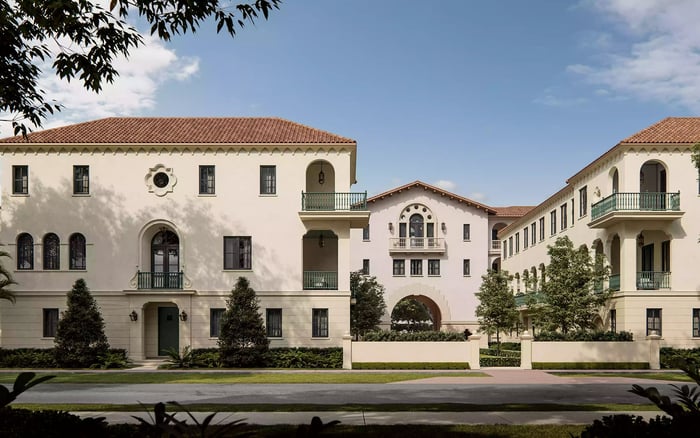
In Coral Gables, where architectural restraint, privacy, mature streetscapes, and civic polish define much of the residential appeal, branded living must be evaluated through a local lens. A project may feel luxurious, but if the service model is too performative, too transient, or too dependent on launch momentum, it can miss the expectations of a buyer who values discretion over spectacle.
Coral Gables has never depended on volume to communicate prestige. Its appeal is rooted in proportion, landscaping, walkability, established institutions, and a residential atmosphere that rewards permanence. This is why buyers comparing branded residences across the broader South Florida market often evaluate Coral Gables differently. The service layer must complement the neighborhood’s rhythm rather than overwhelm it.
Local new-development conversations often include Cora Merrick Park, especially for buyers focused on the Merrick Park lifestyle and the convenience of a refined urban village setting. Others look toward Ponce Park Coral Gables for a more central Gables frame of reference, where neighborhood context, access, and architectural tone carry significant weight in the purchase decision.
The term Coral-gables may appear as search shorthand, but the real buyer psychology is more nuanced. This is a market where the premium often attaches to ease, beauty, and continuity. Boutique scale can be as meaningful as a prominent name if the building is well conceived, well governed, and aligned with the way residents actually live.
A branded residence premium should be examined in layers. The first layer is convenience: reception, reservations, access control, package handling, valet rhythm, private dining coordination, wellness scheduling, and household support. The second layer is quality assurance: how staff are trained, how common areas are maintained, how vendors are managed, and how resident expectations are handled once the building is no longer new.
The third layer is identity. Some buyers want a global hospitality signature because it gives them confidence in the standards. Others prefer a quieter residential experience where the service culture is present but understated. Neither instinct is inherently superior. The right answer depends on whether the premium creates real utility for the owner.
For a family using the residence as a primary home, service should reduce the number of daily decisions. For a seasonal owner, it should create confidence while away. For a lock-and-leave buyer, it should make the residence feel cared for without requiring constant oversight. In each case, the premium is justified only if it translates into measurable comfort, less friction, and a stronger sense of stewardship.
This is where Coral Gables differs from more transient luxury markets. Buyers are often less interested in theatrical amenity counts than in whether a residence feels composed, private, and easy to own. A service program that supports those qualities can be more valuable than one designed primarily to impress during a tour.
Long-term value in a branded residence is shaped by more than the opening narrative. The important questions are quieter. Will the service culture remain consistent after initial sales are complete? Are association costs aligned with the level of staffing being promised? Does the building have a governance structure capable of preserving standards without allowing expenses to drift? Are residents likely to share similar expectations for privacy, maintenance, and amenity use?
The strongest properties tend to age with discipline. Their lobbies do not feel abandoned after the first year. Their landscaping is not treated as decorative afterthought. Their staff understand the residents. Their rules are clear enough to preserve quality without making the building feel rigid. These are the details that turn a service premium into an ownership advantage.
Investment discipline also matters. The buyer should separate emotional appeal from operating reality. A beautiful brand story may help a project stand out, but resale strength is more likely to rest on location, design integrity, service reliability, financial stewardship, and the depth of future buyer demand. In Coral Gables, where many purchasers are relationship-driven and long-horizon oriented, that kind of substance often carries more weight than novelty.
A Coral Gables buyer may also compare the Gables lifestyle with branded residences in nearby markets. Brickell, for example, often presents a more vertical, hospitality-forward version of luxury. A residence such as St. Regis® Residences Brickell speaks to buyers who want a globally recognized service language in a dense urban setting. That model can be compelling, especially for owners who prioritize hotel-style polish, skyline energy, and immediate access to Miami’s financial and dining core.
The comparison is useful because it clarifies preference. Coral Gables does not need to imitate Brickell to justify premium pricing. Its value proposition is different: calmer streets, a stronger sense of neighborhood identity, and a more residential pace. For some buyers, a branded tower nearby will feel efficient and cosmopolitan. For others, a Gables address will feel more personal and enduring.
Within Coral Gables itself, The Village at Coral Gables may enter the conversation for buyers drawn to a composed residential environment rather than a pure hospitality brand. The broader decision is not simply branded versus unbranded. It is managed lifestyle versus neighborhood intimacy, formal service versus architectural character, and recognizable identity versus daily livability.
Before paying a premium, buyers should ask practical questions. What services are included, and what services are billed separately? How is staffing funded? What is the anticipated governance structure? How will standards be maintained over time? What happens if the brand relationship changes, evolves, or becomes less central to the property’s identity?
The answers do not need to be dramatic to be revealing. A clear, modest service program can be more credible than an expansive promise with vague operating details. Buyers should look for alignment between the building’s scale, the resident profile, the expected association budget, and the stated lifestyle. If the model depends on constant activity to feel alive, it may not suit the Coral Gables owner who values privacy. If it depends on underfunded service to feel affordable, the premium may be fragile.
The most resilient luxury residences usually make ownership feel effortless without making the property feel like a stage. That is particularly important in Coral Gables, where elegance is often expressed through proportion, routine, and calm. A true service premium should disappear into the experience of living well.
What is a service premium in a branded residence? It is the added value a buyer assigns to managed services, operational standards, hospitality culture, and the consistency of the residential experience.
Does a branded residence always hold value better? Not automatically. Long-term value depends on location, design quality, governance, service durability, and buyer demand.
Why is Coral Gables different from other luxury markets? Coral Gables emphasizes privacy, neighborhood character, architectural restraint, and a more residential pace than many high-rise urban districts.
Should buyers prioritize the brand name or the service model? The service model deserves close attention because it determines how the residence will function after the initial marketing period.
Can an unbranded Coral Gables residence compete with a branded property? Yes, if it offers strong design, location, maintenance culture, governance, and a lifestyle that fits the buyer’s priorities.
What should seasonal owners look for? They should focus on security, property care, communication, access management, and the ease of returning to a residence that feels ready.
Are higher association costs always a warning sign? Not necessarily. The key is whether the cost structure is transparent and aligned with the staffing and service level being promised.
How should buyers compare Coral Gables with Brickell? Brickell often offers a more urban and hospitality-forward lifestyle, while Coral Gables typically appeals to buyers seeking calm, continuity, and neighborhood identity.
What makes service feel valuable over time? Consistency, trained staff, thoughtful maintenance, clear governance, and a culture that anticipates resident needs without becoming intrusive.
Is branded living best for primary or secondary residences? It can work for either, provided the services match the owner’s daily use pattern and expectations for privacy, convenience, and care.
For a discreet conversation and a curated building-by-building shortlist, connect with MILLION.
If branded residences are on your mind — as a home or as an allocation — we would be glad to share what we are seeing, privately.
Begin a quiet conversation