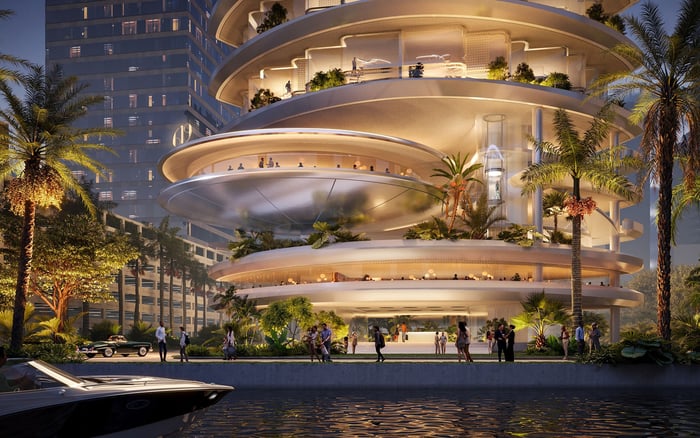
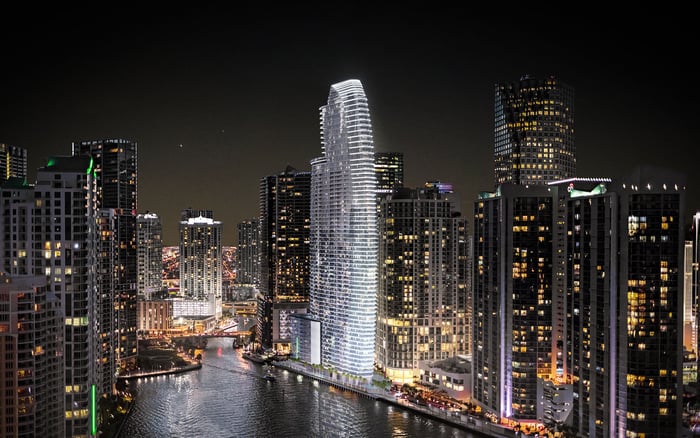
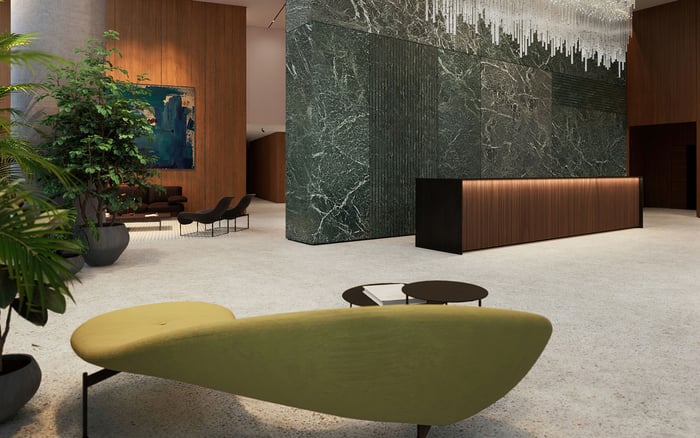
A buyer-oriented framework for comparing storm-resilience priorities in two Downtown Miami towers, with practical due-diligence questions on wind-load design intent and emergency power redundancy.
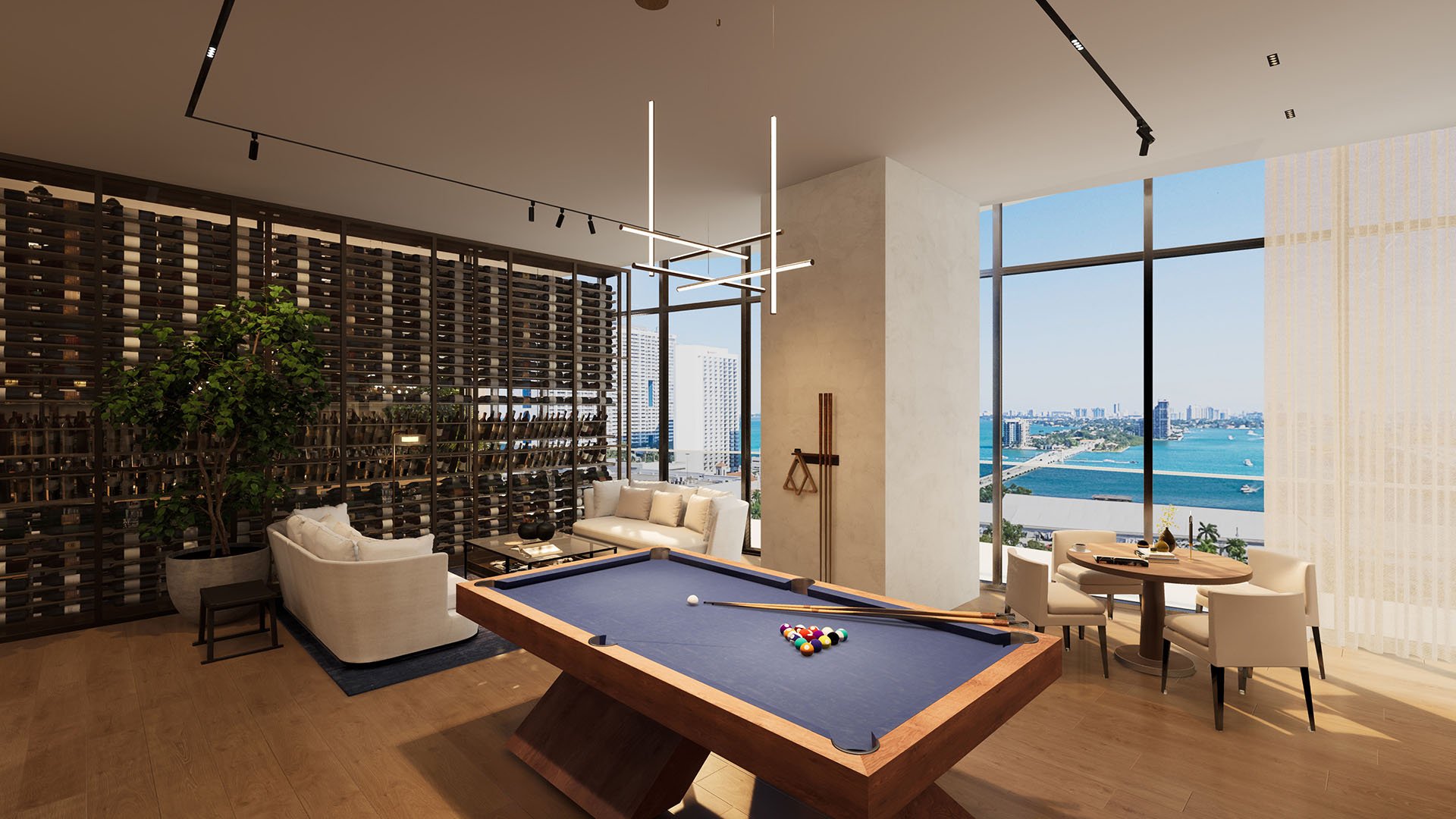
In South Florida, the definition of “luxury” has quietly expanded. Beyond finishes, views, and brand associations, discerning buyers increasingly evaluate a residence the way an owner of a yacht or aviation asset would: by its performance under stress. In a high-rise, two systems sit at the center of that assessment.
First is wind-load capacity-a practical shorthand for how the structural frame, façade, glazing, and anchoring systems are engineered to resist the forces associated with severe storms. Second is generator redundancy, which determines whether the building can sustain key services when the grid is unstable or offline.
This lens is especially relevant in Downtown Miami, where vertical living, water proximity, and dense infrastructure place a premium on continuity planning. Buyers comparing Aston Martin Residences Downtown Miami and Casa Bella by B&B Italia Downtown Miami are often evaluating more than amenity decks. They are evaluating what the building can keep running, for how long, and with what margin for failure.
“Wind-load rated” is sometimes used loosely in sales conversations. The objective is to translate the phrase into verifiable components. In practice, the wind story in a new or recently delivered high-rise is defined by four interlocking categories.
1) Structural design intent.
Ask what the tower was designed to withstand in terms of wind pressures, and whether those criteria vary across elevations. Wind effects are not uniform; corner conditions, higher floors, and rooftop mechanical zones can face different demands. Strong design addresses these zones intentionally rather than leaning on a single simplified narrative.
2) Façade and glazing performance.
For buyers, the lived experience is often decided at the window line: how the glass is specified, how frames are anchored, how water is managed, and how sealants and gaskets are detailed. Ask whether the glazing system is impact-resistant, what testing was used for the assembly, and whether the tested configuration matches what is installed in your line.
3) Doors, balconies, and penetrations.
The quiet vulnerabilities in wind events are often openings and transitions: terrace doors, vents, louvers, and any façade penetrations for mechanical or exhaust. In a luxury tower, these are engineered details-but they are also maintenance items. Even a high-performance envelope depends on consistent upkeep and a disciplined replacement schedule for seals and hardware.
4) Post-construction verification.
The most buyer-friendly buildings can share commissioning practices and close-out documentation that confirm systems were installed as designed. Due diligence is not just about what was drawn; it is about what was delivered.
When comparing Aston Martin Residences and Casa Bella, treat wind-load as a systems question-not a marketing claim. Ask each team to show, not tell. You are looking for a paper trail that reflects discipline from engineering through installation.
Backup power is common. Redundant emergency power that supports a meaningful lifestyle during an outage is rarer-and it depends on decisions made long before the first resident moves in.
Start by clarifying the building’s load philosophy. Most towers do not attempt to power everything. Instead, they select critical loads, such as:
Life safety systems
Fire pump and alarm systems
Emergency lighting
One or more elevators on an emergency schedule
Domestic water pressure support
Limited HVAC for critical areas
Lobby and security systems
From there, redundancy becomes a question of single points of failure. A building with one generator can still be well designed; the issue is whether there is a second unit, a second transfer pathway, or compartmentalization that allows partial operation if one component fails.
Next is fuel strategy and logistics. A generator is only as useful as its ability to run for the duration you care about. Ask how fuel is stored, how it is replenished, and what contractual arrangements exist to prioritize delivery in constrained conditions. In a luxury context, the concern is not only safety-it is predictability.
Finally, ask about testing and maintenance. Redundancy is an operational commitment. A generator that is never tested under load, or that is tested without realistic building demands, is a comfort narrative rather than a resilient asset.
In Downtown, generator continuity also intersects with how you use the property. If you treat the residence as a primary home, the definition of “critical load” often includes communications, refrigeration, building access, and water pressure. If it is a second home, the priority may shift to security, leak detection, and controlled shutdown protocols.
This comparison is best approached through two questions: (1) what is the building’s engineering posture, and (2) what is your personal risk tolerance.
Aston Martin Residences Downtown Miami
Tends to draw buyers who care about identity and craftsmanship, but the resilience conversation should stay focused on the building as an integrated machine. Ask specifically about the façade system, the window and door assemblies at your exposure, and how the tower’s operational plan performs when conditions are not normal.
Casa Bella by B&B Italia Downtown Miami
Often appeals to buyers who value a curated, design-forward environment. Here, the right questions are the same, but they should be framed around execution: how the building team verifies envelope performance, and how emergency power is allocated across owner experience, security, and critical building services.
A practical way to compare the two is to request a written summary that answers:
What systems are on generator and what are not?
How many elevators can run, and under what protocol?
How is domestic water pressure maintained during an outage?
What is the building’s operating plan if fuel deliveries are delayed?
If the answers are vague, the next step is not to walk away. It is to require specificity before you become emotionally committed to a view or an interior.
A resilient high-rise is rarely defined by one headline number. It is defined by alignment between design intent, installation quality, and operating culture.
Operating culture matters.
In luxury properties, the most effective redundancy is often the human layer: management that rehearses procedures, maintains vendor relationships, and communicates clearly with residents.
Water management is part of resilience.
Wind events are frequently water events. Ask about building-wide leak detection, garage pumping strategy, and how mechanical rooms are protected. These questions are not glamorous, but they help prevent the kind of disruption that lingers long after the weather clears.
Vertical living changes priorities.
In a high-rise, resilience is about access as much as comfort. If elevators are limited, you will want to understand how the building sequences elevator service and how it supports residents on higher floors.
Downtown Miami buyers sometimes cross-shop other neighborhoods to calibrate expectations. If you are benchmarking how newer towers discuss performance, scan the broader market context in places like Edgewater or Brickell, where projects such as Aria Reserve Miami and 2200 Brickell reflect the same citywide evolution in high-rise standards. Even when buildings are not directly comparable, the questions you ask should be.
Use this checklist to keep the conversation concrete-and to protect your leverage while you still have it.
Wind and envelope
Request the specific performance documentation for glazing and door assemblies.
Confirm the configuration tested matches your unit’s conditions.
Ask how balcony doors and terrace transitions are sealed and maintained.
Clarify any owner responsibilities that affect envelope performance.
Emergency power and redundancy
Identify exactly which systems are on generator.
Ask whether the generator plant has redundancy or a single-point exposure.
Confirm the testing schedule and whether tests are run under load.
Ask how long critical systems can run under a realistic outage scenario.
Operations and communications
Ask for the building’s emergency communications plan.
Clarify access control during outages and the staffing plan.
Understand how water pressure, sanitation, and deliveries are managed.
This is also where your personal lifestyle preferences should become explicit. If you expect the home to function like a self-contained sanctuary for several days, your due diligence should match that expectation. If you only need secure shutdown and a swift return to normal, your tolerance may be different.
For additional context on how Miami’s branded residential landscape is broadening, some buyers also consider design-led towers outside Downtown, including 888 Brickell by Dolce & Gabbana, as a way to compare how different teams describe building performance versus pure aesthetics.
Comparing Aston Martin Residences Downtown Miami and Casa Bella by B&B Italia is not about declaring which building is “stronger” in the abstract. It is about aligning your expectations with what is operationally supported: wind resilience evidenced in assemblies and documentation, and generator planning that goes beyond life safety into continuity.
A sophisticated buyer does not demand perfection. They demand clarity, credible documentation, and a building team that can explain its decisions without resorting to generalities.
What is a wind-load rating in practical terms for a condo buyer? It is the building’s engineered resistance to wind pressures, especially at the façade, glazing, and openings.
Is impact-resistant glass the same as a high wind-load design? Not necessarily; impact resistance is one component, while wind-load performance includes the full assembly and anchorage.
Do higher floors experience different wind conditions than lower floors? Yes, wind pressures can vary by height and corner exposure, so specifications may differ by elevation and line.
What should I ask about windows and balcony doors specifically? Request the tested assembly details and confirm they match your unit’s exact configuration and exposure.
What does generator redundancy mean in a high-rise? It means the building can sustain selected critical loads with reduced risk of a single equipment failure.
Will a building generator power my unit’s air conditioning? Often it will not; emergency power typically prioritizes life safety and select common-area or critical systems.
How can I compare emergency-power plans between two buildings? Ask for a written list of generator-backed systems, along with elevator, access-control, and staffing protocols during an outage.
Why does fuel logistics matter if the building has a generator? Because runtime depends on fuel availability, and replenishment can be constrained during widespread outages.
Is it reasonable to ask for commissioning or close-out documentation? Yes; it is a prudent request to confirm systems were installed and verified consistent with design intent.
Which building is better, Aston Martin Residences Downtown Miami or Casa Bella by B&B Italia? The better choice is the one whose documented systems and operating plan match your continuity expectations.
When you're ready to tour or underwrite the options, connect with MILLION Luxury.
If branded residences are on your mind — as a home or as an allocation — we would be glad to share what we are seeing, privately.
Begin a quiet conversation