A buyer-focused guide to evaluating wellness-retail proximity at 619 Residences by Foster + Partners + Nobu Hospitality beyond the visual promise of renderings.
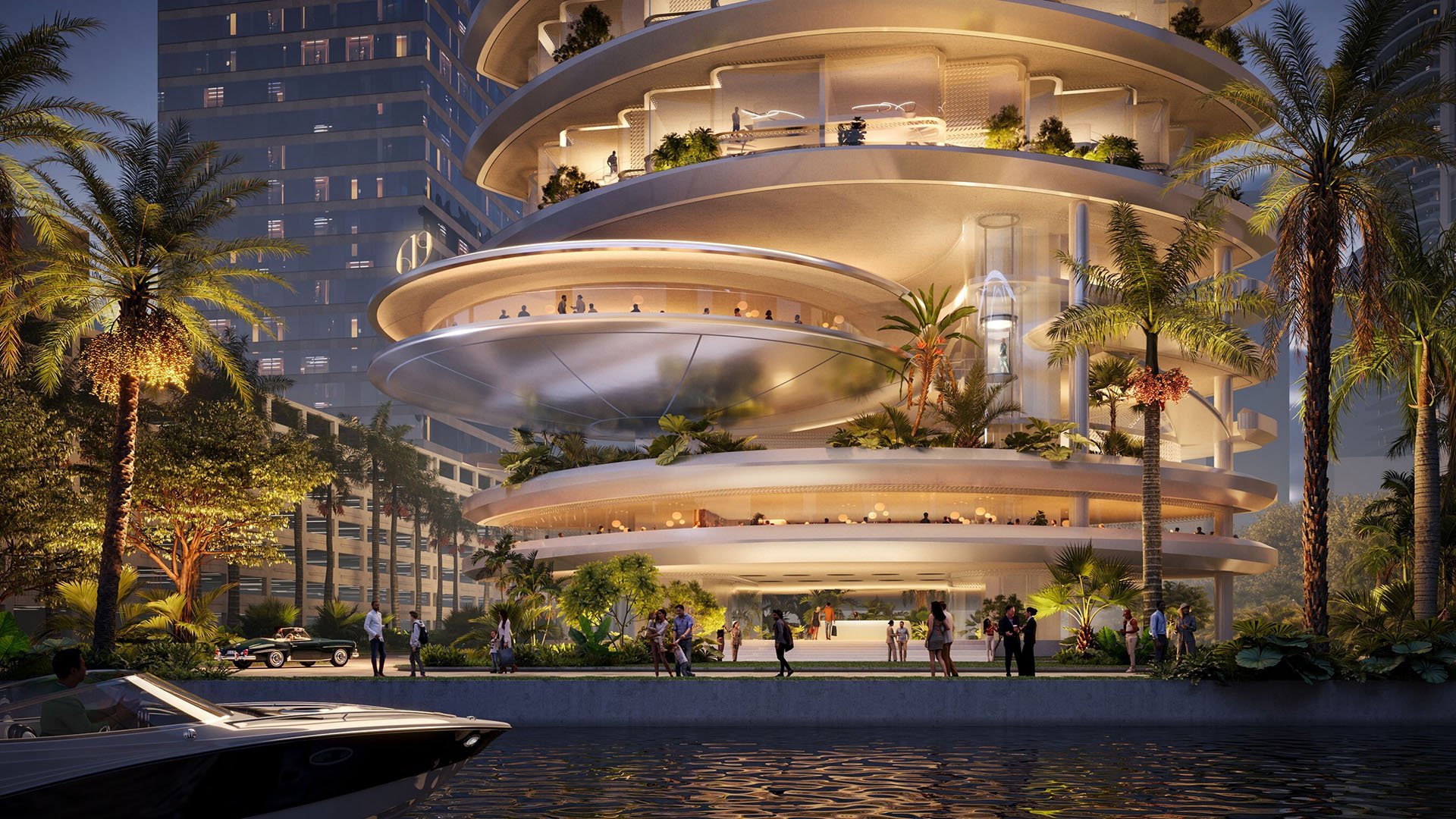
619 Residences by Foster + Partners + Nobu Hospitality enters a South Florida market fluent in architectural imagery, branded experience, and the language of wellness. For the luxury buyer, the question is not whether a rendering is beautiful. The question is whether the lifestyle it implies can be supported every day, at every hour, long after the sales gallery has closed and the building is operating as a private residential address.
That distinction matters. Wellness-retail proximity can be a genuine advantage when it reduces friction: a calmer morning routine, easier access to curated services, better food and beverage options, and a neighborhood rhythm that feels polished rather than congested. It can also become a compromise if the relationship among residences, amenities, retail frontage, deliveries, public circulation, and parking has not been resolved with precision.
The discerning buyer should read the project through three lenses: architecture, hospitality, and operations. Foster + Partners brings an association with design discipline. Nobu Hospitality brings an association with service and lifestyle. Yet the enduring residential value will depend on what is specified, governed, staffed, maintained, and protected in the building documents.
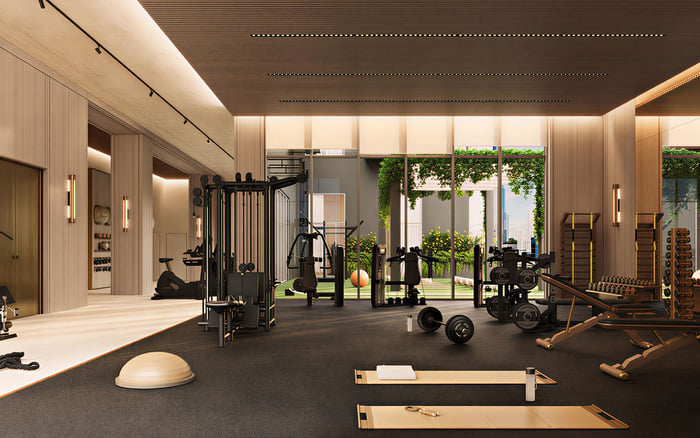
Wellness in a luxury residence should be evaluated as infrastructure, not atmosphere. A spa-like image may suggest serenity, but the buyer should ask how the wellness spaces are located, ventilated, scheduled, staffed, cleaned, and acoustically separated from active areas. A gym beside a treatment room may sound convenient; in practice, vibration, music, and peak-hour crowding can alter the experience.
Look for clarity around the sequence from residence to wellness area. Is the route private and intuitive, or does it intersect with guest traffic, retail patrons, service corridors, or event circulation? Does the elevator strategy preserve discretion? Are locker rooms and recovery areas sized for real use, or staged primarily for visual appeal?
The best wellness environments feel residential first. They do not require a resident to perform wellness in public. They support quiet, consistency, and privacy. In South Florida, where buyers may compare different balances of skyline access, new-construction polish, pre-construction flexibility, boutique intimacy, and investment resilience, the decisive issue is not the presence of amenities. It is whether those amenities retain their quality under daily demand.
Retail adjacency is often marketed as ease. The more refined question is what kind of ease. A buyer should distinguish between curated retail that supports the residential experience and active retail that may introduce noise, scent, late-hour traffic, valet pressure, or inconsistent crowd patterns.
The physical plan matters. Separate residential and retail entrances are typically easier to manage than blended arrival zones. Service access matters just as much as guest access. Deliveries, refuse removal, vendor parking, and loading patterns can affect the feeling of a building as much as lobby finishes.
A high-value retail relationship should feel like an extension of the address, not an intrusion into it. Ask whether outdoor seating, music, signage, lighting, and operating hours are controlled through enforceable agreements. Ask how disputes are handled. Ask whether the residential association has meaningful oversight or merely shares proximity.
For wellness-focused buyers, retail should complement daily life without eroding sanctuary. A juice bar, dining concept, studio, or boutique service can be attractive in theory. The real test is whether the resident can use it easily while still returning home to silence, security, and separation.
Brand affiliation can create confidence, but it should not replace document review. A residence associated with globally recognized design and hospitality names invites a higher standard of inquiry. Buyers should understand what role each party has in the completed project, how long obligations last, and whether brand standards are embedded in enforceable operating protocols.
There is a meaningful difference between design authorship, interior vision, hospitality programming, licensing, management, and long-term residential service. A sales presentation may compress those distinctions into one elegant narrative. A sophisticated purchase process separates them again.
Key questions include who controls staffing standards, how amenities are budgeted, whether hospitality services are optional or included, and what happens if a branded relationship changes over time. The answer may be entirely acceptable, but it should be understood before contract signing rather than assumed afterward.
Buyers should also ask how the building will feel in low season, peak season, and event-driven periods. South Florida luxury ownership often involves intermittent use, visiting guests, service coordination, and privacy expectations. The operating model should serve both the full-time resident and the owner who expects the home to be perfectly ready after weeks away.
Renderings excel at aspiration. Plans reveal priorities. Before assigning a premium to wellness-retail proximity, review the floor plans, amenity plans, declarations, budgets, use restrictions, rules, and service descriptions. The buyer’s advisory team should examine what is fixed, what may change, and what remains subject to developer discretion.
Pay particular attention to adjacencies. Which residences sit closest to active amenity zones, outdoor areas, mechanical equipment, retail uses, valet lanes, or service functions? Which lines benefit from privacy, views, or quieter circulation? A building can be excellent overall while certain positions within it carry different exposure profiles.
Parking and arrival deserve equal scrutiny. In a luxury residential context, a beautiful lobby cannot compensate for a congested porte cochere. Valet management, ride-share flow, guest arrival, resident self-parking options, and service access all influence the lived experience.
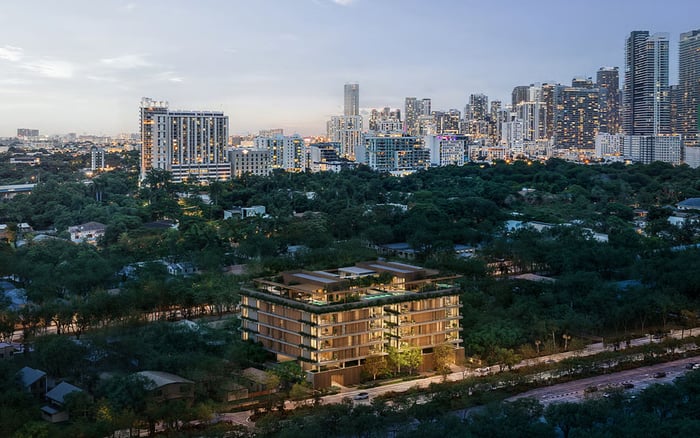
The neighborhood context should also be visited at different times. Morning, evening, weekday, weekend, and seasonal conditions can vary significantly. The question is not only what is nearby, but how the nearby environment behaves.
A wellness-retail premium is strongest when it can be felt in daily life and defended in resale logic. Convenience has value, but only when paired with privacy, design quality, operational control, and long-term maintenance discipline.
Buyers should resist paying solely for conceptual proximity. The more durable premium belongs to residences where the amenity ecosystem is easy to use, the retail component is curated and controlled, and the private home remains insulated from public energy. If a residence offers both immediate lifestyle utility and a credible ownership experience, the premium becomes easier to justify.
It is also important to compare alternatives with restraint. A buyer drawn to 619 Residences by Foster + Partners + Nobu Hospitality may also be considering other South Florida environments with different balances of beach, skyline, restaurant access, club culture, and privacy. The right answer is not universal. It depends on whether the buyer values walkable convenience, resort-like enclosure, architectural authorship, hospitality identity, or long-term quiet.
Before moving from admiration to commitment, focus on tangible confirmations. Request the most current plans and disclosures. Confirm the boundaries between residential, amenity, and retail components. Review operating hours, access rules, pet policies, guest policies, event policies, sound controls, signage rules, and service arrangements.
Ask how wellness spaces are reserved, cleaned, maintained, and refreshed. Ask whether private treatments, trainers, or outside practitioners are permitted. Ask who pays for what, and whether the budget reflects the service level being marketed.
Finally, walk the surrounding area with the mindset of an owner, not a visitor. Test the approach, the noise, the pedestrian experience, and the sense of privacy. Luxury is not only what is seen. It is what has been edited out.
What should buyers verify first at 619 Residences by Foster + Partners + Nobu Hospitality? Start with the legal documents, plans, amenity boundaries, and operating rules that define what residents will actually receive.
Is wellness-retail proximity always a luxury advantage? No. It is an advantage only when convenience is paired with privacy, acoustic control, clear circulation, and disciplined operations.
How should a buyer evaluate wellness amenities? Look beyond finishes and ask about capacity, scheduling, ventilation, staffing, cleaning standards, and separation from active zones.
Why does retail access require extra diligence? Retail can add convenience, but it may also introduce guest traffic, deliveries, signage, music, lighting, and late-hour activity.
Do brand names guarantee residential service quality? Brand association is meaningful, but buyers should confirm the exact role, duration, standards, and obligations in writing.
What documents matter most before signing? Review plans, declarations, budgets, rules, service descriptions, use restrictions, and any materials governing shared areas.
Should buyers visit the site more than once? Yes. Different times of day and week can reveal traffic, noise, arrival patterns, and neighborhood energy that renderings cannot show.
How can buyers assess privacy in a mixed-use setting? Study entrances, elevators, valet flow, service corridors, amenity access, and the separation between residents and public-facing uses.
What makes a wellness-retail premium defensible? The premium is strongest when the convenience is tangible, controlled, easy to use, and compatible with long-term residential calm.
What is the best way to shortlist comparable options for touring? Start with location fit, delivery status, and daily lifestyle priorities, then compare stacks and elevations to validate views and privacy.
For a confidential assessment and a building-by-building shortlist, connect with MILLION.
If branded residences are on your mind — as a home or as an allocation — we would be glad to share what we are seeing, privately.
Begin a quiet conversation