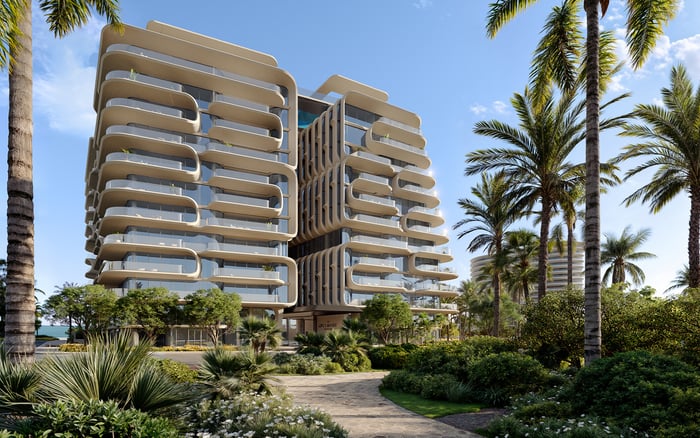
At Eighty Seven Park Surfside, the practical measure of construction-noise strictness is less about decibel math and more about the clock. Surfside’s code framework permits weekday construction activity during a defined daytime window, while weekends, legal holidays, and nighttime periods face materially tighter limits. For buyers, residents, and advisors assessing final outfitting conditions around a newly completed luxury tower, that makes compliance in Surfside notably schedule-driven rather than unusually restrictive in absolute sound terms.

For a refined oceanfront address such as Eighty Seven Park Surfside, the question is not whether Surfside extends luxury construction special treatment. It does not. The condominium tower at 8701 Collins Avenue, designed by Renzo Piano Building Workshop and developed by Terra and Bizzi & Partners, was completed in 2020, placing its final outfitting period squarely within Surfside’s standing local noise framework.
That framework is best understood as disciplined, not unusually draconian. Surfside regulates noise through a broader code structure that applies different sound standards by time of day, with tighter limits at night than during daytime hours. Yet when construction activity falls within the town’s permitted weekday window, the primary issue is schedule compliance. In practical terms, the ordinance is stricter about when crews work than about applying a separately published decibel threshold to otherwise permitted weekday construction activity.
For owners, neighboring residents, and prospective buyers in Surfside, that distinction matters. It points to a town that protects residential calm by narrowing the hours of disruption rather than by making ordinary daytime outfitting nearly impossible.
Surfside generally allows construction activity on weekdays from 7:00 a.m. to 6:00 p.m. Outside that window, the legal posture becomes materially tighter. Construction activity is generally prohibited on Saturdays, Sundays, and legal holidays unless a lawful exception applies. Emergency repair work may qualify for treatment outside ordinary hours, but ordinary outfitting does not carry that same flexibility.
This is why the strictness question at Eighty Seven Park should be framed carefully. If a contractor stayed within the weekday daytime window, Surfside appears comparatively workable for punch-list work, interior installations, and final fit-out operations. If work drifted into evenings or weekends, the regime became considerably more restrictive.
The result is a code that feels highly legible for luxury residential management teams. It provides a clear compliance lane: perform noise-generating work during businesslike weekday hours, avoid weekend activity, and exercise particular caution around nighttime periods. That is not laissez-faire, but neither is it a system designed to frustrate every phase of completion.
In nearby high-end contexts, this schedule discipline is part of the lived experience of coastal ownership. Residents comparing Surfside addresses such as Arte Surfside, Fendi Château Residences Surfside, or The Surf Club Four Seasons Surfside are often less concerned with abstract legal language than with a more immediate question: when can noise happen? In Surfside, the answer is relatively clear.
The most accurate reading is that Surfside is moderately permissive during approved weekday daytime hours and notably strict outside them. That balance is important. Some ordinances are exacting because they hinge on measured sound levels at nearly every hour. Surfside’s structure, by contrast, places greater emphasis on temporal boundaries for construction activity.
For a building like Eighty Seven Park Surfside, that means ordinary outfitting work likely had a defined operational runway during weekdays, even as surrounding residents benefited from sharper protection at night and on weekends. In luxury settings, where privacy, rest, and routine are integral to value, time-based controls can be easier to understand and easier to enforce than constantly debated noise readings.
There is another nuance for buyers and boards to note. Publicly available materials do not show that Surfside created special quieter-hour rules exclusively for ultra-luxury projects. Eighty Seven Park would have been subject to the same construction-hour rules as other permitted projects in town. In other words, prestige did not appear to produce a softer local standard.
That uniformity is often reassuring. It means a landmark building on Collins Avenue is not operating under an opaque exception simply because of its profile. The same basic municipal expectations apply across Surfside.
By the time Eighty Seven Park was moving through final outfitting and occupancy, the practical challenge for contractors would have been calendar management. Interior work that generated noise could proceed, but the safest path was to keep it squarely within weekday daytime hours. If teams needed to compress schedules, weekends were generally unavailable. If deliveries or installations risked running late, nighttime sensitivity became the obvious red zone.
That can feel strict from a contractor’s perspective, especially in a premium building where finish quality, custom millwork, systems calibration, and owner-specific detailing may demand coordination across multiple trades. But from a resident’s perspective, it is a relatively balanced approach. It does not freeze activity altogether, yet it preserves a meaningful expectation of quiet outside the approved workday.
For buyers evaluating luxury product in Surfside more broadly, this context also informs expectations at neighboring properties such as Ocean House Surfside and The Delmore Surfside. In this pocket of the coast, municipal calm is not achieved by banning progress. It is achieved by confining disruption to predictable hours.
A well-written ordinance matters most when residents can act on it. Surfside directs residents through town channels for code enforcement and service requests, including complaint reporting. That is significant because a schedule-based ordinance depends on observable violations. Weekend work, holiday work, or activity outside ordinary hours is usually easier for residents and managers to identify than disputes over whether sound crossed a technical threshold during a permitted work period.
Just as important, publicly available materials do not document specific noise citations or complaint histories tied to Eighty Seven Park itself. That absence should not be overstated, but it does mean the property is not publicly defined by a known pattern of ordinance disputes within the materials reviewed.
There also does not appear to be a mandatory town rule requiring contractors to provide adjacent residents with advance notice before ordinary noise-generating construction work. In luxury practice, many teams may still choose to communicate proactively as a matter of courtesy and management quality, but that is different from a clearly published across-the-board legal requirement.
Surfside does not exist in isolation. Miami-Dade County also regulates noise and publishes countywide guidance that recognizes construction-hour expectations centered on weekday daytime work. For buyers and family offices, this wider framework reinforces the idea that Surfside sits within a regional compliance culture that favors daytime construction windows rather than open-ended scheduling.
That county backdrop does not dilute Surfside’s local authority. Instead, it helps explain why the town’s system feels familiar and operationally practical. The combined framework points to a market where construction outfitting is generally possible, but only if teams respect the civic rhythm of weekday daytime activity.
For the luxury buyer, that is the essential takeaway. Surfside is not permissive in the sense of allowing broad lifestyle disruption. It is permissive in the narrower sense that properly timed work can still proceed.
So, how strict were the noise ordinances during construction outfitting at Eighty Seven Park Surfside? Strict enough to sharply limit when work could occur, but not so strict that routine weekday daytime outfitting appears to have faced a separate, clearly published construction-specific decibel barrier. That makes the regime structured, predictable, and moderately accommodating so long as crews stay within the allowed window.
For discerning buyers in Surfside, that is often the preferable formula. Quiet is protected when it matters most, yet luxury buildings can still complete the finishing work necessary to deliver a polished residential experience.
What is the main measure of noise-rule strictness in Surfside? The clearest measure is timing. Surfside is more exacting about when construction happens than about a separate published decibel cap for permitted weekday construction.
What hours is construction generally allowed in Surfside? Construction activity is generally allowed on weekdays from 7:00 a.m. to 6:00 p.m. Those hours are the central compliance window for ordinary outfitting work.
Is construction generally allowed on weekends in Surfside? No. Saturdays, Sundays, and legal holidays are generally prohibited for construction activity unless a lawful exception applies.
Did Eighty Seven Park have special luxury-project noise rules? No special quieter-hour rules appear to have applied simply because it is a luxury project. It would have been governed by the same town construction-hour framework as other permitted projects.
Was Eighty Seven Park completed under these rules? Yes. The tower was completed in 2020, placing its final outfitting and occupancy period under Surfside’s then-current local rules.
Does Surfside use stricter standards at night? Yes. The town’s broader noise rules are stricter at night than during daytime hours, which heightens sensitivity outside the approved work window.
Are emergency repairs treated differently? They can be. Emergency repair work may qualify for exceptions outside ordinary construction hours under the local framework.
Were there publicly documented noise citations tied to Eighty Seven Park? The materials reviewed do not document specific noise citations or complaint histories tied to the property. That simply means no such record appears in the materials considered here.
Must contractors notify neighbors before ordinary noisy work? A mandatory Surfside rule requiring advance notice for ordinary noise-generating construction work does not appear in the materials reviewed. Courtesy notice may still be used as a management practice.
Where can residents raise a concern about construction noise? Residents can use Surfside’s town channels for code enforcement and service requests, including complaint reporting. That is especially relevant for after-hours or weekend activity.
For a confidential assessment and a building-by-building shortlist, connect with MILLION Luxury.
If branded residences are on your mind — as a home or as an allocation — we would be glad to share what we are seeing, privately.
Begin a quiet conversation