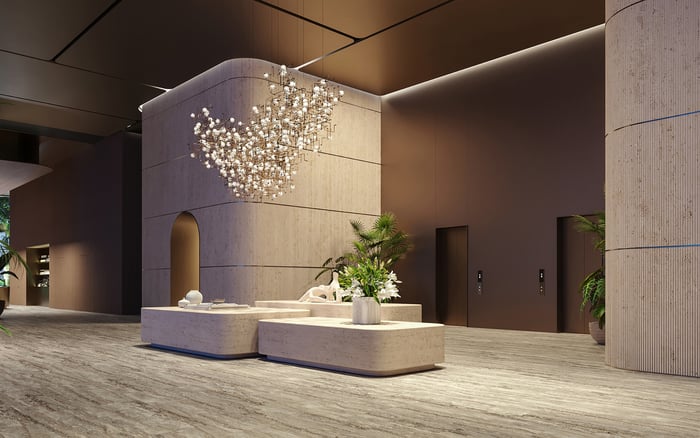
A buyer-oriented look at how to evaluate spatial “footprint” and livability in primary baths designed around freestanding tubs at The Delmore Surfside, with practical planning cues for Surfside and beyond.
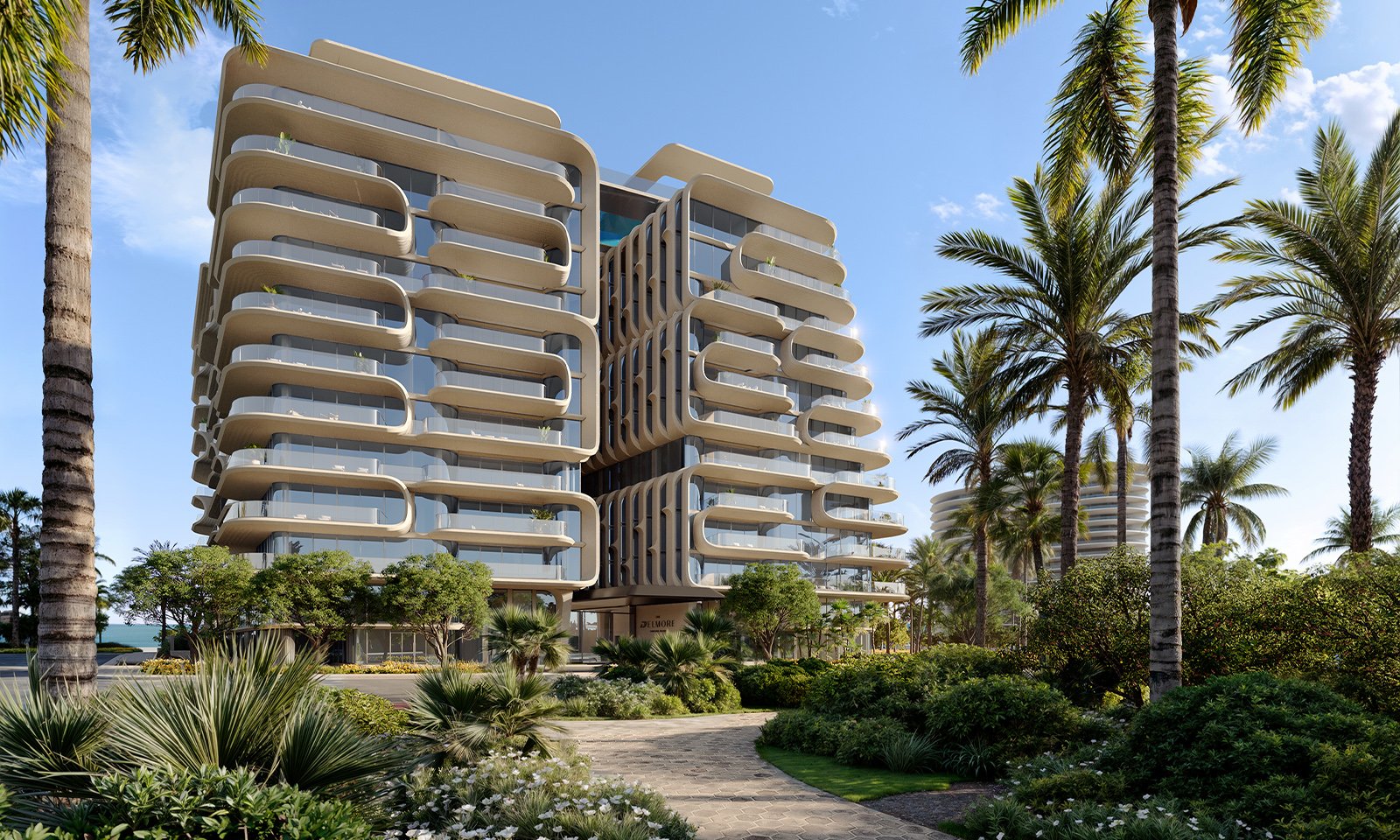
In the ultra-premium market, a primary bathroom is rarely evaluated on fixtures alone. The real differentiator is the footprint: how intelligently the room distributes space across bathing, showering, vanity routines, circulation, and storage-while still feeling effortless. A freestanding tub raises the bar because it is sculptural and fully exposed. When clearances feel tight, the tub reads like an afterthought. When circulation is generous and the wet zone is thoughtfully organized, the tub becomes the centerpiece without sacrificing day-to-day function.
At The Delmore Surfside, this question carries particular weight because Surfside buyers often prioritize privacy, calm, and a more residential cadence. The “best” footprint here is not simply the largest room; it is the plan that feels unhurried at peak use: two people getting ready, towels within reach, flattering mirror light, and a soak that feels integrated-not inserted.
When assessing a freestanding tub layout, start with what the space communicates in motion, not just what it suggests on paper. The goal is clear, uninterrupted paths that do not pinch at corners, door swings, or vanity edges.
Key signals of a well-resolved footprint:
Continuous circulation: You should be able to approach the tub, step in, and exit without twisting around a vanity edge or skirting a glass panel. A smooth approach is a luxury in itself.
Balanced negative space: A freestanding tub needs breathing room. Visually, a tub pushed too close to a wall reads like a compromise. A tub with air around it reads deliberate.
Dry-to-wet sequencing: Ideally, the path from closet to vanity to shower doesn’t require cutting through the tub zone when floors are wet. Strong footprints separate ritual from runoff.
Practical tip: Stand where you would dry off after a shower. If towels aren’t within a logical reach, or there’s no natural landing zone for a robe, the footprint is working against you.
Freestanding tubs photograph like a spa, but daily life is about water management. The footprint should protect the rest of the room from splash, steam drift, and towel sprawl.
Consider these planning cues:
Shower adjacency without conflict: A tub near the shower can feel cohesive, but only if glass lines and door swings preserve clean circulation. A shower door that opens toward the tub zone can create uncomfortable pinch points.
Drainage and flooring transitions: Even in a large primary bath, subtle floor pitches and slip resistance matter. The best rooms manage water without broadcasting “utility.”
Ventilation as design: Steam isn’t only about comfort-it affects material performance. A footprint that allows discreet ventilation placement helps protect stone, millwork, and soft finishes.
If your routine is shower-first, the tub’s footprint still needs to earn its place: as a calm visual anchor, a recovery zone, and an architectural gesture that elevates the suite. If the tub forces the shower to shrink or compromises vanity storage, you’re paying for the look while losing the function.
In high-end residences, the vanity is typically the most used part of the primary bath. The footprint should support two people without forcing choreography.
Look for:
Countertop landing zones that feel generous and uninterrupted. If every inch is fragmented by sinks, faucets, and ledges, the footprint isn’t doing its job.
Mirror and lighting placement that truly flatters. A striking tub cannot offset weak task lighting.
Storage depth and access: Deep drawers, integrated outlets, and dedicated space for appliances make the room feel tailored rather than staged.
This is also where buyers often benchmark against the broader Miami market. Some of the strongest new-construction planning in the region treats the bath as interior architecture rather than a finish schedule, as seen in buildings such as The Perigon Miami Beach where buyers often gravitate toward a calm, gallery-like interior sensibility.
A freestanding tub can occupy the most photogenic zone, but the real footprint test is the suite choreography-how the bath connects to the closet and bedroom. In a well-designed primary suite, transitions feel private and intuitive: sleeping to dressing to bathing, without awkward thresholds.
Evaluate:
Sightlines: Can the bath be used with discretion from the bedroom? A tub on axis to the entry can look dramatic, but it may not feel private.
Noise and light control: A night routine shouldn’t wash the bedroom in mirror lighting or amplify water sound.
Robe and towel logic: The footprint should deliver a clear grab point near the shower, plus a second, quieter storage zone near the vanity.
In boutique Surfside, this sequencing is often part of the appeal, differentiating it from higher-density lifestyles in neighborhoods like Brickell. Buyers cross-shopping may notice that 2200 Brickell aligns with a more urban rhythm-where smart planning can mean compact efficiency-while Surfside often aims for an uncompressed, residential feel.
Even with generous dimensions, a footprint can feel smaller when material transitions are overly busy. Conversely, a restrained, cohesive palette can make a more modest footprint feel quietly expansive.
What to look for:
Long, uninterrupted surfaces: Large-format stone, consistent grout lines, and minimal thresholds extend perceived space.
Warmth in touch points: Millwork, hardware, and subtle texture keep the room from feeling like a hotel.
Lighting layers: Ambient light should soften the entire envelope, while task lighting stays precise at the mirror.
A freestanding tub feels most convincing when it reads as part of the architecture. If you can mentally remove the tub and the room still feels composed, that’s a strong indicator the footprint is structurally sound.
When touring in person or reviewing a plan, use this quick test to translate “beautiful” into “livable.”
Entry moment: Where do your eyes land? If the tub is the first thing you see, determine whether that’s a deliberate design move or a planning necessity.
The wet exit: Picture stepping out of the shower. Where do towels live, and how many steps does it take to reach them without cutting across the main circulation path?
Two-person use: Stand at the vanity and imagine a second person moving behind you. Does the footprint allow passing without contact?
Storage reality: Assign homes for daily items-skincare, appliances, extra towels. If you can’t place them confidently, the footprint may be prioritizing presentation over living.
Soak scenario: Mentally sit on the tub edge. Is there a practical spot for a book, a glass, or a folded towel-without turning the floor into a catchall?
Surfside’s buyer profile often leans toward discretion: quieter streets, beach proximity, and a preference for residences that feel personal rather than performative. That sensibility typically favors primary baths that operate like private spas-calm, controlled, and composed.
Compare that with other coastal submarkets:
In Sunny Isles, larger-format towers can emphasize panoramic drama and resort-like amenities, and the bath may lean into high-gloss statement finishes.
In Miami Beach, the market often rewards design-forward interiors, where a tub can be treated as a sculptural object.
In Broward’s oceanfront corridor, buyers may seek a similarly serene bath experience, often anchored by water views and expansive suites. For example, Auberge Beach Residences & Spa Fort Lauderdale reflects a hospitality-grade expectation where the primary bath is part of a broader resort-caliber daily routine.
Within that spectrum, Surfside tends to reward bathrooms that feel like a retreat rather than a showcase, with the freestanding tub serving as a quiet focal point.
A freestanding tub is an aesthetic commitment. For resale, the strongest footprints protect optionality, allowing the next owner to personalize without needing to rework the room.
Resale-forward cues include:
A shower that remains primary: Even tub lovers tend to live in the shower. If the shower is undersized to accommodate the tub, the footprint can age poorly.
Wall and floor continuity: Timeless materials and coherent lines support easier updates.
Storage and electrical readiness: Thoughtful provisions for outlets, drawers, and concealed organization read as quality across buyer preferences.
If you’re buying in Surfside for long-term enjoyment, choose the footprint that supports your daily rhythm. If your horizon is shorter, prioritize the plan where the tub elevates the room without overpowering it.
What does “footprint” mean in a primary bathroom? It refers to how the room’s area is allocated among tub, shower, vanity, circulation, and storage.
Why do freestanding tubs require more planning than built-ins? They need clear space around them for access, cleaning, and visual balance.
Is a larger bathroom always better for a freestanding tub? Not necessarily; a well-zoned layout can feel more luxurious than a larger but awkward plan.
What is the biggest functional risk with a freestanding tub layout? Poor wet-zone sequencing that forces you to cross damp floors to reach towels or storage.
How can I tell if the tub placement is intentional? If circulation stays smooth and the tub has comfortable clearances, it typically reads purposeful.
Should the tub be near the shower? It can work beautifully if door swings, glass lines, and splash control do not interrupt circulation.
What matters most at the vanity in an ultra-luxury bath? Practical landing space, flattering lighting, and storage that supports daily routines without clutter.
How do materials affect the perception of bathroom size? Fewer transitions and calmer surfaces make the space feel larger and more composed.
Does a freestanding tub help resale in Surfside? It can, if the shower and storage remain strong and the tub does not compromise functionality.
What should I compare when cross-shopping other new construction? Compare circulation, wet-zone logic, vanity usability, and storage, not just finishes and fixtures.
For a confidential assessment and a building-by-building shortlist, connect with MILLION Luxury.
If branded residences are on your mind — as a home or as an allocation — we would be glad to share what we are seeing, privately.
Begin a quiet conversation