Miami’s most refined residences are redefining luxury by pairing high-touch amenities with privacy, controlled access, and discreet security that feels effortless rather than restrictive.
In Miami, the most compelling residential buildings no longer define luxury by abundance alone. A long amenity list may impress on a first tour, but sophisticated buyers now ask a more exacting question: how does the building preserve the quiet of daily life while delivering the pleasures of a private club, resort, wellness retreat, and serviced residence?
That balance matters in a city where waterfront living, hospitality culture, and global ownership converge. The ideal residence offers access without exposure. It gives owners a pool deck, fitness environment, private dining possibilities, guest arrival experience, and social spaces, while still allowing them to move from car to elevator to home with calm and discretion.
For a Brickell buyer comparing 2200 Brickell with other urban addresses, the decision is not simply about proximity or design. It is about whether a high-energy location can feel composed the moment one crosses the threshold. In that sense, privacy and security are not defensive concepts. They are lifestyle infrastructure.
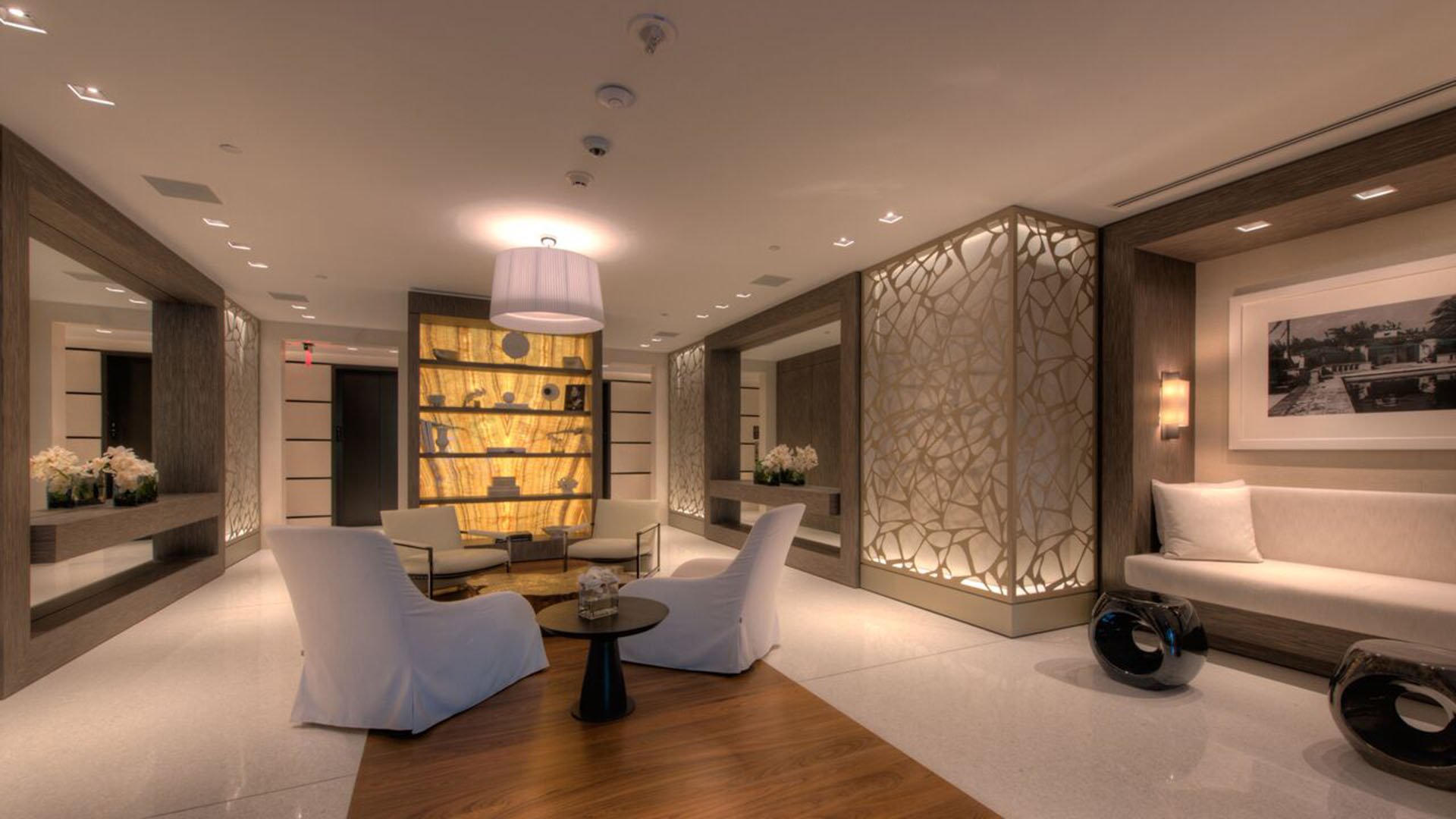
The most successful amenities are choreographed, not merely assembled. A grand lobby can create drama, but it must also manage arrival. A wellness floor can feel indulgent, but it should not require residents to pass through heavily trafficked public zones. A rooftop or waterfront terrace can be spectacular, but the path to it matters as much as the view.
This is where buyers distinguish visible luxury from livable luxury. Visible luxury photographs well. Livable luxury considers how often an owner will encounter guests, service teams, delivery personnel, event traffic, and other residents during ordinary routines. The more expensive the residence, the lower the tolerance for friction.
A private treatment room, screening lounge, spa suite, or residents-only dining area feels most valuable when access is clear and controlled. Buyers also notice whether amenity spaces are sized and sequenced for actual use, not simply for marketing language. A small number of well-managed spaces can feel more refined than a sprawling amenity program that exposes residents to constant movement.
The best buildings make privacy feel natural. Elevators are intuitive. Service paths are separated where possible. Outdoor areas create zones rather than a single stage. Staff presence is visible enough to reassure, but never so prominent that the home feels institutional.
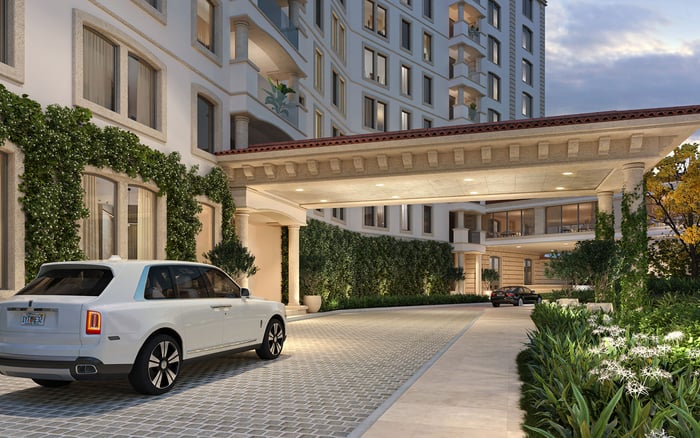
For many high-end buyers, privacy begins at the curb. The arrival sequence reveals how carefully a building thinks. Is there a protected porte cochere or a calm drop-off experience? Does the valet operation feel orderly? Are guests and residents guided without confusion? Is the entrance memorable without becoming theatrical?
In Miami Beach, where the appeal of the ocean must be balanced with the realities of a destination setting, this becomes especially important. A buyer considering The Perigon Miami Beach may be drawn to the name and coastal context, but the deeper question is how gracefully the building separates private residential life from the energy around it.
Beachfront and near-beach residences have a particular privacy challenge: the amenity everyone wants is also the setting that invites attention. Beach access, pool terraces, cabanas, and outdoor lounges must be planned so residents do not feel on display. Landscape, elevation, controlled pathways, and discreet staffing all contribute to a sense of ownership rather than spectacle.
The same principle applies inside the residence. Private foyers, considered elevator access, and thoughtful transitions from common corridors to the home can make even a large building feel intimate. The goal is not isolation. It is selectivity.
At the highest end, security is most successful when it is quiet. Buyers rarely want to feel as if they are entering a fortress. They want confidence, continuity, and intelligent oversight. The art lies in making protection feel like hospitality.
That is why front-desk teams, valet staff, concierge personnel, and building management are central to the experience. Technology can support access control, cameras, package handling, guest registration, and elevator management, but human judgment remains essential. A resident should feel recognized without being scrutinized. A guest should feel welcomed without gaining uncontrolled access.
In Sunny Isles, a market associated with vertical luxury and dramatic residential architecture, privacy can depend on how effectively a tower organizes movement. Buyers looking at Bentley Residences Sunny Isles are part of a broader audience that expects high design and high discretion to coexist. The building’s daily operation must be as considered as its visual identity.
Security also extends to digital and logistical life. Package rooms, service appointments, deliveries, household staff access, and visiting wellness providers all create touchpoints. In a luxury building, these details should not be improvised. They should be part of a clear operating culture that protects residents’ time and privacy.
Miami does not have one privacy model. Brickell requires a different balance than Coconut Grove. Fisher Island has a different psychology than Miami Beach. Sunny Isles differs from Coral Gables, Bay Harbor Islands, and Fort Lauderdale. The right building should be judged within its setting.
In a dense financial and residential district, privacy often means efficient vertical movement, controlled entries, and the ability to retreat from the street quickly. In a lower-scale village setting, privacy may depend more on landscape, building intimacy, and a softer threshold between home and neighborhood. In a waterfront context, privacy often turns on how the building manages docks, promenades, beach paths, terraces, and views.
For buyers considering the rarefied context of The Residences at Six Fisher Island, the conversation naturally leans toward seclusion, access, and a sense of enclave living. In Coconut Grove, a buyer exploring The Well Coconut Grove may focus more on wellness, neighborhood calm, and how private routines are supported within a village-like environment.
Neither approach is inherently superior. The important question is whether the building’s amenity strategy matches the privacy expectations of its location. A social tower should still offer retreat. A boutique building should still feel serviced. A resort-style property should still make owners feel that the best spaces are truly theirs.
Privacy and security deserve the same scrutiny during a tour as views, finishes, and floor plans. Ask how residents arrive, where guests wait, how deliveries are handled, whether amenity areas can become crowded, and how staff coordinate access. Notice whether the building feels calm at different times of day. The first impression matters, but the repeated daily impression matters more.
Buyers should also consider the relationship between amenity ambition and resident count. A building may offer impressive spaces, yet the experience depends on how they are managed. Reservation systems, staff training, guest policies, pet circulation, parking operations, and event rules can all affect privacy. The written offering may describe the amenities, but the building culture determines how they feel.
A penthouse owner, seasonal resident, family with children, frequent host, or executive who values anonymity may each define privacy differently. The best purchase advisory process clarifies those priorities before narrowing the field. In Miami, where residences can range from intimate waterfront buildings to branded towers and island enclaves, that clarity is essential.
The most enduring luxury residences do not force buyers to choose between service and serenity. They deliver both. They understand that the finest amenity is not always the most visible room. Often, it is the absence of inconvenience, the precision of access, and the feeling that life inside the building remains beautifully controlled.
Why is privacy so important in Miami luxury residences? Miami combines global ownership, hospitality-driven amenities, and high-profile locations, so buyers often value discretion as much as design.
Can a building have extensive amenities and still feel private? Yes. The key is thoughtful circulation, controlled access, clear staff protocols, and amenity spaces that do not overexpose residents.
What should buyers notice during a private tour? Pay attention to arrival, valet flow, lobby calm, elevator access, service paths, and how easily residents can move without unnecessary interaction.
Is security more about technology or staff? Both matter, but luxury security works best when technology supports trained staff who understand discretion and hospitality.
Do beachfront buildings require special privacy planning? Yes. Beach access, terraces, pools, and exterior pathways should be organized so owners enjoy the setting without feeling on display.
How does Brickell differ from quieter residential areas? Brickell places more emphasis on efficient access, vertical circulation, and retreat from urban energy once inside the building.
Are boutique buildings always more private than large towers? Not always. A larger building with excellent planning and management can feel more private than a smaller building with poor circulation.
What role do amenity policies play? Reservation systems, guest rules, event guidelines, and staffing standards shape whether amenities feel exclusive or overused.
Should seasonal owners evaluate privacy differently? Seasonal owners should focus on secure access, package handling, guest coordination, and how well the residence functions when they are away.
What is the strongest sign of a well-balanced luxury residence? The building feels effortless: amenities are available, access is controlled, staff are discreet, and the home remains calm.
For a discreet conversation and a curated building-by-building shortlist, connect with MILLION.
If branded residences are on your mind — as a home or as an allocation — we would be glad to share what we are seeing, privately.
Begin a quiet conversation