In a supertall, the elevator is not a utility. It is the building’s real transportation network, shaping how owners experience privacy, punctuality, and daily ease from lobby arrival to front door. For buyers considering Waldorf Astoria Residences Miami, “efficiency” means more than speed. It is the choreography of dispatching software, destination controls, zoning strategy, security, and redundancy that determines whether vertical living feels effortless or constantly negotiated. This MILLION Luxury editorial outlines the practical levers that make high speed elevator systems succeed in supertall residential environments, what to ask for during due diligence, and how to interpret marketing language without relying on unverified performance numbers. The goal is straightforward: translate vertical-transport design into buyer-grade signals you can evaluate.
In low-rise luxury, a few extra seconds in the lift is easy to forgive. In a supertall, the elevator becomes your first and last daily interaction with the building’s operational intelligence. Efficiency shows up in the quiet details: how quickly you clear the lobby, whether your car arrives predictably during peak periods, and whether residential movement is cleanly separated from hotel traffic, vendors, and back-of-house service.
For buyers evaluating Waldorf Astoria Residences Downtown Miami, elevator performance is also a proxy for long-term livability. A tower can be visually iconic yet feel logistically constrained if vertical circulation was value-engineered or poorly commissioned. Conversely, a well-conceived elevator strategy can make a dense building read as calm, private, and almost villa-like once you move beyond the lobby.
In Miami’s Downtown and Brickell corridor-where supertall ambition and mixed-use programming often converge-elevator systems carry the burden of multiple “cities” stacked vertically: residences, hotel, amenity decks, and private entries. The highest luxury is not raw speed. It is the feeling that the building already knows where you are going, without announcing it.
The market often reduces elevator performance to top speed, but owners experience efficiency as a blend of five interlocking outcomes.
First is average wait time, especially at predictable peaks: weekday morning departures, evening returns, weekends, and event surges. A high top speed does little if cars are poorly allocated or the system repeatedly makes unnecessary stops before reaching your zone.
Second is travel-time consistency. In premium residential life, consistency can matter more than the absolute fastest run. When the same trip varies widely, residents start adjusting behavior-leaving earlier and crowding the lobby. That behavioral shift quickly becomes a self-fulfilling inefficiency.
Third is capacity and batching. Destination-based systems can group riders heading to similar floors, reducing intermediate stops and improving throughput. When executed well, it can feel like a car arrives “for you,” even while the system is optimizing building-wide.
Fourth is privacy and access control. Efficiency includes the subtle discipline of security: how credentials direct you to the correct bank, how visitors are routed, and whether elevator logic keeps residential movement discreet.
Fifth is resilience: redundancy, power recovery, maintenance planning, and how quickly the system returns to normal when a car is taken offline or an outage occurs.
In other words, “high-speed” is a component. “Efficient” is an operational promise.
Several design strategies tend to distinguish supertall elevator systems that feel effortless from those that feel perpetually busy.
Zoning and elevator banks.
Supertalls typically divide floors into zones served by specific banks. Done well, zoning reduces the number of stops each car must make, improving wait times and ride quality. Done poorly, it creates bottlenecks at transfer points or loads too many residences onto too few cars.
Destination dispatch.
Instead of pressing “up” and hoping, residents select a destination and the system assigns a car. This is especially valuable in mixed-use towers because it can prevent different populations from unintentionally sharing cars-or crowding the same lobby areas.
Separation of uses.
In a luxury environment, a dedicated residential lobby and elevator bank is not simply a branding flourish. It is a mechanical and operational requirement that keeps service movement, hotel arrivals, and residents from competing for the same vertical bandwidth.
Service elevator strategy.
When service elevators are treated as an afterthought, resident experience pays the price. Move-ins, deliveries, and maintenance must be handled by a system designed for them-or the passenger system degrades at the moments it can least afford to.
Ride comfort.
In very tall towers, pressure changes, acceleration profiles, and vibration control can define the experience. Comfort is part of perceived efficiency: if the ride feels abrupt or noisy, residents will classify it as “worse,” even if it is fast.
Because the Research Pack and Fact Table provided for this assignment contain no verified technical disclosures, this evaluation focuses on what buyers can responsibly infer-and what to request during a sales and due diligence process-without assuming specific specifications.
A Waldorf Astoria-branded residential offering signals an intent toward hotel-caliber operations, which in practice often translates to heightened attention to arrival sequence, staffing, and controlled circulation. In a supertall context, the critical question is whether that operational ambition is supported by an elevator strategy that can deliver it: appropriately separated access points, clear zoning, and enough redundancy to preserve standards when a component is down.
For buyers, the most useful mental model is to treat elevator performance as the building’s “circulatory system.” If it is undersized, everything else feels tighter-the lobby, the amenity decks, even valet and package handling. If it is right-sized and well-programmed, the building can feel serene even at high occupancy.
You do not need engineering credentials to ask for signals that correlate strongly with elevator efficiency. The goal is to move from marketing adjectives to operational logic.
1) How is the building zoned for residential elevators?
Ask where the residential zones begin and end, and whether any transfers are required for certain amenity levels. Transfers can be elegant when planned, but inconvenient when forced.
2) Is destination dispatch used for residences, and how is it integrated with access control?
The strongest systems feel seamless: credential, assignment, arrival. The weakest feel like two separate systems stacked together.
3) What is the planned separation between residents, hotel guests, and back-of-house traffic?
Separation should be physical and operational, not merely “recommended.”
4) How are move-ins, deliveries, and large-item logistics handled?
Ask about service elevator availability, booking protocols, and whether large deliveries ever require passenger elevators.
5) What is the redundancy plan?
How many cars can be offline without materially changing the resident experience? What happens during maintenance windows?
6) What is the recovery sequence after a power interruption?
This is less about catastrophe and more about Florida’s everyday reality. A premium building should return to normal operations quickly and predictably.
These questions are deliberately non-numeric. They are designed to surface design intent and operational maturity without leaning on unsupported performance figures.
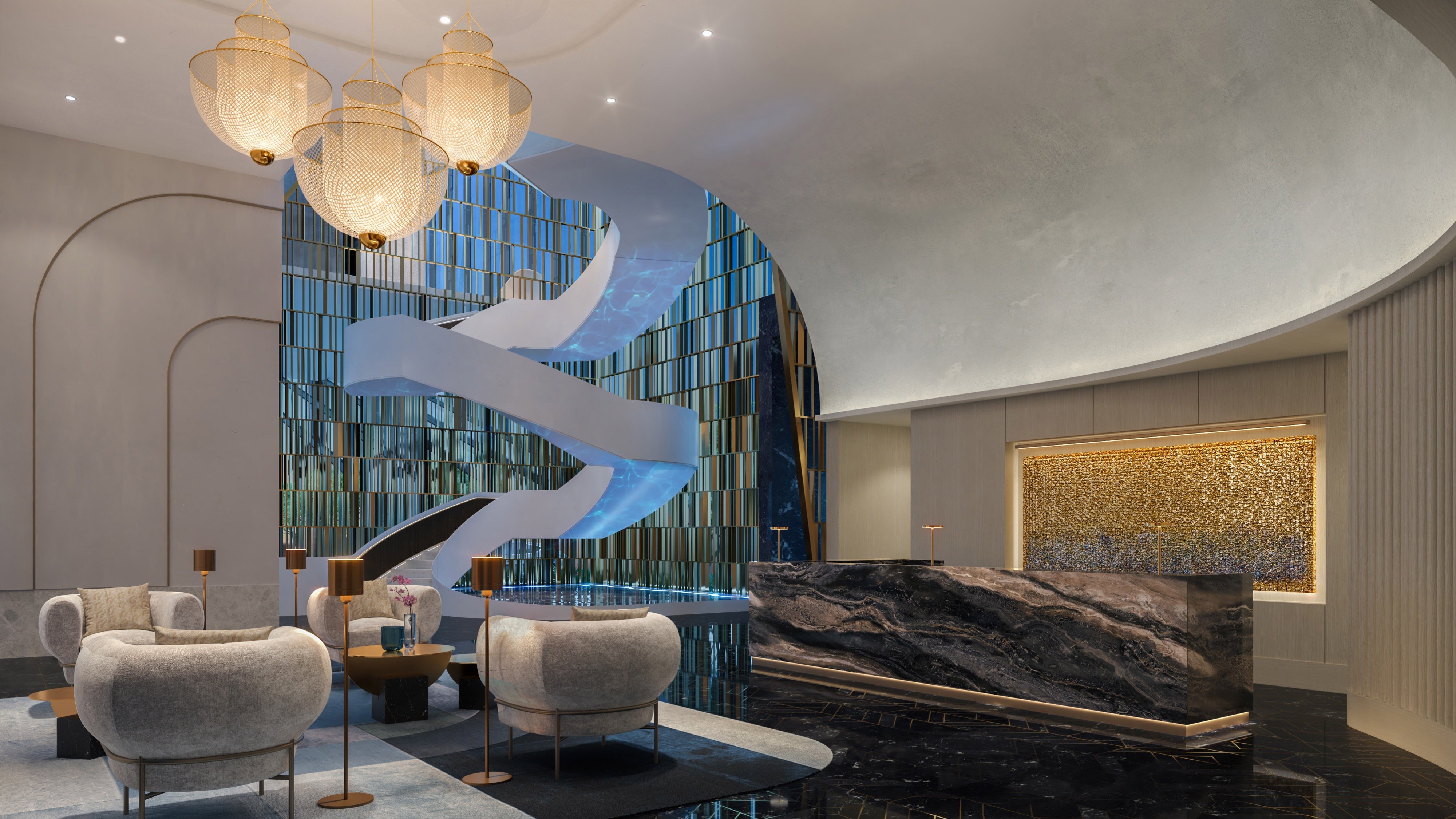
In supertalls, the lobby is not just a room. It is a transfer station. The most luxurious lobbies are not necessarily the most dramatic; they are the ones that remove decision points.
Look for a clear progression: arrival, identity confirmation, elevator assignment, and a calm waiting area that does not conflict with other building uses. If residential and hotel functions share a footprint, notice whether separation is enforced by architecture and staffing-not just signage.
This is why buyers often compare experiences across neighborhoods. In Brickell, towers such as 2200 Brickell and Baccarat Residences Brickell shape expectations around discreet arrival and controlled access, even when they are not supertalls. Applied to a much taller building, those cues become even more consequential.
Elevator systems are typically designed around peaks. The resident experience, however, is shaped by how those peaks are defined-and how the building behaves when real life diverges from the assumptions.
Ask yourself when you would most resent delay. For many owners, it is the morning departure, the late-night return, and weekend midday movement to amenities. If amenities are concentrated on a single deck, that deck can become a “mini-peak” generator throughout the day.
A well-designed system manages this with zoning, intelligent dispatch, and enough cars allocated to residential demand. A less successful one relies on signage and resident patience. In the ultra-premium market, patience is not a design strategy.
Luxury buyers increasingly treat privacy as measurable, not abstract-and elevator efficiency contributes directly. If the system routinely forces mixed groups into the same cars or pushes residents into a shared queue, privacy erodes.
Destination dispatch can increase discretion by reducing guesswork about who is going where. Access control can further ensure visitors and staff are guided to appropriate endpoints. The result is not just “secure,” but quiet.
For buyers who split time between Miami and the beaches, it can be helpful to contrast how different property types approach vertical privacy. Oceanfront buildings such as 57 Ocean Miami Beach often emphasize boutique scale, where elevator privacy is achieved by fewer units per floor rather than advanced dispatching. In a supertall, the building has to earn that same feeling through systems.
Efficiency is what you notice when everything is working. Value is what you notice when something is not.
In a supertall, elevators run heavy cycles. A strong maintenance culture and clear service planning help protect resale and rental desirability. Pay attention to how building teams describe preventive maintenance, response times, and how disruption is minimized.
Also consider how service operations touch daily life: package handling, staff movement, and vendor access. If those flows are not intelligently routed, passenger elevators become the default workaround-and the system degrades over time.
In markets where brand and operations matter, buyers often compare towers across the coast, including resort-forward environments such as Four Seasons Hotel & Private Residences Fort Lauderdale, where hotel-grade staffing and logistics can set a benchmark for what “frictionless” feels like.
When details are not publicly disclosed, focus on what can be demonstrated in experience and what can be answered with clarity.
Words like “high-speed,” “smart elevators,” and “private access” are directionally useful but incomplete. Ask for definitions: private to what extent, smart through which user interaction, separated from which flows. In a supertall, precision is not optional.
A simple buyer discipline helps: translate each claim into a daily scenario. If you cannot picture the operational reality, request a walkthrough of the arrival sequence and elevator assignment. A building that is genuinely confident in its vertical transportation is typically comfortable explaining how it works.
In Miami’s top tier, the view still matters-but the path to the view is increasingly where value is won or lost. Elevator efficiency is not a technical footnote. It is lived luxury: time returned to you, privacy protected by design, and confidence that the building can perform at full occupancy.
For Waldorf Astoria Residences Miami, the most practical approach is to evaluate the elevator system as an integrated experience: lobby choreography, residential separation, dispatch intelligence, service logistics, and resilience. Ask the right questions early. The answers tend to align with the ownership experience you will have for years.
What is a “high-speed elevator” in a residential supertall? It generally refers to elevators designed for long travel distances and higher velocities, but the lived benefit depends on dispatching and zoning.
Is elevator speed the main factor in reducing wait times? Not usually; wait times are more influenced by how many cars serve your zone and how intelligently trips are grouped.
What is destination dispatch and why does it matter? You select your floor first and the system assigns a car, which can reduce stops and improve privacy when integrated with access control.
Do mixed-use towers typically have separate elevator systems? Well-planned mixed-use towers often separate residential circulation from hotel and service traffic to protect experience and security.
How can I evaluate elevator privacy during a tour? Observe whether residential arrivals are routed to a distinct lobby zone and whether elevator assignment feels controlled and discreet.
What role do service elevators play in residential comfort? They absorb deliveries, move-ins, and maintenance so passenger elevators remain calm and predictable during daily operations.
Why does redundancy matter in a supertall? If one car is offline, a resilient system maintains near-normal performance rather than forcing long waits or crowded lobbies.
Are higher floors always harder to serve efficiently? They can be if zoning is weak; strong zoning and dispatching are designed specifically to keep upper levels practical.
Should buyers request technical elevator specifications? You can ask, but it is often more useful to request explanations of zoning, separation of uses, and operational recovery plans.
What is the simplest sign of an efficient elevator system? Consistency: predictable waits, minimal unnecessary stops, and a lobby experience that feels calm even when busy.
For a confidential assessment and a building-by-building shortlist, connect with MILLION Luxury.
If branded residences are on your mind — as a home or as an allocation — we would be glad to share what we are seeing, privately.
Begin a quiet conversation