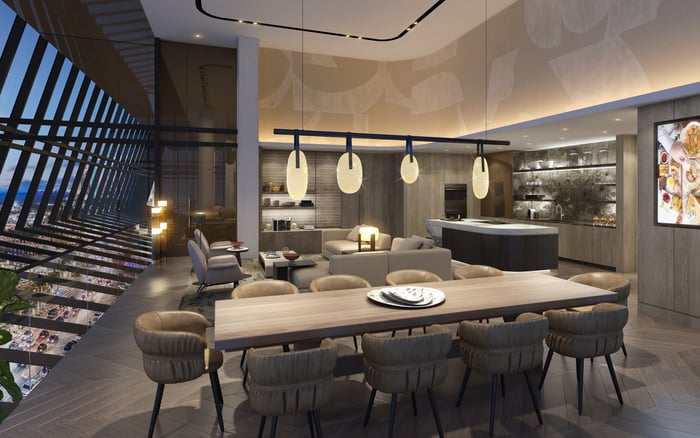
A discreet buyer’s guide to waterfront condominium decisions in Downtown Miami and Brickell, with emphasis on view protection, insurance review, and resilient building standards.
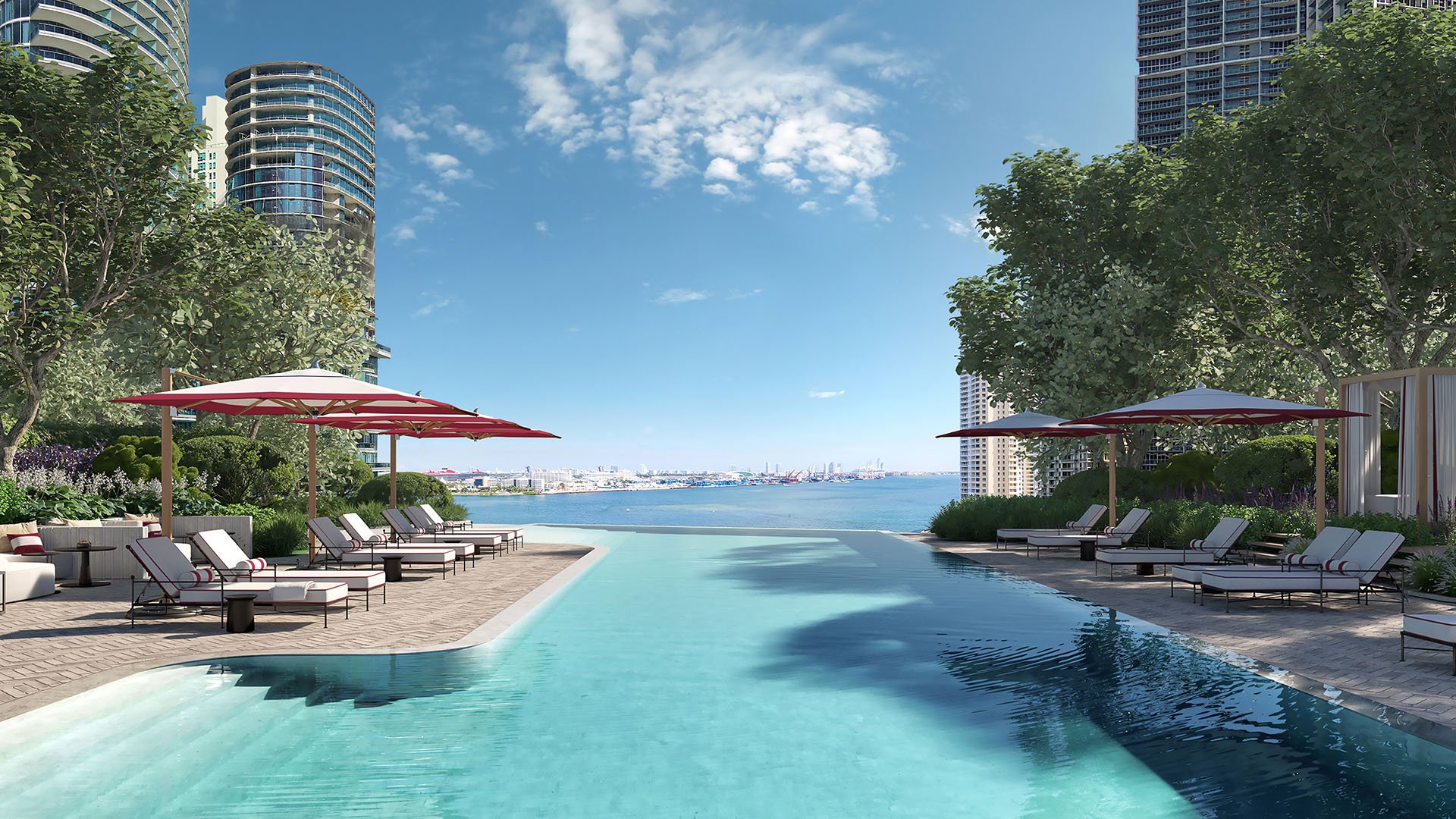
Buying waterfront in Downtown Miami is rarely just a search for a blue horizon. For sophisticated buyers, it is a study in permanence: what can be seen today, what may change tomorrow, and how a building is prepared to perform under the realities of coastal ownership. The most desirable residences balance emotion with discipline. They deliver the sensory appeal of light, water, skyline, and arrival, while also withstanding scrutiny around insurance, maintenance, construction quality, and long-term governance.
Downtown and Brickell sit at the center of that conversation. A residence may feel cinematic at sunset, yet the decision should also be assessed through view corridors, neighboring parcels, association documentation, and the physical systems behind the lobby. The best waterfront purchase is not simply the one with the most dramatic first impression. It is the one whose advantages have been tested carefully before contract.
A view corridor is not the same as a view. The view is what a buyer sees from the living room today. The corridor is the spatial relationship that makes that view possible, including the angle over water, the positioning of adjacent towers, the width of streets, and the development potential of nearby land. In a vertical market, that distinction matters.
Buyers often focus on direct east-facing water exposure, but oblique views can be equally compelling when they capture both Biscayne Bay and the urban skyline. A corner residence may offer layered sightlines that feel more durable than a single straight-ahead exposure. Conversely, a seemingly perfect view may depend on a neighboring low-rise site that deserves closer scrutiny.
When touring a tower such as Aston Martin Residences Downtown Miami, the most productive questions are precise rather than emotional. Which rooms hold the primary water exposure? Does the terrace frame the bay, the river, or both? Is the principal view enjoyed while seated, or only when standing at the glass? Does the sightline pass over open water, a roadway, a park, or a parcel that could change?
Downtown waterfront ownership tends to emphasize scale, skyline, cultural proximity, and the visual drama of Biscayne Bay. Brickell often adds a denser financial-district rhythm, with walkability, restaurants, offices, and residential towers compressed into a more intensely urban setting. Neither is inherently better. The right choice depends on how a buyer wants the waterfront to function in daily life.
For some, Downtown offers a broader sense of arrival, especially in residences where the bay view feels expansive and theatrical. Waldorf Astoria Residences Downtown Miami belongs to the Downtown conversation because buyers considering this area often want architecture, height, and skyline identity to be part of the ownership experience. In these cases, the view is not merely decorative. It becomes part of the residence’s brand, entertaining value, and future positioning.
Brickell buyers may approach the waterfront through a slightly different lens. A building such as Baccarat Residences Brickell speaks to those who want proximity to the urban core while still preserving a strong relationship to water and light. Nearby, Una Residences Brickell reflects the continued appeal of waterfront living where design, arrival sequence, and bay orientation are central to the buyer’s evaluation.
For luxury waterfront buyers, insurance should be treated as a core ownership component, not an administrative afterthought. The relevant review extends well beyond the premium. It should include deductibles, exclusions, wind and flood considerations, the association’s master policy, unit owner responsibilities, and how assessments could be handled if the building faces a significant claim or capital need.
In condominium ownership, the boundary between association coverage and personal coverage deserves careful attention. Buyers should understand what is covered by the building, what must be insured individually, and how improvements, finishes, contents, and temporary displacement may be treated. A residence with extensive customization or designer interiors may require a more careful policy structure than a standard unit.
The most prudent buyers ask for insurance information early, then review it alongside budgets, reserves, maintenance history, and association governance. A glamorous lobby cannot compensate for unclear documentation. Nor should a beautiful terrace distract from the financial realities of waterfront exposure. Insurance does not diminish the romance of the bay. It clarifies the terms on which that romance is owned.
Waterfront towers should be evaluated as living systems. The visible design matters, but so do the less visible elements: glazing, exterior envelope, waterproofing, drainage, mechanical systems, backup power strategy, elevator resilience, garage design, and maintenance protocols. A buyer does not need to become an engineer, but a buyer should know which specialists to consult and which documents to request.
Newer buildings often market advanced design and contemporary construction, but the buyer’s task is to verify how those promises translate into daily performance. How does the building manage wind-driven rain? How are terraces drained and maintained? What is the history of water intrusion, if any? How accessible are critical systems for inspection and repair? How transparent is the association about ongoing capital planning?
Older buildings can also be compelling if they have been maintained with discipline. In some cases, established associations have a clear operating culture and a strong understanding of the building’s needs. The point is not to prefer new automatically. The point is to compare condition, documentation, design intent, and governance with the same seriousness one brings to floor plan and view.
Inside the unit, waterfront value is shaped by how the plan meets the view. Wide living rooms, corner glazing, and principal suites oriented toward water can create a more durable sense of luxury than a narrow plan with a single framed exposure. Ceiling height, mullion placement, terrace depth, and the relationship between indoor seating areas and exterior space all influence how the residence lives.
Sound is also part of the waterfront equation. Buyers should experience the residence at different times when possible. Traffic, marine activity, wind, nearby construction, and the acoustics of outdoor amenities can change the feel of a home. A high-floor residence may reduce some distractions, while a lower elevation may offer a more intimate connection to water. Neither should be dismissed without context.
Terraces deserve particular scrutiny. A deep terrace may function as an outdoor room, while a shallow balcony may be primarily visual. Buyers should understand privacy from neighboring units, sun exposure, furniture practicality, and the building’s rules for exterior use. Waterfront living is most successful when the outdoor space is not just beautiful in photography, but genuinely usable.
The strongest waterfront offers are built on preparation. Before becoming emotionally attached, buyers should identify their non-negotiables: direct bay exposure, protected angle, building age, service level, amenity profile, pet policy, parking, storage, and tolerance for future construction nearby. This allows the search to remain elegant rather than reactive.
A careful contract process should preserve time for condominium document review, insurance analysis, inspection, financing coordination if applicable, and legal guidance. Buyers should not rely solely on marketing materials or a single tour. The luxury market rewards decisiveness, but only when decisiveness is supported by disciplined inquiry.
For international, second-home, and relocating buyers, the best approach is to compare buildings in clusters rather than in isolation. Downtown and Brickell each contain different expressions of waterfront ownership. The right residence is the one where the view, building, insurance structure, and lifestyle all support the same conclusion.
What is the first thing to evaluate in a Downtown Miami waterfront condo? Start with the view corridor, then study the building’s documentation, insurance structure, and physical condition before focusing on finishes.
Is a direct water view always better than an angled view? Not always. A strong angled view can combine bay, river, and skyline exposure, sometimes with more visual depth than a single straight view.
Why does insurance matter so much for waterfront buyers? Insurance affects ownership cost, risk allocation, and potential exposure to deductibles or assessments after a significant event.
Should buyers prefer new-construction on the waterfront? New-construction can be appealing, but it should still be evaluated for design quality, association planning, documentation, and long-term operations.
How should a buyer think about a balcony on the bay? A balcony should be judged by depth, privacy, wind comfort, drainage, sun exposure, and whether it functions as true outdoor living space.
Are high-floors always more valuable? High-floors often improve outlook and privacy, but value also depends on layout, exposure, sound, terrace usability, and building quality.
What makes a waterview residence more resilient in value? A waterview feels stronger when the sightline is broad, layered, and less dependent on a nearby parcel remaining unchanged.
How is Brickell different from Downtown for waterfront ownership? Brickell is typically more intensely urban, while Downtown may offer a broader civic and skyline setting, depending on the building and exposure.
What documents should a buyer review before closing? Buyers should review condominium documents, budgets, reserves, insurance materials, rules, maintenance history, and any available engineering information.
Can a beautiful view justify overlooking building concerns? No. In waterfront ownership, the view and the building must be evaluated together because both shape long-term enjoyment and risk.
To compare the best-fit options with clarity, connect with MILLION.
If branded residences are on your mind — as a home or as an allocation — we would be glad to share what we are seeing, privately.
Begin a quiet conversation