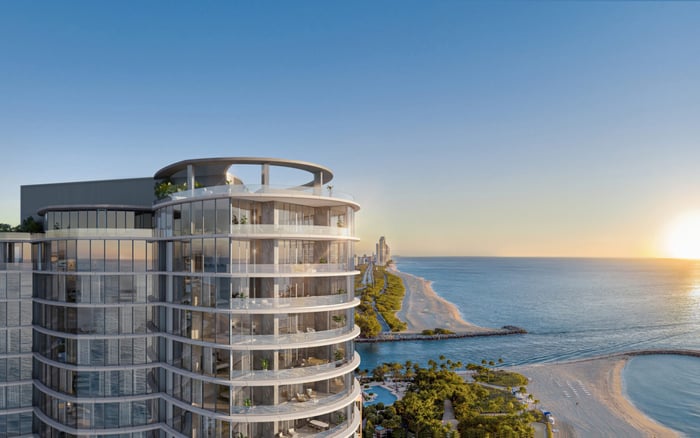
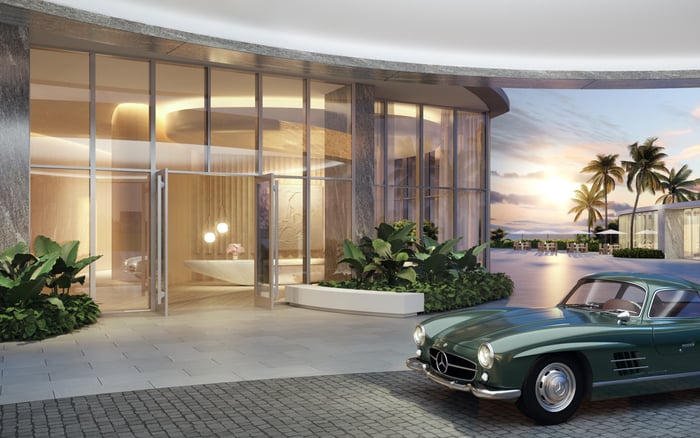
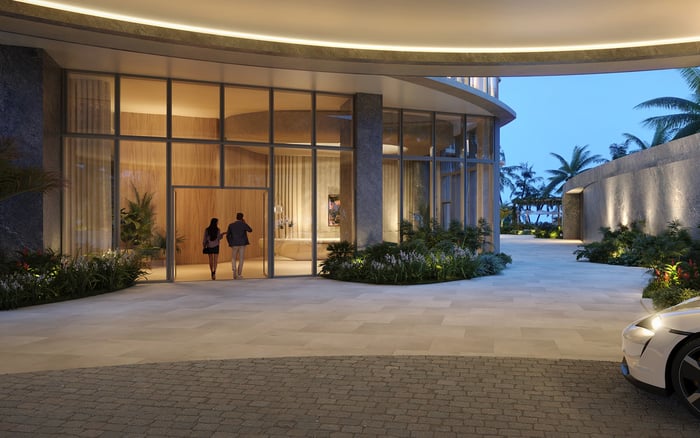
A discreet buyer’s guide to evaluating Rivage Bal Harbour as a $14M+ oceanfront reservation, with emphasis on scarcity, unit selection, carrying costs, execution risk, and future resale liquidity.
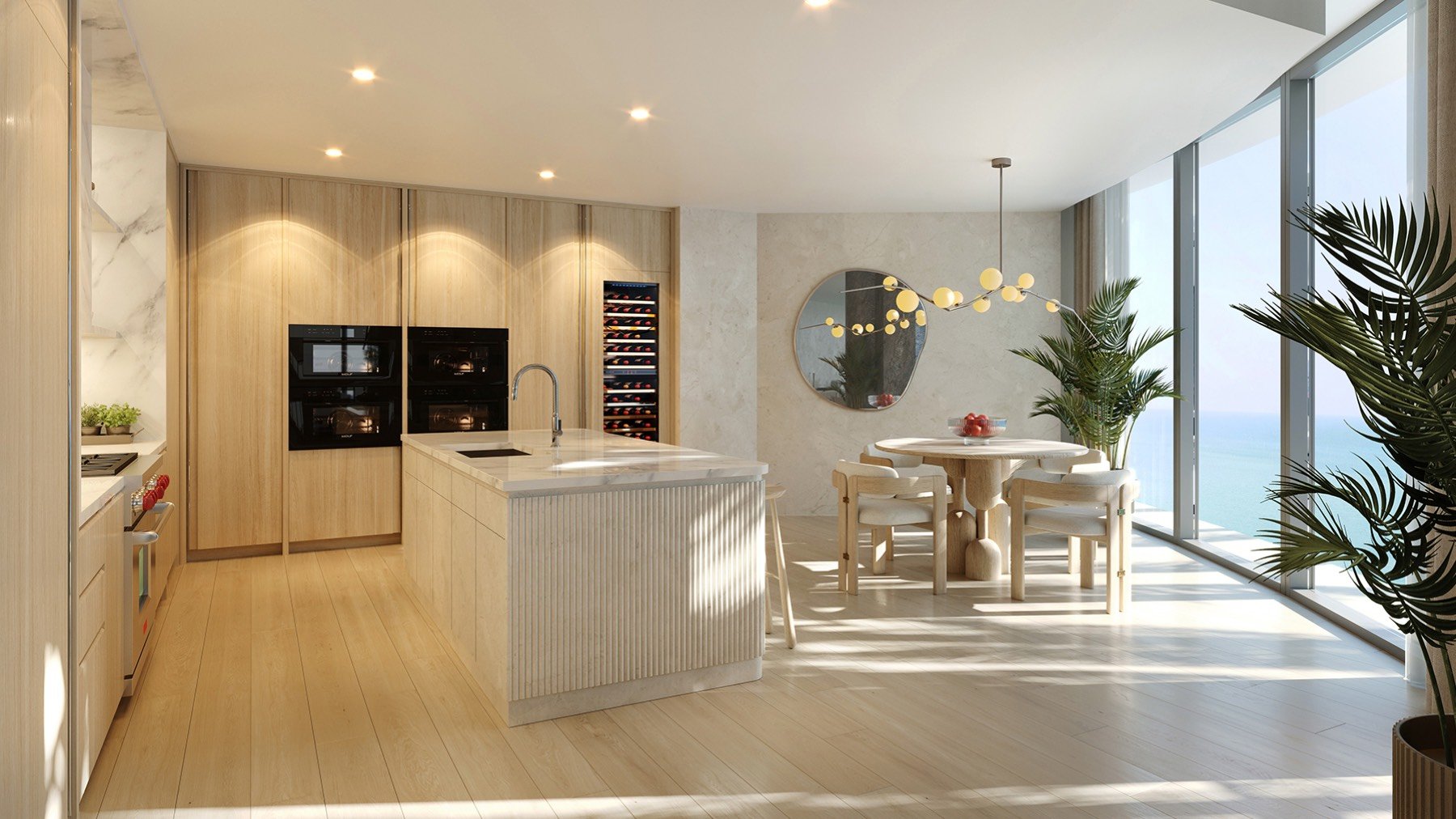
Rivage Bal Harbour occupies one of South Florida’s most scrutinized categories: ultra-luxury oceanfront condominium living at a price point where emotion and underwriting must carry equal weight. For a $14M+ buyer, the decision is not simply whether the building is beautiful, private, or well located. It is whether reserving now creates enough advantage to justify committing before the full arc of construction, final pricing, and future inventory becomes clear.
That distinction matters. At this level, a residence is both a personal environment and a long-duration capital allocation. The right buyer may value the quiet prestige of Bal Harbour, the rarity of new oceanfront supply, and the chance to secure a preferred position early. The disciplined buyer will also ask what happens if market conditions soften, ownership costs rise, or resale liquidity proves thinner than expected.
Rivage Bal Harbour is therefore best approached with a boardroom mindset and a residential heart. The home must feel inevitable. The numbers must remain defensible.
The strongest argument for Rivage begins with scarcity. Bal Harbour has limited oceanfront development opportunities, and that scarcity is central to the project’s appeal. In a market where the most coveted parcels cannot be easily recreated, the ability to reserve in a new luxury building can feel less like a conventional condo purchase and more like access to a rare asset class.
Still, scarcity should not be mistaken for automatic appreciation. Land scarcity can support pricing power, but it does not answer every buyer question. At $14M+, the purchase must be evaluated against architecture, privacy, service, ownership structure, carrying costs, and the credibility of execution. A rare address can open the door. It cannot replace due diligence.
This is especially true for buyers comparing Rivage Bal Harbour with established trophy residences in Bal Harbour, Miami Beach, and Sunny Isles. A new building may offer architectural freshness and first-generation ownership. An established building may offer a clearer record of service, governance, maintenance discipline, and resale behavior.
Renderings can be seductive, but ultra-prime buyers should go deeper. The essential underwriting factors include land scarcity, the development team, construction execution risk, lifestyle fit, and resale liquidity. Each deserves its own conversation before a reservation becomes a commitment.
Construction execution risk is not merely about whether a building gets completed. It includes timing, quality control, finish standards, budget discipline, and how closely the delivered product matches the promise made during sales. In pre-construction and new-construction purchases, the paper experience and the delivered experience can diverge if expectations are not clearly documented.
Buyers should also understand the legal and regulatory dimensions of a reservation. Contract terms, deposit structure, rescission rights, association documents, budget assumptions, reserves, insurance exposure, and potential assessments all influence the true profile of the purchase. The most elegant residence can still be compromised by unclear obligations or governance risk.
At this tier, the building is only the beginning. Line-by-line analysis can materially affect long-term value because view corridors, sunlight exposure, and floor height are not interchangeable. A residence that looks compelling on a stack plan may feel different in morning light, afternoon glare, or seasonal sun patterns.
Buyers should study how each line relates to the ocean, neighboring structures, privacy, terraces, elevator access, service flow, and sightlines from principal rooms. Floor height may command a premium, but the best choice is not always the highest available residence. The strongest line is the one that aligns views, livability, discretion, and future buyer appeal.
This is also where lifestyle becomes measurable. A second-home owner may prioritize lock-and-leave convenience, service depth, and security. A full-time resident may focus on kitchen functionality, storage, staff circulation, acoustic privacy, and year-round amenity use. The question is not only which residence is most impressive. It is which residence will still feel correct after ten summers, ten winters, and multiple ownership cycles.
Amenity depth and service quality should be judged against true ultra-luxury peers, not launch materials alone. At $14M+, buyers are not paying only for a pool deck, a fitness room, or a lobby experience. They are paying for a service culture that should remain consistent over time.
That means asking practical questions. How will staffing be funded? What level of privacy will residents have during peak periods? Are wellness, arrival, valet, security, beach, and concierge functions designed for daily use or visual drama? Does the amenity program support quiet luxury, or does it create unnecessary exposure?
In Bal Harbour, discretion is part of the value proposition. A successful building should make ownership feel effortless without turning daily life into a performance. Rivage’s long-term relevance will depend not only on its architecture, but on whether the property remains well capitalized, carefully maintained, and operationally refined after delivery.
The purchase price is only the opening line of the analysis. Buyers should model ownership costs over a 10- to 20-year horizon, including maintenance, insurance, reserves, assessments, and future capital improvements. In coastal South Florida, disciplined reserve planning and insurance assumptions are not back-office details. They are central to wealth preservation.
A sophisticated buyer will stress-test the monthly and annual carry under several scenarios. What if insurance costs rise? What if reserves need to be strengthened? What if a future capital project is required to keep the building competitive? What level of maintenance burden is acceptable if the residence is used seasonally?
This analysis should not make the purchase feel defensive. It should make the decision clearer. The best luxury assets are not only beautiful on day one. They are financially and physically resilient across decades.
Exit liquidity is one of the most important risk factors. Bal Harbour is a smaller resale market than larger coastal submarkets, which means the buyer pool can be more selective and less liquid in certain price bands. For some owners, that is a feature, not a flaw. Smaller markets can reinforce exclusivity. But exclusivity also means the exit strategy must be realistic.
A future buyer at this level will likely compare Rivage Bal Harbour against trophy inventory across Bal Harbour, Surfside, Miami Beach, Fisher Island, and Sunny Isles. They will ask whether the architecture has aged well, whether the association is well funded, whether services remain excellent, and whether a particular residence has the right view, light, floor height, and privacy.
The likely buyer profile for Rivage skews toward end users and second-home owners rather than short-term speculators. That can support a more stable ownership culture. It can also mean resale timing depends on finding the right end user, not simply the next trade.
The central decision is whether reserving now offers enough advantage versus waiting. Early reservation may provide access to preferred lines, stronger selection, and a sense of control in a scarce oceanfront market. Waiting may offer more visibility into construction progress, final product quality, competitive inventory, and broader pricing conditions.
There is no universal answer. The right move depends on how irreplaceable a specific residence feels, how confident the buyer is in the execution, and how comfortable the buyer is holding through a full ownership cycle. At $14M+, hesitation can be prudent. So can decisive action when the fit is unusually precise.
The most intelligent Rivage buyer will not be moved by scarcity alone. They will reserve only when the residence, the risk profile, and the long-term thesis align.
Is Rivage Bal Harbour primarily a lifestyle purchase or an investment decision? It should be treated as both. At $14M+, lifestyle quality and capital preservation are inseparable.
Why does Bal Harbour scarcity matter for Rivage buyers? Limited oceanfront development opportunities support the project’s appeal, but scarcity does not eliminate the need for careful underwriting.
What are the biggest due diligence points before reserving? Buyers should review execution risk, legal terms, association structure, ownership costs, unit selection, and future resale liquidity.
Should buyers compare Rivage with existing buildings? Yes. Established trophy buildings can provide useful benchmarks for service, resale behavior, governance, and long-term maintenance.
How important is the specific unit line? Very important. View corridors, sunlight exposure, privacy, and floor height can materially affect long-term desirability.
Are amenities enough to justify a premium price? Amenities matter, but buyers should focus on service quality, staffing, privacy, and durability rather than presentation alone.
What ownership costs should be modeled? Maintenance, insurance, reserves, assessments, and capital improvements should be evaluated over a 10- to 20-year horizon.
Is exit liquidity a concern in Bal Harbour? It can be. Bal Harbour is a smaller resale market, so future liquidity may depend on finding a highly specific buyer.
Who is the likely buyer for Rivage Bal Harbour? The buyer profile is likely to favor end users and second-home owners seeking privacy, scarcity, and long-term residential value.
Should a buyer reserve now or wait? Reserve only if the preferred residence, execution confidence, and long-term ownership thesis are strong enough to outweigh the value of waiting.
To compare the best-fit options with clarity, connect with MILLION.
If branded residences are on your mind — as a home or as an allocation — we would be glad to share what we are seeing, privately.
Begin a quiet conversation