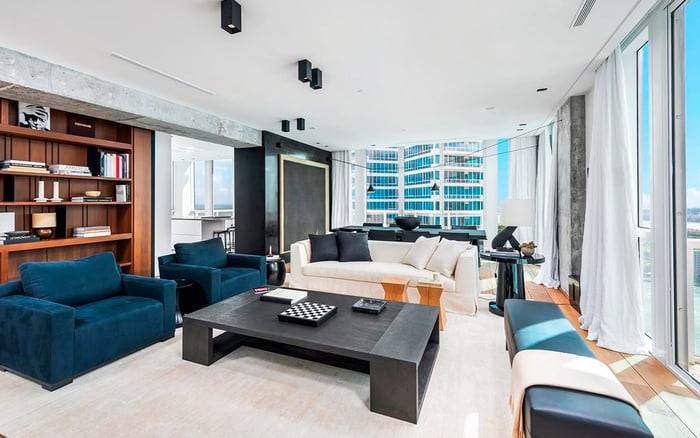
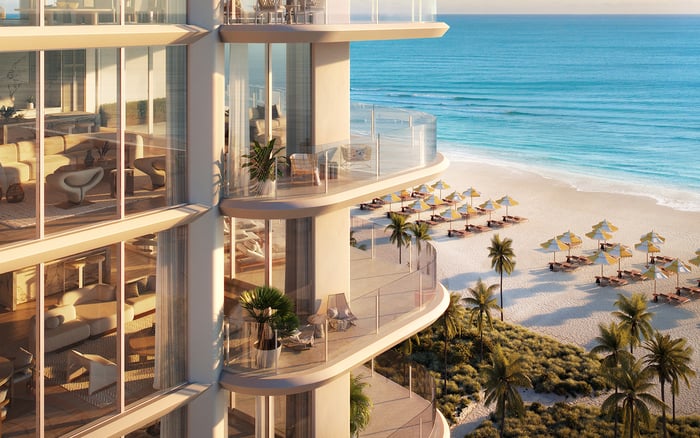
A discreet buyer’s guide to evaluating commercial-tenant, amenity, and service-related sound exposure at Continuum on South Beach before committing to a seasonal residence.
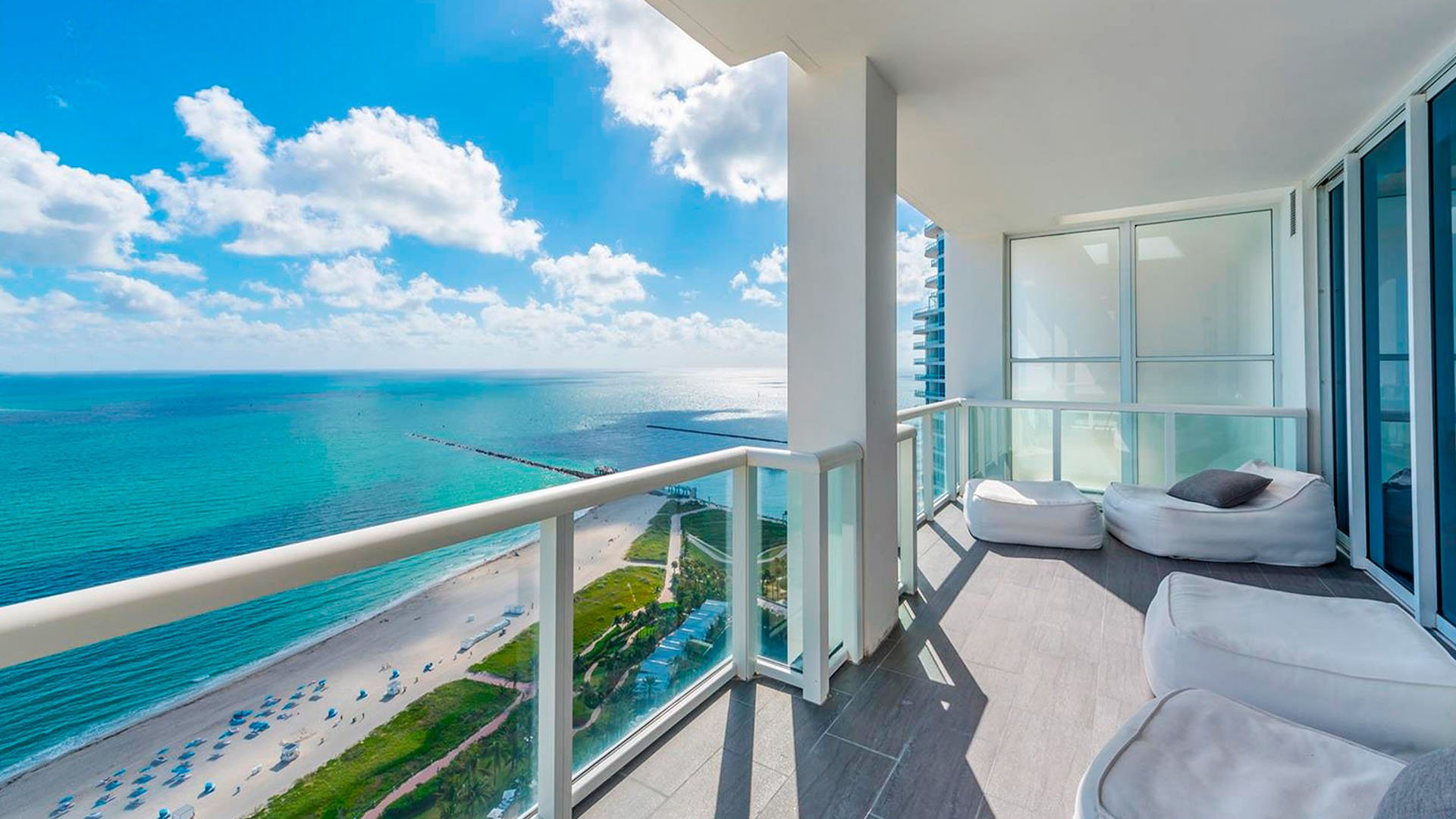
Continuum on South Beach occupies one of Miami Beach’s most recognizable resort-residential settings: an oceanfront condominium campus in the South of Fifth area, positioned at the southeastern edge of South Beach with direct exposure to the beach and Atlantic Ocean. For seasonal buyers, that setting is precisely the appeal. It is also why sound diligence requires a more refined lens than simply asking whether a residence is “quiet.”
The property is organized as a two-tower luxury condominium complex, generally distinguished by its North Tower and South Tower. It functions less like a conventional standalone condominium and more like a resort-style residential environment with gated, high-amenity grounds. That distinction matters. A resort-style property can feel more complete, more serviced, and more private than a standard tower, but it can also create a more layered daily acoustic profile.
Commercial-tenant noise should therefore be treated as a due-diligence category, not as a presumed defect. The more useful question is whether non-residential rhythms, service activity, guest movement, amenity operations, or beach-adjacent energy affect the exact residence under consideration. At this level of the market, the answer is rarely generic. It depends on line, floor, orientation, timing, and personal tolerance.
Commercial sound in a luxury condominium context can mean several things. It may involve activity from permitted commercial or service-related uses. It may involve deliveries, refuse handling, staff circulation, building entries, outdoor hospitality energy, or sounds that are not strictly commercial but follow the same pattern: predictable, operational, and recurring.
At Continuum, the relevant framework is the property’s resort-service character. Fitness, spa, and wellness amenities are part of the luxury offering. Pool and outdoor leisure areas are integral to the residential experience. Tennis and landscaped outdoor areas also contribute to the amenity mix. Each feature strengthens the appeal of ownership, especially for seasonal residents who want the ease of a private resort. Each can also create periods of daytime or evening activity that should be evaluated from the unit itself, not from a brochure-level impression.
This is especially important for buyers who occupy only part of the year. A residence that feels serene during a midweek afternoon showing may present differently on a weekend, during peak seasonal occupancy, or in the evening when outdoor amenities and beach activity become more apparent. The right diligence sequence tests the property at the times the owner will actually use it.
The most important acoustic distinction at Continuum is not simply North Tower versus South Tower. It is how a specific residence sits in relation to the ocean, amenity areas, city-facing edges, entries, service zones, and landscaped outdoor spaces.
Ocean-facing residences can offer the sensory benefit of open Atlantic exposure, with the constant background of wind, surf, and beach life. Amenity-facing residences may deliver a more connected resort atmosphere, but they should be tested for pool, tennis, and outdoor leisure sound. City-facing residences may present a different profile, shaped less by beach-club energy and more by urban movement beyond the gates.
Elevation further sharpens those differences. Higher-floor residences often benefit from distance above active areas, while lower-floor residences near entries, service areas, pools, or amenity zones warrant more careful review. This does not make lower floors undesirable. Some buyers prefer their immediacy, garden feel, or visual connection to the grounds. It simply means the acoustic review should be more deliberate.
For a South of Fifth buyer focused on oceanfront living, the correct analysis joins view, privacy, service convenience, and sound. Balcony use is part of that analysis. A living room may feel insulated with doors closed, while the terrace reveals how the residence performs during the owner’s preferred hours.
A polished daytime showing is useful, but it is only the first step. Seasonal buyers should request access or arrange observation at different times, ideally including a weekday, a weekend, and an evening period. The goal is not to search for flaws. It is to understand the residence’s normal rhythm before negotiating as though all lines perform alike.
Stand on the balcony in silence for several minutes. Close and open exterior doors. Move between the primary bedroom, living room, kitchen, and terrace. Listen for recurring patterns rather than one-off sounds. A single passing cart or distant conversation may be irrelevant. Repeated mechanical, loading, poolside, or entry-related activity may be more material, depending on the buyer’s expectations.
Review the condominium rules, especially those addressing amenity hours, outdoor music, service access, deliveries, trash handling, guest policies, and any commercial or operational spaces relevant to the building. Ask precise questions: What areas operate early? Which zones are active at night? Where do deliveries and refuse movements occur? Are there established quiet hours for outdoor amenities? These questions are ordinary in high-end due diligence and should not be treated as adversarial.
Continuum is fundamentally a lifestyle property. Its gated grounds, beach-club-style environment, pools, wellness amenities, fitness offering, tennis, and landscaped areas are not incidental. They are central to the ownership proposition. The buyer who wants a highly serviced oceanfront home may value the same energy another buyer would classify as too active.
This is why a second-home purchase should begin with self-assessment. Will the residence be used for long winter stays, short holiday visits, family weekends, or quiet work periods? Will the owner spend mornings on the terrace, evenings entertaining, or most time indoors with doors closed? Does the buyer want to feel the pulse of South Beach, or retreat from it almost completely?
Within MILLION’s buyer vocabulary, this is where Continuum on South Beach, pool, commercial, balcony, oceanfront, and South of Fifth considerations overlap. A strong purchase is not the one that eliminates all sound. It is the one where the soundscape aligns with the owner’s intended life.
Before contract deadlines are reached, buyers should assemble a complete acoustic picture. That may include condominium documents, rules and regulations, meeting materials available to buyers, seller disclosures, inspection observations, and direct questions routed through appropriate representatives. If commercial-tenant or service-related sound is a concern, the request should be specific rather than broad.
Instead of asking whether a unit is noisy, ask where service activity occurs relative to the residence. Ask how outdoor amenities are managed. Ask whether the unit has any history of window, door, or terrace enclosure work that affects acoustic performance. Ask whether the seller has noticed recurring sounds at certain hours. These answers should be evaluated together with direct visits.
The best outcome is clarity. If a residence has the right line, height, exposure, and lifestyle fit, the buyer can proceed with confidence. If the sound profile is more active than expected, the buyer can recalibrate toward a different elevation or orientation rather than abandoning the building entirely.
Does Continuum on South Beach have confirmed commercial-tenant noise issues? The available property facts support treating the topic as buyer diligence, not as a confirmed defect. Conditions should be verified for the specific unit under consideration.
Why is noise diligence especially important for seasonal buyers? Seasonal owners may use the residence during peak periods, weekends, and holidays. Those times can differ from a quiet midweek showing.
Are lower-floor residences always louder? Not always, but lower floors near entries, service areas, pools, or amenity zones deserve more careful acoustic review. Orientation matters as much as height.
Can ocean-facing units still have sound exposure? Yes. Ocean-facing homes may carry beach-adjacent activity, wind, surf, and outdoor leisure sounds, depending on elevation and terrace position.
What should buyers listen for during a showing? Buyers should note recurring patterns such as service movement, amenity activity, entry circulation, or poolside sound. One-time sounds are less informative than repeated rhythms.
Should buyers visit at night? Yes. Evening visits can reveal amenity, entry, and neighborhood patterns that are not obvious during daytime showings.
Do the North Tower and South Tower perform the same acoustically? Not necessarily. Performance depends on the exact line, floor, exposure, and proximity to active areas rather than tower name alone.
What documents should buyers review? Condominium rules, amenity policies, delivery procedures, guest rules, and seller disclosures can all help frame the sound profile. Buyers should focus on operational details.
Is a resort-style condominium inherently noisier? Not inherently, but a high-amenity campus usually has more internal movement than a low-service residential building. Many buyers consider that tradeoff worthwhile.
What is the best way to decide if the soundscape is acceptable? Experience the unit at the times you plan to use it most, including terrace time with doors open and interior time with doors closed. Then compare alternatives by line and elevation.
For a tailored shortlist and next-step guidance, connect with MILLION.
If branded residences are on your mind — as a home or as an allocation — we would be glad to share what we are seeing, privately.
Begin a quiet conversation