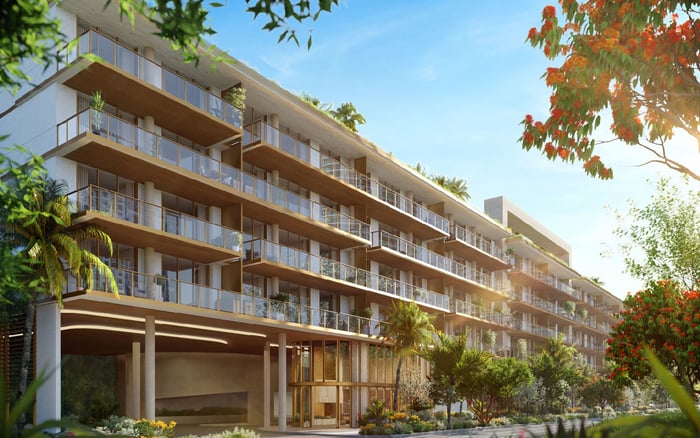
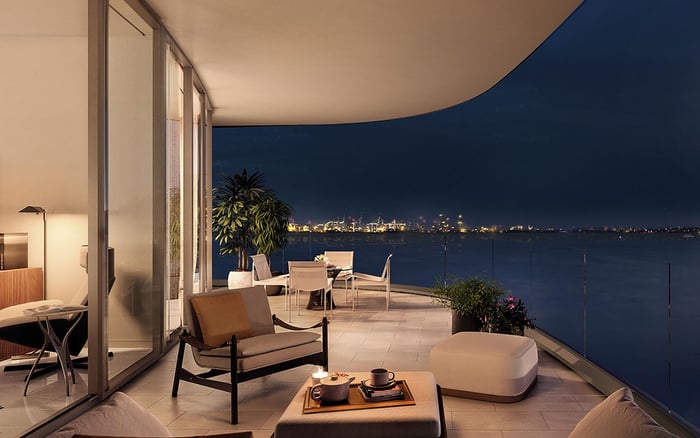
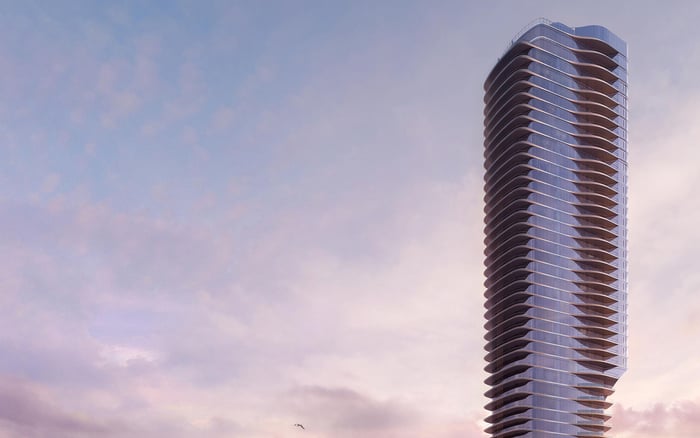
Curved glass balconies can read as sculpture or as skyline sheen. Here is how Una Residences Brickell and Andare Residences Fort Lauderdale express that same element with distinctly different visual intent, and what it means for buyers who live on their terraces as much as inside.
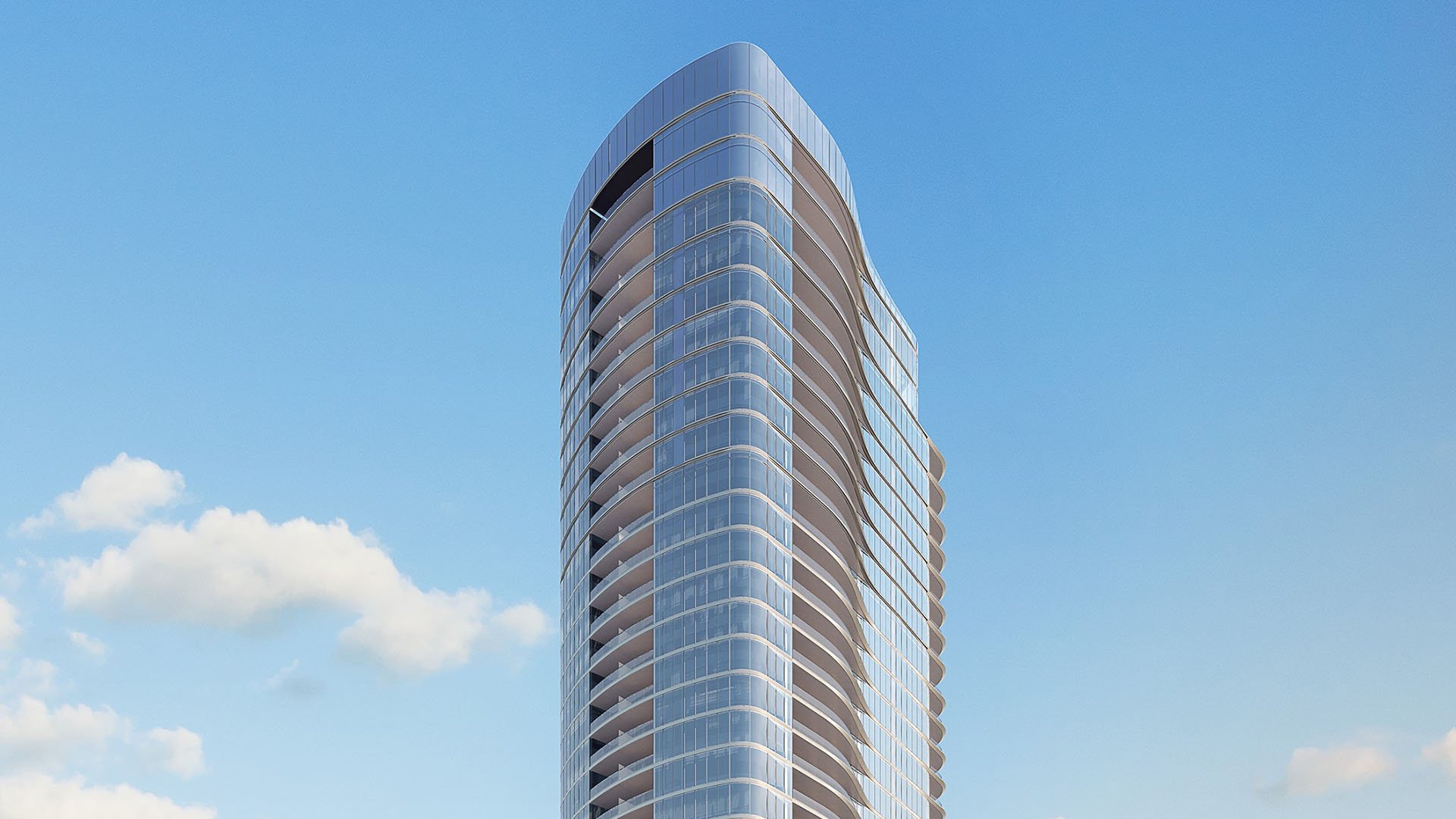
In South Florida, balconies aren’t a bonus. They function as a parallel living room, a climate instrument, and a signature that broadcasts a building’s identity to the bay, the ocean, and the street below. When that balcony is executed in curved glass, the impact compounds: the facade becomes a lens-bending light, softening corners, and turning a stack of floors into something closer to a continuous ribbon.
That’s what makes the comparison between Una Residences Brickell and Andare Residences Fort Lauderdale so instructive. Both speak the language of modern coastal luxury, and both rely on glass and curvature to express it. Yet the visual result is meaningfully different-and those differences shape how residents experience privacy, horizon lines, and even the emotional tone of arriving home.
Curved balcony glazing does three quiet things that flat panes rarely accomplish.
First, it softens corners. Towers with orthogonal terraces can feel crisply tailored, but they can also read as stacked trays. Curved glass blurs that stack, making the building feel less segmented and, often, more expensive.
Second, it reworks reflection. Flat glass mirrors the environment like a clean-cut gemstone. Curved glass behaves more like water: reflections stretch, compress, and glide as you move. In a region defined by sun angles and shimmering horizons, that motion becomes a central part of the architecture.
Third, it changes the perceived thickness of the facade. The balcony edge becomes a continuous line that can appear impossibly thin from certain angles-especially at dusk, when interior lighting turns the building into a lantern.
For buyers, this isn’t only exterior aesthetics. It changes how the Balcony reads as an outdoor room, how the railing frames the view, and how visually exposed a terrace feels to neighboring towers.
Brickell carries a specific visual pressure: tall silhouettes, constant choreography of headlights and high-rises, and a waterfront that rewards calm. Against that backdrop, Una reads as a quieter kind of confidence. Here, the curved glass balcony line is less about spectacle and more about continuity.
The most compelling quality of a composed curve is how it makes the building feel drawn rather than assembled. When the balcony edge reads as a single gesture, it smooths the vertical climb and gives the eye a place to rest. That restraint matters in Brickell, where architectural noise can dilute even strong design.
From the inside out, the same curvature can create a panoramic framing effect. Instead of dividing the view with sharp balcony corners, the glass arc can feel like an unbroken horizon band. For a buyer whose daily ritual is coffee facing the water or evening wine with the skyline behind, the balcony’s geometry becomes part of the choreography.
In a neighborhood where luxury is often expressed through scale and shine, Una’s curved-glass aesthetic lands as tailored minimalism: reflective, yes, but never restless.
Fort Lauderdale’s luxury mood is different. It carries a yachting sensibility, an ease with waterfront living, and a skyline that welcomes architectural personality without demanding constant restraint. In that context, Andare’s use of curved glass balconies reads as more animated, with the facade acting like a series of sweeping gestures rather than a single calm line.
A lively curve suggests motion. From the street, it can feel as if the building is turning toward the water, catching sunlight from multiple directions throughout the day. The result is a more social energy-a sense that life is happening on terraces, that dining and conversation aren’t tucked away but elegantly on display.
For buyers, the implication is subtle but consequential: a more animated balcony expression often signals a building that treats outdoor living as a core identity, not a secondary amenity. In Fort-lauderdale, where evenings can be as much about cruising to dinner as staying in, that signal resonates.
Curved glass balconies aren’t a single decision. They’re a hierarchy of micro-decisions that determine whether the effect feels couture or merely contemporary.
1) Glass tint and reflectivity.
A clearer, lighter appearance emphasizes transparency and daylight. A darker, more reflective finish emphasizes sleekness and privacy. Either can be beautiful, but they read differently from the bay and from a neighboring tower.
2) Edge thickness.
The edge condition of the balcony slab and railing is the difference between “thin-line luxury” and “heavy deck.” In premium execution, the rail reads as a fine, continuous stroke, allowing the curve to feel effortless.
3) Rhythm and repetition.
Curved balconies can establish a consistent cadence, or they can intentionally vary to create a wave. Consistency reads composed. Variation reads kinetic.
This is where comparing Una and Andare becomes less about which curve is “better,” and more about which curve aligns with your preferred level of visual silence. Some buyers want a building that behaves like background music: polished, present, never loud. Others want a facade that carries more personality from morning to night.
A curved glass balcony can increase privacy in unexpected ways. Because the railing arcs, sightlines from adjacent balconies may be redirected, softening the direct look between neighbors. At the same time, curved glass is visible from more angles, which can make outdoor living feel more performative if a building’s spacing and orientation don’t provide visual relief.
For many luxury buyers, the question isn’t whether a balcony exists-it’s whether you’ll use it daily. Ask yourself:
Do you enjoy being part of the city’s visual tapestry, or do you prefer to disappear into it?
Do you entertain on the terrace, or is it a private retreat?
Do you value sunrise and daylight clarity more than nighttime glow and reflection?
In Brickell, the balcony often functions as a sanctuary above the pace. In Fort Lauderdale, it can read more like a stage for waterfront lifestyle. Both are legitimate. The architecture simply makes one feel more natural than the other.
Curved glass balconies have become a hallmark of New-construction luxury for a reason: they photograph beautifully, soften massing, and satisfy the region’s obsession with indoor-outdoor living. The deeper reason is emotional. Curves feel hospitable. They imply ease.
You can see parallel expressions of this “soft modern” direction across the market, from the elevated waterfront calm of Baccarat Residences Brickell to the design-forward skyline statements rising nearby like The Residences at 1428 Brickell. Even when the balcony language differs, the intent stays consistent: reduce harsh edges, amplify light play, and turn the building into a sculptural object rather than a simple stack.
For buyers who want to remain within the Brickell gravitational field but prefer a slightly different tone, it’s also worth noticing how neighborhood peers handle facade refinement, such as 2200 Brickell, where the overall impression leans residential and considered.
The most practical way to compare Una and Andare is to treat curved glass as a lifestyle filter.
Choose a more composed curve if you prioritize:
A calmer visual experience from inside the residence
A facade that reads timeless rather than trend-forward
A balcony that feels like an extension of the interior, not a separate “event”
Choose a more animated curve if you prioritize:
A skyline presence that feels energetic and social
Dynamic sunlight and reflection across the day
A terrace that feels like the center of gravity for hosting
Either way, insist on seeing how the balcony reads in different conditions. Daylight can flatter transparency. Night can reveal how interior illumination and railing reflectivity shift the facade’s mood.
Ultimately, curved glass balconies are architectural body language. Una Residences Brickell signals composure in a fast district. Andare Residences Fort Lauderdale signals movement in a waterfront city that celebrates it. The better choice is the one that matches your own cadence.
Are curved glass balconies more expensive to build than flat balconies? Typically yes, because curvature can increase fabrication and installation complexity.
Do curved glass railings distort the view from inside? Slightly, depending on curvature and tint, but most owners acclimate quickly.
Is curved glass safer than flat glass for balcony railings? Safety depends on engineering and code compliance, not the presence of curvature.
Will a curved balcony feel larger or smaller than a rectangular one? It often feels more open at the perimeter, even when the footprint is similar.
Does curved glass increase privacy on a terrace? It can, by redirecting certain sightlines, but it also increases visibility from angles.
What design style pairs best with curved glass balconies? Soft modern, coastal minimalism, and contemporary interiors tend to harmonize well.
Do curved balconies change wind or weather exposure? They can shift how breezes wrap the edge, but exposure is mostly site and height driven.
How should buyers evaluate balcony aesthetics during a tour? Stand at multiple points, look back at the facade, and note reflections day to night.
Do curved glass balconies age well visually? When detailing is refined, curves tend to read timeless because they avoid harsh edges.
Is balcony design as important as interior finishes in luxury condos? In South Florida it can be, since the balcony often functions as a primary living area.
For a tailored shortlist and next-step guidance, connect with MILLION Luxury.
If branded residences are on your mind — as a home or as an allocation — we would be glad to share what we are seeing, privately.
Begin a quiet conversation