Padel has arrived as a lifestyle marker in South Florida, but what buyers and residents actually live with is not the sport itself. It is the sound profile of the court and the social code of the club around it. This MILLION Luxury comparison frames two very different environments, Reserve at SoLe Mia and Mercedes-Benz Places Miami, through the lens of acoustics, neighbor experience, and the kind of community each setting tends to cultivate.
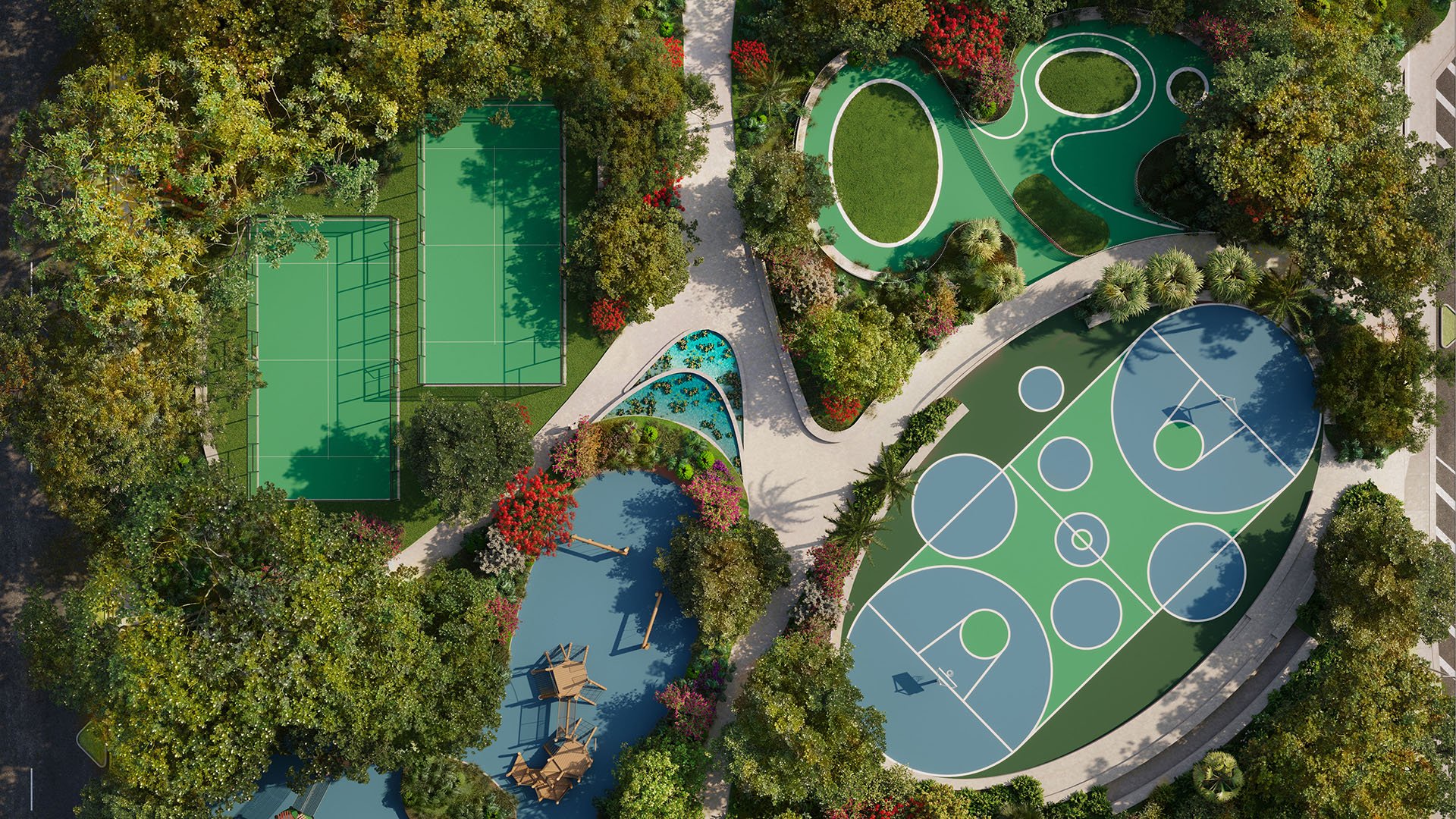
Padel is not a quiet amenity. The sport’s signature “pop” comes from ball impact on a solid racket, rebounds off glass, and quick exchanges that keep the cadence tight. In a resort setting, that sound can read as a lively soundtrack. In a dense, high-rise neighborhood, it can become a daily negotiation between those who play and those who prize hush.
For a luxury buyer, the question is not whether a development has padel. It’s whether it has the right padel-thoughtfully placed, properly buffered, governed by clear operating rules, and supported by a club culture that treats restraint as a form of service. This is where a comparison between Reserve at SoLe Mia and Mercedes-Benz Places Miami becomes especially useful, because the urban context shapes everything from reverberation to etiquette.
In Brickell, the expectation is vertical: amenities are curated, scheduled, and shared among many residents living stack-on-stack. At SoLe Mia, the expectation leans campus-like: more open air, more separation, and a different relationship to neighbors. Even without obsessing over decibel math, you can evaluate which environment will feel most effortless in your day-to-day.
Padel sound is not only volume-it’s character. Impact noise is sharp and repetitive. Glass reflections can intensify that sharpness by pinging sound back onto the court and outward. Group play also brings its own layer of social noise: coaching cues, celebrations, music, and the “let’s squeeze in one more set” momentum.
For residents, the perceived disturbance usually comes down to four design and operational variables:
Distance and buffering: Landscaping, berms, solid walls, and auxiliary buildings can break line-of-sight and dampen reflections.
Orientation: Courts aimed away from the most sensitive edges of a site help, especially where a neighborhood has established low-noise expectations.
Surface and enclosure choices: Materials influence how much sound is absorbed versus reflected. Fully enclosed solutions can reduce spill, but if poorly designed they can trap noise for players and encourage louder music or shouting.
Hours and programming: The difference between “a few morning reservations” and “constant prime-time play plus lessons” is often the biggest factor for non-players.
Luxury buyers should treat padel like a pool deck or a restaurant terrace: a lifestyle asset that only works when it’s managed like one.
Reserve at SoLe Mia reads, in concept, like a destination within a destination. In a master-planned environment, padel is typically integrated into a broader wellness and social ecosystem-outdoor activity is expected, and movement is the point. That setting can be acoustically forgiving because it often allows for greater setbacks and layered buffering between active zones and private interiors.
The cultural upside is clear: padel can become a low-friction social engine. New residents meet quickly. Couples find an easy ritual. Families build weekend routines around clinics, casual matches, and post-game coffee. At its best, the culture feels less like a “scene” and more like a neighborhood habit.
The caution is that campus energy can slide into event energy if the club isn’t deliberate. If your ideal morning is quiet work on a terrace, the most important questions are operational, not architectural: Are there limits on coaching volume? Are tournaments seasonal or frequent? Is guest play controlled? Is music allowed-and if so, where?
If you prefer a residential tone that stays serene even when amenities are active, prioritize communities whose amenity plan is built around separation and discretion. In coastal neighborhoods, that often aligns with projects designed to protect calm as a first principle, such as 57 Ocean Miami Beach, where buyers typically prioritize quiet enjoyment alongside wellness and beach access.
Brickell’s luxury promise is convenience and intensity: walkable dining, quick commutes, and an amenity stack that can rival a private club. In a tower-driven environment, sports amenities are less about sprawl and more about precise scheduling, controlled access, and service standards.
That is why Mercedes-Benz Places Miami is best assessed through two lenses: acoustic containment in a dense district and the social signaling of a branded residential experience.
Acoustically, Brickell demands discipline. Courts placed on exposed podiums or rooftops can project sound across nearby buildings. Sound that feels acceptable on-site can travel in surprising ways through the urban canyon effect. For a buyer, the practical move is to understand not only where the court sits, but what it faces. A court oriented toward water, parks, or wide rights-of-way will typically feel less intrusive than one aimed at neighboring residential balconies.
Culturally, branded vertical communities often create a “members club” cadence: reservations, guest policies, curated events, and a higher likelihood that padel becomes part of a lifestyle calendar rather than a spontaneous pickup game. That can be ideal for residents who value structure, social continuity, and a polished environment that feels designed down to the last detail.
If your baseline is Brickell, it can help to compare how different luxury projects express the neighborhood’s social life. The riverfront and the core corridor can feel distinct in daily tempo. Projects like Una Residences Brickell often appeal to buyers who want design-forward privacy without leaving the district’s energy behind.
Two residents can live in the same building and walk away with opposite experiences depending on culture. With padel, culture shows up in small behaviors:
Do players linger and socialize loudly after matches, or do they disperse quietly?
Are lessons conducted with amplified coaching, or with a softer, boutique tone?
Does the club attract competitive regulars who treat it like training, or social players who treat it like brunch?
Reserve at SoLe Mia is more likely to cultivate a “resort neighborhood” rhythm: casual sets, families, and a broader age mix when the amenity is positioned as part of an all-day campus. Mercedes-Benz Places Miami is more likely to cultivate a “city club” rhythm: time-boxed play, a more polished presentation, and a stronger link between amenity use and social identity.
Neither is inherently superior. The key is alignment. Buyers who travel frequently may prefer a concierge-like sports program that makes it easy to plug in and play. Buyers who are in residence year-round may prefer a more organic, neighborly environment.
Luxury due diligence often centers on finishes, views, and service. If padel is part of your decision, bring these questions in early:
Placement and exposure
Where are the courts located relative to residences: ground, podium, roof, or adjacent to other uses?
What buffers exist: landscaping, solid walls, or structural separation?
Rules and hours
What are operating hours, and are there quiet-hour restrictions?
Are there limits on coaching, clinics, and tournaments?
Access and guest policy
Is the court private to residents, or shared with a broader club program?
Are guests allowed, and if so, how often and how many?
Booking friction
How far in advance can residents book?
Are prime slots protected for residents, or allocated to programming?
Sound management
Are there posted conduct guidelines about music and shouting?
Is there staff on-site during peak play to manage behavior?
In practice, these operational details determine whether the courts feel like a private luxury perk-or a perpetual activation.
Padel is trendy, but quiet is timeless. In luxury markets, long-term value is supported by features that remain desirable across buyer cycles: privacy, comfort, and predictable management. A well-designed court with clear rules can strengthen a building’s identity, especially for younger buyers and second-home owners who want an instant community.
But when an amenity becomes a noise dispute, it can introduce resident friction that undermines the feeling of ease. The smartest developments treat sound and neighbor experience as part of the amenity package, not an afterthought.
For buyers who love sport but are sensitive to ambient noise, consider how different submarkets tend to “hold quiet.” Oceanfront contexts often draw a calmer residential profile, while high-activity urban cores embrace livelier patterns. That is why it can be useful to contrast Brickell options with buildings whose identity is more explicitly residential, such as 2000 Ocean Hallandale Beach, where buyers often place a premium on separation and a measured pace.
Reserve at SoLe Mia tends to suit buyers who want padel as part of a larger outdoor lifestyle-and who enjoy the easy sociability of a campus environment. The best experience comes when the club sets clear expectations around hours, programming, and respectful play.
Mercedes-Benz Places Miami tends to suit buyers who want padel within a highly curated urban routine, where service, scheduling, and brand-forward social cohesion are part of the value proposition. The best experience comes when court placement is carefully oriented and the building enforces a polished code of conduct.
In both cases, the real luxury is not simply the presence of a court. It’s the confidence that the amenity will elevate your day without asking you to compromise on quiet, privacy, or control.
Is padel louder than tennis in residential settings? It often sounds sharper because of the racket impact and glass rebounds, even if overall volume feels similar.
What design choice most reduces padel noise for nearby residences? Setbacks paired with real buffering-such as landscaping and solid barriers-typically do more than any single tweak.
Do rooftop courts create more neighborhood sound issues? They can, because elevation increases sound travel and reduces natural absorption from landscaping.
Are operating hours more important than construction materials? For many residents, yes; consistent quiet-hour policies can matter more than minor material differences.
Will a padel amenity help resale value? It can, especially for lifestyle-driven buyers, but only if it is managed without recurring noise conflict.
How can I gauge club culture before purchasing? Ask about programming, guest rules, and enforcement, and visit at peak hours to observe behavior.
What should non-players ask during due diligence? Focus on court placement, quiet hours, guest access, and how complaints are handled and documented.
Do branded residences tend to have stricter amenity rules? Often yes, since curated experiences typically rely on reservations, staffing, and clearer conduct policies.
Can landscaping meaningfully reduce padel noise? It can help when paired with distance and barriers, but it is rarely sufficient on its own.
Is it reasonable to request written padel policies before closing? Yes; written rules on hours, bookings, and events are a practical way to set expectations.
If you'd like a private walkthrough and a curated shortlist, connect with MILLION Luxury.
If branded residences are on your mind — as a home or as an allocation — we would be glad to share what we are seeing, privately.
Begin a quiet conversation