A buyer-oriented guide to what “clean” really means in shared hammams and steam rooms: materials, ventilation, water management, staffing, documentation, and resident behavior.
In South Florida, shared steam rooms and hammams have quietly become signature amenities: a private-hotel ritual available on a resident schedule. But wet-heat rooms are also among the most operationally unforgiving spaces in any building. Warmth accelerates odor, moisture exposes material weaknesses, and one lapse in cleaning discipline can turn a beautifully designed room into an amenity residents avoid.
For buyers, the goal is not to fear communal wellness spaces. It is to evaluate them with the same rigor you would apply to elevators, water intrusion mitigation, or reserve planning. A high-end spa experience is the product of systems-surface selection, ventilation strategy, water management, staffing consistency, and resident etiquette. When those systems are intentional, shared hammams and steam rooms can be both indulgent and responsibly maintained.
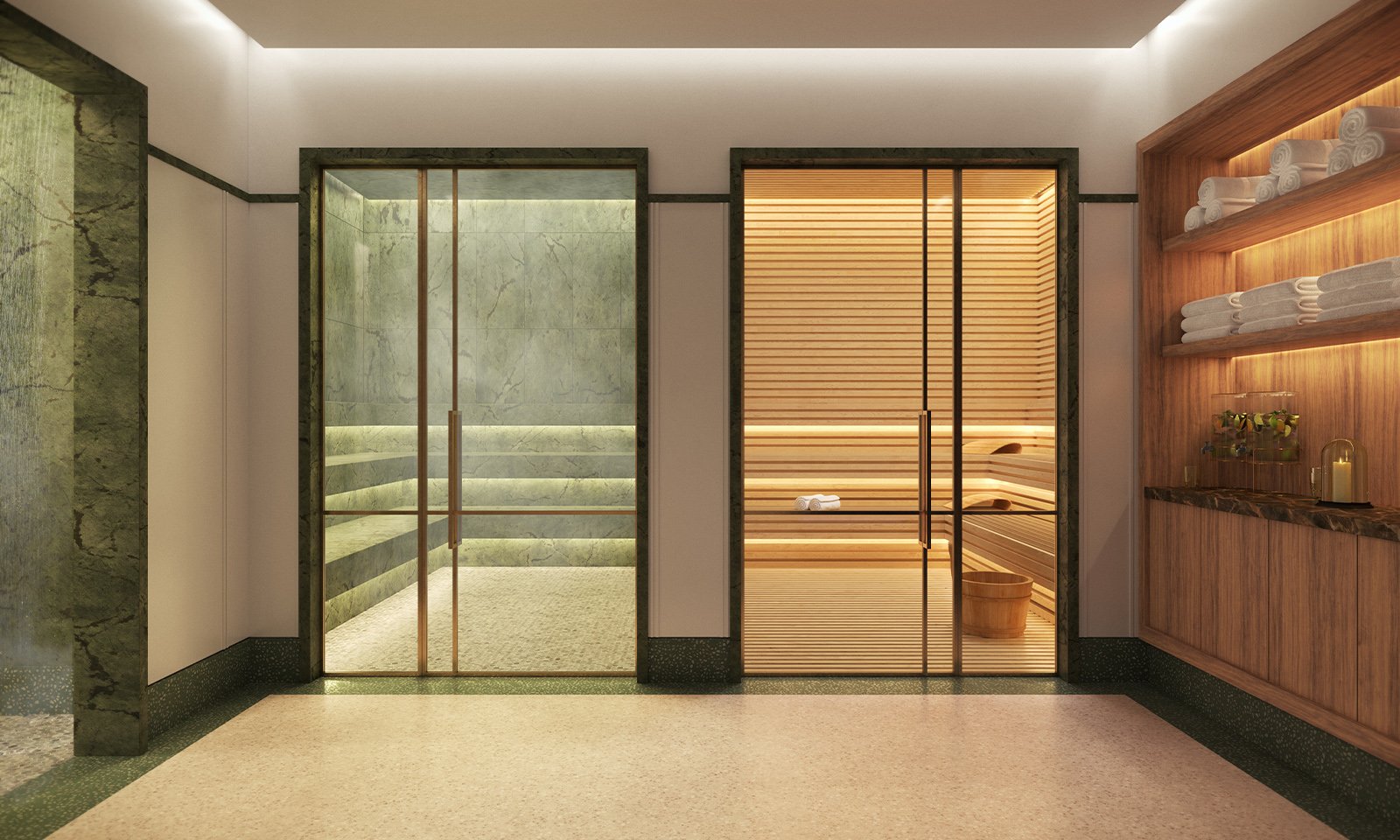
A steam room is typically a sealed, tiled environment where a generator introduces steam and surfaces remain wet. The primary hygiene stressors are condensation, biofilm formation at grout lines and drains, and the reliability of post-use purge and drying.
A hammam-inspired room can range from a hot, humid chamber to a multi-temperature ritual suite with heated stone benches and wash areas. When water is part of the ritual, runoff paths, drain placement, and splash zones matter more than the romance of stone. In either format, the fundamentals are the same: the room must be easy to clean thoroughly, and it must be designed to dry predictably.
In luxury condominiums, aesthetics often lead the conversation. For hygiene, detailing should.
Start with surface porosity and cleanability. Large-format, non-porous finishes reduce joints where residue can collect. If the room uses stone, ask whether it is sealed and how often the sealant is renewed as part of the building’s maintenance plan. Study transitions: where the wall meets the bench, where the bench meets the floor, and around the steam head. These are the points where grime accumulates when corners are sharp, caulk fails, or water lingers.
Grout choice and condition are a tell. Discolored grout, soft caulk lines, or persistent mineral staining can point to insufficient cleaning chemistry, inadequate ventilation, or chronic moisture retention. A well-run facility looks “boringly consistent”: crisp grout lines, clean drains, no musty odor, and no visible residue on the door sweep.
Finally, prioritize hygienic hardware. Touchless-or at least easy-to-disinfect-controls, minimal crevices, and commercial-grade drains are not glamorous, but they are practical. Even small moves, like a well-placed foot pull on the door, can reduce high-contact touchpoints.
The best-looking wet-heat room fails if it cannot dry.
Ask simple, specific questions: How is the room ventilated when not in use? Is there an active exhaust cycle after each session? Does the door remain closed, or is it propped open to accelerate drying? A consistent drying protocol is often the difference between a spa-like environment and a perpetually damp one.
Assess adjacent spaces as well. A steam room tucked into a wellness suite can perform well if the corridor is dehumidified and air pathways are intentional. If the anteroom is warm and damp, towels feel clammy, and the ceiling shows staining, the system is likely underperforming.
For buyers comparing buildings in wellness-forward corridors, it is reasonable to treat wet-heat amenities as part of the broader “wellness operations” package rather than a standalone feature. That mindset is especially relevant in buildings that market an elevated spa culture, such as The Well Coconut Grove.
When a building says it cleans “daily,” that is a baseline-not a standard. The most confidence-inspiring programs are specific and documented.
Look for:
Clear opening and closing checklists, including a post-use purge and wipe-down cadence.
A defined deep-clean routine that targets grout lines, drains, seating undersides, and door frames.
Visible cleaning infrastructure that fits the environment, such as a designated mop sink, proper storage, and a place for PPE.
A logbook or digital record of checks and corrective actions.
The best properties run the steam room like a small commercial facility, with repeatable steps that are easy to audit. A luxury environment does not need to display its back-of-house mechanics-but it should be able to describe them clearly and calmly when asked.
On buyer tours, this often shows up indirectly: staff who can answer quickly, a manager who knows the routine, and a room that smells neutral rather than perfumed. Heavy fragrance can be a red flag when it reads as masking rather than cleanliness.
Wet-heat rooms touch multiple water stories: the steam generator supply, any wash fixtures, cleaning water, and floor drainage.
Ask how the building manages water quality for steam equipment. Even if the room looks pristine, a poorly maintained generator can contribute to mineral issues and inconsistent performance that encourages residents to “fiddle” with controls. Also ask about drain maintenance: how often drains are inspected and cleaned, and whether the room has ever had recurring odor issues.
Operationally, buildings that plan for peak use tend to perform better. When the room is busy, staff schedules and towel replenishment must scale. When it is quiet, stagnation and disuse become the challenge. A thoughtful program accounts for both.
A spa suite is choreography. The towel journey matters: where clean towels live, where used towels go, and whether residents have to cross paths with bins to access the room.
Look for:
A clear separation between clean and used textiles.
Hands-free disposal for used towels.
A nearby shower with supplies that encourage pre-rinse.
Seating and hooks placed so towels are not draped over wet benches.
Traffic flow matters, too. If residents must pass through a crowded gym corridor to reach the steam room, the space will collect more debris and invite more “quick drop-ins” with less preparation. In contrast, a properly buffered wellness suite tends to attract more intentional use.
In dense, amenity-rich neighborhoods like Brickell, where buildings compete on spa programming and interiors, operational design becomes a quiet differentiator. If you are comparing offerings in that corridor, it can be useful to tour wellness suites with the same attention you would bring to lobby security-especially in projects such as 2200 Brickell and 888 Brickell by Dolce & Gabbana.
Luxury buildings can keep common areas pristine. Wet-heat rooms are where a management team’s operational maturity becomes most visible.
Ask who owns the space day to day: building staff, a contracted vendor, or a hybrid. Then ask who inspects the inspection. A credible answer includes a named role, a cadence, and where records are kept.
Also ask how issues are handled. If a resident reports an odor, a slippery floor, or a non-functioning steam cycle, what happens next? Strong programs treat it like a service ticket: documented, time-stamped, resolved, then rechecked.
If the building has a spa partner or a wellness concept integrated into the amenity deck, expectations should rise accordingly: consistent standards, trained attendants, and a formal SOP. In Miami Beach, where residents often expect a hotel-grade feel, this lens is particularly relevant when touring wellness-centric amenity decks near the ocean, including properties such as 57 Ocean Miami Beach.
Even excellent cleaning cannot compensate for chaotic use. Discreet signage and a culture of courtesy protect everyone.
Effective etiquette programs are short and specific: shower before entering, no shaving or grooming, no oils applied immediately before use, no food or glass, and wipe down seating after use. The tone should feel like a private club, not a public facility-but it must be unambiguous.
Buildings that add small support systems make compliance easier: readily available wipes suited to wet environments, a nearby rinse shower, and adequate hooks. The most effective rule is the one residents can follow without friction.
A buyer can evaluate quickly without turning a tour into an inspection.
Red flags include persistent musty odor, visible mildew at corners, slick floors, stained ceilings, or towels that feel damp before use. Overly warm adjacent corridors can signal humidity migration. If the room is closed “for maintenance” repeatedly, ask whether that reflects scheduled deep cleaning or recurring repair.
A simple test is timing: visit once during peak hours and once during a quieter window. Peak use reveals throughput, replenishment, and whether the room is being refreshed between resident waves. Quiet hours reveal whether the room dries properly and whether the suite holds odors.
If you are evaluating oceanfront lifestyle properties where residents lean heavily on spa amenities as part of daily living, consider how the wellness suite supports year-round use. In Hallandale, for example, buyers touring 2000 Ocean Hallandale Beach may want to weigh the wet-heat experience alongside pool deck operations and overall building maintenance culture.
Discreet diligence is appropriate when amenities materially influence the value proposition.
Consider requesting:
The cleaning schedule and a high-level SOP for wet-heat spaces.
Confirmation of routine inspections for ventilation and drainage.
The policy for closures, repairs, and re-openings after maintenance.
Any resident rules specific to spa areas.
You are not looking for perfection. You are looking for a system that is planned, repeatable, and owned.
What is the single most important hygiene factor in a shared steam room? The room must dry reliably between uses, supported by ventilation and a post-use routine.
Is stone in a hammam automatically a hygiene problem? Not necessarily; the risk is unmanaged porosity and sealing, not the material itself.
How can I tell if a room is being “masked” with fragrance? If scent is strong but corners, drains, or grout look tired, freshness may be cosmetic.
Should a building provide wipes inside the steam or hammam area? It can help compliance, but products should be appropriate for wet environments.
Do touchless controls meaningfully improve hygiene? They reduce high-contact points, but they cannot replace cleaning discipline.
What etiquette rules are most important for shared wet-heat rooms? Shower before entry, avoid grooming, and keep oils and products out of the room.
How often should a shared steam room be deep-cleaned? It depends on use, but the best programs follow a defined schedule beyond daily wipes.
What are common design details that make cleaning easier? Fewer grout lines, well-sloped floors to drains, and cleanable bench and corner profiles.
Can a steam room be luxurious without being large? Yes; consistency, comfort, and immaculate upkeep often matter more than square footage.
What should I ask management before relying on these amenities daily? Ask for the cleaning SOP, ventilation drying routine, and how issues are logged and fixed.
If you'd like a private walkthrough and a curated shortlist, connect with MILLION Luxury.
If branded residences are on your mind — as a home or as an allocation — we would be glad to share what we are seeing, privately.
Begin a quiet conversation