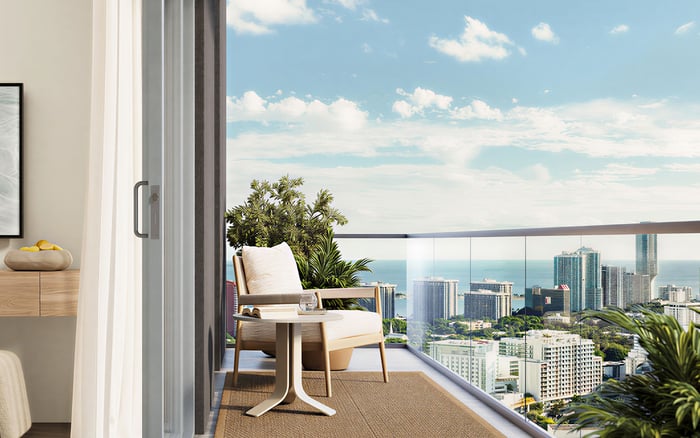
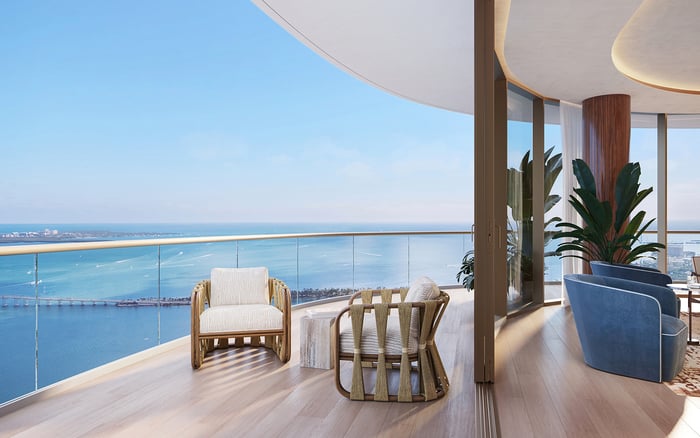
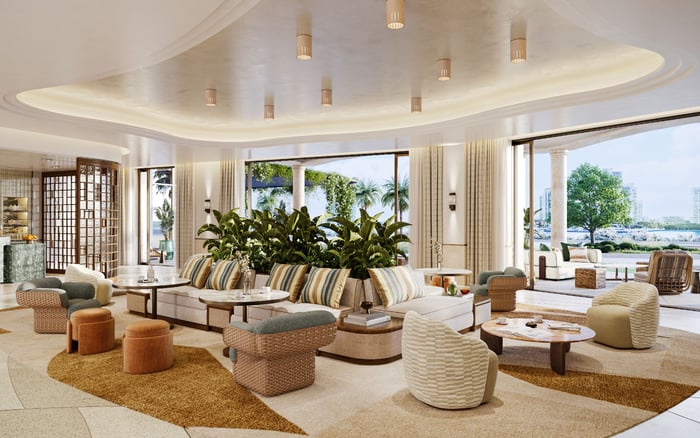
A practical, buyer-oriented look at why multigenerational comfort, privacy, elevator access, terraces, and daily usability can outweigh pure altitude in South Florida penthouse decisions.
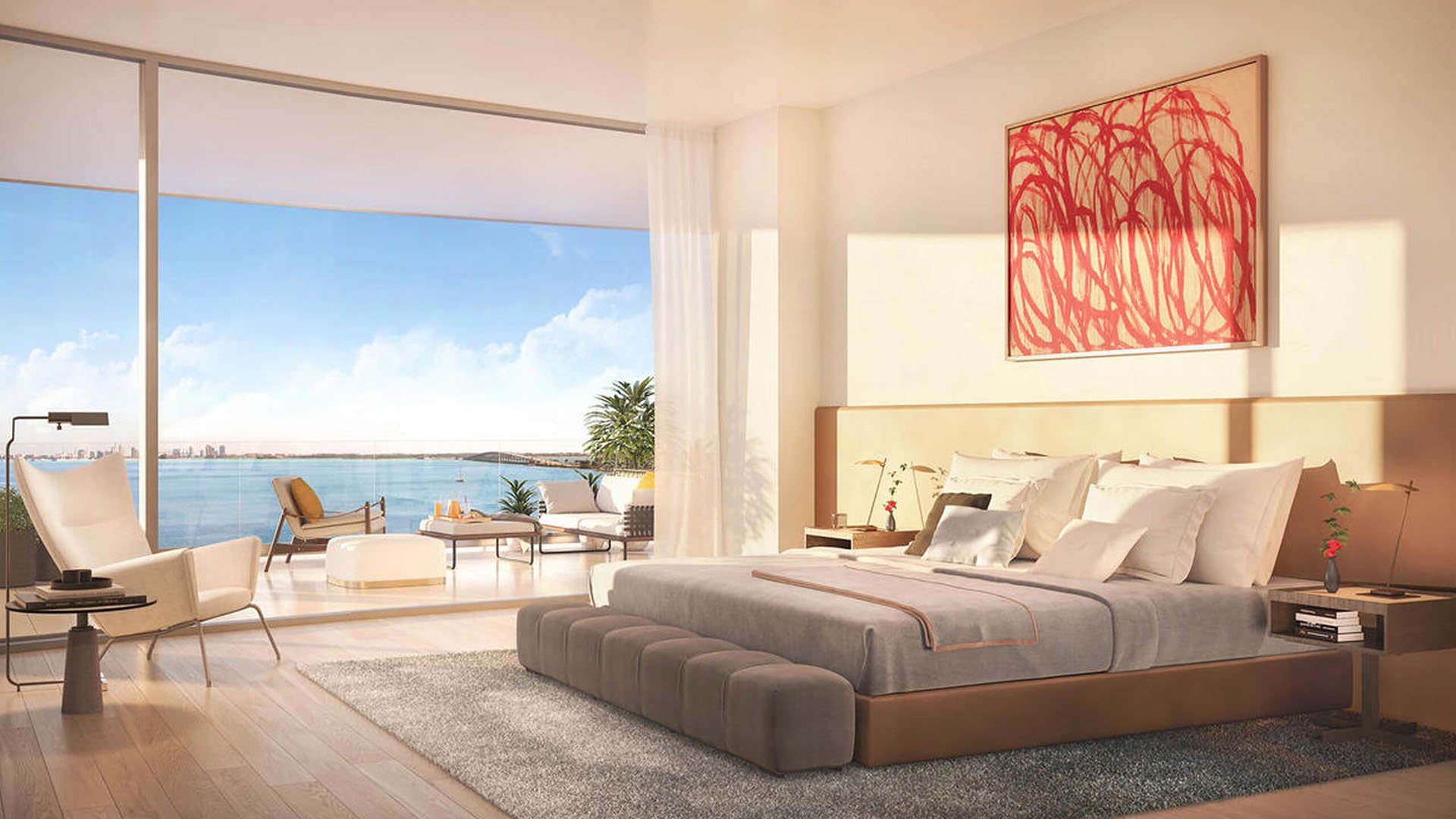
For many South Florida buyers, the word penthouse still evokes altitude: a private elevator arrival, a cinematic skyline, a terrace suspended above water or city lights. Height has its poetry. Yet in the most considered purchases, especially for families who gather across generations, another question can prove more consequential: can the residence host grandparents with grace?
A grandparent suite is not merely a secondary bedroom with a better mattress. In a luxury residence, it is an architectural promise of ease, privacy, dignity, and belonging. It allows an older parent to visit for the season, recover after travel, join family dinners, retreat when needed, and move through the home without feeling like a guest tucked into leftover space. That kind of comfort can matter more than being a few floors higher.
South Florida’s premium market has always rewarded view, frontage, and scarcity. But daily life is lived in thresholds, corridors, bathrooms, morning light, acoustics, and the path from elevator to kitchen. When a home supports the family at every age, it becomes more than a trophy. It becomes infrastructure for closeness.
The highest floor may offer the boldest panorama, but the best home is not always the one with the most dramatic number attached to it. A slightly lower residence with a superior plan, calmer elevator experience, more intuitive bedroom separation, and better outdoor usability may serve a family far more elegantly than the highest available shell.
High floors can deliver prestige, but they do not automatically deliver comfort. Buyers weighing Brickell, Miami Beach, Sunny Isles, Palm Beach, and other South Florida enclaves are often comparing very different lifestyle patterns. A waterfront tower may offer spectacle, while a boutique building may provide a quieter sense of arrival. An oceanfront address may feel resort-like, while an urban penthouse may place restaurants, offices, and cultural life within closer reach. The grandparent-suite question cuts across all of these markets because it focuses on use rather than optics.
The strongest penthouse layouts are legible. They make it easy for an older family member to understand the home quickly: where to enter, where to rest, how to reach the main living area, and how to step outside without navigating unnecessary drama. That clarity is a form of luxury, particularly when visits extend beyond a weekend.
A successful grandparent suite begins with placement. Ideally, it offers enough separation from the primary suite and children’s rooms to preserve autonomy, while remaining close enough to the heart of the home to avoid isolation. The suite should feel intentional, not exiled. A quiet wing, a generous secondary primary, or a bedroom near a den can all work if circulation is simple and privacy is respected.
The bathroom deserves particular scrutiny. Buyers should look for comfortable clearances, a shower that feels secure, lighting that flatters without glare, and storage that does not require constant bending or reaching. These details rarely carry the glamour of a skyline photograph, but they define whether an older guest feels at ease each morning.
Acoustics also matter. A grandparent suite beside a media room, elevator core, service corridor, or high-traffic kitchen may be less restful than its square footage suggests. The stronger design move is often a room with softness around it: a vestibule, a library, a sitting area, or a hallway that creates a buffer. In ultra-premium living, silence can be as valuable as marble.
Penthouse living depends on vertical movement. For grandparents, the experience from car to residence may be as important as the view from the living room. A graceful arrival sequence reduces friction: clear valet or garage access, a protected lobby, a comfortable elevator ride, and a private entry that does not require unnecessary turns or level changes.
Once inside, the plan should not force every guest to cross the entire residence to reach a bedroom. The most thoughtful homes create a natural rhythm: arrival, greeting, rest, gathering, dining, and retreat. When that choreography is easy, multigenerational hosting feels effortless.
This is where buyers should resist being seduced solely by floor height. A home that is simpler to enter, easier to navigate, and more pleasant for a visiting parent may produce more happiness over a decade than a slightly higher vantage point. In South Florida, where many residences function as a second home, this is especially relevant. Family visits often cluster around holidays, school breaks, medical appointments, and seasonal stays. The home must work when everyone is there at once.
Outdoor space is central to the South Florida penthouse fantasy, but terrace design needs to be evaluated with the family in mind. Is there a shaded area where an older parent can sit comfortably? Can the door be opened and crossed without awkward steps? Is the furniture layout conversational, or is the terrace mainly a stage for photographs?
The most valuable terraces are not just expansive. They are humane. They allow a grandparent to join breakfast outside, watch grandchildren swim, read in filtered light, or enjoy evening air without feeling exposed. A terrace that is too windy, too narrow, or too disconnected from the kitchen may be less useful than a smaller, calmer outdoor room.
For buyers comparing penthouses, the question is not simply how many square feet of exterior space exist. It is whether the outdoor experience supports the rituals of family life. Coffee before the house wakes. A quiet phone call. A birthday dinner. A view shared across generations.
The art of multigenerational luxury is balancing togetherness and retreat. Grandparents may want to be close to the family without being absorbed into every moment of the household. Children may want freedom. Hosts may need their own suite to remain serene. A penthouse that supports all three conditions will feel more valuable every year.
Look for plans with secondary living spaces, flexible dens, or bedroom wings that do not rely on one central corridor for every movement. Pocketing social zones away from sleeping zones can make a home feel larger and calmer. A grandparent suite near a sitting room can provide an independent morning routine, while still allowing easy participation in meals and celebrations.
This flexibility also supports resale. Future buyers may use the same suite for parents, adult children, long-term guests, wellness staff, or a private office. A floor plan that can adapt is less likely to feel dated because it is organized around human needs rather than a single lifestyle assumption.
When choosing between a higher penthouse and a more comfortable one, buyers should walk the home as each family member would. Imagine a grandparent arriving after a flight. Where do they place luggage? How far is the bedroom? Is the bathroom intuitive at night? Can they reach the kitchen for water without passing through private zones? Is there a peaceful place to sit while the rest of the household is active?
Then test the social sequence. Can everyone gather for dinner without crowding? Does the terrace feel welcoming at different times of day? Are there places for conversation in pairs, not just one grand salon? True luxury is not only scale. It is the absence of unnecessary effort.
Height remains desirable, of course. It can enhance privacy, light, and view quality. But it should not override the deeper value of a residence that lets a family live generously. The best penthouse is the one that makes hosting feel natural, not performative.
Is a grandparent suite different from a guest room? Yes. A grandparent suite is planned around comfort, privacy, access, and daily use, not just occasional sleeping space.
Should buyers prioritize the highest floor available? Not automatically. A better layout, quieter suite placement, and easier circulation may create more lasting value than extra height.
What is the most important feature for older guests? Simple movement through the residence is essential, from elevator arrival to bedroom, bathroom, living areas, and terrace.
Can a grandparent suite improve resale appeal? It can broaden a home’s usefulness because future buyers may need space for relatives, guests, adult children, or work.
Does terrace design matter for multigenerational living? Yes. Shade, access, wind comfort, and seating arrangements can determine whether outdoor space is truly used.
Is privacy more important than square footage? Often, yes. A smaller suite in the right location may feel more luxurious than a larger room with poor acoustics or circulation.
What should buyers inspect during a showing? Walk the arrival path, bathroom access, nighttime route, terrace threshold, and distance from social areas to the suite.
Does this apply to both urban and waterfront penthouses? Yes. Brickell, oceanfront, and resort-style residences all benefit from layouts that support family across generations.
Can a grandparent suite also serve other purposes? Yes. It may function as a guest suite, wellness room, private office, or independent space for adult children.
What is the simplest test of a penthouse layout? Ask whether every generation can feel comfortable, independent, and included without the host constantly managing the home.
For a discreet conversation and a curated building-by-building shortlist, connect with MILLION.
If branded residences are on your mind — as a home or as an allocation — we would be glad to share what we are seeing, privately.
Begin a quiet conversation