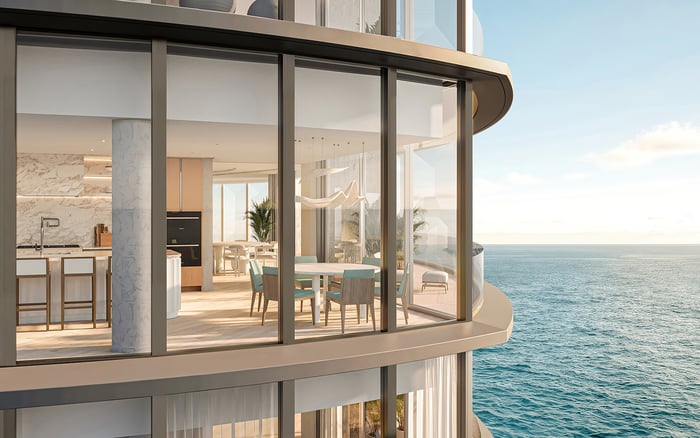
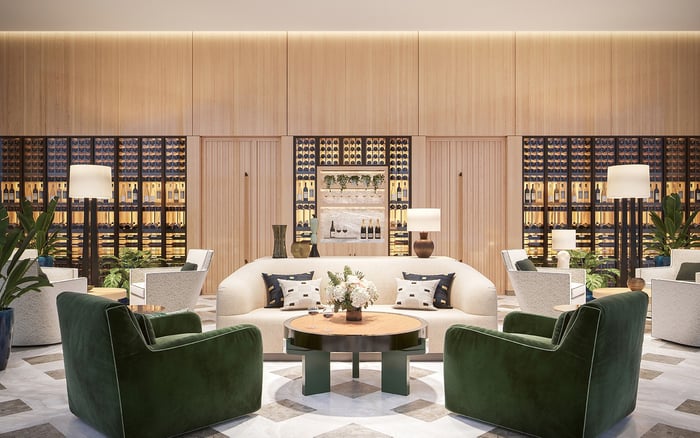
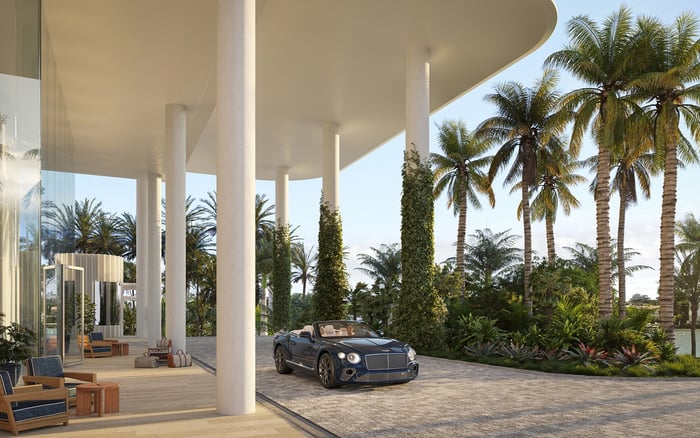
In South Florida, the most consequential luxuries are often invisible: the distance between a building and the water, the height and health of the dune, and the quiet choreography between public beach access and private arrival. These coastal conditions influence how a residence feels day to day, how it photographs from the shoreline, and how its outdoor spaces perform over time. This editorial looks at coastal setbacks and dune privacy dynamics as a buyer’s lens, using two ultra-premium references: The Perigon Miami Beach and Rivage Bal Harbour. Without leaning on project-specific claims, we focus on the physics and governance of the coast, and on the practical questions sophisticated buyers ask before committing to an oceanfront lifestyle.

Oceanfront buyers in South Florida rarely need to be sold on the romance of sunrise. What separates a merely expensive address from a truly enduring one is how the site negotiates the coastline.
Coastal setbacks determine how close the built form, terraces, pools, and landscape can sit to the active beach system. Dunes, meanwhile, are not just scenery. They are a living, shifting boundary that can deliver privacy, soften wind, and buffer storm energy-while also shaping what you actually see when you look “at the ocean” from a lower floor.
Using The Perigon Miami Beach and Rivage Bal Harbour as two reference points, this guide translates coastal design into buyer-relevant outcomes: sightlines, sound, discretion, outdoor usability, and long-horizon durability.
A larger setback is not automatically “better,” but it does change the experience in predictable ways.
First, setbacks influence the vertical geometry of views. When a building sits closer to the shoreline, lower floors can feel more immersed in the seascape, but may also contend with more dune in the foreground. When a building is set farther back, lower floors may look across a broader landscaped apron, and the ocean can read as a more distant horizon line.
Second, setbacks shape microclimate. The closer you are to breaking surf, the more direct the salt aerosol and wind load. That affects not only day-to-day comfort on a terrace, but also the maintenance reality over years: finishes, glazing, railings, and exterior hardware simply live a harder life.
Third, setbacks mediate the social boundary between a public beach and a private residence. Even in the most rarefied pockets of Miami Beach and Bal Harbour, the shoreline remains a shared civic edge. A building that relies on landscaping, dune elevation, and controlled pathways can feel quieter and more private-even when the beach itself is active.
In other words: a setback is not just a line on a survey. It is a design budget for discretion.
Dunes do two things at once, and the tension between them creates the “privacy dynamic.”
They provide a soft visual shield between beachgoers and ground-level amenities. A healthy dune with native vegetation can make a pool deck or garden feel secluded, even when the public shoreline is only steps away.
They can also interrupt the ocean read from certain elevations. On lower floors, a dune can become the dominant foreground element, turning “oceanfront” into “dune-front” unless architecture and landscape are carefully coordinated.
For buyers, the question is not whether dunes exist-it’s how they are composed. Height and contour matter, but so do plant density, walkover placement, lighting, and the exact point where private paths meet public sand. The strongest dune strategies feel effortless: you hear the ocean, you glimpse it between greens, and you never feel on display.
This is where ultra-premium projects often differentiate in ways that never appear in typical listing language.
Miami Beach and Bal Harbour can both deliver extraordinary oceanfront living, but the coastal “feel” can differ.
With The Perigon Miami Beach, the buyer conversation often centers on how a high-design oceanfront residence integrates with an energetic barrier-island context. Miami Beach is a globally recognized destination. That can translate into stronger seasonality on the sand, more visual activity, and more sensitivity around how lobbies, drop-offs, and outdoor decks are screened.
With Rivage Bal Harbour, the coastal narrative often reads more discreet and residential in tone. Bal Harbour’s brand is privacy-forward, and buyers frequently prioritize controlled arrival, quiet beach time, and a shoreline experience that feels curated rather than performative.
Rather than treating these as marketing archetypes, use them as a checklist prompt:
How does the landscape manage the transition from private amenity zones to public beach?
Where are the beach walkovers relative to the most valuable outdoor rooms?
How does the dune profile affect the view corridor on low and mid floors?
What is the “sound signature” with doors closed: surf, wind, or promenade activity?
Those questions do not depend on a brochure. They depend on coastal geometry.
Sophisticated buyers understand there is no true “private beach” in the way the phrase is casually used. What you are really evaluating is a combination of access patterns and the design of boundaries.
Start with three practical issues.
Public access and pathways. The location of public routes to the sand influences foot traffic in front of the site. Even when a building is impeccably managed, a misaligned path can create a persistent sense of exposure at the pool edge.
Coastal easements. Oceanfront properties can be subject to coastal regulatory overlays and recorded easements that govern how dunes are maintained, where walkovers can be placed, and what improvements are allowed seaward of certain lines.
Operational privacy. The difference between a quiet beach day and a busy one is often operational: security presence, signage restraint, lighting choices, and whether the site funnels people toward or away from amenity edges.
If your lifestyle includes frequent hosting on terraces and amenity decks, these “soft” conditions can matter as much as a floor plan.
In luxury oceanfront towers, the conversation often over-indexes on upper-floor panoramas. Yet a meaningful share of demand concentrates on low and mid floors for their relationship to the landscape and the sound of the water.
Here is the dune-to-horizon equation to keep in mind:
On low floors, dunes can either protect your privacy or claim your view-sometimes both.
On mid floors, dunes often become a framing device, with the ocean legible above a green band.
On high floors, dunes recede into pattern, and wind becomes the dominant environmental factor.
If you are considering a low- or mid-floor residence, ask to evaluate the view in person at different times of day. Morning light can make dune vegetation read luminous and elegant, while late afternoon can increase contrast and make the dune mass feel heavier.
To calibrate your preferences, it can be useful to experience other oceanfront contexts. For example, a more intimate oceanfront scale such as 57 Ocean Miami Beach can clarify whether you prefer a closer, more immediate relationship to the beach-or a deeper landscaped threshold.
Outdoor space is where setbacks and dunes become tangible.
Wind is not only a comfort issue; it dictates how often you actually use a terrace for dining, reading, or work. Dunes and layered landscaping can slow wind at ground level and lower elevations, while exposed corners and higher floors may require more robust furniture strategies.
Salt exposure is similarly experiential. It affects the frequency of cleaning, the long-term appearance of railings and exterior metals, and even how you feel about leaving doors open for cross-breezes.
For buyers who value outdoor entertaining, a key question is whether the building’s coastal strategy creates usable microclimates. The most livable oceanfront residences are not the ones that look closest to the surf in photographs, but the ones that remain comfortable when the weather is less than perfect.
A dune system is a form of living infrastructure. When it is well-designed and properly maintained, it can help reduce storm impacts and protect landscape investment. When it is neglected or poorly repaired, it can become a recurring source of disruption.
From an ownership standpoint, stewardship translates into predictable operations. Buyers should understand, at a high level, how the property plans for dune management, vegetation health, and post-storm restoration. You are not buying a static garden. You are buying an evolving edge condition.
This is one reason experienced South Florida buyers cross-shop different waterfront types. Some ultimately choose bayfront for calmer conditions, while others remain committed to oceanfront for its clarity and ritual. If you are weighing those trade-offs, a high-design bayfront environment like Aria Reserve Miami can provide a useful counterpoint for how wind, salt, and outdoor comfort differ away from the open Atlantic.
When comparing The Perigon Miami Beach and Rivage Bal Harbour, the most useful distinction is not price per square foot or a single amenity. It is the kind of oceanfront life you want.
An immersive edge prioritizes immediacy: you feel the surf, you see more water from more places, and you accept that privacy and maintenance require more active management.
A buffered edge prioritizes discretion: dunes, landscape, and setback work together to create a calmer threshold, and the ocean becomes a composed view rather than a constant presence.
Neither is objectively superior. The right answer is personal, and it should be tested against your daily habits:
Do you work from home and need quiet with doors closed?
Do you entertain frequently and want a terrace that performs in wind?
Do you prefer to be visually connected to beach life, or insulated from it?
Do you value low-floor landscape immersion, or high-floor horizon dominance?
For additional perspective on a highly private, design-forward coastal enclave, a project such as The Delmore Surfside can help clarify how a smaller-town beach context can influence the privacy equation.
What is a coastal setback in practical lifestyle terms? It is the distance between site improvements and the active coastal zone, influencing privacy, exposure, and outdoor comfort.
Do bigger setbacks always mean better ocean views? Not necessarily; they can improve privacy and buffering, but may make the ocean read more distant from lower floors.
Why do dunes matter for privacy at luxury oceanfront condos? Dunes and their vegetation can screen amenity decks from the beach, reducing sightlines into private areas.
Can dunes block views from lower floors? Yes; dune height and contour can become the dominant foreground-especially on low floors-depending on design.
Is there such a thing as a private beach in Miami Beach or Bal Harbour? Beach access is generally public; what varies is how discreetly a property manages transitions and pathways.
What should I ask about beach access near a building? Ask where public and private walkovers are located and how they relate to amenity edges and ground-level residences.
How do setbacks affect terrace usability? They influence wind and salt exposure; more buffering can make outdoor dining and lounging comfortable more often.
Are higher floors always preferable for oceanfront living? Higher floors usually maximize horizon views, but they can bring more wind, while lower floors can feel more sheltered and immersive.
What is the key difference between Miami Beach and Bal Harbour for oceanfront privacy? The difference often comes down to beach activity patterns and how site design buffers public areas from private amenities.
How can I evaluate dune and setback impact before buying? Visit at multiple times of day and review how landscape, walkovers, and amenity placement shape views and privacy.
If you'd like a private walkthrough and a curated shortlist, connect with MILLION Luxury.
If branded residences are on your mind — as a home or as an allocation — we would be glad to share what we are seeing, privately.
Begin a quiet conversation