A buyer-oriented framework for high-net-worth households weighing a custom build against a turnkey purchase in South Florida, with realistic timelines, cost categories, insurance and HOA considerations, and decision triggers.
In South Florida’s top tier, “build vs. buy” is often framed as a design preference. In practice, it’s a control decision: how much authority you want over architecture, materials, site strategy, and construction sequencing, and how much you want to control time-to-occupancy, budget predictability, and the ongoing obligations that continue long after the ribbon is cut. A custom home can deliver an exact fit for lifestyle and art, privacy, and family logistics. It can also expose you to layered variables: approvals, contractor sequencing, supply volatility, and the simple reality that a bespoke house requires thousands of bespoke decisions. A turnkey purchase, by contrast, is a negotiated snapshot. You accept an existing set of finishes and building rules, and in return you can move faster, simplify execution, and often reduce the number of moving parts between intent and occupancy.
Luxury clients often underestimate how much time passes before concrete and steel feel real. For a custom home in Florida, a common planning-to-completion range is roughly 16 to 36 months, with the spread driven by complexity and local approvals. Pre-construction alone is frequently estimated at about 4 to 12 months, covering design development, engineering, permitting, and early site work. Vertical construction, in many typical single-family scenarios, is often discussed as roughly 7 to 14 months. Ultra-luxury projects can extend beyond that once you layer in specialty glazing, complex structural requirements, elevated finish standards, and owner-driven change orders. New permitting rules scheduled to take effect July 1, 2025 may help introduce clearer review timelines once a complete permit application is submitted. The practical takeaway isn’t that permits become “fast,” but that completeness and coordination become even more valuable: an immaculate package, tight consultant alignment, and a disciplined approach to revisions can keep the calendar from becoming a hidden cost center.
In Florida, construction budgets are frequently summarized as hundreds of dollars per square foot, but that shorthand can obscure the real financial structure. In luxury work, the headline build contract is only one component of the total capitalization required to get to keys-in-hand. The most commonly underweighted category is soft costs: architecture, engineering, permitting, interior design, selections, and project management. These items can materially increase the all-in cost compared to construction alone, especially when the scope includes custom millwork, specialty stone, integrated lighting, and elevated mechanical systems. Then there is risk. A standard best practice is a contingency reserve to absorb change orders and the surprises that only appear once walls open up or soil conditions reveal themselves. Even with excellent planning, South Florida sites can carry complexity in drainage, coastal exposure, and structural requirements. For buyers who value certainty, contingency isn’t pessimism; it’s professionalism. Finally, consider carrying costs and opportunity cost. Time on the calendar can mean interest, rent, storage, and lifestyle friction. If you are relocating on a firm schedule, timeline risk isn’t abstract, it’s personal.
The build path often brings a different financing rhythm. Construction-to-permanent (one-time close) loans are structured to fund construction in stages, then convert to a long-term mortgage after completion. Conceptually, you are financing a process, not a finished asset, and that means documentation, draws, and inspection cadence. A turnkey purchase typically follows a more conventional closing flow. For many high-net-worth buyers, the appeal isn’t simply debt terms. It’s operational simplicity: fewer third parties, fewer approvals, fewer dependencies. If you want to preserve bandwidth for family, travel, or business, the transaction structure itself can be a deciding factor.
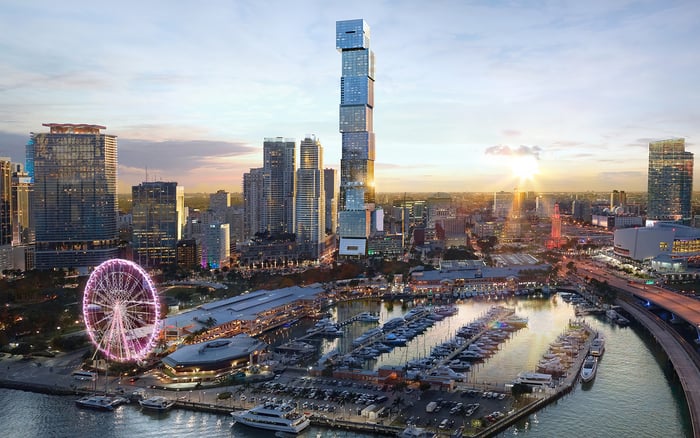
A move-in ready residence trades customization for speed and convenience. The benefit is straightforward: faster occupancy after closing, and less need to coordinate renovations. In South Florida, turnkey often means a luxury condominium or a branded-style amenity ecosystem where daily life is designed to be frictionless. Consider a Brickell buyer weighing the cadence of ownership in a full-service tower: staff, valet, pool operations, security, and building-wide maintenance are handled, and your job is to enjoy. For buyers drawn to that simplicity, the critical diligence shifts from construction management to governance and operating economics. HOA dues can be a major component of ownership cost because they fund building operations, staffing, amenities, insurance, maintenance, and reserves. Post-2021, condo buildings have also faced heightened attention on structural inspections and reserve funding, contributing to fee pressure in many associations. That doesn’t mean “avoid condos.” It means: read the budget, understand reserves, and scrutinize any pending or recent special assessments because they can materially change total ownership costs. In Miami, owners typically insure interiors with an HO-6 policy, while the association carries a master policy for structure and common elements. That separation is normal, but it can surprise buyers who are more familiar with single-family ownership models. The premium is only part of the story; how insurance and reserves flow through the HOA is often where the long-term math lives.
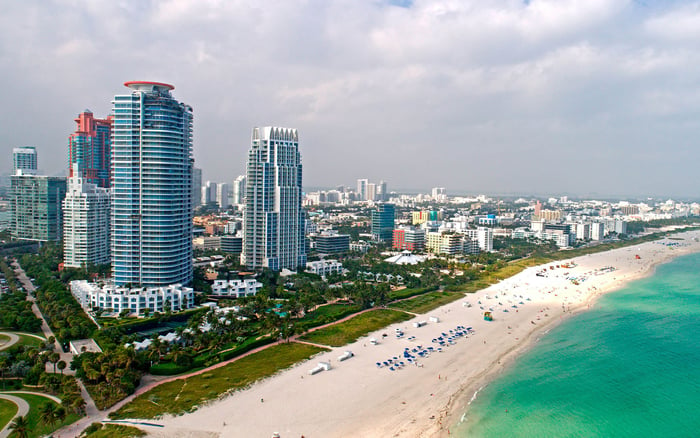
Whether you build or buy, South Florida ownership is inseparable from risk and resilience. Flood insurance costs can vary substantially by property risk, and premium differences tend to be meaningful when exposure changes even slightly. For a custom build, you can design for resilience from the first line: elevations, drainage strategies, fenestration choices, and robust mechanical planning. That control is valuable, but it also demands expertise and discipline. For a condo purchase, you inherit the building’s risk posture and insurance structure. Your diligence is less about what you can redesign and more about what the association has already decided and budgeted. Buyers who want ocean proximity with a polished, turnkey feel often look to Miami Beach options such as The Perigon Miami Beach, where the draw is lifestyle immediacy. The right question is not only “do I love the view,” but “do I understand the building’s ongoing obligations and governance.”
Most luxury clients fall into one of three decision profiles. First: the “author.” You want a residence that reflects your life precisely, and you’re comfortable making hundreds of decisions. You have the patience for a multi-season process and the appetite for complexity. Building is often the correct answer. Second: the “strategist.” You value customization, but only where it matters: layout, light, storage, and key materials. You’re open to a high-quality new-construction or lightly lived-in residence that reduces risk while still feeling intentional. For some buyers, that can mean selecting a refined building in an area you already love and tailoring within the rules. In Brickell, a purchase in 2200 Brickell can align with this mindset: you step into a modern product and focus your energy on furnishing, art, and the way you live, rather than managing a full construction sequence. Third: the “time-constrained.” You need certainty: school calendars, business timing, or a relocation mandate. In this case, the speed and convenience of turnkey often outweigh the value of perfect customization. If your priorities lean toward privacy and design quality with a minimal unit-count feel, you might gravitate to boutique coastal options like 57 Ocean Miami Beach, where the underlying appeal is reduced complexity after closing compared to a ground-up build.
Two buyers can have identical budgets and completely different outcomes based on management tolerance. Building requires you to be a client in the true sense. You approve drawings, manage scope decisions, and navigate inevitable moments where schedule, cost, and design cannot all win at once. If you’re not personally inclined to manage that, you can hire expertise, but you still have to lead. Buying requires you to be a governor. You learn the rules, understand building finances, and decide whether the HOA culture fits how you want to live. A well-run association can be a luxury in itself; a poorly aligned one can feel like a constant negotiation. For buyers who love a waterfront lifestyle but want staffing, amenities, and a resort-caliber cadence baked in, a property such as Auberge Beach Residences & Spa Fort Lauderdale can be compelling. The premium you pay is not only for finishes; it’s for operational design.
If you want a clear way to choose, start with five questions. 1) When must you be living there? If your answer is within a year, building is typically a high-risk fit unless much of the work is already entitled and underway. 2) What must be custom? If your “must” list is short, buying a strong base and tailoring within it can be the elegant solution. 3) How much variability can you tolerate in final cost? Building involves soft costs and a contingency reserve for the unknown. 4) What kind of obligations do you want? Single-family ownership concentrates responsibility on you; condo ownership distributes it but adds governance and HOA economics. 5) How much decision-making do you want to do? Not “can you,” but “do you want to,” for 12 to 36 months. When you answer these honestly, the correct path often becomes obvious.
How long does a custom luxury home build typically take in Florida? A common estimate is about 16 to 36 months from planning through completion, depending on complexity and approvals.
How long is the pre-construction phase before building starts? Pre-construction is often roughly 4 to 12 months for design, engineering, permits, and site preparation.
What is a realistic construction-only timeline for a Florida single-family home? Construction itself is often discussed around 7 to 14 months, with longer timelines for higher complexity.
Will Florida’s 2025 permitting changes make luxury builds fast? They can create clearer statutory review timelines, but complete applications and coordinated teams still matter.
Why do custom builds run over budget even with a strong contractor? Soft costs, change orders, and unforeseen site or structural conditions can add meaningfully beyond the build contract.
What is a contingency reserve and why is it important? A contingency reserve is a budgeting buffer for changes and unknowns, helping protect your all-in budget.
How is construction financing different from a purchase mortgage? Construction-to-permanent loans fund the build in stages and then convert to a long-term mortgage after completion.
What does move-in ready really mean in luxury real estate? It generally means minimal immediate renovation needs, trading customization for speed and convenience after closing.
What insurance should a Miami condo owner expect to carry? Owners often carry an HO-6 policy for interiors, while the association insures common elements and structure.
What condo documents matter most before buying in South Florida? Focus on the budget, reserve levels, and any pending or recent special assessments because they can change total cost.
For bespoke guidance on whether building or buying best matches your timeline and lifestyle, explore MILLION Luxury.
If branded residences are on your mind — as a home or as an allocation — we would be glad to share what we are seeing, privately.
Begin a quiet conversation