
For the ultra-premium set, Miami and the Hamptons are not competing addresses. They are complementary seasons, each with its own cadence, logistics, and ownership math. In 2026, the most confident buyers are treating the corridor as an operating system: a Florida base that can run year-round, paired with a summer outpost that still defines East Coast social gravitas. This guide focuses on what actually changes your experience as an owner: travel time realities, residency and tax posture, seasonality, the practicalities of managing two homes, and the South Florida condo details that matter when you are not in town every week.
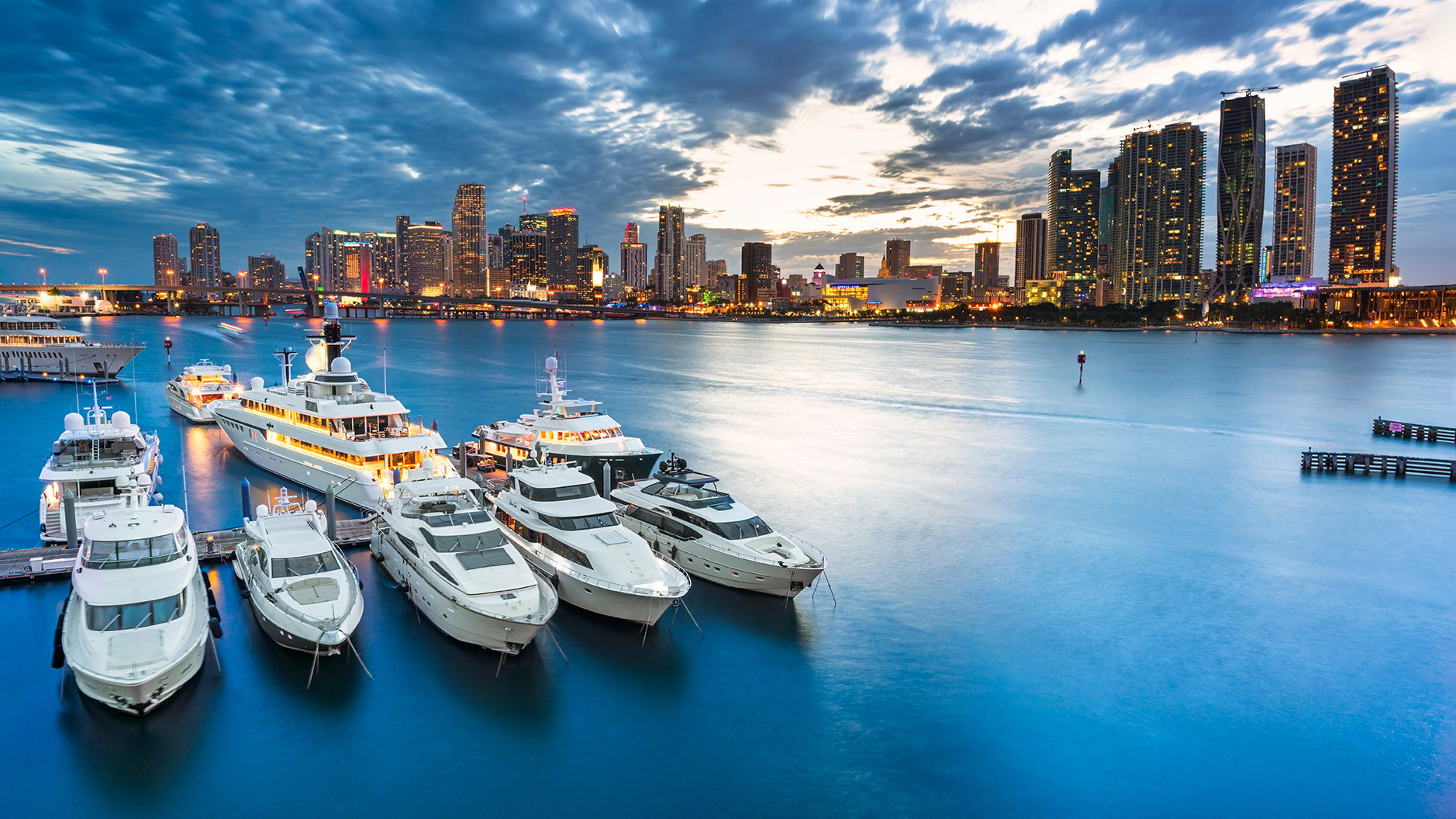
Owning in both Miami and the Hamptons has become a modern version of the classic two-home rhythm: winter sun and cultural heat in South Florida, summer tradition and privacy on the East End. The value is not just weather. It is optionality, access, and the ability to host beautifully across two distinct social seasons. The corridor is also demanding. When buyers say they want a “second home,” what they often mean is a second operating base with its own staff, vendor network, insurance and risk plan, and a calendar built around both markets’ peak weeks. The owners who do this best treat the decision like a portfolio: allocate for enjoyment, but manage for friction. In 2026, that friction tends to be less about finding a property and more about making ownership seamless: travel predictability, a clean residency posture, disciplined building selection, and property management designed for absentee owners.
Miami to the Hamptons is not a casual drive. By road, the route is roughly 1,171 miles, which makes driving a statement rather than a routine. Most owners treat air as the default. Typical commercial flight time from Miami International to New York-area airports is roughly 3 to 3.5 hours, and the rest of the day becomes a choreography of car services and East End traffic. For private aviation, a charter flight from Miami International to East Hampton Airport is often listed at about 2 hours and 49 minutes of flight time. That difference matters because it changes the psychology of the trip: you can leave after breakfast and arrive before a late lunch. On the New York side, helicopter transfers are positioned specifically to compress the ground-transfer portion of the journey, which is frequently where the day disappears. The point is not speed for its own sake. It is reliability. If your summer weekends are limited, predictable arrivals are part of the luxury.
One of the cleanest talking points in the Miami-to-Hamptons conversation is Florida’s lack of a state personal income tax. The less discussed reality is that a move is not a mood board. New York’s top marginal state income tax rate is often cited at 10.9%, which makes Florida domicile highly attractive for high earners. But New York is known to audit residency changes aggressively, and simply buying a Florida home is not enough. A successful shift requires clear domicile establishment, day-count discipline around the 183-day framework, and a pattern of life that supports the story. In practice, domicile determinations can involve multiple factors, including where you keep “near-and-dear” items, where family life is centered, and how business ties are maintained. For dual-market owners, the takeaway is straightforward: if the Florida home is meant to be primary, it needs to operate like one.
The mood in South Florida is maturing. After years defined by velocity, 2026 is broadly framed as a period of higher inventory and more stable conditions. For buyers, a normalizing market is not a downgrade. It is an invitation to be precise. Precision in 2026 means reading rules and budgets as carefully as you read views. For condos, ownership outcomes can hinge on building documents, financing constraints, and rental restrictions, especially when the property will be used part-time. If the Hamptons house is the summer stage, Miami often needs to be the lock-and-leave engine that runs with minimal supervision. Brickell is a natural example. A home at 2200 Brickell can serve as a refined base for business weeks and cultural nights, provided the building’s policies match your intended use. The real luxury is not just finishes. It is operational clarity.
Miami’s wealth density has become part of the city’s self-image, and it shows in the ambition of new development. For a Hamptons owner, the ideal South Florida property typically does three things exceptionally well: First, it compresses daily logistics. You want a residence that lets you land, reset, and entertain without re-learning the city on every visit. Second, it delivers privacy without isolation. Not every buyer wants a gated narrative; many want a curated building culture and a predictable service level. Third, it supports how you actually live. If you are in town for five days at a time, storage, deliveries, guest management, and security protocols matter more than a rarely used formal dining room. For buyers who appreciate a high-design, fashion-forward signature in a core neighborhood, 888 Brickell by Dolce & Gabbana reflects the kind of branded, amenity-centric living that can make Miami feel genuinely turnkey. If your Miami chapter is more coastal and walkable, Miami Beach offers a different kind of gravity, with Art Basel Miami Beach anchoring the cultural calendar in December. In that context, The Perigon Miami Beach fits buyers who want a refined oceanfront posture that reads as discreet rather than loud.
The Hamptons is intensely seasonal. Summer is the primary demand engine, while winter is typically quieter. That seasonality affects everything: availability, vendor responsiveness, and the pace at which listings and contracts move. Even in a quieter week, public market snapshots can show substantial total inventory and a smaller number of weekly contracts. The lesson for a 2026 buyer is not to time the market by a single week. It is to respect the calendar. If you aim to be “in by Memorial Day,” your decision windows shrink and your negotiating posture changes. If you buy with more lead time, you can spend more energy on inspections, systems, and the property’s ability to run while you are in Florida. And that is the real Hamptons luxury in 2026: not just a perfect summer weekend, but a house that behaves predictably in your absence.
Two-home ownership breaks down when it becomes reactive. The owners who enjoy it most invest in prevention: scheduled inspections, maintenance coordination, and a single point of accountability when you are not in town. In Miami, concierge-style property management is often built around absentee-owner support, including inspections and maintenance coordination. Similar second-home management models exist specifically for seasonal owners. The exact provider matters less than the structure: a cadence of checks, a documented vendor list, and a clear decision tree for emergencies. South Florida adds another layer: hurricane risk. Hazard insurance can be a meaningful factor in the ownership cost stack, and ultra-wealthy homeowners often put extensive planning into storm preparation. If your Miami residence is a condo, much of the exterior risk management is shared. If it is a single-family home, your plan needs to be more bespoke.
In a normalized market, the advantage shifts from speed to selectivity. Prioritize: - Building rules that match your lifestyle, including rental restrictions and guest policies.
Two-market ownership is ultimately a calendar strategy. In Miami, the early winter season has a distinctly cultural intensity, with Art Basel Miami Beach acting as a global magnet. In the Hamptons, summer traditions like Polo Hamptons define the kind of social continuity that keeps families coming back generation after generation. When you plan around those anchors, your real estate decisions sharpen. Your Miami home becomes the winter hosting platform, ideally near the neighborhoods you actually frequent. Your Hamptons home becomes the summer retreat with enough privacy to recover between obligations. That is the final mindset shift: you are not merely buying two addresses. You are buying two different versions of time.
How far is Miami to the Hamptons by road? Roughly 1,171 miles, making driving possible but rarely convenient for quick turns.
How long is a typical commercial flight from Miami to reach the Hamptons area? About 3 to 3.5 hours to New York-area airports, plus ground transfer time.
How long can a private charter flight take from MIA to East Hampton Airport? Flight time is often listed at about 2 hours and 49 minutes, depending on routing.
Can helicopter transfers reduce the time from New York City to the Hamptons? Yes, helicopter service is commonly marketed as a way to cut ground-transfer time.
Does Florida have state personal income tax? No, Florida does not levy a state personal income tax.
Is buying a Florida home enough to change New York tax residency? No, residency shifts typically require day-count discipline and strong domicile evidence.
Why do dual-market owners focus so much on condo rules in Miami? Because rental restrictions, financing, and building policies can shape your real use-case.
What is one ownership risk factor buyers should underwrite in South Florida? Hurricane-related hazard insurance and preparation can materially affect cost and planning.
Is the Hamptons market seasonal? Yes, demand typically peaks in summer, while winter tends to be slower.
What is the most effective way to enjoy a Miami and Hamptons lifestyle year-round? Treat it like operations: travel planning, proactive property management, and clear policies.
For tailored guidance, speak with MILLION Luxury.
If branded residences are on your mind — as a home or as an allocation — we would be glad to share what we are seeing, privately.
Begin a quiet conversation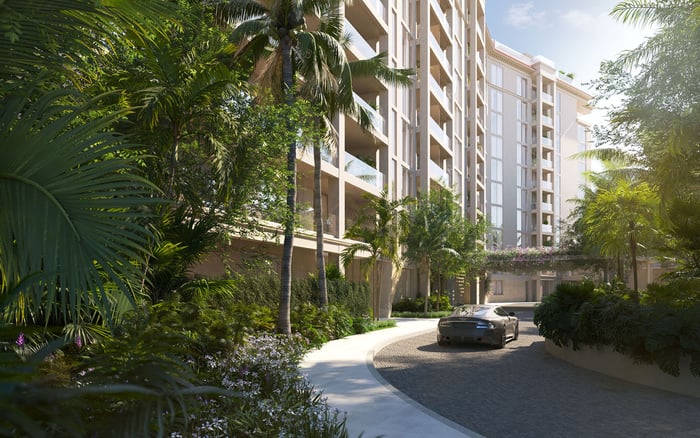
.jpg&width=700&height=438&fit=cover)