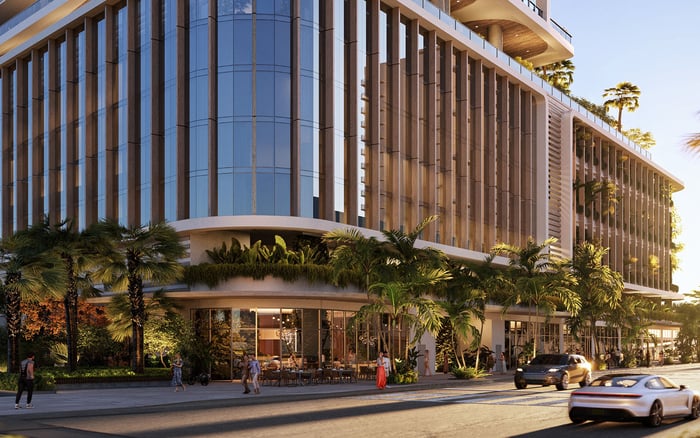
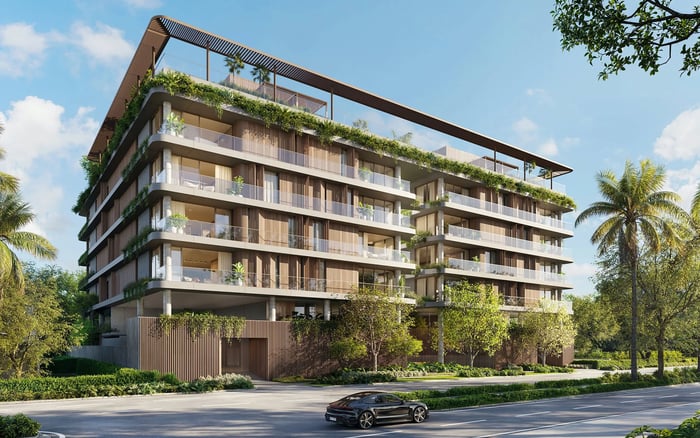
A buyer-focused comparison of Coral Gables and Downtown Miami, examining privacy, architecture, daily rhythm, condo lifestyle, and how each market speaks to a different definition of luxury.

For many South Florida luxury buyers, the choice between Coral Gables and Downtown Miami is not simply a question of address. It is a question of daily atmosphere. One speaks in courtyards, shaded arrivals, neighborhood continuity, and measured privacy. The other speaks in glass, elevation, skyline, services, and immediate access to the city’s pulse.
That is why the decision is often more emotional than statistical. A buyer may admire both, yet only one will feel natural at 7 a.m. on a weekday or after dinner on a quiet Sunday. Coral Gables tends to appeal to those who want refinement without constant motion. Downtown Miami tends to appeal to those who want the city close at hand, with the convenience and drama of high-rise living.
In search language, Coral-gables, Downtown, Brickell, New-construction, Boutique, and High-floors are not interchangeable labels. They signal different expectations around privacy, scale, arrival, and routine. The strongest purchase is the one that aligns the building with the life the owner intends to live.
Coral Gables has long appealed to buyers who value a more composed version of Miami living. Its appeal is rooted in human scale: residential streets, established neighborhood texture, and a sense that architecture should sit within a broader civic setting rather than dominate it.
For buyers comparing new residential offerings in the area, projects such as The Village at Coral Gables reflect the desire for a more intimate residential experience within a highly recognized neighborhood. The draw is not only the residence itself, but the broader promise of a home connected to a place with identity.
This is where Coral Gables differs most sharply from the vertical city. The luxury is often quieter. Arrival matters. Landscaping matters. Proportion matters. Buyers coming from larger estates, traditional neighborhoods, or international capitals with strong residential districts may find this rhythm familiar.
The area can also suit those who want to be near Miami’s urban core while preserving a degree of separation from it. That separation is not about distance alone. It is about the feeling of coming home to a calmer register, where evenings do not necessarily belong to the skyline.
Downtown Miami offers a different proposition: elevation, density, views, and a more metropolitan cadence. The buyer here is often drawn to the vertical residence as a complete lifestyle platform. The building becomes not just a home, but a framework for convenience, privacy, security, service, and visual spectacle.
The appeal is clearest in towers such as Aston Martin Residences Downtown Miami, where the address itself participates in Downtown’s skyline identity. Buyers considering this part of Miami are often less concerned with recreating a traditional neighborhood and more interested in living within the city’s evolving architectural profile.
Downtown is for the owner who enjoys immediacy. The experience is vertical rather than village-like, polished rather than pastoral, and oriented toward access. A residence here can feel especially compelling for buyers who split time between global cities and expect building services, valet convenience, views, and a lock-and-leave format.
For some households, Downtown is a primary home. For others, it is the Miami pied-à-terre that delivers the city in concentrated form. Either way, the buyer is choosing an urban composition where the residence is inseparable from the momentum below it.
No comparison of Coral Gables and Downtown Miami is complete without acknowledging Brickell. For many buyers, Brickell functions as the polished urban alternative: more residential than a purely commercial center, yet more vertical and energetic than Coral Gables. It is where the city’s condominium language becomes especially refined.
A buyer who likes the elegance of Coral Gables but wants full-service condominium living may be drawn to Cipriani Residences Brickell. Another who prefers a more dramatic glass-tower statement may consider The Residences at 1428 Brickell. The decision is less about which area is superior and more about which environment supports the buyer’s routine with the least compromise.
Brickell also clarifies the middle ground. It offers a denser urban lifestyle than Coral Gables, but with a residential condominium culture that many luxury buyers understand immediately. In that sense, it can become the deciding reference point: if Brickell still feels too active, Coral Gables may be the better fit. If Brickell feels too quiet or too formal, Downtown may provide the stronger emotional pull.
Luxury buyers often use the word convenience, but they do not always mean the same thing. In Coral Gables, convenience may mean an elegant drive home, a neighborhood that feels established, and a residence that supports privacy without constant building intensity. In Downtown, convenience may mean an elevator ride to a staffed lobby, proximity to urban activity, and the ability to live efficiently without relying on a traditional residential pattern.
Privacy also reads differently in each context. Coral Gables offers privacy through setting, street presence, and residential spacing. Downtown offers privacy through height, controlled access, staffed environments, and the physical separation of a tower residence. One is horizontal discretion. The other is vertical discretion.
Neither is inherently more luxurious. The better choice depends on how the owner wants to move through the day. A buyer who values garden-like arrivals, lower visual intensity, and neighborhood continuity may find the Coral Gables experience more emotionally durable. A buyer who values skyline views, staffed convenience, and the city’s energy may find Downtown more compelling.
Coral Gables tends to reward buyers who appreciate architectural restraint, proportion, and continuity. Even when considering a contemporary residence, the area asks for sensitivity to context. The best homes and condominiums feel as though they belong to the neighborhood rather than simply occupy it.
That is one reason a project such as Ponce Park Coral Gables can resonate with buyers who want newness without surrendering the area’s more composed identity. The architectural question is not only what the residence looks like, but whether it preserves the feeling that makes the area desirable in the first place.
Downtown Miami, by contrast, welcomes a more assertive skyline conversation. Height is part of the appeal. Form, silhouette, and views become central to the ownership experience. In Downtown, architecture is often read from a distance before it is experienced up close. The building becomes part of the city’s image.
For collectors, entrepreneurs, and internationally mobile buyers, that visibility can be desirable. For buyers who value understatement, it may feel too exposed. The most sophisticated purchasers understand this distinction early and choose accordingly.
Coral Gables is often the more natural match for buyers who want a primary residence with neighborhood grace, a quieter cadence, and a sense of permanence. It can suit families, long-term Miami residents, and buyers who want refined access to the city without living inside its most vertical districts.
Downtown Miami is often the stronger fit for buyers who want a city residence with impact, service, and a more immediate urban lifestyle. It can suit executives, second-home owners, and global buyers who are comfortable with density and want Miami to feel metropolitan from the moment they step into the lobby.
The most important discipline is to avoid buying someone else’s version of prestige. A celebrated tower is not automatically right for a buyer who needs calm. A village-like setting is not automatically right for a buyer who thrives on access and energy. The right address should reduce friction, not create it.
Is Coral Gables better than Downtown Miami for privacy? Coral Gables may appeal to buyers who prefer privacy through setting and neighborhood character. Downtown offers a different kind of privacy through height, controlled access, and staffed buildings.
Is Downtown Miami better for high-rise living? Yes, Downtown Miami is generally the more natural fit for buyers seeking a vertical urban residence. It offers the visual drama and convenience associated with tower living.
Who should consider Coral Gables? Buyers who value a quieter residential rhythm, architectural continuity, and a village-like atmosphere should consider Coral Gables. It is especially compelling for those who want refinement without constant intensity.
Who should consider Downtown Miami? Downtown Miami suits buyers who want city energy, elevation, and the convenience of a full-service building environment. It is often attractive for lock-and-leave ownership.
Where does Brickell fit into the decision? Brickell can serve as a bridge between the two lifestyles. It offers a refined condominium culture with more urban energy than Coral Gables.
Is Coral Gables only for single-family homes? No. While many buyers associate Coral Gables with residential streets and established homes, there are also condominium and new residential options for those seeking a different format.
Is Downtown Miami only for second homes? No. Downtown can work as a primary residence or a second home, depending on the buyer’s tolerance for urban energy and preference for vertical convenience.
Which area feels more timeless? Coral Gables often feels more rooted in neighborhood continuity, while Downtown expresses Miami’s changing skyline. Timelessness depends on whether the buyer values permanence of setting or architectural presence.
Which area is better for a quieter daily routine? Coral Gables is more likely to suit buyers seeking a calmer everyday rhythm. Downtown is better for those who want activity and access close at hand.
How should a buyer decide between them? Begin with lifestyle before comparing buildings. The right choice is the place where privacy, access, architecture, and daily pace feel naturally aligned.
For a tailored shortlist and next-step guidance, connect with MILLION.
If branded residences are on your mind — as a home or as an allocation — we would be glad to share what we are seeing, privately.
Begin a quiet conversation