A discreet buyer-focused editorial on how security, privacy, and controlled arrival shape the Bay Harbor Islands luxury residential search.
Bay Harbor Islands has become a revealing lens for how ultra-premium buyers define comfort. The conversation is no longer confined to finishes, views, or amenity count. For many, the decisive questions begin before the front door: who sees the arrival, how the vehicle sequence is handled, whether guests can be received without friction, and how naturally the building protects a private routine.
This is not a defensive way of living. It is a refined one. Security, discretion, and private arrival are increasingly understood as forms of architectural intelligence. The best residences do not announce these qualities. They make them feel effortless, embedded, and calm.
In the Bay Harbor search, buyers are often seeking a quieter expression of luxury. They want a home that allows them to move among family life, business obligations, wellness, travel, and entertaining without unnecessary exposure. That shift gives circulation, access, and service choreography as much importance as the visual drama of the residence itself.
For sophisticated buyers, security is not only a matter of technology. It is a sequence. The experience begins at the street, continues through the arrival court or garage, and extends into elevators, corridors, amenity areas, and private residential thresholds. A building may feel polished, but if arrival feels exposed or confusing, the sense of privacy weakens immediately.
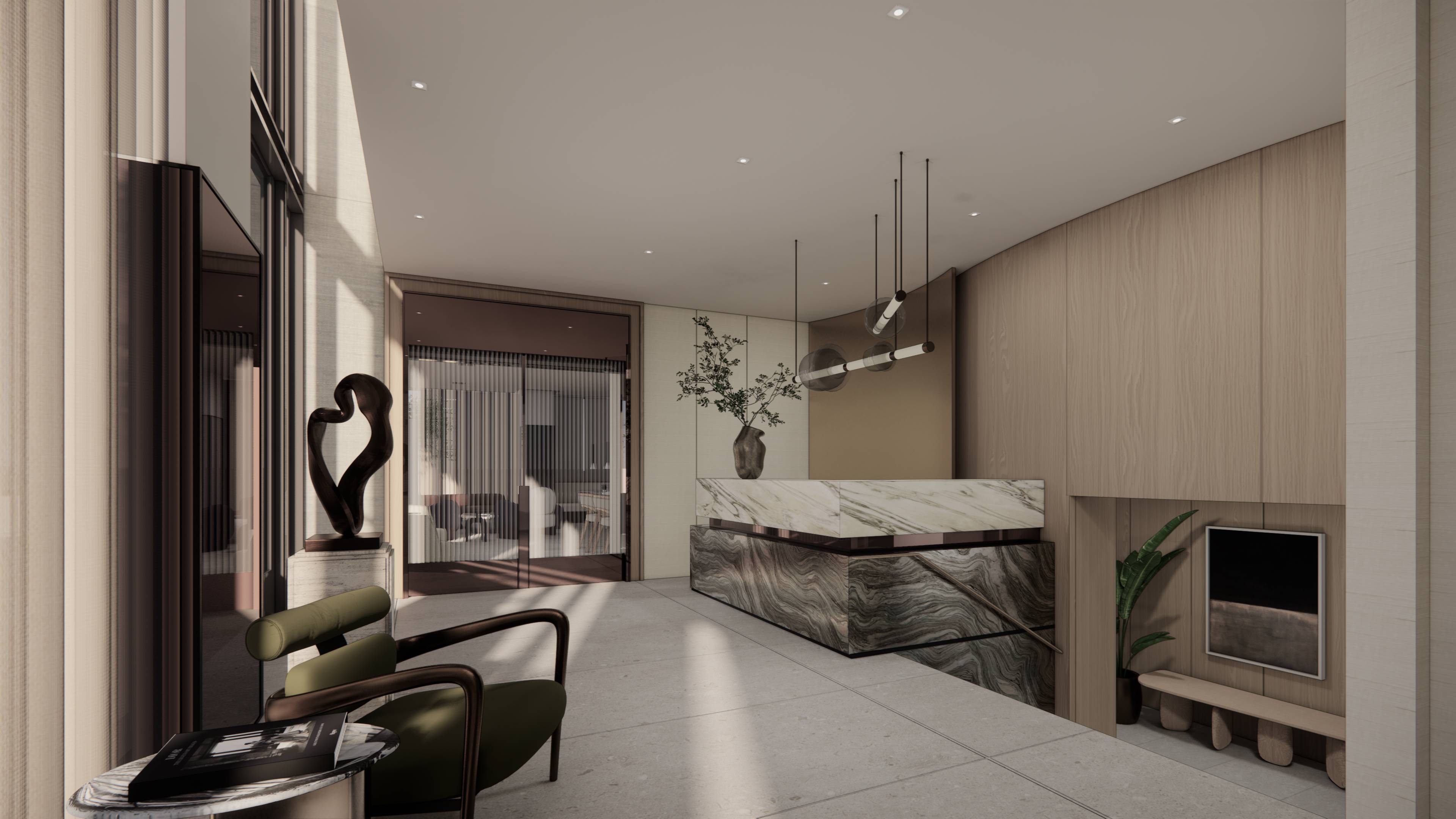
The most discerning buyers study how a property separates residents, guests, deliveries, staff, and service providers. They ask whether the lobby is ceremonial or overly public. They notice whether parking feels intuitive. They evaluate how long a visitor must wait in view, how packages are handled, and whether service circulation preserves the calm of the residential experience.
This is where boutique scale can become meaningful. Smaller residential environments may offer a more controlled atmosphere, provided the design, staffing, and operational culture support it. Larger buildings can also perform beautifully when the access strategy is disciplined. The issue is not size alone. It is whether every transition feels intentional.
Discretion is often mistaken for isolation. In practice, it is more subtle. A discreet residence allows the owner to participate fully in South Florida life while maintaining control over visibility. It offers the option to entertain, host family, receive advisors, and move through the day without feeling that every gesture is public.
That is why buyers increasingly focus on sightlines. Can one enter without crossing a crowded amenity zone? Are elevators shared broadly or limited in use? Does the residence open directly into a private foyer, or into a more common circulation path? Are terraces positioned for enjoyment without creating a sense of exposure?
Projects such as Alana Bay Harbor Islands enter the buyer conversation because this market rewards residences that feel composed rather than theatrical. The appeal is not just the address or the design vocabulary. It is the promise of a home that supports daily life with restraint.
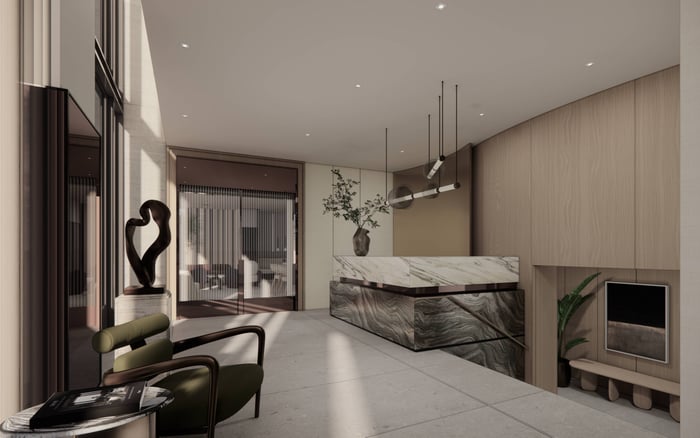
For a certain buyer, the most important room may be the one no one photographs: the arrival sequence. A private or semi-private arrival allows the home to begin before the residence itself. It sets the tone for how a family returns from dinner, how children come home from school, how luggage is handled after travel, and how guests are welcomed.
The strongest arrival experiences feel intuitive. There is no sense of searching, waiting, or being on display. A vehicle enters, the transition is clear, and the resident moves toward the home with minimal interruption. This kind of planning is especially important for buyers who value household staff, frequent travel, or a steady flow of private appointments.
In Bay Harbor Islands, projects such as Bay Harbor Towers are part of a broader buyer focus on how buildings manage the boundary between public approach and private residence. That boundary is where luxury either becomes convincing or begins to feel performative.
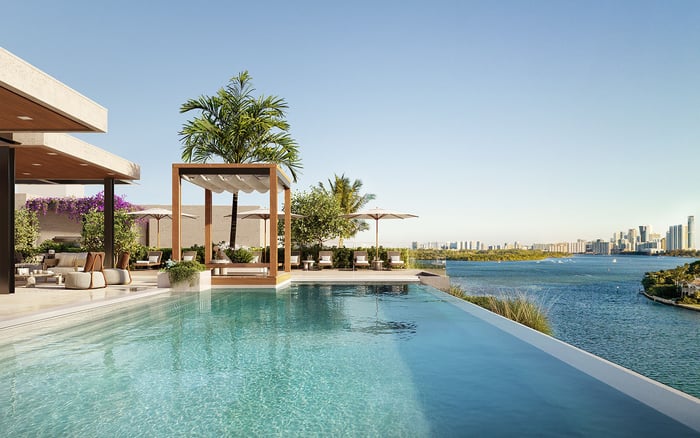
Waterview living has an obvious emotional pull, but for privacy-minded buyers it can also contribute to psychological calm. A residence that looks outward rather than inward can feel more relaxed, more expansive, and less exposed to the immediate activity of neighboring streets. The value lies not only in what one sees, but in what one does not have to confront.
Still, buyers should be precise. A beautiful outlook does not automatically create privacy. The orientation of terraces, neighboring sightlines, amenity placement, and nighttime visibility all matter. The best evaluation happens at different moments of the day, because morning, late afternoon, and evening can reveal different privacy conditions.
Residences such as La Baia North Bay Harbor Islands are often considered through this lens: how the water, architecture, and daily circulation combine to create a composed residential experience. In this segment, serenity is not decorative. It is functional.
High-net-worth households rarely operate on a single routine. There may be drivers, assistants, wellness providers, chefs, housekeepers, stylists, tutors, pet care, visiting family, and private guests. The residence must absorb that complexity without making the owner feel as if the home has become a stage.
This makes service flow a central part of due diligence. Buyers should ask how deliveries are received, where staff wait when necessary, whether service access conflicts with resident paths, and how management handles peak periods. A glamorous lobby cannot compensate for a building that lacks operational grace.
The goal is quiet competence. When a building works well, residents do not need to think through every handoff. Guests arrive smoothly. Packages are managed discreetly. Maintenance is handled without disruption. Security is present without feeling intrusive. That balance is one of the clearest markers of a truly elevated residential environment.
Bay Harbor Islands buyers often face a productive tension: the intimacy of boutique living versus the breadth of larger amenity-driven residences. Neither choice is universally superior. A boutique building may deliver a stronger sense of recognition, calm, and controlled access. A larger property may offer more extensive services, deeper staffing, and a broader range of lifestyle spaces.
The right answer depends on household rhythm. A buyer who entertains frequently may want flexible guest reception and generous shared spaces. A buyer seeking refuge may value fewer crossings with other residents. A family may prioritize predictable parking, protected school-day routines, and simple access for caregivers. An international owner may focus on lock-and-leave confidence and management depth.
Projects such as Onda Bay Harbor and The Well Bay Harbor Islands can be evaluated not only for architecture or lifestyle positioning, but for how naturally they answer these questions of daily privacy. The most successful purchase is the one that fits the owner’s life without demanding constant adaptation.
Before becoming attached to a floor plan, buyers should walk the arrival path. Arrive by car. Observe where the vehicle pauses. Notice who can see the entrance. Ask how guests are announced, how service providers are routed, and how after-hours access is handled. Then repeat the mental exercise from the perspective of a child, an elderly parent, a visiting guest, and a staff member.
Next, study vertical circulation. Elevator privacy, corridor length, foyer design, and access control all influence how personal the residence feels. Then move to the exterior spaces. Terraces, pool decks, wellness areas, and lounges should be beautiful, but they should also protect comfort. A space that looks impressive in a presentation may feel different when occupied.
Finally, listen for operational philosophy. Luxury buildings are not only designed. They are run. The tone of management, the training of staff, and the clarity of house protocols shape the lived experience long after closing. In this category, discretion is not a feature to be switched on. It is a culture.
What should Bay Harbor Islands buyers prioritize first? Begin with access, arrival, and privacy before comparing finishes. These factors shape daily comfort more than many visible design details.
Is private arrival more important than amenities? For many luxury buyers, yes. Amenities matter, but the daily transition from street to residence often defines whether a home feels truly private.
Does boutique scale always mean better discretion? Not always. Boutique scale can help, but staffing, access control, and circulation design are just as important.
How should buyers evaluate security without overemphasizing hardware? Focus on the full sequence of movement. The best security experience feels calm, coordinated, and unobtrusive.
Why do sightlines matter in a luxury residence? Sightlines determine how visible daily life feels from neighboring buildings, shared areas, and approach points.
Are waterfront views automatically more private? No. Orientation, terrace placement, and surrounding context still need careful review at different times of day.
What questions should buyers ask about service flow? Ask how deliveries, staff, maintenance, and guest arrivals are handled. Smooth service flow protects the owner’s routine.
Can a highly serviced building still feel discreet? Yes, if service is choreographed carefully. The ideal experience is attentive without becoming visible or intrusive.
What makes an arrival sequence feel luxurious? Clarity, privacy, and ease. A resident should move from vehicle to home without confusion, delay, or unnecessary exposure.
What is the best way to shortlist comparable options for touring? Start with location fit, delivery status, and daily lifestyle priorities, then compare stacks and elevations to validate views and privacy.
To compare the best-fit options with clarity, connect with MILLION.
If branded residences are on your mind — as a home or as an allocation — we would be glad to share what we are seeing, privately.
Begin a quiet conversation