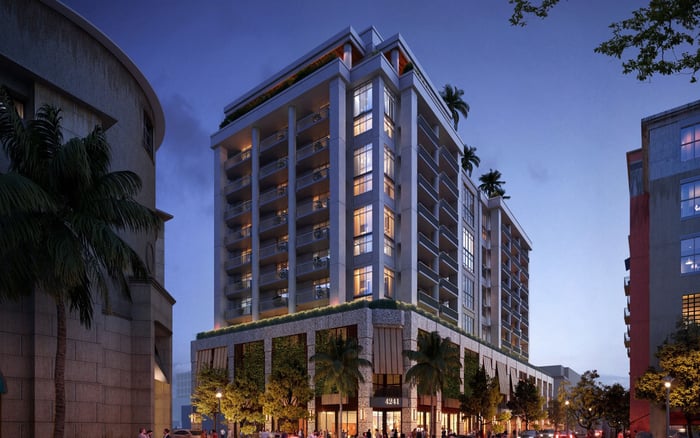
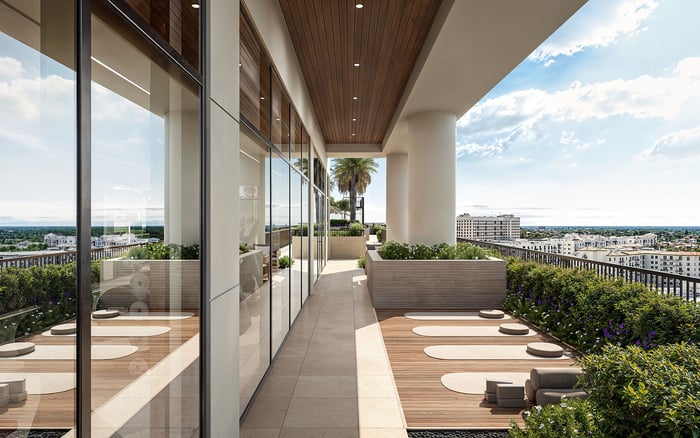
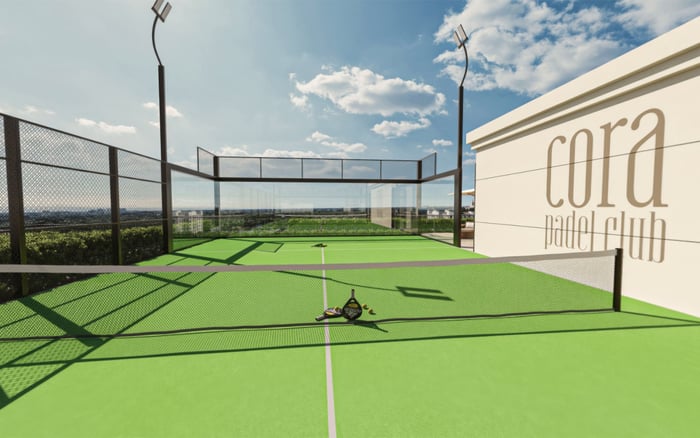
A discreet buyer’s framework for assessing how amenity-floor adjacency at Cora Merrick Park can influence privacy, sound, daily comfort, and resale positioning before a contract becomes binding.
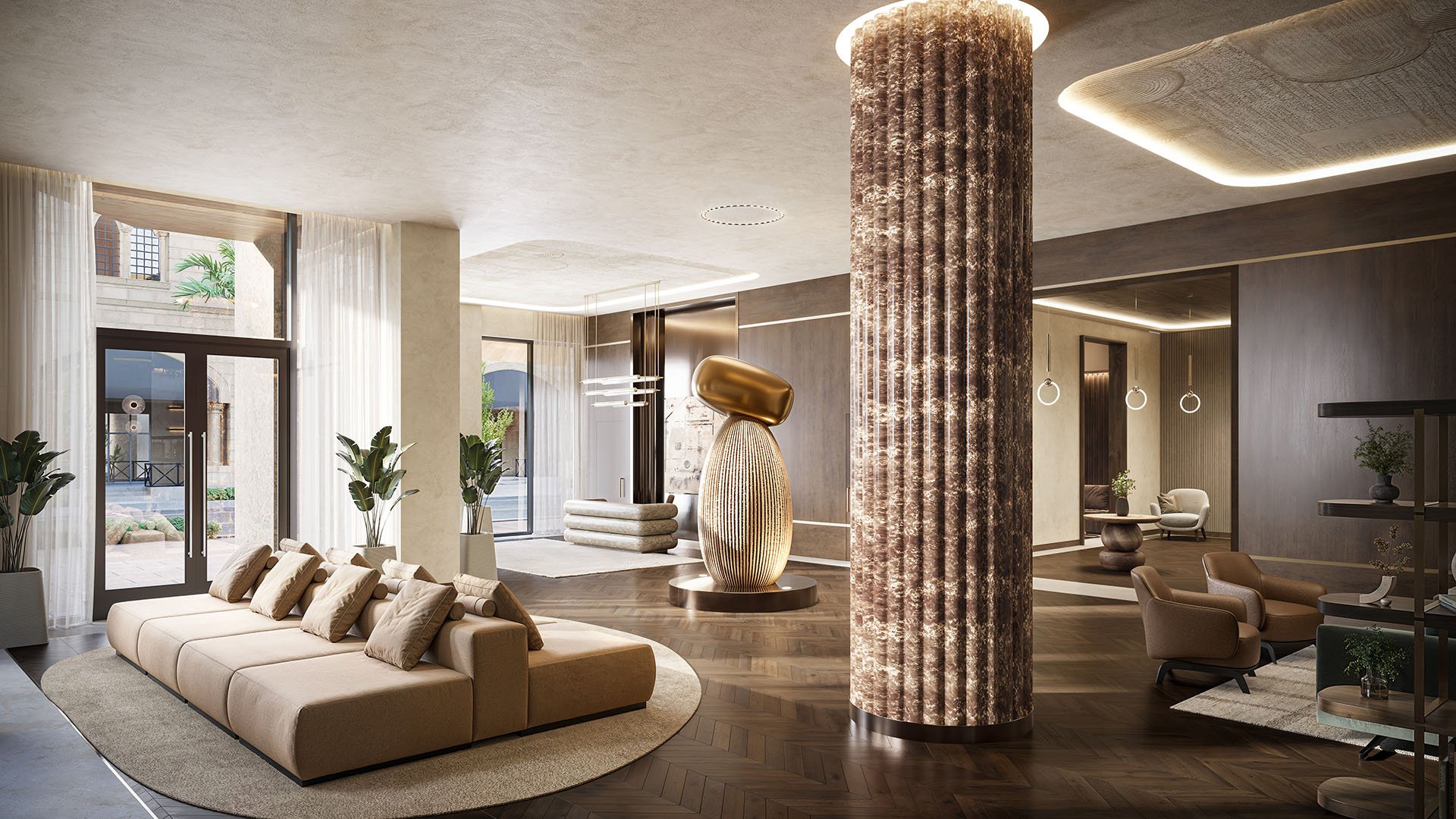
At Cora Merrick Park, the question is not simply whether a residence offers access to polished shared spaces. The more refined question is how close the residence sits to those spaces, and what that proximity means in daily life. In a Coral Gables condominium, a unit that reads beautifully on paper can feel very different if it is directly above a gym, beside a clubroom, across from an amenity elevator lobby, or below a heavily used pool deck.
Amenity-floor adjacency is the vertical or horizontal relationship between a private residence and shared facilities such as pools, gyms, lounges, spas, co-working rooms, children’s areas, event spaces, service corridors, or mechanical zones. In practice, that relationship can influence comfort, privacy, traffic patterns, and future resale positioning. For buyers comparing two similar residences, adjacency belongs beside view, floor height, exposure, parking, and layout as a serious pricing variable.
This is especially relevant in a new-construction or pre-construction setting, where decisions are often made from plans rather than lived experience. Cora Merrick Park is the project context, but the discipline is broader: identify every meaningful amenity exposure before the purchase agreement becomes binding.
The sales floor plan is only the beginning. A buyer should request the full vertical stack plan, because the most important condition may not appear on the residence plan itself. What sits directly above the primary suite? What is below the living room slab? What is beside the secondary bedroom wall? What lies across the corridor from the private entry?
A residence may show gracious proportions on paper, while its stack relationship tells a more complex story. Units directly above, below, beside, or across from active amenities may deliver a different living environment than units farther away in the same building. That distinction is not always a defect. A well-buffered residence close to amenities can be exceptionally convenient. The goal is to determine whether the adjacency is beneficial, neutral, or worthy of negotiation.
Lower floors often deserve added attention because amenity decks, shared rooms, service uses, and mechanical areas are frequently concentrated lower in a building. That does not make a lower-floor residence inherently less desirable. It simply means the buyer should understand the stack, the corridors, the operating rules, and the likely movement patterns around the home.
The highest-risk adjacencies to review are typically gyms, pools, clubrooms, event lounges, children’s areas, service corridors, and mechanical spaces. These spaces do not create the same type of exposure. Each brings a different mix of sound, traffic, privacy, and schedule considerations.
Gym adjacency deserves particular scrutiny. Dropped weights, treadmills, and fitness equipment can transmit vibration through slabs and structural elements. This is not only a question of hearing music or conversation. It can be structure-borne, meaning the sensation may travel through the building itself. A buyer should ask how fitness equipment is isolated, whether impact-noise mitigation is used, and what lies between the gym and the residence.
Pool-deck adjacency requires a broader review. Daytime activity, evening social use, furniture movement, equipment noise, privacy exposure, and light spill can all shape the experience. A terrace overlooking a landscaped amenity deck may feel serene at one hour and social at another. The buyer’s task is to understand the likely rhythm before contract, not after move-in.
Clubrooms and event lounges raise their own questions. Hours of operation, guest policies, music rules, private-event rules, and the ability to reprogram the room later should all be reviewed. A lounge that begins as a quiet resident salon could become more active if permitted uses change.
Sound risk should be evaluated in two forms: airborne noise and structure-borne vibration. Airborne noise includes voices, music, doors, gatherings, or corridor activity. Structure-borne vibration can come from equipment, footsteps, weights, furniture movement, or pool operations. A sophisticated buyer separates the two because a building can perform well against one and less well against the other.
Where available, buyers should request acoustic details, including slab assemblies, impact-noise mitigation, equipment isolation, and upgraded underlayments near amenity areas. These are technical topics, but they matter. Luxury is not only marble, millwork, and glass. It is also the absence of recurring disturbance.
For Cora Merrick Park, buyers should avoid assuming that proximity automatically creates a problem. The better approach is disciplined verification. Ask what separates the residence from the amenity. Ask whether any non-sensitive uses sit between them. Ask whether the relevant amenity has fixed operating hours and clear rules. Then assess whether the answer matches the buyer’s own tolerance.
Privacy should be assessed from both directions. Can amenity users see into the residence? Does the residence look directly onto crowded amenity areas? Either condition may be acceptable for some buyers and undesirable for others. A social owner may appreciate the energy. A more private owner may prefer distance, height, or a buffered exposure.
Sightlines should be studied at different times of day. Morning pool use, afternoon family activity, and evening lounge traffic can create distinct privacy conditions. Light spill is also part of the analysis. If an amenity deck or social space remains illuminated at night, a nearby residence may require window treatment planning or may simply not suit a buyer who values darkness and quiet.
Elevator and corridor patterns matter as well. Amenity floors can concentrate resident and guest traffic near specific elevator lines, lobbies, waiting areas, and hallway turns. A residence near those paths may benefit from convenience, but it may also experience more pass-by activity than another unit with the same floor plan on a quieter stretch.
In a Coral Gables setting, where discretion and residential calm are often part of the appeal, these subtleties can be as important as the headline amenities themselves.
The buyer’s attorney should review condominium documents for the developer’s and association’s rights to modify, relocate, reprogram, or regulate amenities after contract. This is a critical step because a current amenity plan may not fully answer how the space can evolve later.
Due diligence should include asking whether any amenities are subject to phased delivery, future redesign, shared use, or operating-hour changes. If the answer is unclear, the question should be refined until the buyer understands the practical risk. The safest pre-contract approach is to identify every amenity-adjacent exposure in writing and resolve concerns before the purchase agreement becomes binding.
This is also where investment thinking becomes practical rather than abstract. Resale positioning is shaped by what future buyers perceive. A residence with a thoughtful buffer from active amenities may have a broader audience than one with a more specialized exposure. Conversely, a convenience-oriented buyer may value proximity to wellness spaces, lounges, or pools if the separation is well designed.
The ideal outcome is not always the farthest unit from every shared space. A “sweet spot” residence may be close enough to amenities for convenience but separated by enough vertical distance, buffer space, or non-sensitive uses to reduce nuisance risk. The best adjacency supports the owner’s lifestyle without becoming the defining feature of the home.
For buyers at Cora Merrick Park, the practical sequence is clear: review the stack, identify active spaces, separate airborne sound from vibration, study privacy from both directions, understand traffic patterns, and have counsel review the rights to change or regulate amenities. Only then should the buyer decide whether the unit’s position is a premium, a neutral factor, or a point for further discussion.
What does amenity-floor adjacency mean? It means the vertical or horizontal relationship between a residence and shared facilities such as a gym, pool deck, lounge, spa, children’s room, or event space.
Why should Cora Merrick Park buyers study adjacency before contract? Because proximity to shared spaces can influence daily comfort, privacy, traffic patterns, and resale positioning before the agreement becomes binding.
Is being near an amenity always a negative? No. A well-buffered residence can offer convenience without meaningful nuisance, especially when there is vertical distance or non-sensitive space between uses.
Which amenity adjacencies need the most review? Gyms, pools, clubrooms, event lounges, children’s areas, service corridors, and mechanical spaces usually deserve the closest attention.
Why is gym adjacency different from lounge adjacency? Gyms can create structure-borne vibration from weights and equipment, while lounges more often raise questions about voices, music, guests, and hours.
What plan should a buyer request? A buyer should request the full vertical stack plan, not only the sales floor plan, to see what sits above, below, beside, and across from the residence.
How should privacy be evaluated? Privacy should be reviewed from both directions: whether amenity users can see into the residence and whether the residence overlooks active shared areas.
Can amenity rules change later? Condominium documents may address rights to modify, relocate, reprogram, or regulate amenities, so counsel should review those provisions carefully.
Should adjacency affect pricing comparisons? Yes. When two residences are otherwise similar, amenity adjacency should be considered alongside view, exposure, floor height, parking, and layout.
What is the safest pre-contract approach? Identify every amenity-adjacent exposure in writing, ask for the relevant technical and operating details, and resolve concerns before signing.
For a discreet conversation and a curated building-by-building shortlist, connect with MILLION.
If branded residences are on your mind — as a home or as an allocation — we would be glad to share what we are seeing, privately.
Begin a quiet conversation