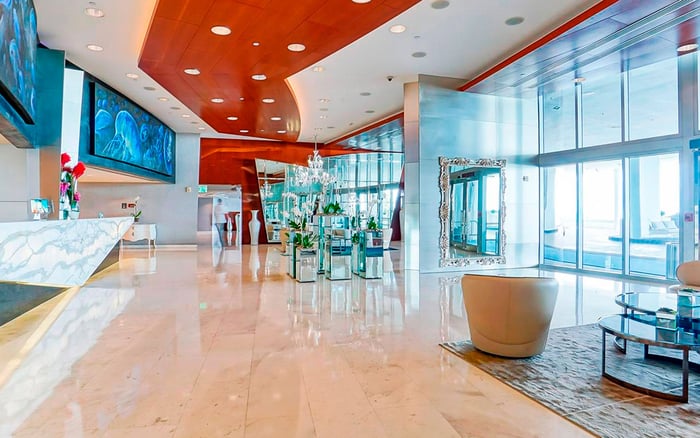
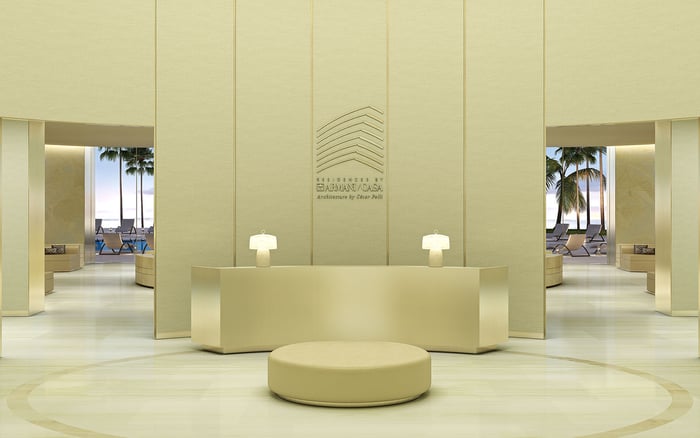
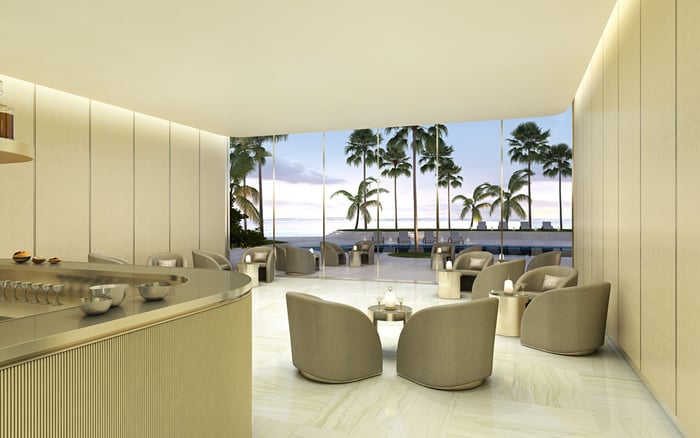
A discreet buyer-psychology comparison of three South Florida wellness archetypes: secluded sanctuary at Rosewood, urban refuge at Setai, and private-club ecosystem at Turnberry Ocean Club.
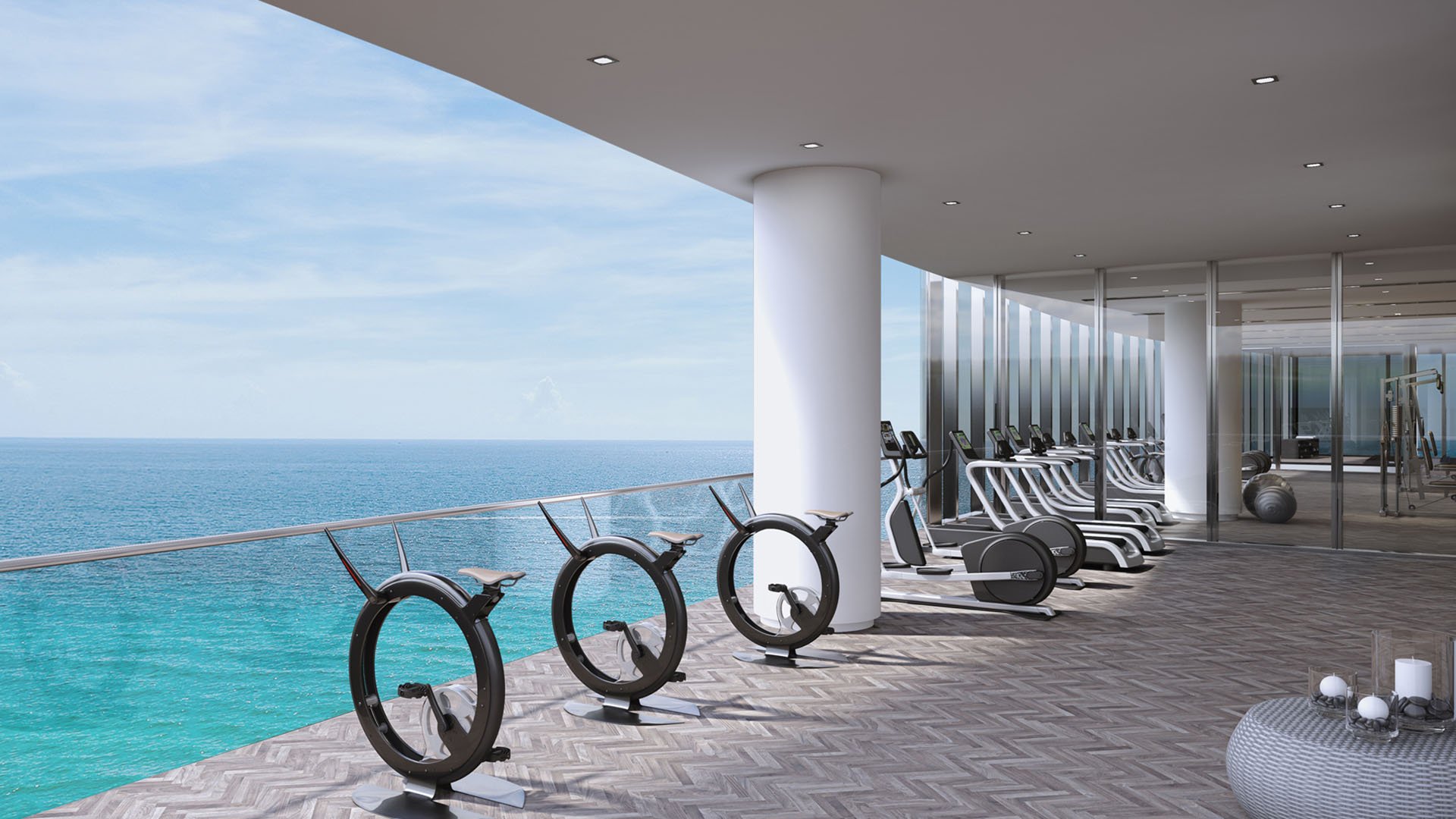
At the highest end of South Florida real estate, wellness has moved beyond a checklist and become a philosophy of daily life. Buyers are not simply asking whether a residence has spaces for restoration, social connection, or recreation. They are asking what the building makes easy, what it filters out, and what kind of routine it quietly protects.
That distinction matters when comparing Rosewood Residences Hillsboro Beach, Setai Residences Miami Beach, and Turnberry Ocean Club Sunny Isles. Each speaks to wellness, but each defines it through a different emotional architecture. Rosewood is about seclusion and decompression. Setai is about calm within proximity. Turnberry is about a private-club ecosystem shaped by activity, family, and community.
For a serious buyer, the real comparison is not which property sounds most impressive. It is which environment aligns with the life they are trying to protect.
Rosewood Residences Hillsboro Beach is the most sanctuary-oriented choice in this comparison. Its buyer logic begins with location and density rather than spectacle. On Hillsboro Beach’s Millionaire’s Mile, the appeal is rooted in separation from the intensity of larger urban districts. Wellness here is not performative. It is atmospheric.
For this buyer, oceanfront living is valuable because it supports a retreat-like rhythm. The daily experience is shaped by controlled surroundings, quieter coastal energy, and a sense of discretion that is increasingly rare in South Florida’s most visible luxury corridors. The Rosewood buyer is often less motivated by being near the center of everything and more motivated by being able to step away from it completely.
That does not mean disengagement from service or refinement. Rosewood’s logic is the opposite: personalized resort-level service in a quieter coastal setting. The buyer is seeking a residence that feels highly attended without feeling socially exposed. Privacy becomes a wellness feature. So does predictability. So does the ability to arrive home and feel the pace of the day slow immediately.
This is the right profile for buyers who view restoration as protection. They may entertain selectively, travel often, or split time across multiple homes, but when they are in South Florida, they want the residence to operate as a coastal exhale. Among the three, Rosewood is the clearest expression of low-density calm.
Setai Residences Miami Beach answers a different psychological need. Positioned as an Asian-inspired hotel-condo environment in Miami Beach, its wellness value is built around contrast. The buyer does not necessarily want to leave the energy of South Beach behind. They want a private refuge inside it.
This is the logic of the cosmopolitan wellness purchaser. Dining, culture, entertainment, and the familiar pulse of Miami Beach remain part of the appeal. Yet the residence itself must feel composed, design-led, and tranquil. The buyer wants access without surrendering serenity.
That balance is central to Setai’s appeal. Wellness here is not defined by distance from the city. It is defined by the ability to move between two states: the vitality of a dense urban district and the calm of a private residential environment. The property becomes a threshold between stimulation and stillness.
For buyers who are socially active, internationally mobile, or deeply attached to the Miami Beach lifestyle, this can be more compelling than isolation. They do not want wellness to mean withdrawal. They want wellness to mean control over contrast. In that sense, Setai is not competing with Rosewood on privacy alone. It is competing on the sophistication of the transition between public energy and private calm.
Turnberry Ocean Club Sunny Isles represents the most socially integrated wellness model in the group. In Sunny Isles Beach, its logic is less about retreat from people and more about creating a vertical private-club residential ecosystem. The buyer is often thinking beyond the individual owner and toward the household as a whole.
That distinction is important. Turnberry’s strongest appeal is to multigenerational families and club-oriented purchasers who want wellness to include activity, convenience, and shared experience. Quiet restoration still matters, but it is only one part of the equation. Wellness also includes social connection, recreation-oriented programming, spa-oriented infrastructure, and the ability for different generations to find their own rhythm within the same residential world.
For a family buyer, that can be decisive. A residence may need to satisfy children, visiting relatives, adult owners, and guests without requiring constant off-property coordination. Turnberry’s private-club framework supports that lifestyle logic. It is not just a home in a tower. It is a residential ecosystem where the day can expand vertically, socially, and recreationally.
The Sunny Isles Beach buyer choosing this model may be less concerned with maximum seclusion and more focused on whether the building can carry the lifestyle load. For them, wellness is not only silence. It is ease, activity, and belonging within a managed luxury environment.
Placed side by side, the three residences clarify the modern wellness decision in South Florida. Rosewood is for the buyer who wants privacy to be the foundation of health. Setai is for the buyer who wants serenity without giving up urban immediacy. Turnberry is for the buyer who wants wellness to include family infrastructure and private-club social life.
This is why an amenity-by-amenity comparison can mislead. A spa, a pool, or a service program may matter, but only within the larger life system the property creates. A buyer who needs seclusion may find a socially active environment overstimulating, even if it is beautifully executed. A buyer who thrives on Miami Beach access may find a quieter coastal address too removed. A multigenerational household may value integrated programming more than absolute stillness.
The best purchase is therefore not the one with the longest feature list. It is the one that removes friction from the buyer’s preferred life. For Rosewood, that friction is exposure. For Setai, it is the tension between urban access and private calm. For Turnberry, it is the complexity of managing family, wellness, and social life across a luxury household.
Begin with the rhythm of a normal week, not the fantasy of a vacation day. If the ideal week is quiet, contained, service-rich, and largely private, Rosewood deserves close attention. If the ideal week includes restaurants, culture, and the energy of Miami Beach balanced by a tranquil private setting, Setai is the more natural fit. If the ideal week involves family members moving through different activities while remaining inside a cohesive residential environment, Turnberry becomes especially persuasive.
The second question is tolerance for proximity. Some buyers recharge through distance. Others recharge through choice. Rosewood gives distance. Setai gives contrast. Turnberry gives a controlled social field. None is inherently superior. Each is built around a different definition of wellness.
Finally, consider resale psychology through the lens of identity. These properties will likely attract buyers who understand the archetype quickly. The Rosewood buyer sees sanctuary. The Setai buyer sees an urban refuge. The Turnberry buyer sees a private club in the sky. When a residence has a clear emotional proposition, the purchase decision often becomes more confident.
Which property is best for buyers who want the most secluded wellness experience? Rosewood is the clearest fit because its buyer logic centers on privacy, discretion, and low-density oceanfront calm.
Which property fits buyers who still want access to Miami Beach energy? Setai is best aligned with buyers who want serenity while remaining connected to dining, culture, and entertainment in Miami Beach.
Which property is most family-oriented in this comparison? Turnberry is the strongest fit for multigenerational families and buyers who value private-club infrastructure.
Is wellness here mainly about spa amenities? No. The stronger lens is the total life system each residence supports, from privacy to social connection to daily convenience.
Why would a buyer choose Rosewood over Setai? A buyer would choose Rosewood if quiet coastal sanctuary matters more than immediate urban access.
Why would a buyer choose Setai over Rosewood? Setai makes sense for a buyer who wants a calm, design-led refuge without disconnecting from the South Beach lifestyle.
Why would a buyer choose Turnberry over the other two? Turnberry fits buyers who want wellness to include activity, family-friendly social infrastructure, and a club-like environment.
Does Sunny Isles Beach change the Turnberry buyer profile? Yes. Sunny Isles Beach supports a residential resort mindset where private-club living and oceanfront luxury can work together.
Are these properties competing for the same buyer? Only partially. They overlap in luxury positioning, but their wellness archetypes attract different daily-life priorities.
What is the simplest way to decide among them? Choose Rosewood for sanctuary, Setai for urban refuge, and Turnberry for a private-club ecosystem.
For a tailored shortlist and next-step guidance, connect with MILLION.
If branded residences are on your mind — as a home or as an allocation — we would be glad to share what we are seeing, privately.
Begin a quiet conversation