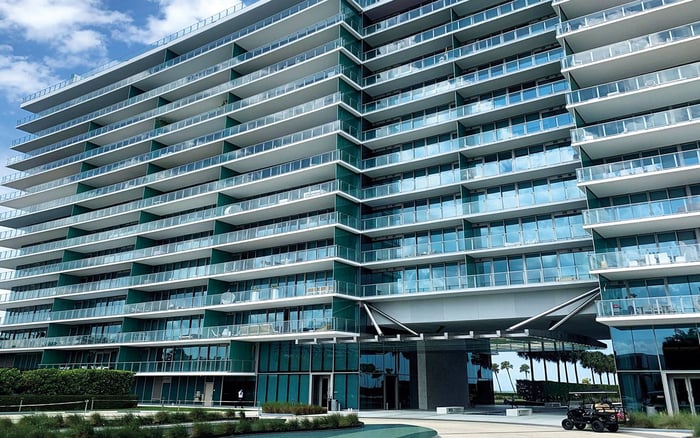
A buyer-focused underwriting guide comparing Viceroy Brickell and Park Grove Coconut Grove through intended use, association rules, rental assumptions, carrying costs, and long-term livability. The conclusion is not universal superiority, but fit: urban flexibility and document review on one side, residential continuity and bayfront Grove living on the other.
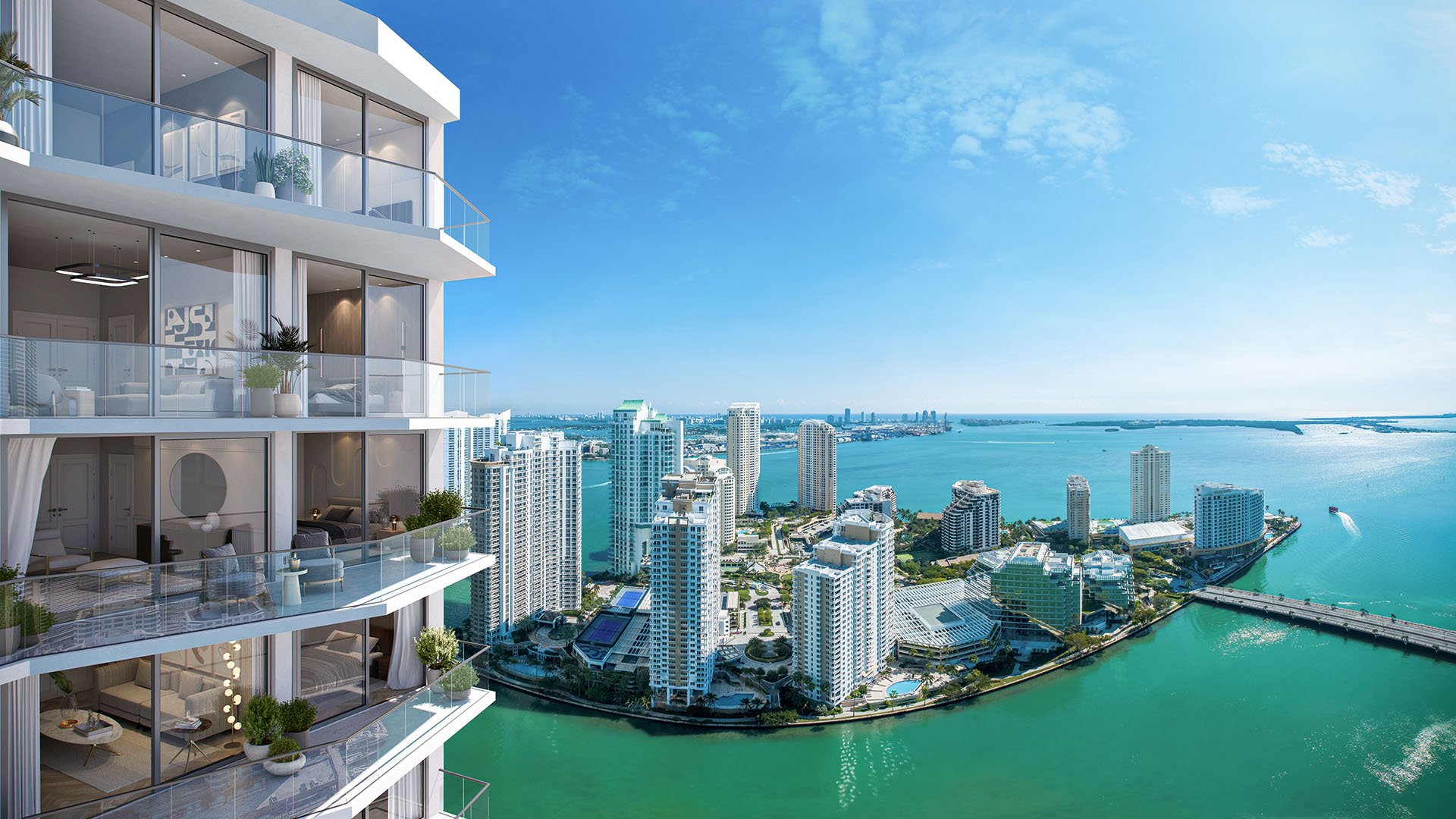
For sophisticated Miami buyers, the more useful comparison is not whether Viceroy Brickell or Park Grove Coconut Grove is categorically superior. The sharper question is what each ownership profile requires you to underwrite. On one side is Brickell, with its financial-district energy, dense vertical living, and a market often assessed through access, turnover, and urban convenience. On the other is Park Grove Coconut Grove, a bayfront luxury condominium environment that reads as more residential, more long-stay-oriented, and more aligned with the rhythms of a neighborhood than a central business district.
That distinction matters because lifestyle and investment logic do not always point in the same direction. A buyer seeking a primary residence, an extended seasonal base, or a quieter household setting may value residential continuity over maximum rental optionality. A buyer focused on flexibility should avoid assumptions. Especially with Viceroy Brickell, any conclusion about rental permissions, lease minimums, hotel-style use, or management structure should be verified through current governing documents rather than inferred from the name or neighborhood.
The first underwriting exercise is personal: how will the residence actually be used over the next five to ten years? If the answer is primary residence, extended winter occupancy, or a second home used repeatedly by the same household, Park Grove’s Coconut Grove positioning becomes clearer. Its value proposition is tied less to maximum short-stay velocity and more to a bayfront enclave where privacy, neighborhood feel, and residential consistency matter.
If the answer is income flexibility, guest turnover, or a strategy built around variable occupancy, the buyer should proceed carefully and document every assumption. Labels such as Condo-hotel, Short-term-rentals, Long-term-rentals, and Investment can be useful search categories, but they are not substitutes for legal and association review. A building can feel hospitality-oriented and still carry restrictions that materially affect income strategy, guest use, owner access, and financing comfort.
For Park Grove Coconut Grove, the underwriting frame is different. The question is not chiefly how to extract the broadest possible rental use from the asset. It is whether the buyer wants Coconut Grove’s bayfront residential ecosystem, accepts the association structure that supports that environment, and values a setting designed for longer, steadier occupancy.
In luxury condominium underwriting, association rules are not administrative details. They are part of the asset. The most elegant lobby, view line, or amenity suite can be compromised if the rules do not align with how the buyer intends to live, host, lease, renovate, or travel.
For Park Grove, the review should include lease minimums, guest-use rules, pet policies, move-in procedures, renovation approvals, contractor access, elevator reservations, and any limits that affect household operations. These items are especially important for buyers coming from single-family homes, where control is more private, or from less formal buildings, where enforcement may feel lighter. A luxury bayfront condominium often protects its residential character through rules, and those rules can be a feature for one buyer and a friction point for another.
For Viceroy Brickell, the same discipline applies, with even more caution around assumptions. A buyer should request and review current declarations, bylaws, house rules, rental policies, budget materials, insurance information, reserve disclosures, and any management-related documents that affect use. If a purchase thesis depends on flexibility, the documents must support that thesis clearly.
Brickell and Coconut Grove are not merely different neighborhoods. They create different ownership exposures. Brickell is Miami’s vertical financial core, where access to offices, restaurants, transit connections, and dense urban activity shapes buyer psychology. That can be compelling for an owner who wants immediacy and an urban base.
Coconut Grove offers a different proposition. Park Grove is tied to bayfront residential demand, neighborhood texture, and a quieter setting than the Brickell urban core. The underwriting case is therefore less about central business district rental turnover and more about whether affluent buyers continue to prize privacy, water proximity, and a mature residential village atmosphere.
In portfolio terms, this is a Brickell versus Coconut-grove decision as much as it is a Viceroy Brickell versus Park Grove Coconut Grove decision. One side asks how much the buyer values urban liquidity and optionality. The other asks how much the buyer values neighborhood permanence, bayfront calm, and residential identity.
Luxury buyers sometimes separate lifestyle from underwriting, as if livability were a soft preference rather than a financial input. In practice, livability affects hold period, resale audience, maintenance tolerance, and the likelihood that an owner remains satisfied through market cycles.
Park Grove’s long-term case rests on that point. A buyer who prioritizes privacy, neighborhood feel, and residential continuity may find the Grove’s quieter cadence more durable than a purely flexibility-driven ownership model. The project should be evaluated as a luxury bayfront enclave where buyer fit depends heavily on use case, household profile, and tolerance for association restrictions.
Carrying costs deserve equal attention. Buyers should underwrite insurance, reserves, maintenance fees, future association obligations, and special-assessment risk. These are not unique concerns to Park Grove, but they are essential in any high-service condominium. The stronger the buyer’s desire for long-term ownership, the more important it becomes to determine whether the building’s financial structure feels sustainable and transparent.
A disciplined buyer should begin with a written use-case statement. If the residence is primarily for personal enjoyment, family continuity, seasonal stays, or a future primary home, Park Grove’s residential posture may support the thesis. If the residence is meant to operate with high flexibility, frequent guest use, or a rental-forward approach, the buyer should avoid shorthand and obtain exact rules before pricing the asset.
The next step is to stress-test inconvenience. Would stricter guest rules be comforting or frustrating? Would renovation approvals feel protective or burdensome? Would a quieter residential setting feel restorative or too removed from the Brickell pace? Would urban density feel energizing or exhausting after the initial purchase glow fades?
The final step is resale audience analysis. Park Grove is likely to resonate most with buyers seeking the Coconut Grove bayfront lifestyle and extended-stay suitability. Viceroy Brickell should be evaluated through the buyer pool that values Brickell access, but only after the ownership and association framework is documented. Neither answer is universally correct. The premium belongs to the building that best matches the owner’s real behavior.
Is Park Grove Coconut Grove more residential than Viceroy Brickell? Park Grove should be evaluated as the more residential, long-stay-oriented option in this comparison, especially for buyers prioritizing Coconut Grove’s bayfront setting.
Can I assume Viceroy Brickell allows flexible rentals? No. Any rental thesis for Viceroy Brickell should be confirmed through current governing documents, association rules, and applicable policies before underwriting.
What documents should a buyer review first? Review declarations, bylaws, house rules, rental policies, budgets, reserves, insurance information, and any renovation or guest-use procedures.
Is Park Grove better for a primary residence? Park Grove’s underwriting angle is strongest for primary-home and extended-stay suitability, particularly for buyers who value privacy and neighborhood continuity.
Which option is better for Investment? The better Investment depends on use case, rule tolerance, carrying costs, and resale audience rather than a simple building-to-building ranking.
Are association restrictions always negative? No. Restrictions can protect residential quality, privacy, and building consistency, but they must align with the owner’s intended lifestyle.
Why does neighborhood matter so much in this comparison? Brickell and Coconut Grove attract different buyer motivations, with Brickell emphasizing urban access and Coconut Grove emphasizing bayfront residential demand.
What Park Grove costs should be underwritten beyond price? Buyers should examine maintenance fees, insurance, reserves, future association obligations, and possible special-assessment exposure.
Is this a Condo-hotel versus traditional condominium decision? It may be tempting to frame it that way, but any Condo-hotel conclusion must be verified through current documents rather than assumed.
Who is the best fit for Park Grove? Park Grove best fits buyers who value Coconut Grove, long-term livability, privacy, and a residential bayfront environment over maximum rental flexibility.
For a confidential assessment and a building-by-building shortlist, connect with MILLION.
If branded residences are on your mind — as a home or as an allocation — we would be glad to share what we are seeing, privately.
Begin a quiet conversation