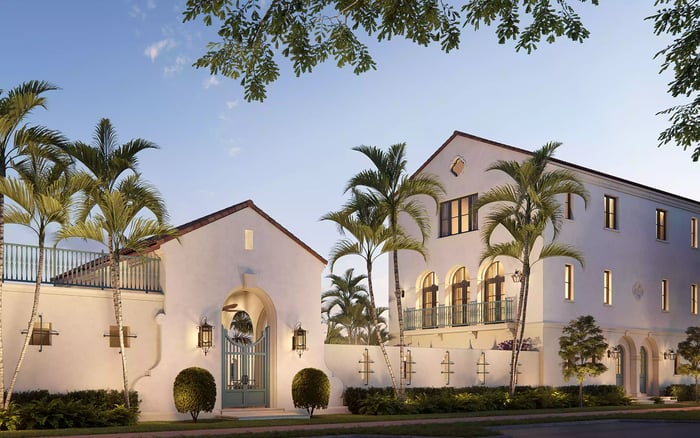
At Cora Merrick Park, the cabana-rights conversation is less about amenity allure and more about legal structure, transferability, and buyer diligence.

At the upper end of South Florida residential real estate, the most coveted amenities are rarely just amenities. A private-feeling retreat beside a pool, a wellness-adjacent lounge, or a shaded outdoor room can become part of how an owner actually lives in a vertical residence. At Cora Merrick Park, the cabana-rights conversation belongs in that more serious category.
The central question is deceptively simple: do you own the cabana, hold an exclusive-use right, or merely enjoy access under a revocable arrangement? The answer can change the economics of the purchase, the security of the privilege, and the way the asset behaves on resale.
That is why cabana rights should not be treated as decorative sales language. They sit at the intersection of title, condominium governance, association control, municipal approvals, budgeting, maintenance, and future transferability. For a buyer, the cabana may look like lifestyle. For counsel, lenders, appraisers, and future purchasers, it may be a distinct asset with its own risk profile.
Coral Gables buyers tend to be sophisticated about architecture, location, privacy, and long-term value. Yet amenity rights can be overlooked because they feel secondary to the residence itself. That is precisely where the diligence issue begins.
In high-service South Florida buildings, cabanas can function as extensions of the home, especially where private outdoor space is limited or where the amenity environment carries social and status value. The fewer the cabanas, and the closer they sit to premium common areas, the more meaningful the right can become.
Scarcity alone, however, does not create ownership. A buyer must understand whether the cabana interest is embedded in the unit, assigned as a limited common element, separately conveyed, licensed by the association, or subject to a management agreement that can change over time. The form matters because it determines what can be sold, financed, taxed, maintained, or revoked.
The strongest cabana position is often the one clearly described in recorded documents. If a cabana is treated as real property or as a separate condominium unit, the buyer may have a more defined estate, subject to the exact documents governing the project. That can affect how the interest is valued and transferred.
A second structure is the limited common element. In that case, the cabana may remain part of the common property while being reserved for the exclusive use of a particular unit or owner. This can be valuable, but the declaration must be precise about exclusivity, transfer rights, maintenance, insurance, and whether the right travels with the residence.
A third model is an assignment or allocation controlled by the association or developer. It may look exclusive in practice, but the buyer should determine whether it is permanent, conditional, or subject to board approval.
The weakest position is usually a revocable license. A license may allow use, but it may not create durable ownership. If the license can be changed, reassigned, terminated, or limited, the cabana should be valued differently from a deeded or clearly protected interest.
The luxury market often communicates amenities through mood and imagery. That helps convey the intended lifestyle, but it is not enough for underwriting cabana rights. Buyers should request and review the declaration of condominium, plats, surveys, municipal approvals, management agreements, association budgets, and any recorded exhibits that describe amenity areas.
The declaration is especially important because it may define common elements, limited common elements, units, appurtenant rights, allocation procedures, owner obligations, and board powers. Plats and surveys may clarify whether the relevant physical area is separately identified or folded into broader common property. Municipal approvals may show how amenity spaces were authorized. Budgets may reveal who pays to maintain, staff, insure, repair, or replace the cabana area.
The practical concern is ambiguity. If the documents do not clearly state what the buyer receives, the buyer may later face uncertainty about exclusivity, transferability, maintenance obligations, assessments, or revocability. In a luxury acquisition, uncertainty is not merely a legal nuisance. It can become a valuation issue.
For an investment-minded buyer, cabana rights deserve separate underwriting. A residence with a durable cabana interest may present differently from a residence with informal amenity access, even if both feel similar during a sales tour. The distinction can influence buyer demand, perceived scarcity, and negotiating leverage.
The ownership structure may also affect financing and tax treatment. A separately recognized real-property interest may be evaluated differently from a license or association-controlled privilege. The same is true at exit. If the cabana cannot be transferred, or if transfer requires approval, the resale narrative changes.
This is where new-construction diligence becomes especially important. Early purchasers often make decisions before an association has an operating history. Budgets, management structures, and governing documents therefore carry extra weight. In a new project, an amenity promise may feel immediate, but the durable right exists only if the legal structure supports it.
A disciplined buyer should begin by asking for the precise legal classification of any cabana-related entitlement. The question should not be phrased casually as, “Is a cabana included?” Instead, ask whether the interest is deeded, appurtenant, assigned, licensed, limited, transferable, inheritable, financeable, taxable, and revocable.
Next, confirm whether the right travels with the residence automatically or requires a separate instrument, board approval, payment, or reassignment. If the right is tied to a particular unit, the documents should say so. If it is controlled through association rules, the buyer should understand how those rules can be amended.
Then review costs. Maintenance, cleaning, staffing, insurance, replacement reserves, and capital repairs can sit with the association, the individual holder, or a hybrid arrangement. A cabana that feels private may still be supported by common funds, individual fees, or future assessments.
Finally, consider future buyer psychology. In South Florida, amenity competition is intense, and exclusive wellness, spa, club, and outdoor spaces can help distinguish one residence from another. But future buyers will ask the same fundamental question: what exactly is being conveyed?
The cabana-rights issue at Cora Merrick Park is not a minor footnote. It is a governance and title question that belongs beside the purchase contract, condominium declaration, budget, and closing diligence checklist. The most elegant amenity is the one whose rights are clearly documented.
For buyers, the goal is not to diminish the lifestyle appeal of a cabana. It is to price the right correctly. A deeded or clearly protected entitlement may carry one value. A limited common element may carry another. A revocable license may offer pleasure without the same permanence.
In the most refined transactions, certainty is a luxury of its own.
What is the main cabana-rights question at Cora Merrick Park? The key question is whether the cabana interest is ownership, exclusive use, a separate unit, a limited common element, or a revocable license.
Should buyers assume a cabana is included with a residence? No. Buyers should treat any cabana entitlement as a separate diligence item unless the governing documents clearly say otherwise.
Which documents should be reviewed? Buyers should review the declaration of condominium, plats, surveys, municipal approvals, management agreements, and association budgets.
Why does legal structure affect value? The structure can influence transferability, financing, tax treatment, maintenance costs, and resale appeal.
What is a limited common element? It is typically common property reserved for the exclusive use of a specific owner or unit, subject to the condominium documents.
Is a revocable license the same as ownership? No. A revocable license may allow use, but it may not provide durable ownership or guaranteed transfer rights.
Can cabana rights affect future negotiations? Yes. A clearly documented cabana right may strengthen a seller’s position, while ambiguity can invite discounting or extra conditions.
Who pays for cabana maintenance? Payment responsibility depends on the governing documents, budget structure, and any agreements tied to the amenity area.
Why are cabanas important in South Florida luxury buildings? They can extend the living experience beyond the residence and carry lifestyle, privacy, scarcity, and status value.
What should a buyer ask before relying on cabana access? Ask whether the right is exclusive, transferable, revocable, separately assessed, and clearly recorded in the project documents.
If you'd like a private walkthrough and a curated shortlist, connect with MILLION.
If branded residences are on your mind — as a home or as an allocation — we would be glad to share what we are seeing, privately.
Begin a quiet conversation