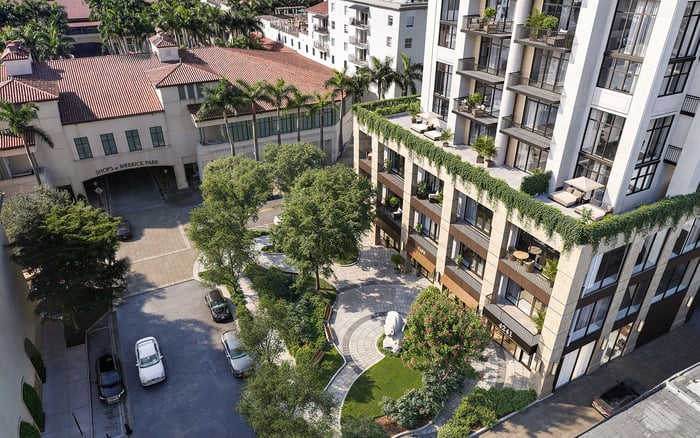
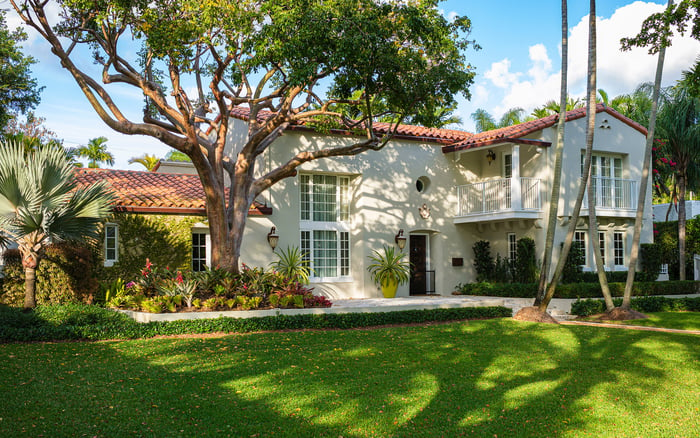
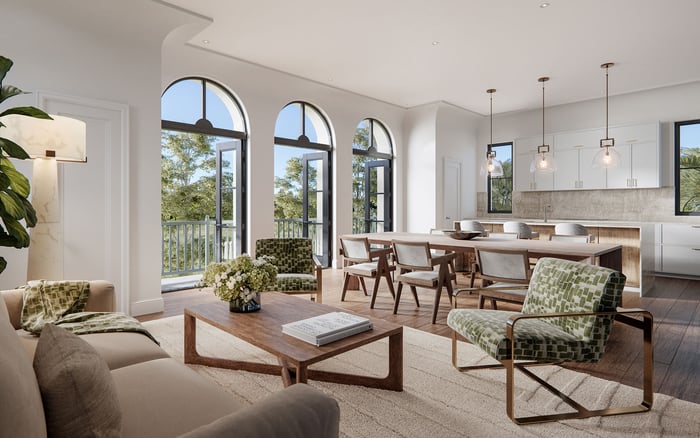
A buyer-focused editorial guide to evaluating Cora Merrick Park as a Coral Gables residence for privacy-sensitive remote work, confidential calls, and discreet advisor visits.
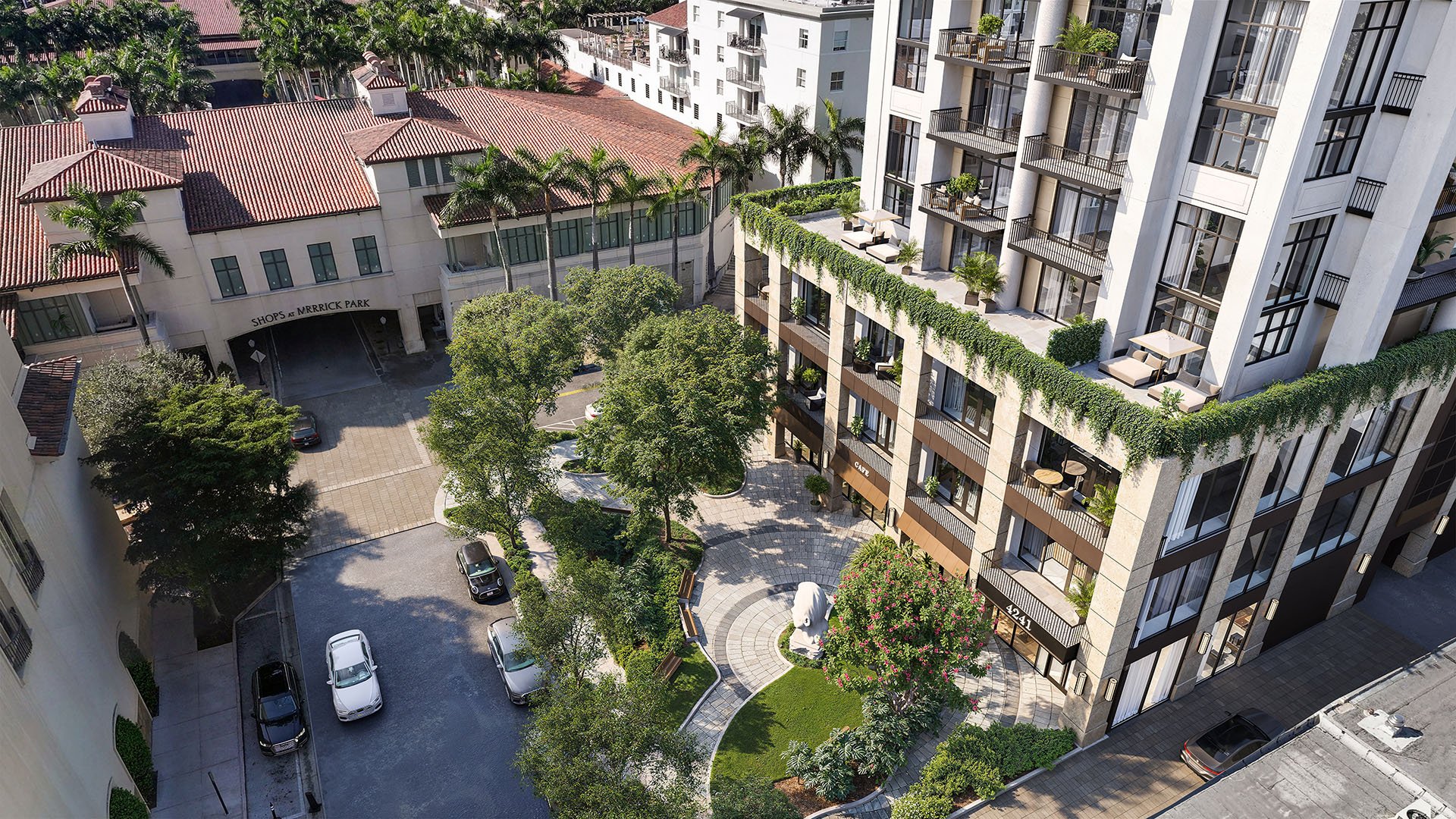
For a certain South Florida buyer, the home office is no longer a secondary room with a desk. It is a controlled environment for capital decisions, legal conversations, confidential family matters, and video calls where discretion is not decorative, but operational. Cora Merrick Park should be evaluated through that lens: not only as a Coral Gables residence near Merrick Park, but as a potential platform for secure remote work and discreet professional consultations.
The right buyer is often privacy-sensitive and professionally mobile. They may work with wealth managers, attorneys, family-office staff, accountants, trustees, or other trusted advisors who occasionally come to the residence. For this audience, work-from-home suitability depends on unit selection, floor-plan discipline, building operations, and the buyer’s own due diligence. The question is not simply whether there is room for a desk. The question is whether the residence can preserve the boundary between household life and confidential work.
Within a South Florida search, Cora Merrick Park also benefits from the tone of Coral Gables and Merrick Park: more residential, more measured, and less overtly commercial than denser Miami business districts. For buyers comparing search categories, the relevant vocabulary may include Cora Merrick Park, Coral-gables, New-construction, Boutique, Exclusive-area, and Terrace priorities, but those labels matter only if the actual unit and building procedures support how the buyer lives and works.
Merrick Park’s appeal is not just convenience. It is the ability to live in a polished residential setting while remaining close to dining, retail, and professional services that can support off-site meetings when a conversation should not happen at home. A remote executive may want to host an advisor in the residence one morning, then move a more social discussion to a nearby restaurant later in the day. That flexibility is part of the location’s utility.
Coral Gables also gives privacy-minded buyers a different rhythm than high-density waterfront or downtown corridors. There is still access to Miami’s professional ecosystem, but the daily experience can feel more controlled. For private-call buyers, that matters. The calmer the setting, the easier it may be to maintain a residence that feels like a home first and a professional command center only when needed.
Still, location alone cannot solve privacy. Buyers should test how they would actually move through a workday: where a confidential call starts, where a family member enters, where an advisor waits, and how a guest departs without intersecting with private routines. A beautiful address is only part of the answer.
The most important diligence point is separation. Buyers should evaluate whether the residence can keep work activity away from bedrooms, main entertaining areas, and high-traffic family zones. A dedicated office is ideal, but a secondary work nook or flexible room may also work if it has the right relationship to entries, corridors, bathrooms, and living spaces.
A private-call room should not rely entirely on etiquette. If every call requires the household to become silent, the plan is not truly resilient. Buyers should walk the layout as if a confidential virtual meeting is taking place while someone else is cooking, a child is returning home, or a service provider is at the door. If the only suitable work area is exposed to the living room, the unit may function beautifully for occasional email but less effectively for serious confidential work.
For visiting advisors, the test is equally practical. Can a guest arrive, be received, and meet without seeing private family routines? Is there a powder room or suitable guest path that does not require access to bedrooms? Can a meeting take place without turning the main entertaining area into an office? These questions are not aesthetic. They define whether the residence can absorb professional use without changing the emotional character of the home.
For private calls, acoustic privacy is central. Buyers should verify how walls, doors, windows, and adjacent-unit conditions affect sound transfer. A room may look perfect on a floor plan yet fail the practical test if voices carry into common areas, adjoining rooms, corridors, or neighboring residences.
The diligence should be physical, not theoretical. Stand in the proposed office while another person speaks at normal call volume. Close doors. Test the room at different times of day. Consider whether window exposure, hallway adjacency, elevator proximity, or shared walls could affect confidentiality. If a buyer expects sensitive legal or financial conversations to happen regularly, the room should be evaluated with the same seriousness as a primary suite or view line.
Because public technical specifications may be limited, buyers should avoid assuming sound performance. They should ask direct questions during due diligence and, when appropriate, bring in advisors who can evaluate acoustic treatments after purchase. The goal is not to turn the residence into a studio. The goal is to ensure professional discretion is not compromised by ordinary household acoustics.
The visiting-advisor use case makes building operations unusually important. Lobby procedures, elevator flow, guest-management policies, and access protocols all shape the experience. A wealth manager carrying sensitive documents, an attorney arriving for a family matter, or a family-office representative coordinating with household staff should be handled with the same discretion as any valued guest.
Buyers should ask how visitors are announced, where they wait, how service providers are managed, and whether guest arrivals are visible to other residents in ways that matter to the buyer. They should also consider package handling, staff interactions, and the degree of routine exposure created by repeated professional visits. Privacy is not only about locked doors. It is also about the choreography of daily life.
This is where a buyer’s personal pattern becomes decisive. Someone with quarterly advisor meetings may need less operational support than someone who receives confidential visitors weekly. The right residence should match the cadence of the buyer’s professional life rather than force that life into public spaces.
A residence that cannot support a flawless video call is not fully work-ready. Buyers should verify internet redundancy, cellular reception, Wi-Fi coverage, and the ability to support professional-grade video calls in the rooms where work will actually occur. Power resilience should also be discussed, especially for buyers whose work cannot tolerate interruption.
The most useful test is simple: imagine a high-stakes call on a day when the household is active and the weather is imperfect. Can the office function without compromise? Is the cellular signal reliable in the intended workspace? Can equipment be positioned elegantly without visible clutter? Are there suitable locations for routers, backup devices, printers, or secure storage if the buyer needs them?
Cora Merrick Park may be compelling for the right remote professional, but buyers should not assume work-from-home readiness from location or presentation alone. The strongest purchase process will treat privacy, acoustics, access, and technology as core components of value.
Before contract, buyers should identify the exact room or rooms that will carry professional use. Then they should test how those rooms perform with doors closed, visitors present, family life in motion, and devices connected. This is the difference between a residence that merely accommodates remote work and one that supports it with grace.
They should also ask building-specific questions without presuming answers: how guests are received, how advisors are directed, how staff interactions are managed, how packages are handled, and what options exist for improving connectivity inside the unit. For this buyer, discretion is not a finishing touch. It is part of the purchase thesis.
Is Cora Merrick Park appropriate for buyers who work from home? It may be, depending on unit selection, layout, acoustic conditions, and building operations. Buyers should verify the specific residence rather than assume readiness.
What is the most important floor-plan issue for private calls? Separation is the first test. The work area should be away from bedrooms, main entertaining zones, and heavy household circulation.
Can visiting advisors meet at the residence discreetly? That depends on guest flow, lobby procedures, elevator access, and how the unit receives visitors. Buyers should test the arrival-to-meeting path in detail.
Which advisors are most relevant to this use case? Wealth managers, attorneys, family-office staff, accountants, trustees, and other trusted professionals may all require discreet residential access.
How should buyers evaluate acoustic privacy? They should test voice transfer through doors, walls, windows, corridors, and adjacent spaces. Normal call volume is the practical benchmark.
Does a flexible room work as well as a dedicated office? It can, if it provides privacy, power, connectivity, and separation from household routines. The room’s location matters as much as its size.
Why does Merrick Park matter for remote professionals? The neighborhood can support a more residential rhythm while offering nearby dining, retail, and professional services for off-site meetings.
What technology should buyers verify? Internet options, redundancy, cellular reception, Wi-Fi coverage, power resilience, and video-call performance should be reviewed before purchase.
Should buyers ask about packages and service providers? Yes. Package handling, staff contact, and service-provider movement can affect discretion for buyers who work with sensitive information.
Is work-from-home value the same in every unit? No. Work-from-home suitability depends on the specific floor plan, exposure, acoustic behavior, and operational details of the selected residence.
When you're ready to tour or underwrite the options, connect with MILLION.
If branded residences are on your mind — as a home or as an allocation — we would be glad to share what we are seeing, privately.
Begin a quiet conversation