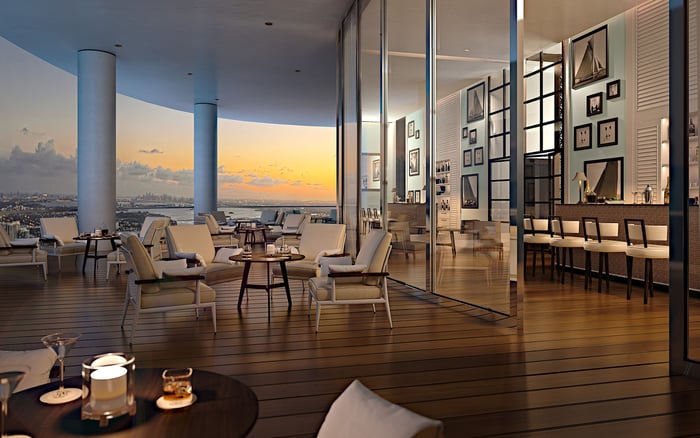
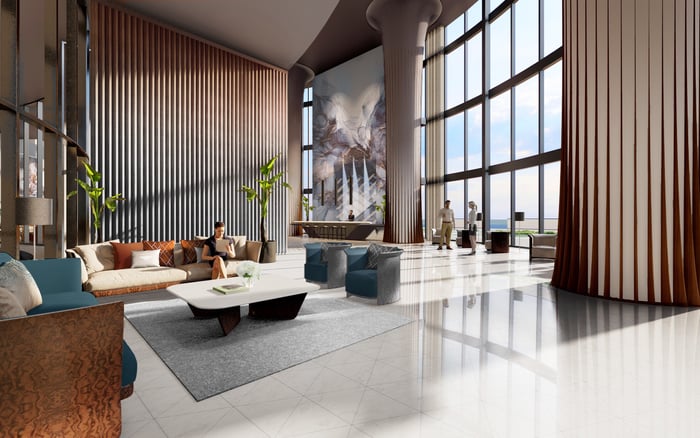
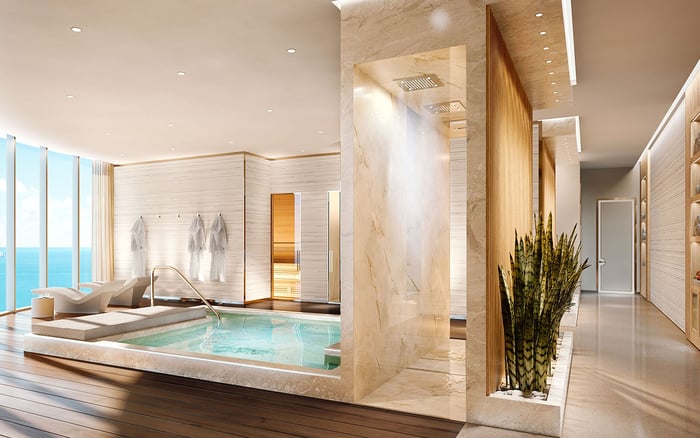
At Turnberry Ocean Club, selecting a residence requires more than choosing a floor plan. This buyer-focused guide examines how line, height, exposure, amenity proximity, privacy, wind, noise, and due diligence shape the lived experience.
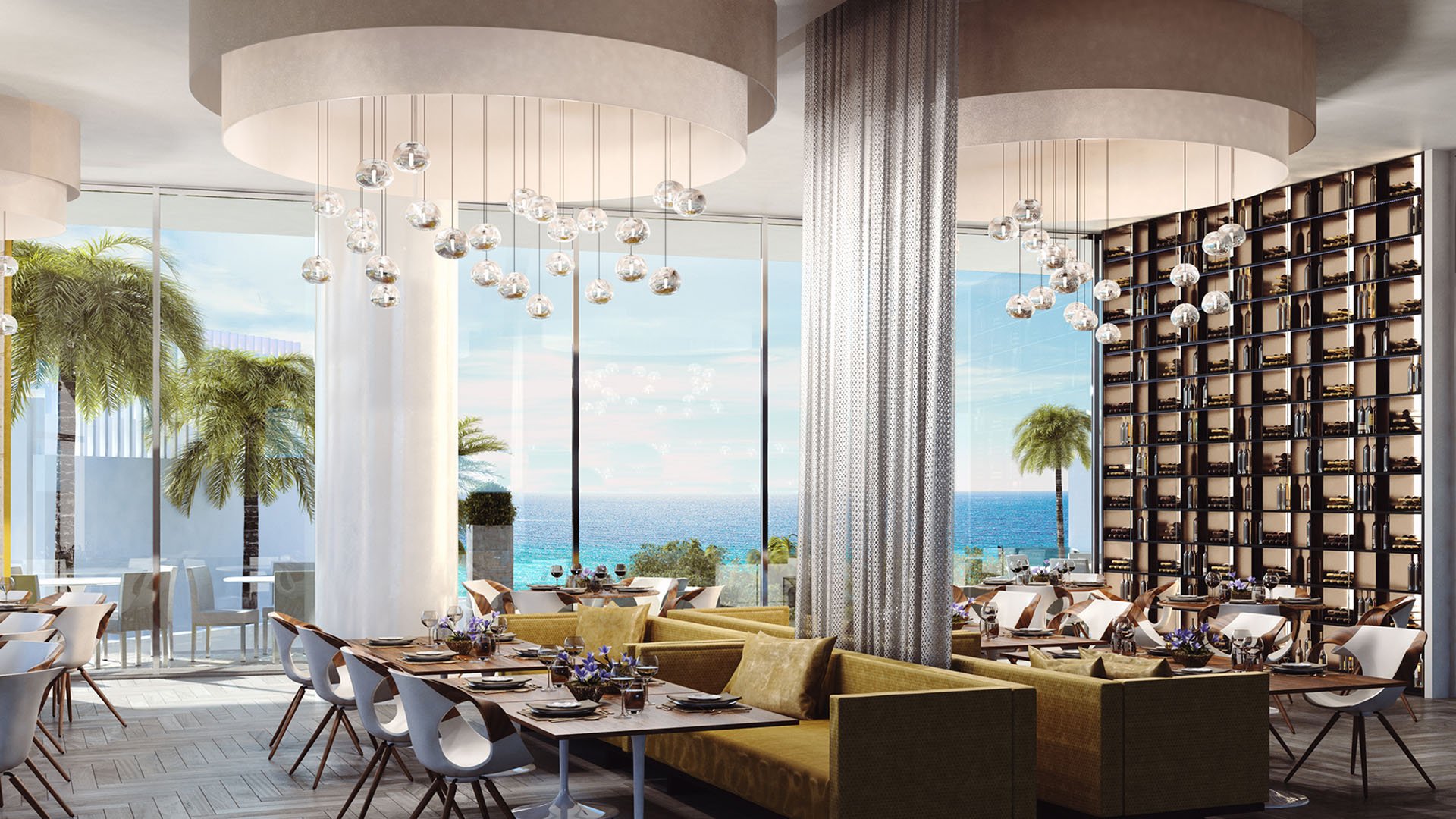
The sales gallery presents a complete vision: oceanfront living, resort-style amenities, personalized service, and the hospitality-minded character associated with Turnberry. Yet a buyer ultimately owns a specific residence, not the building’s marketing proposition. At Turnberry Ocean Club Sunny Isles, the decisive questions center on the exact line, floor, orientation, and relationship to the tower’s sculptural form.
A line is the vertical stack of residences that shares a floor plan, orientation, and position within the building. The plan may repeat; the experience does not. Height can alter privacy, shade, wind, outside noise, and the breadth of a view corridor. In Sunny Isles Beach, those distinctions deserve the same scrutiny as finishes and amenities.
Labels such as Oceanfront, High-floors, and Balcony are useful starting points, not substitutes for residence-specific analysis.
Begin with a marked floor plate, not a standalone plan. Ask the sales team to identify the residence’s principal exposures, neighboring stacks, balcony position, structural geometry, elevator core, service circulation, and nearby operational spaces. Because the tower has a sculptural profile rather than a conventional rectilinear shape, two plans that appear comparable on paper may relate very differently to the building envelope.
Request floor-specific answers to practical questions. Which rooms receive direct sun, and when? Does the balcony look past another part of the tower? Can neighboring terraces see into the primary living spaces? Is the view apparent from the seating area and kitchen, or only when standing at the glass? These details define daily life more precisely than a broad ocean-facing description.
Treat each rendering as a prompt for questions. Confirm whether it depicts the precise line and floor under consideration or an idealized high-floor perspective. Ask about the camera position, direction of view, and any assumptions concerning surrounding development.
Apply the same discipline when comparing other architecturally distinctive Sunny Isles properties, including Jade Signature Sunny Isles Beach and The Ritz-Carlton Residences® Sunny Isles. A building’s identity may be clear, while the experience within each stack remains highly specific.
If the residence is available to visit, prioritize direct observation over generalized imagery. Stand in the main living area, primary bedroom, kitchen, and balcony. Look laterally as well as outward. A compelling horizon may coexist with a close neighboring sightline, reflected glare, or a view partially framed by the tower itself.
The multi-level Sky Club, positioned around the middle of the tower, is central to Turnberry Ocean Club’s amenity concept. Its convenience is part of the appeal, but proximity merits careful evaluation.
Ask whether the contemplated floor sits above, below, or near amenity operations. Confirm the locations of pools, mechanical equipment, elevators, service corridors, staff areas, and other circulation. The objective is not automatically to maximize distance. Some owners may value swift access; others may place a premium on separation. What matters is understanding the tradeoff before selecting a line.
“Higher” is not a complete buying strategy. Residences within one line can feel materially different from floor to floor because elevation affects openness, privacy, wind, shade, and sound. Whenever possible, visit the exact residence at multiple times of day. Observe morning and afternoon light, glare across glass surfaces, balcony wind, traffic noise, and changing ocean conditions.
Comparing newer Sunny Isles offerings such as Bentley Residences Sunny Isles can sharpen the buyer’s brief. The purpose is not to assume equivalence, but to clarify priorities: service culture, architectural expression, amenity access, privacy, and how a particular residence meets the water and skyline.
Before committing, request the recorded condominium documents, current budget, reserve information, engineering reports, mechanical plans, floor-specific view material, and available information about neighboring development. Have the appropriate legal, financial, and technical advisers review them.
Ask specifically about noise and vibration near elevators, service corridors, mechanical spaces, amenity floors, pools, loading areas, and staff operations. Where appropriate, confirm verbal representations in writing. The building may be boutique in scale and service-oriented in concept, but due diligence must still reach the level of the individual residence.
A disciplined buyer can distill the decision into five priorities: exposure, view resilience, privacy, operational adjacency, and balcony comfort. Rank them before negotiating. Then score each candidate residence against the same criteria rather than allowing a dramatic rendering or higher floor alone to determine the outcome.
The best line is not universal. It is the one whose orientation, elevation, relationship to circulation, and sensory conditions align with how the owner intends to live.
What does a condo line mean at Turnberry Ocean Club? It is a vertical stack of residences that generally shares a floor plan, orientation, and position within the tower.
Can residences in the same line feel different? Yes. Height can change views, privacy, shade, wind, and exposure to outside noise.
Should buyers rely on sales-gallery renderings? Renderings are useful, but buyers should confirm that each image represents the exact line and floor under consideration.
Why does orientation matter in an oceanfront tower? Orientation influences principal views, direct sunlight, glare, shade, and the residence’s relationship to surrounding buildings.
Is a higher floor always preferable? No. Greater elevation may improve openness, but it can also change wind, balcony comfort, amenity access, and the character of the view.
Why should buyers examine Sky Club proximity? Its mid-tower position can make access convenient, while nearby operations and circulation warrant residence-specific review.
Which operational areas deserve attention? Check proximity to elevators, service corridors, mechanical spaces, pools, loading areas, staff functions, and amenity circulation.
When should a buyer visit the residence? Visit at multiple times of day to assess sunlight, glare, wind, privacy, traffic noise, and ocean conditions.
Which documents should be reviewed before choosing a line? Request condominium documents, the current budget, reserve information, engineering reports, mechanical plans, and floor-specific view materials.
How should two candidate lines be compared? Apply the same priorities to both, including exposure, view corridors, privacy, operational adjacency, and balcony comfort.
For a tailored shortlist and next-step guidance, connect with MILLION.
If branded residences are on your mind — as a home or as an allocation — we would be glad to share what we are seeing, privately.
Begin a quiet conversation