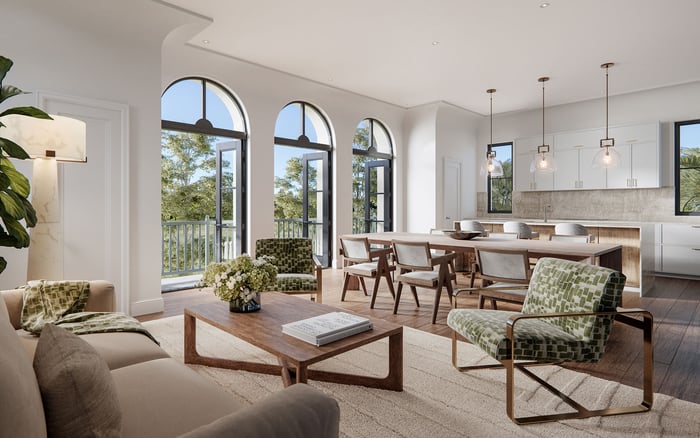
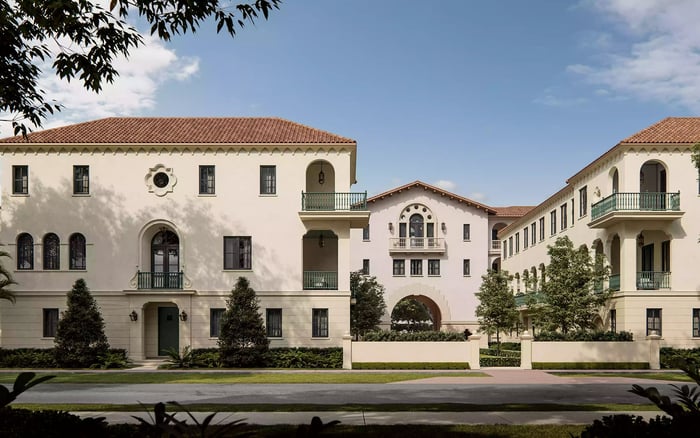
Two new boutique addresses in Coral Gables offer distinct definitions of luxury: one leans into bespoke classicism and scale, the other centers wellness systems and flexible planning.
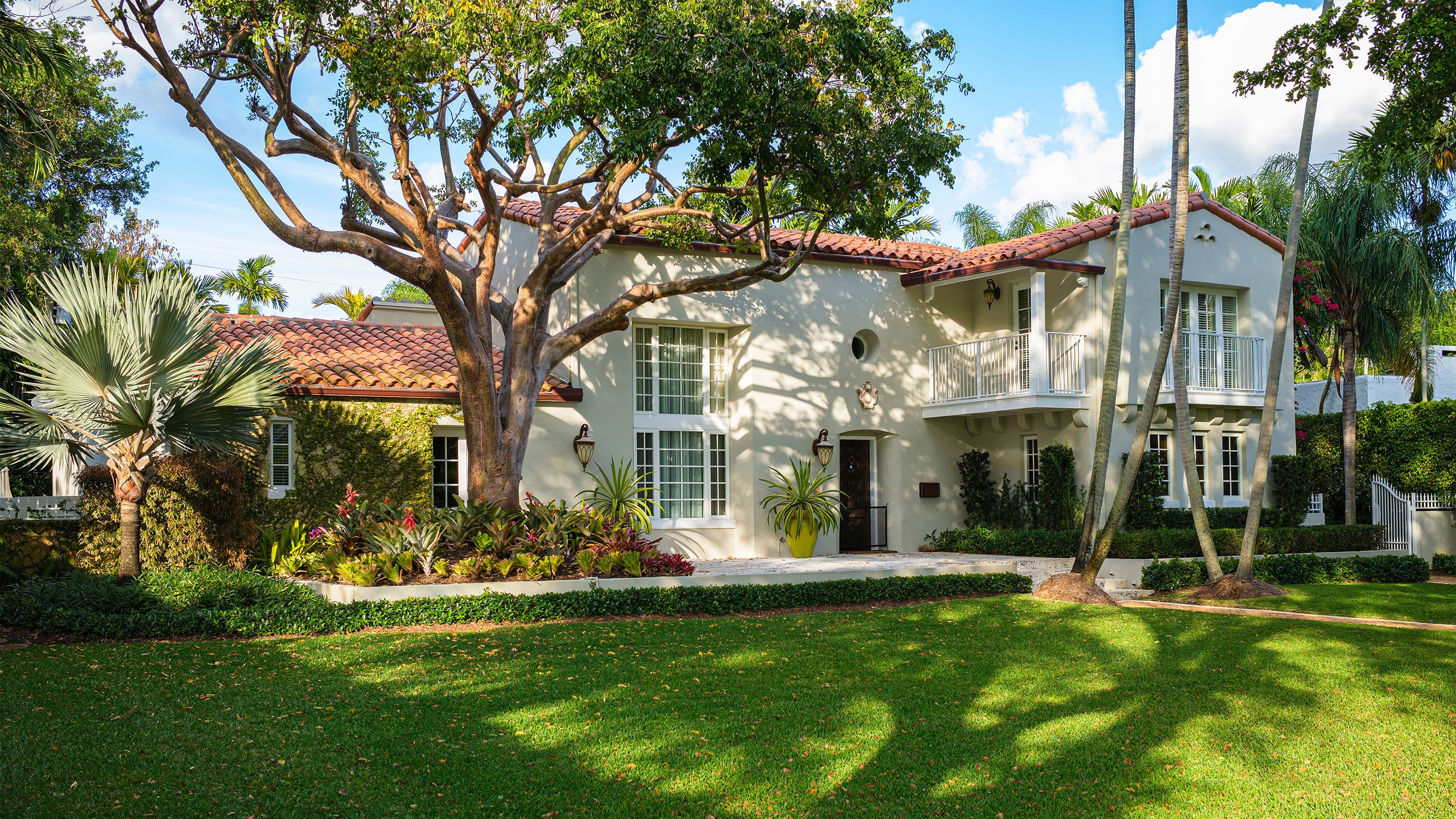
Coral Gables has long rewarded restraint. The neighborhood’s appeal is not built on spectacle, but on daily composure: walkable blocks, a mature tree canopy, and architecture that feels deliberate instead of performative. For today’s high-net-worth buyer, that composure matters even more when it is paired with new residences designed to reduce friction in everyday living.
Two new-construction condominium projects capture this moment. Both are intentionally boutique in scale, both trade on design pedigree, and both speak to residents who value privacy as much as proximity. Yet they arrive at “luxury” from different angles. Ponce Park Coral Gables leans into bespoke neoclassical cues and large-format homes. Cora Merrick Park frames wellness not as an amenity, but as infrastructure.
For buyers looking at Coral Gables as a long-term hold, the real question is not which is better. It is which philosophy aligns with how you live.
Ponce Park Residences is presented as an 11-story boutique building with 58 residences. That scale typically supports a quieter ownership experience: fewer neighbors, fewer moving parts, and a service model that can feel more personal by default. The project’s public materials emphasize a neoclassical architectural approach intended to harmonize with the Gables’ established design language. Interiors are listed as by Meyer Davis Studio, reinforcing a value proposition built on narrative, craft, and proportion, not only square footage.
Cora Merrick Park, by contrast, is planned as a 13-story building with 74 residences near the Merrick Park district. Arquitectonica is named as architect, with interiors by Urban Robot. Its identity is explicitly wellness-forward, with messaging around WELL-related standards and building health systems. The tone reads less “classic sanctuary” and more “high-performance home,” aimed at residents who treat air, water, and materials as part of the buying decision, not afterthoughts.
The most practical distinction between these two addresses may be how they approach plan variety and future adaptability.
Ponce Park is publicly described with 2- to 5-bedroom configurations, with interior sizes reported at roughly 1,900 to 6,500 square feet, including larger penthouse layouts. Marketing also cites ceiling heights up to about 11 to 12 feet, varying by residence and floor plan. The range of published residence types suggests the project begins with large-format living and offers multiple ways to match plan to lifestyle, rather than forcing lifestyle into a single template.
Cora publishes 12 floor plans, ranging from approximately 678 to 2,651 square feet, while also noting that select adjacent residences may be combined to create larger homes, subject to design and building constraints. In a neighborhood where many buyers are coming from single-family homes, that option can support right-sizing without surrendering a sense of scale.
In short, Ponce Park appears to deliver size as a starting point, while Cora offers a pathway to more space through combinations.
In today’s market, luxury is increasingly legible in the small, repeatable moments. It is the feel of the flooring underfoot, the durability of the kitchen, and whether finishes still look crisp after real daily use.
Ponce Park’s disclosed specifications emphasize European oak flooring and travertine or stone applications, depending on plan and option. Kitchens are positioned with Italian cabinetry and appliances including Sub-Zero and Wolf, with select high-tier range options referenced in marketing materials. This palette is familiar in South Florida’s premium tier, but the differentiator is the project’s bespoke positioning: finishes and proportions intended to read tailored, not standardized.
Cora’s specification language is similarly premium, though framed as a curated system. It highlights Italkraft Italian cabinetry and Sub-Zero and Wolf appliances as part of a consistent package. The effect is less about individualized flourish and more about disciplined repeatability: a clean interior framework that supports wellness systems and predictable performance.
If your personal definition of luxury is singularity and rare finishes, the bespoke approach may resonate. If your luxury is clarity, consistency, and a baseline that lets your art and furniture lead, the curated approach can be equally persuasive.
“Wellness” is now widely used across new development, which is why the specifics of technical commitments matter.
Cora is explicit in its positioning as a wellness-focused development promoting WELL-related standards and systems. Its wellness program includes features such as air and water purification and other health-centered material and system choices. Amenities extend that thesis with a rooftop padel court and a spa or thermal-circuit style component, along with wellness-oriented social spaces. For buyers who travel frequently or are sensitive to indoor air quality, this focus can shape the lived experience in ways that do not show up in a rendering.
Ponce Park also presents a wellness-minded amenity stack, including multiple water and thermal experiences as part of a resort-style positioning, in addition to a pool. The distinction is emphasis: Ponce Park’s wellness story reads more amenity-forward, while Cora’s is more system-forward.
A useful buyer question is simple: do you want wellness to be something you visit within the building, or something embedded in the daily performance of your home.
In Coral Gables, outdoor space plays a different role than on the beachfront. It is less about spectacle and more about controlled exposure: morning coffee in shade, a quiet dinner outside, and greenery that reads as an extension of the interior.
Ponce Park emphasizes indoor-outdoor living with deep terraces and summer kitchens, varying by residence type. For buyers who entertain often, or simply prefer dining outdoors without leaving home, that programming can function like an additional living room for much of the year.
Cora’s public materials lean more heavily into wellness, but its adjacency to the Merrick Park district supports a lifestyle where “outdoor living” also includes stepping into the neighborhood for a walk, a coffee, or shopping. Its site plan includes a roughly 5,000 square foot public park component with a Jaume Plensa sculpture installation cited in its fact sheet, adding an art-forward public realm element at the doorstep.
When evaluating any terrace, probe privacy lines, exposure, and intended use. A large terrace that feels overlooked can deliver less value than a smaller one that reads as a true extension of the home.
Beyond aesthetics, boutique buildings often reward buyers who ask operational questions early. Use these filters when comparing projects like Ponce Park and Cora.
Start with density and lifestyle fit. A 58-residence building can feel materially different from one with 74, even when both are small by Miami standards. Then evaluate plan resilience. Look for layouts that can evolve with your life, including the ability to create a flex room, expand dining, or support a home office without compromising flow.
Next, separate systems from finishes. Premium finishes are easier to upgrade later than building-wide systems. If wellness infrastructure is a priority, Cora’s emphasis on purification and WELL-related standards may deserve outsized weight. If you prioritize volume, ceiling height, and large-format entertaining, Ponce Park’s disclosed sizes and terrace focus may align more closely.
Finally, focus on the quiet luxuries: arrival sequence, service calibration, and how amenities are integrated into daily routine. In boutique living, the goal is not maximal programming. It is frictionless living.
Some buyers cross-shop Coral Gables with Miami Beach, not because the neighborhoods are similar, but because the lifestyles can complement each other. If Coral Gables is the composed weekday address, Miami Beach can be the weekend punctuation.
On the Beach side, newer towers often skew more vertical and view-driven. Five Park Miami Beach is an example of a high-design, amenity-forward proposition for buyers who want a contemporary skyline presence. For those who prioritize a branded hospitality cadence, Setai Residences Miami Beach and The Ritz-Carlton Residences® Miami Beach represent a different model, one rooted in service culture and an ownership experience that can feel closer to a private club.
The point is not to choose one geography forever. Many sophisticated households build a portfolio of “modes.” Coral Gables can deliver privacy, walkability, and architectural continuity, while Miami Beach can deliver an ocean-facing, hotel-adjacent rhythm. Knowing which mode you are buying first helps you choose the right project and the right floor plan.
How many residences are planned at Ponce Park Residences? Ponce Park is presented as an 11-story project with 58 residences.
What residence sizes are reported for Ponce Park? Public materials cite roughly 1,900 to 6,500 square feet, including larger penthouse layouts.
What is the architectural style positioning for Ponce Park? It is presented with a neoclassical approach intended to complement Coral Gables’ design language.
Who is responsible for Ponce Park interiors? Interiors are listed as by Meyer Davis Studio.
What kitchen and appliance brands are disclosed at Ponce Park? Marketing references Italian cabinetry and appliances including Sub-Zero and Wolf.
How many residences are planned at Cora Merrick Park? Cora is planned as a 13-story building with 74 residences.
What floor plan range is disclosed for Cora? Cora markets 12 floor plans ranging from about 678 to 2,651 square feet.
Can residences be combined at Cora? Cora indicates select adjacent residences may be combined, subject to design and building constraints.
What makes Cora’s wellness positioning distinct? Cora emphasizes WELL-related standards and systems, including air and water purification features.
Which project is better for indoor-outdoor living? Ponce Park places particular emphasis on deep terraces and summer kitchens, while Cora leans more heavily into wellness systems and neighborhood connectivity.
To compare current availability and align the right residence to your lifestyle, connect with MILLION Luxury.
If branded residences are on your mind — as a home or as an allocation — we would be glad to share what we are seeing, privately.
Begin a quiet conversation