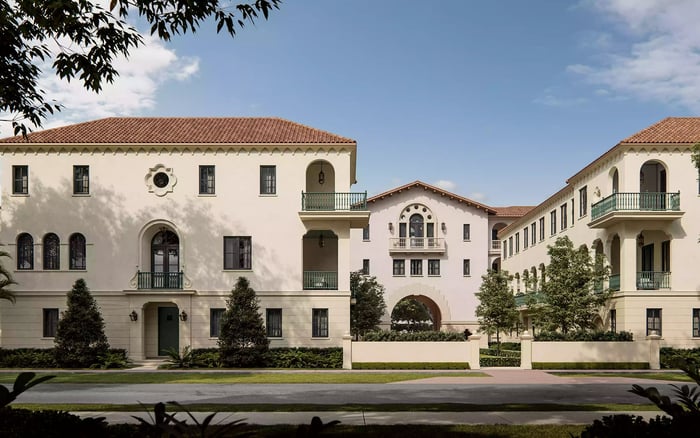
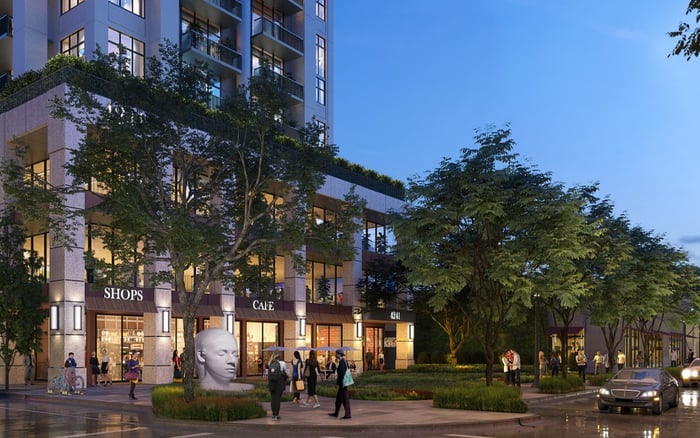
A buyer-oriented look at how Coral Gables residences can be evaluated through the lens of service style, from formal hospitality to quieter residential discretion.
In Coral Gables, the choice between formal hospitality and quiet residential service is rarely a question of which model is more luxurious. It is a question of which model disappears most gracefully into the owner’s life. A residence can feel exquisitely served without feeling managed, and it can feel grand without becoming theatrical. The best decision begins with a candid reading of how the household lives, entertains, arrives, departs, and protects its privacy.
Formal hospitality tends to appeal to buyers who value ceremony. Arrival matters. Recognition matters. A sense of orchestration matters. This is the language of hotel-caliber welcome, polished common spaces, attentive front-of-house presence, and a social rhythm that makes entertaining feel supported before the first guest reaches the door.
Quiet residential service is different. It is no less considered, but it is more private in tone. It favors continuity over performance, discretion over flourish, and a daily cadence closer to a private estate than a grand hotel. For many Coral Gables buyers, particularly those moving from single-family homes or long-held estates, this softer model can feel more natural.
Formal hospitality changes the threshold experience. It can make a condominium or townhome setting feel like an extension of a private club, with a visible staff presence, a lobby that carries a sense of occasion, and a building culture that supports hosting. Buyers who entertain often may value that structure because it creates a clean separation between the private residence and the public moment of arrival.
This model also changes expectations. Residents may look for a more active service desk, polished guest handling, coordinated deliveries, and common areas that feel appropriate for receiving visitors. The experience can be especially compelling for buyers who split time between cities and want a residence that is ready to perform when they arrive.
Yet formality requires comfort with visibility. In Coral Gables, where privacy and neighborhood character are central to the residential mood, not every owner wants a home that announces itself with hotel-like energy. The right buyer will find reassurance in that level of service. The wrong buyer may find it too present.
Quiet residential service preserves the feeling of home. It is well suited to owners who want attention without fanfare: a discreet greeting, practical assistance, and a staff culture that understands boundaries. The atmosphere is less about being received and more about being known.
This approach can be especially attractive in boutique settings, where fewer residences may allow service to feel more personal and less procedural. In a Coral Gables context, the appeal often lies in the blend of walkable elegance, architectural restraint, and a slower residential tempo. The owner does not need every arrival to feel like an event. The luxury is in the ease.
For buyers considering Cora Merrick Park, the conversation is naturally less about spectacle and more about how a residence fits into a polished neighborhood routine. That distinction matters. A home that supports daily life quietly can be more valuable to the right owner than one that constantly reminds them of its amenities.
Coral Gables complicates the service decision because the city already carries a strong residential identity. The streets, gardens, historic references, and village-like pockets can make excessive formality feel unnecessary unless the buyer specifically wants a hospitality-forward environment. Unlike more vertical, nightlife-driven markets, the Gables often rewards subtlety.
This does not mean formal hospitality has no place. It means it must be measured. A buyer may want a refined arrival sequence, strong staffing, and beautifully maintained shared spaces, yet still reject anything that feels overly branded or transient. The service should elevate the residence without overpowering the neighborhood.
At Ponce Park Coral Gables, buyers can frame the question around daily convenience and presentation: will the building support a composed, lock-and-leave life while still feeling like a true home base? That is the essential Coral Gables test.
The entertaining buyer should think carefully about circulation. Where do guests arrive? How are they greeted? Does the building make dinner at home feel easier, or does the owner still need to manage every detail personally? Formal hospitality can reduce friction when entertaining is frequent, especially when the owner wants the building’s service posture to complement a refined social life.
The privacy buyer asks a different set of questions. How often will staff be visible? How intimate is the arrival sequence? Does the residence feel protected from the energy of common spaces? Is the building culture calm enough for long stays, family routines, or remote work? Quiet service is often the better fit when the home is primarily a retreat.
Neither buyer is choosing more or less luxury. They are choosing a different expression of control. Formal hospitality externalizes the service experience. Quiet residential service internalizes it.
Boutique is often used as shorthand for discretion, but the reality is more nuanced. A smaller building can feel deeply private, but it can also feel highly social if the common areas are programmed or if residents expect a strong sense of community. Conversely, a larger building can feel serene if the service choreography is disciplined and resident pathways are well managed.
The more useful question is not size alone. It is tone. Does the building feel like a club, a hotel, a private house, or a neighborhood residence? Each carries a different service expectation.
For buyers studying The Village at Coral Gables, the more relevant lens is how the residential environment supports neighborhood living. The best fit will depend on whether the owner wants a sense of community at the doorstep or a quieter threshold between public life and private rooms.
New-construction buyers often focus on finishes, floor plans, parking, views, and outdoor space. Those elements matter, but service culture may shape daily satisfaction just as much. A well-designed residence can still feel mismatched if the building operates with the wrong level of intensity.
The questions should be practical. Who is the first person a resident encounters? How are guests handled? Are service areas discreet? Does the lobby encourage lingering, or is it primarily transitional? Are amenities designed for social visibility or private use? These details tell a buyer whether the project leans toward formal hospitality or quiet residential service.
A buyer comparing Coral Gables with nearby Coconut Grove might also consider Four Seasons Residences Coconut Grove as a point of contrast, not because the neighborhoods are interchangeable, but because service identity can vary meaningfully even among premium residential settings. The important task is to define the desired rhythm before falling in love with the architecture.
The most successful Coral Gables purchase is not the one with the longest amenity narrative. It is the one where the service style supports the owner’s natural behavior. If the buyer loves hosting, travels frequently, and appreciates a more polished public face, formal hospitality may feel correct. If the buyer values calm, familiarity, and the emotional texture of a private home, quiet residential service may prove more enduring.
This is also why resale logic should be considered carefully. A residence whose service culture is aligned with the expectations of its likely buyer pool can feel more coherent over time. In Coral Gables, coherence is a form of luxury. The home, the staff tone, the arrival, the neighbors, and the surrounding streets should all speak the same language.
The question is not whether formal hospitality or quiet service is superior. The question is which one allows the owner to live more elegantly with less explanation.
What is the main difference between formal hospitality and quiet residential service? Formal hospitality is more visible and ceremonial, while quiet residential service is more discreet and home-like.
Which service style is better for Coral Gables buyers? The better style depends on how the buyer lives, especially around privacy, entertaining, and daily routine.
Is formal hospitality only for hotel-branded residences? No. A residence can have a formal service tone without being defined solely by a hotel-style identity.
Why do some buyers prefer quiet residential service? They often want privacy, familiarity, and support that does not make daily life feel overly managed.
Does a boutique building always offer quieter service? Not always. Boutique scale can feel private, but the building culture and programming matter just as much.
What should entertaining-focused buyers prioritize? They should study arrival, guest handling, common areas, and whether the service model supports hosting gracefully.
What should privacy-focused buyers prioritize? They should look at staff visibility, resident circulation, acoustic calm, and the overall sense of discretion.
Can service style affect long-term satisfaction? Yes. Even a beautiful residence can feel mismatched if the service rhythm does not suit the household.
How should single-family home owners approach this decision? They should consider how much private-estate independence they want to preserve when moving into a serviced setting.
What is the best way to shortlist comparable options for touring? Start with location fit, delivery status, and daily lifestyle priorities, then compare stacks and elevations to validate views and privacy.
If you'd like a private walkthrough and a curated shortlist, connect with MILLION.
If branded residences are on your mind — as a home or as an allocation — we would be glad to share what we are seeing, privately.
Begin a quiet conversation