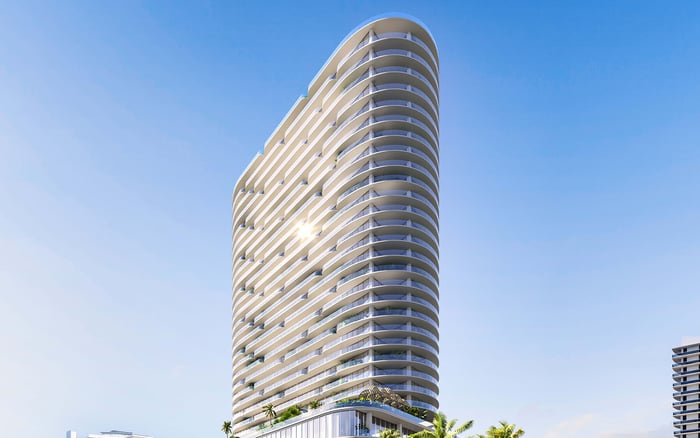
A buyer-focused guide to warranty response at Continuum Club & Residences in North Bay Village, with emphasis on accountability, urgent repairs, family schedules, documentation, and legal review before signing.

For families evaluating Continuum Club & Residences in North Bay Village, the polished presentation suite is only the beginning of due diligence. The deeper question is how the residence will perform after closing, once school mornings, remote work, visiting relatives, pets, and seasonal travel begin to test the building in real life.
Warranty response is not a minor contract detail. It is a practical measure of accountability during the first years of ownership, when punch-list items, system issues, and construction defects are most likely to appear. In a luxury condo, finish quality matters. So do the speed, clarity, and professionalism with which problems are handled.
In practical search language, this is a Continuum Club & Residences North Bay Village question, a North Bay Village family question, and a new-construction or pre-construction ownership question for buyers who also care about waterview living, pool amenities, and daily service.
Family buyers should begin with one direct question: who is responsible for warranty claims after closing? The answer may involve several parties, including the developer, general contractor, subcontractors, product manufacturers, building management, the condominium association, or a third-party warranty administrator.
That distinction matters. A slow handoff between parties can turn a manageable issue into a household disruption. Buyers should ask whether there will be one central point of contact, who has authority to approve work, and how communication is handled when a claim touches both the residence and common building systems.
A strong warranty response process should be legible. If a window issue affects one residence, the buyer should know whether it is handled as a unit-level matter, a façade matter, a manufacturer issue, or a broader building concern. If an appliance fails, the buyer should know whether to contact management, a brand service line, or a warranty portal.
Families should request a written warranty matrix before signing. The matrix should show what is covered inside the unit, what is covered in common areas, and what is excluded. It should also identify claim deadlines, documentation requirements, and the correct submission channel.
At the unit level, buyers should look closely at HVAC performance, plumbing, electrical systems, appliances, windows, doors, flooring, cabinetry, waterproofing, and smart-home components. These are not abstract concerns. They affect sleep, storage, air quality, privacy, sound control, and the ability to run a household smoothly.
At the building level, the discussion should include elevators, life-safety systems, pools, amenity areas, garage systems, façade elements, roofs, waterproofing, mechanical rooms, and access-control systems. For family buyers, these items shape the reliability of the entire property. What may be a temporary inconvenience for a single adult owner can become a major logistical issue for a household with children or elder relatives.
Not every warranty item deserves the same response time. A cabinet adjustment and water intrusion should not sit in the same queue. Buyers should ask whether emergency issues receive priority handling, particularly water intrusion, loss of air conditioning, elevator outages, electrical faults, or life-safety concerns.
The next question should be specific: what are the target response times by severity level? Families should ask whether urgent issues receive same-day response and whether non-urgent repairs are assigned written timelines. A luxury building does not need to promise instant perfection, but it should provide a disciplined system for triage.
This is especially important in South Florida, where heat, humidity, and storm-season realities can intensify the consequences of delayed repairs. Loss of air conditioning is not merely inconvenient for a family with young children. Water intrusion can affect finishes, flooring, cabinetry, and daily habitability. Elevator reliability can influence school drop-offs, medical appointments, and mobility for relatives.
Buyers should confirm how warranty requests will be submitted. Possibilities may include a digital portal, concierge desk, property manager, developer representative, or third-party warranty administrator. The key is not the format, but the clarity of the workflow.
Families should ask whether each request receives a tracking number, whether photos or videos can be uploaded, and whether updates are delivered automatically. They should also ask who can submit claims if the owner is traveling, leasing the residence, or using the property seasonally.
For a household, the best process is predictable. Parents should not have to chase multiple contacts during a school week. Seasonal owners should not discover that a repair was delayed because an approval sat unanswered. A documented channel protects both the owner and the building team.
Warranty language is only as strong as the people available to execute it. Buyers should ask whether the building will have on-site engineering, maintenance, and management staff after delivery. Staffing directly affects practical warranty response, especially when a problem needs immediate inspection or coordination with subcontractors.
The questions should be operational. Will there be on-site engineering during standard hours? Who responds after hours? Does management have authority to inspect urgent issues, or must every concern wait for a developer representative? How are subcontractors scheduled into occupied residences?
For families, this is where service becomes tangible. A parent working from home may need a defined appointment window. A household with a sleeping infant may need quiet-hour sensitivity. A pet owner may need advance notice before workers enter. A seasonal owner may need management to coordinate access while the residence is vacant.
Warranty repair is not just about whether something will be fixed. It is about how the work enters the rhythm of a home. Families should ask how appointments are scheduled, how much advance notice is given, whether workers are supervised, and what happens if a repair requires multiple visits.
Buyers should also ask how the building handles repairs that affect privacy, security, or livability. Will furniture need to be moved? Are protective coverings used? Who confirms that the residence is left clean? How are keys, access permissions, and alarm systems managed?
These questions may seem granular, but they are central to luxury ownership. A family residence is not a showroom. It is a working home, and warranty response should respect that.
Buyers should clarify whether temporary accommodations, service credits, or alternative amenity access are available if a warranty issue materially affects habitability or use of common amenities. Not every issue will qualify, and families should avoid assuming relief exists unless it is written clearly.
The most important point is to define the process before a problem arises. If a major issue prevents normal use of a residence, who evaluates the claim? What documentation is required? Are decisions made by management, the developer, the association, or another party?
The same logic applies to amenities. If a pool, garage system, elevator, or access-control system is affected, family buyers should understand whether there are contingency plans, communication protocols, or alternative arrangements.
Families should ask how repeat defects are escalated. If the same HVAC issue, leak, door alignment problem, or smart-home malfunction returns, does the matter move from property management to developer leadership? Is there a defined escalation path for unresolved claims?
Documentation is equally important. Buyers should request examples of what they will receive after repairs, such as work orders, completion confirmations, photos, subcontractor notes, and warranty-extension details if applicable. The goal is not confrontation. It is continuity.
A well-documented repair history helps future troubleshooting, resale preparation, and any later conversation about recurring defects. It also encourages disciplined follow-through from everyone involved.
Families should have counsel review the purchase agreement, condominium documents, warranty provisions, disclaimers, claim deadlines, and dispute-resolution procedures before signing. This is not about slowing momentum. It is about ensuring that the promise of a luxury residence is matched by clarity around the owner’s rights and responsibilities.
The central buyer question is simple: if something important fails, what happens next? The answer should be written, specific, and operational. For a family choosing a North Bay Village residence, that clarity can be as valuable as the view.
Why should family buyers focus on warranty response at Continuum Club & Residences? Warranty response affects daily livability during the first years of ownership, when punch-list items and system issues are most likely to surface.
What is the first warranty question buyers should ask? Ask who is responsible for each type of claim after closing, including the developer, management, contractors, manufacturers, or association.
Should buyers request a written warranty matrix? Yes. A written matrix should clarify what is covered inside the residence, what is covered in common areas, and what is excluded.
Which unit-level items deserve special attention? HVAC, plumbing, electrical systems, appliances, windows, doors, flooring, cabinetry, waterproofing, and smart-home components should all be reviewed.
Which building systems should families ask about? Elevators, life-safety systems, pools, amenity areas, garage systems, façade elements, roofs, mechanical rooms, and access control are key topics.
How should urgent issues be handled? Buyers should ask for severity-based response times, including whether urgent matters receive same-day attention.
What counts as an urgent warranty concern? Water intrusion, loss of air conditioning, elevator outages, electrical faults, and life-safety concerns should be discussed as priority issues.
Why does on-site staffing matter? On-site engineering, maintenance, and management can determine how quickly issues are inspected, coordinated, and resolved.
What documentation should owners receive after repairs? Owners should request work orders, completion confirmations, photos, subcontractor notes, and any applicable warranty-extension details.
Should an attorney review warranty provisions before signing? Yes. Counsel should review the purchase agreement, condominium documents, warranty language, deadlines, disclaimers, and dispute procedures.
To compare the best-fit options with clarity, connect with MILLION.
If branded residences are on your mind — as a home or as an allocation — we would be glad to share what we are seeing, privately.
Begin a quiet conversation