A discreet buyer’s guide for New York owners evaluating a trophy penthouse move from Brooklyn to Surfside, Miami Beach, Brickell, and neighboring South Florida enclaves.
For a Brooklyn owner accustomed to architectural tension, skyline silhouettes, and neighborhood intimacy, the move to a South Florida trophy penthouse is not simply a climate decision. It is a lifestyle re-edit. The question is not whether a penthouse should be high, dramatic, and visually commanding. It is whether it can translate grandeur into daily ease.
In New York, value often concentrates around scarcity, ceiling height, protected outlooks, and proximity to culture. In Surfside, Miami Beach, Brickell, and the wider luxury coastline, the calculus broadens. A buyer must assess how the residence receives light, how terraces live, how private arrival feels, how staff and guests circulate, and whether the building culture matches the owner’s appetite for discretion.
The strongest acquisitions begin with one principle: a trophy residence is not merely the largest home in the building. It is the home with the fewest compromises.
A Brooklyn-to-Surfside move often begins with a fantasy of water, warmth, and privacy. The best buyers turn that fantasy into a written brief. Will the penthouse serve as a primary residence, a seasonal retreat, a family gathering place, or a quieter base between New York, Miami, and international travel? Each answer changes the correct floor plan.
If the home will be lived in for long stretches, storage, service corridors, elevator privacy, laundry placement, pantry logic, and acoustic separation matter as much as the view. If it will be used for entertaining, the kitchen, bar, dining terrace, powder rooms, and guest circulation deserve early scrutiny. If it is a second home, simplicity of maintenance, building management, and lock-and-leave confidence become central.
The right penthouses do not force an owner to perform around the architecture. They make the owner’s routines more graceful.
Surfside is compelling for buyers who want a more residential tone near the water. It can feel intimate, restrained, and less performative than larger urban districts. In this context, a buyer comparing residences around The Delmore Surfside may be looking for quiet prestige rather than spectacle.
Miami Beach offers another register: coastal living with a stronger social and cultural pulse. Buyers considering The Perigon Miami Beach may be drawn to an address within a broader beachside lifestyle, where dining, design, and ocean proximity are part of the everyday rhythm.
Brickell, by contrast, is for the buyer who still wants urban charge. It is not trying to be Surfside. It is vertical, connected, and more metropolitan in mood. A Brooklyn buyer who wants a downtown Miami axis may compare that energy with residences such as The Residences at 1428 Brickell, where the appeal is less retreat than elevation within the city.
Oceanfront is one of the most used words in South Florida real estate, but it should never be treated as a single category. The experience of water changes dramatically depending on orientation, floor height, terrace depth, neighboring structures, and the way interior rooms meet the view.
A trophy buyer should stand in the primary suite at different moments of the day, if possible, and imagine the morning sequence: waking, moving to the bath, dressing, stepping onto the terrace, and taking a first call. The most valuable view is not always the widest. Sometimes it is the one that feels calmest from the rooms used most often.
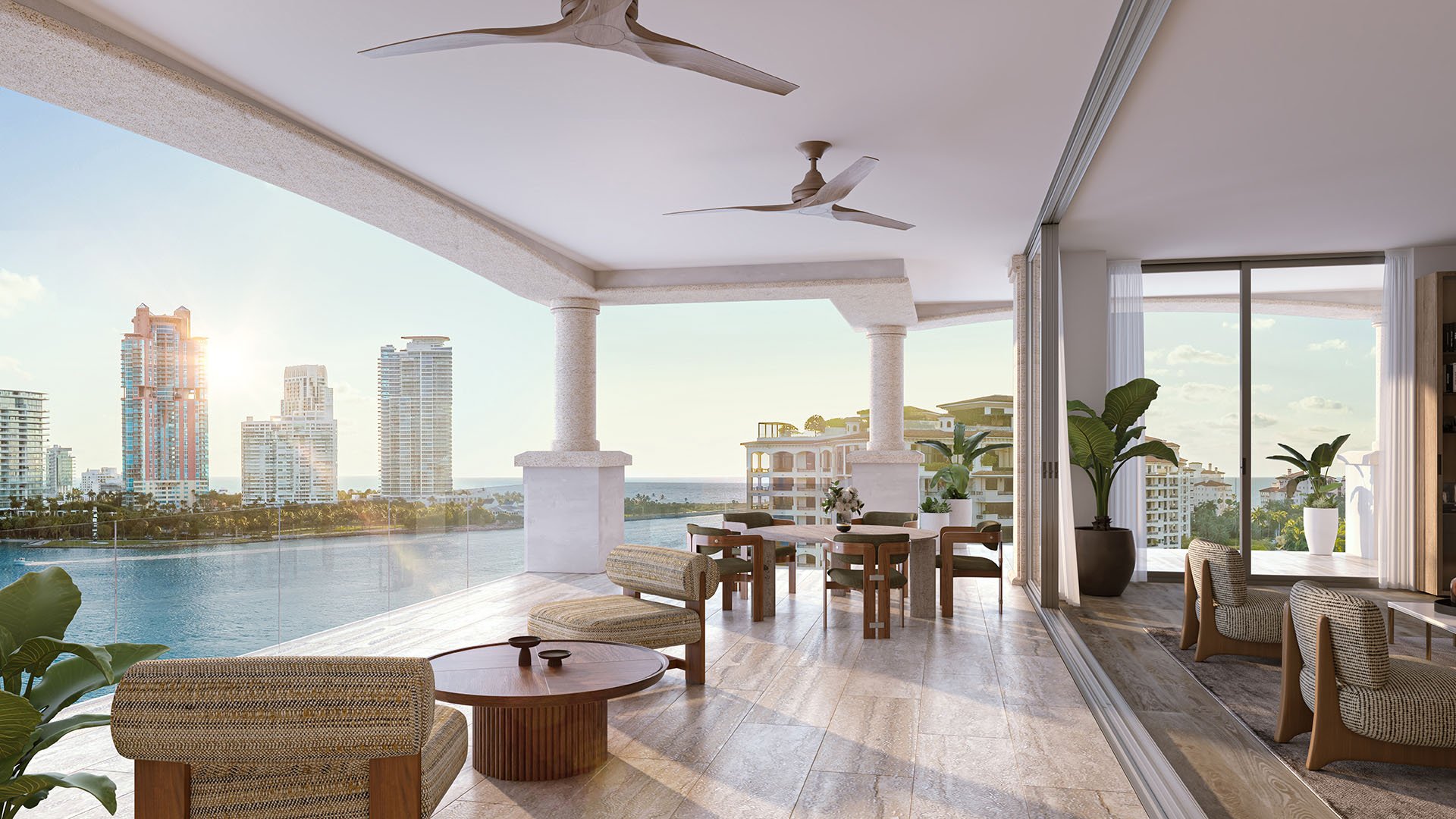
Terraces deserve particular care. A large terrace that is awkward to furnish can be less useful than a more disciplined outdoor room with shade, wind protection, and a natural relationship to the living area. For buyers leaving Brooklyn brownstones or lofts, outdoor space in South Florida can be intoxicating. The better question is how often it will be used, and for what.
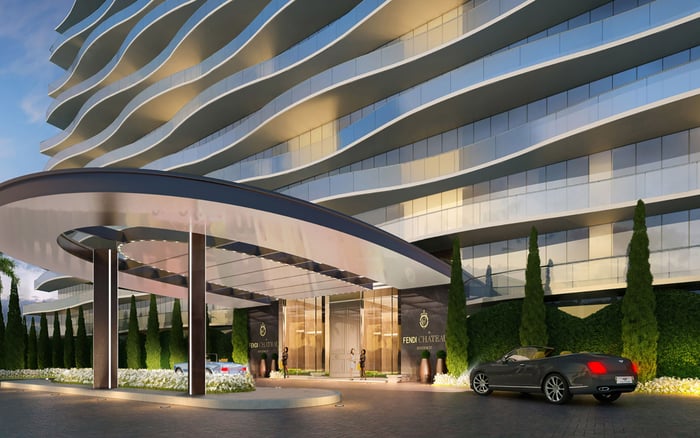
In the trophy category, arrival is part of ownership. The experience begins before the elevator doors open. How does the car enter? Where do guests wait? Is there a sense of calm at the lobby level? Can deliveries, staff, private chefs, wellness practitioners, and family members move through the building without disturbing the main living experience?
A penthouse may photograph beautifully and still fail the privacy test. Buyers should understand elevator configurations, access control, package handling, valet rhythm, guest parking, service elevators, and the building’s norms around events. The point is not isolation. It is control.
South Florida also requires attention to the relationship between amenity life and private life. Some owners want a social pool deck, a visible lobby, and a building that feels alive. Others want the opposite. Neither is inherently superior. The mistake is buying one and expecting the other.
Brooklyn buyers often arrive with a trained eye. They notice proportion, material integrity, window lines, and the difference between decoration and architecture. That sensitivity is useful in South Florida, where view can sometimes distract from plan quality.
A disciplined penthouse should have a clear entry sequence, generous but not wasteful corridors, well-scaled entertaining rooms, and private quarters that feel removed from the social zone. Ceiling height matters, but only when paired with proportion. Glass matters, but only when the home can still display art, control glare, and offer walls that feel calm.
For a buyer who values design authorship, properties such as Arte Surfside may enter the conversation because Surfside can support a more cultivated, boutique sensibility. In a different mood, a buyer considering Faena House Miami Beach may be responding to the idea of Miami Beach as a stage for art, hospitality, and oceanfront living.
The emotional pull of the top floor should never replace disciplined due diligence. Buyers should review association documents, reserve posture, insurance considerations, rental policies, pet rules, renovation rules, assessment history, and the practical mechanics of owning at the uppermost level.
Mechanical systems deserve particular focus. Air conditioning performance, elevator reliability, water pressure, window systems, terrace drainage, and rooftop or equipment adjacency can meaningfully affect day-to-day comfort. A beautiful residence should be tested like a serious asset.
Buyers should also study future flexibility. Can rooms adapt as children grow, parents visit, staff needs evolve, or work patterns change? The best trophy homes do not only serve the current moment. They give the owner optionality.
A trophy penthouse should be rare, but rarity alone is not enough. The right home should offer privacy without loneliness, drama without inconvenience, and beauty without operational strain. For a Brooklyn buyer, that may mean accepting a slower, more horizontal rhythm. It may also mean retaining an urban foothold in Brickell while choosing Surfside for its quiet coastal register.
The best decision is usually felt after the comparison becomes clear. One residence may have the stronger view. Another may have the better plan. A third may offer the more coherent building culture. The trophy choice is the one where these elements converge with the least friction.
In South Florida, the true luxury is not only the penthouse itself. It is the ability to wake above the water, move through the day privately, entertain without effort, and leave again without worrying about the home left behind.
What should a Brooklyn buyer prioritize first in a South Florida penthouse? Start with lifestyle fit, then test the floor plan, privacy, terrace usability, and building operations against that lifestyle.
Is Surfside better than Brickell for a trophy penthouse? Surfside generally suits a quieter coastal rhythm, while Brickell suits buyers who want a more urban daily environment.
How important is the terrace in a penthouse decision? Very important, but usability matters more than size. Shade, wind, access, and furnishing logic should be reviewed carefully.
Should buyers focus only on the view? No. A commanding view is valuable, but the plan, light, privacy, acoustics, and service flow determine long-term satisfaction.
What makes a penthouse feel truly private? Private or controlled arrival, thoughtful elevator access, discreet staff circulation, and a calm building culture all contribute.
Are branded residences always the right choice? Not always. The brand should support service quality and lifestyle fit rather than substitute for careful analysis.
How should a buyer evaluate amenity spaces? Consider whether the amenities match actual routines, including wellness, entertaining, guests, children, pets, and seasonal use.
What operational details matter most? Elevator reliability, air conditioning, insurance context, reserves, terrace drainage, and building management deserve attention.
Can a penthouse be both a second home and an investment? It can, but buyers should separate emotional value from rental rules, carrying costs, liquidity, and long-term ownership plans.
When is the right time to make an offer? When the residence satisfies the brief, the due diligence is clear, and the buyer can articulate why this home is difficult to replace.
For a discreet conversation and a curated building-by-building shortlist, connect with MILLION.
If branded residences are on your mind — as a home or as an allocation — we would be glad to share what we are seeing, privately.
Begin a quiet conversation