A buyer-oriented editorial on how to evaluate childproofing readiness and family safety in Brickell’s modern high-rises, from balcony design to elevator access, pool environments, and in-residence layouts.
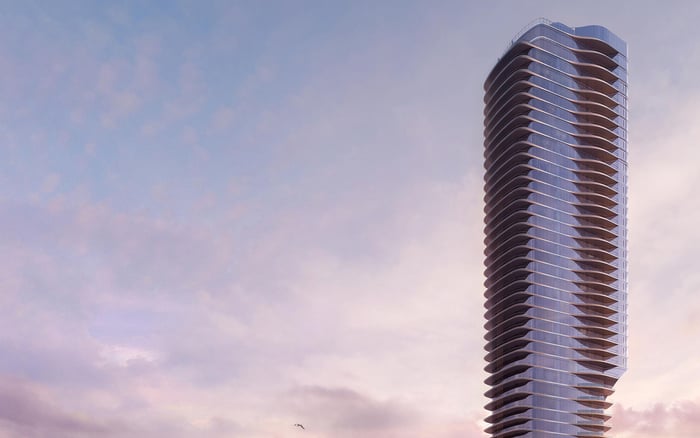
Brickell’s newest towers deliver the lifestyle buyers want: walkability, waterfront views, and amenities that rival private clubs. For families, the question is not whether a high-rise can be safe-it’s whether the building’s architecture and day-to-day operations make safety easy to maintain.
Childproofing works best when it’s integrated into how a home functions. A residence with generous circulation, controlled access points, and predictable sightlines reduces the number of daily “patches” a parent has to add. In practical terms, the most family-friendly towers are the ones where guardrails, doors, elevators, and amenity layouts quietly do the right thing without constant reminders.
In Brickell, the conversation often starts at the edge conditions: balconies, operable windows, terraces, and any indoor-outdoor threshold. It then moves to vertical living-elevator behavior, hallway visibility, and how guests circulate through the property. Finally, it lands in the shared spaces where most incidents occur: pools, play zones, fitness areas, and lobbies.
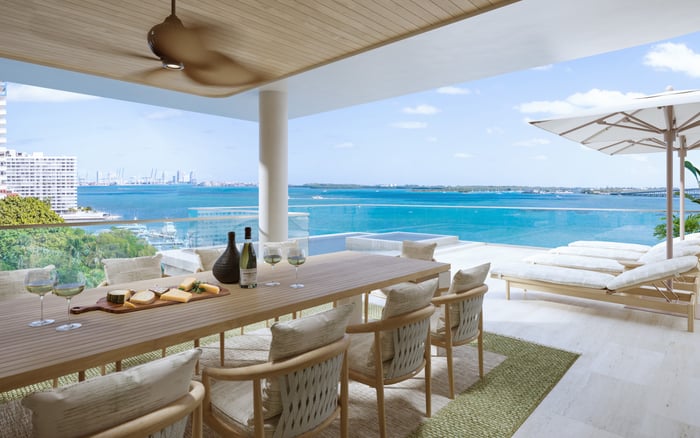
Balconies are a signature feature of many Brickell homes-and the first item on a family safety checklist. Evaluate the balcony as an architectural element, not simply an extension of the living room.
Start with the rail design and how it performs when climbed. Favor rail profiles that discourage footholds and limit horizontal elements that function like a ladder. Then confirm how the balcony door operates and whether the hardware supports a layered approach: a lock, plus an additional latch or restrictor if you choose to add one.
Next, study the balcony’s geometry. Deep terraces can be safer than narrow ledges because they allow furniture to sit well back from railings and keep circulation away from the edge. On a shallow terrace, almost any chair can become a stepping platform. Sometimes the safest “design choice” is simply keeping movable furniture and planters away from the perimeter.
Finally, treat outdoor surfaces as a slip-risk environment. Consider how the material behaves when wet and how quickly it drains after rain. In Brickell, weather shifts fast, and a slick threshold at a balcony door is exactly the kind of detail that matters when small feet move at speed.
Modern towers often rely on expansive glazing and large-format sliders. The aesthetic is undeniable, but families should prioritize openings that can be managed consistently.
Ask how many operable elements you’ll realistically want to secure every day. A single primary slider to a terrace is straightforward; multiple doors spanning a living area can become a recurring task. Evaluate whether the residence offers natural “gates” in the plan-such as a vestibule or corridor that can separate sleeping areas from public entertaining space.
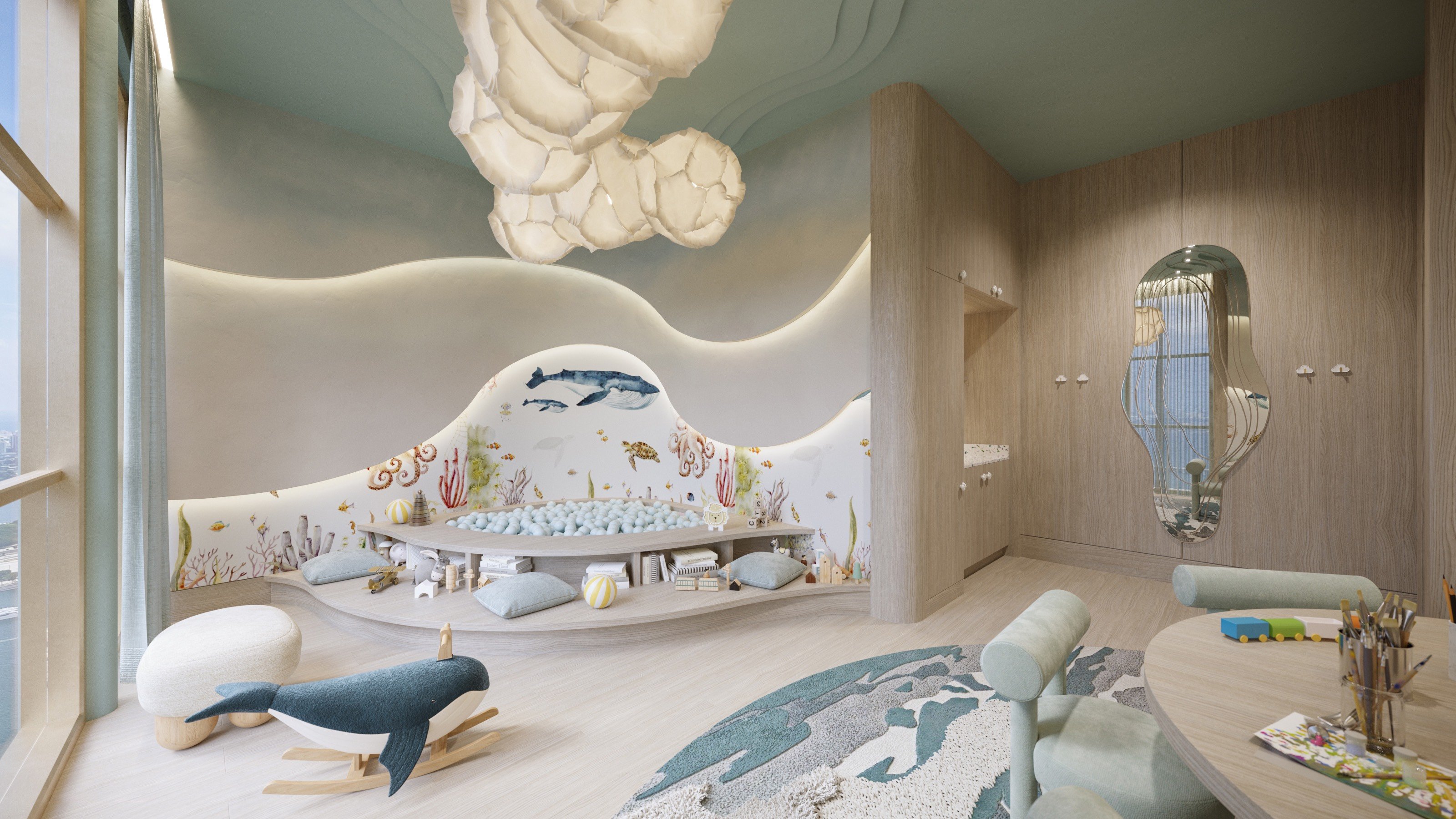
Inside the home, identify fall and pinch points early. Door swings near stair-like level changes, tight corners near closets, and heavy pocket doors can all create pinch hazards. The goal isn’t to strip sophistication from a luxury interior; it’s to select a layout where childproofing additions stay discreet.
For buyers comparing Brickell inventory, consider touring residences in Una Residences Brickell with a checklist rooted in daily use: where would a gate go, how quickly can you secure the primary outdoor opening, and can you maintain clear sightlines from kitchen to living area?
In a high-rise, family safety is inseparable from access control. The elevator is the building’s circulatory system, so the questions you ask should be as operational as they are architectural.
Start with how residents and guests reach a unit floor. In many modern buildings, access is managed through controlled entry points and elevator credentialing. Even when systems are strong, clarify what happens in real household scenarios: a babysitter arrival, a food delivery, visiting relatives, or a child returning with a caregiver. You want a setup that supports your routine without encouraging shortcuts.
In the lobby, watch the sightlines. Can staff or residents see key transition zones-such as the front door, elevator bank, and any adjacent lounge areas? If a child slips a few steps away while you’re handling strollers or bags, the environment should naturally slow that moment down through design and oversight.
If you’re considering newer, service-forward buildings, pay attention to how arrival is choreographed at St. Regis® Residences Brickell or Baccarat Residences Brickell. The best family outcomes come from calm, controlled transitions: curb to lobby, lobby to elevator, elevator to door.
Amenities sell towers, but families should evaluate them the way you’d assess a boutique hotel with children in tow: edges, supervision, and how easily a caregiver can maintain control.
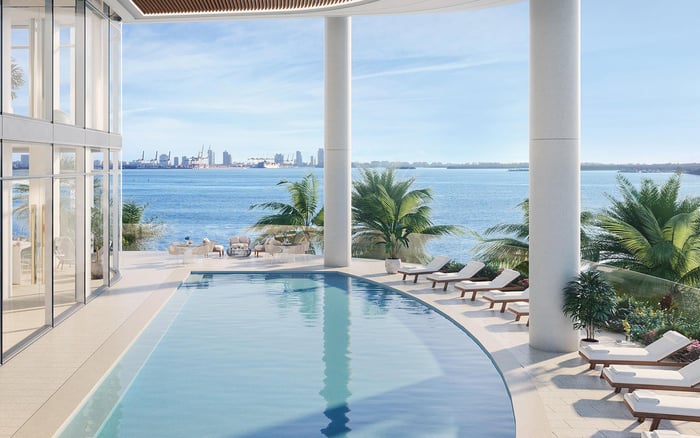
Pool environments are the most obvious variable. Note where seating sits relative to the water and whether there are natural “pause zones” between the social deck and the pool edge. Look for barriers that are elegant but functional, and confirm whether the pool area has clear rules and staff presence that reinforce a safety culture.
Fitness centers can introduce risk as well: free weights within easy reach, glass partitions, and fast-moving cardio equipment. The question isn’t whether children will be there often; it’s whether the building’s design discourages unplanned access.
For families who value a broader lifestyle ecosystem, some buyers cross-shop Brickell with nearby urban cores like Edgewater. Touring a large-scale property such as Aria Reserve Miami can clarify what you prefer in amenity planning: larger, more zoned spaces with multiple supervision points, or more compact amenity decks where everything sits closer to the edge conditions.
Luxury finishes don’t replace life-safety fundamentals. While specific systems vary by building and should be verified during due diligence, families should consistently press for the basics that matter in emergencies.
Confirm that the building’s fire and life-safety strategy is clearly communicated to residents: alarms, sprinklers, and evacuation procedures. Ask how stairwells are accessed and whether signage and egress paths feel intuitive. In a real event, clarity matters more than complexity.
Also ask how the building maintains continuity during disruptions. Backup power, communication protocols, and staffing plans can influence everything from elevator availability to lobby control. Families often underestimate how much operational steadiness contributes to overall safety.
The most elegant childproofing is nearly invisible-and it usually begins with selecting a residence where safety measures can be integrated without compromising design.
Look for a kitchen that can be partially separated, or at least clearly “read,” from the living area so you can supervise while cooking. Islands are beautiful, but they can become climbing platforms and add corners at eye level. Softer edges, thoughtful circulation, and room for a high chair or stroller parking reduce daily friction.
Bedrooms matter as much as entertaining space. A split-plan layout can be ideal for privacy, but families with very young children may prefer a configuration where the primary suite isn’t too distant from secondary bedrooms. Storage is also a safety tool: the easier it is to put items away, the less you have to rely on constant vigilance.
In the Brickell new-construction conversation, some buyers gravitate toward bold branding and dramatic interiors. If that’s your aesthetic, evaluate how a statement tower like 888 Brickell by Dolce & Gabbana can accommodate the practical layers a family needs: controlled thresholds, secure storage, and circulation that doesn’t force children through entertainment zones.
A luxury tour can be emotionally persuasive. Families benefit from a calm, repeatable script so you can compare buildings without guesswork.
Ask about:
Access: how residents, guests, and vendors reach residential floors.
Amenity rules: how pool and fitness access is managed for minors and guests.
Balcony behavior: how rail design and door hardware support safe everyday use.
Operations: staffing coverage, communication practices, and how issues are handled.
In-unit constraints: whether the plan supports discreet gates, latches, and storage.
The objective isn’t to create a risk-free environment. It’s to choose a building where the most likely risks are naturally reduced by design and operations-leaving you to focus on the life you came to Brickell to enjoy.
What is the first child-safety feature to evaluate in a Brickell condo? Balcony and terrace conditions, especially rail behavior and door hardware.
Are high floors inherently less family-friendly than low floors? Not necessarily; strong edge design and consistent routines can make any floor workable.
Should buyers avoid condos with large sliding glass doors? No, but plan for layered controls and consistent daily habits.
How do I assess elevator safety for kids without getting technical? Focus on access control, visibility at entries, and how guests are managed.
Is a staffed lobby a meaningful safety advantage? It can be, because oversight helps reduce uncontrolled access and confusion.
What should I look for on amenity decks beyond aesthetics? Barriers, sightlines, and whether spaces naturally separate adults and kids.
Are open-plan layouts harder to childproof? They can be; prioritize plans with natural zones and places for discreet gates.
Do luxury towers typically allow owners to add childproofing hardware? Many do with reasonable guidelines, but confirm rules before installing.
How can I keep childproofing discreet in a design-forward home? Use integrated storage, consistent furniture placement, and minimal add-ons.
When should I bring a professional to assess safety? After you narrow choices, before closing, so recommendations fit the unit.
To compare the best-fit options with clarity, connect with MILLION Luxury.
If branded residences are on your mind — as a home or as an allocation — we would be glad to share what we are seeing, privately.
Begin a quiet conversation